Save the Date Timing Calculator
Determine Your Save the Date Timeline
Enter your wedding details to calculate the optimal time to send save the dates based on real wedding planning data.
Recommended Timing
Why this timing matters: According to the 2024 Knot study, 68% of guests would have missed your wedding without a save the date. This timing ensures you have the maximum attendance possible.
Think of your wedding like a big group project where everyone needs to know the deadline. If you wait until the last minute to tell people, you’ll end up with empty chairs and confused guests. That’s where save the dates come in - they’re not just fancy cards. They’re your first real signal that your wedding is happening, and it’s not just a dream you’re talking about at brunch.
Why Save the Dates Actually Matter
Most people don’t plan weddings in a vacuum. They plan around jobs, vacations, family obligations, and travel. If your wedding is in June 2026 and you’re sending invitations in January, you’re already too late. People book flights and hotels months ahead - especially if your venue is in another state or country. A study by The Knot in 2024 showed that 68% of wedding guests said they would’ve missed the event if they hadn’t received a save the date. That’s not a small number. That’s nearly seven out of ten people.
Save the dates aren’t about being polite. They’re about logistics. They give guests time to clear their calendars, request time off, and budget for travel. If your guests are flying in from another country, they might need to apply for visas. If they’re bringing kids, they need to find babysitters or figure out childcare. You’re not asking them to RSVP yet. You’re just saying, ‘Hey, mark this date. Something big is coming.’
When Should You Send Save the Dates?
There’s no magic rule, but here’s what works in real life:
- For local weddings with mostly local guests: Send them 4 to 6 months before the big day.
- For destination weddings or weddings during peak season (May-October): Send them 8 to 12 months ahead.
- For holidays or long weekends: Add an extra month. People plan trips around Thanksgiving, Christmas, or Memorial Day.
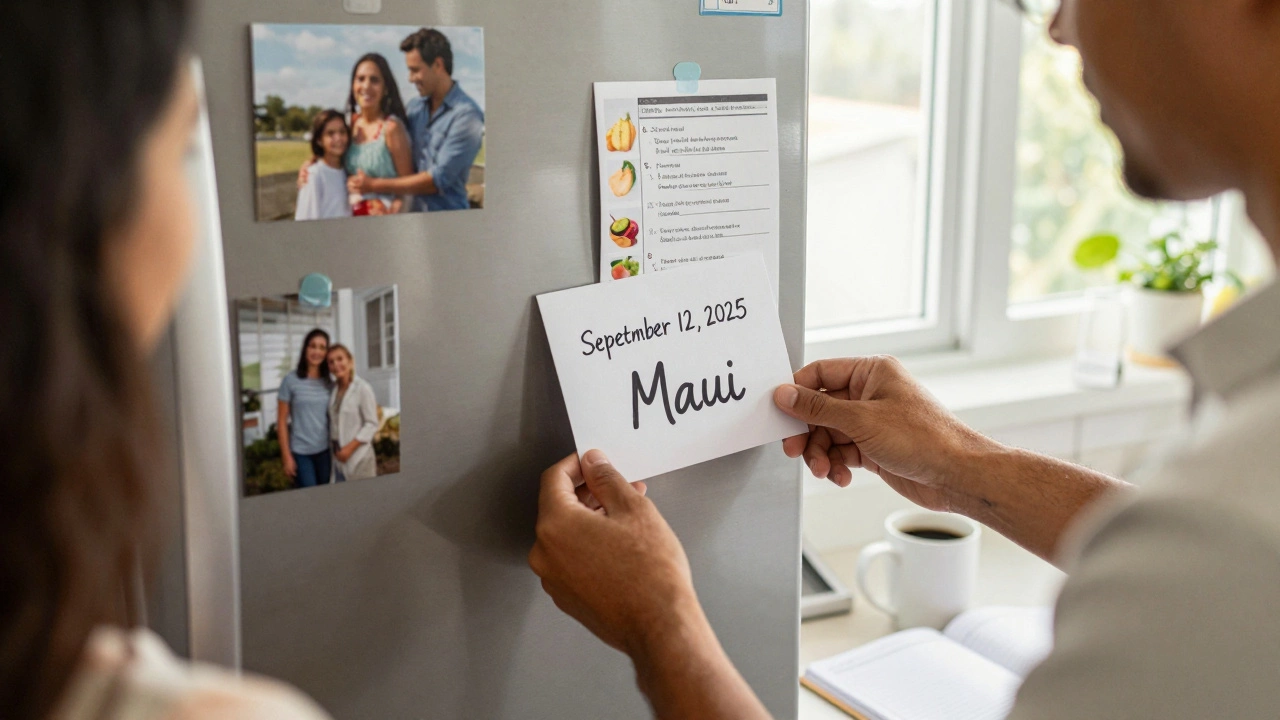
Here’s a real example: A couple got married in Maui in September 2025. They sent save the dates in July 2024. By the time invitations arrived in January 2025, 92% of their out-of-town guests had already booked flights. The rest? They were still deciding - but at least they had a date to work with.
Waiting until 3 months out? You’re gambling. And your guests will be the ones losing.
Who Actually Needs a Save the Date?
Not everyone. But you need to be smart about who gets one.
- Out-of-town guests - absolutely. They need time to plan travel.
- International guests - even more so. Visa processing can take weeks or months.
- Close family and friends - yes. Even if they live nearby, they might have kids’ recitals, work events, or medical appointments already booked.
- Local guests who don’t travel - optional. If you’re having a small, neighborhood-style wedding and everyone knows your schedule, you can skip it.
Here’s the thing: if you’re sending save the dates to 15 people, you don’t need to send them to 100. Focus on the ones who matter most - the ones who will actually have to make a real effort to be there.
What Do Save the Dates Look Like?
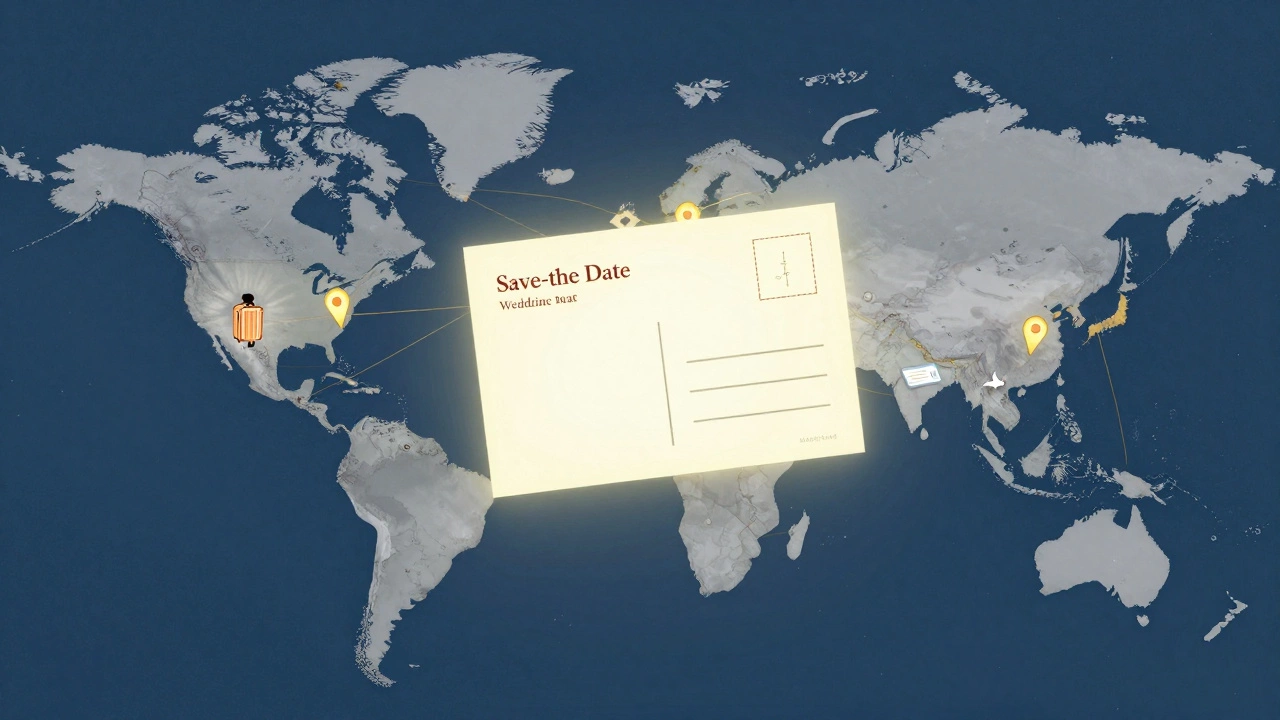
They don’t have to be fancy. You don’t need gold foil or hand-calligraphy. You just need:
- The wedding date
- The location (city and state or country)
- A note saying something like, ‘Formal invitation to follow’
That’s it. No dress code. No RSVP link. No registry info. Save the dates are not invitations. They’re reminders. Think of them like a calendar alert on your phone - just printed on paper.
Some couples use digital save the dates - emails, Instagram posts, or even text messages. That’s fine too. But if you’re sending physical invitations later, matching the style helps. Consistency matters. It tells guests you’ve thought this through.
What Happens If You Skip Save the Dates?
You’ll get a lot of ‘Oh, I didn’t know!’ responses. You’ll have guests who show up late, or not at all. You’ll get last-minute cancellations because someone booked a trip they forgot about. You’ll have to scramble to fill empty seats.
One couple skipped save the dates for their August wedding. They sent invitations in June. By July, they had 17 cancellations - mostly from people who had already planned a vacation. They ended up with 30 fewer guests than expected. Their caterer had ordered food for 120. They had to give away 40 plates of lobster tails to neighbors.
It’s not just about money. It’s about the experience. Weddings are emotional. You don’t want your day to feel empty because you didn’t give people a heads-up.
Are Save the Dates Still Relevant in 2025?
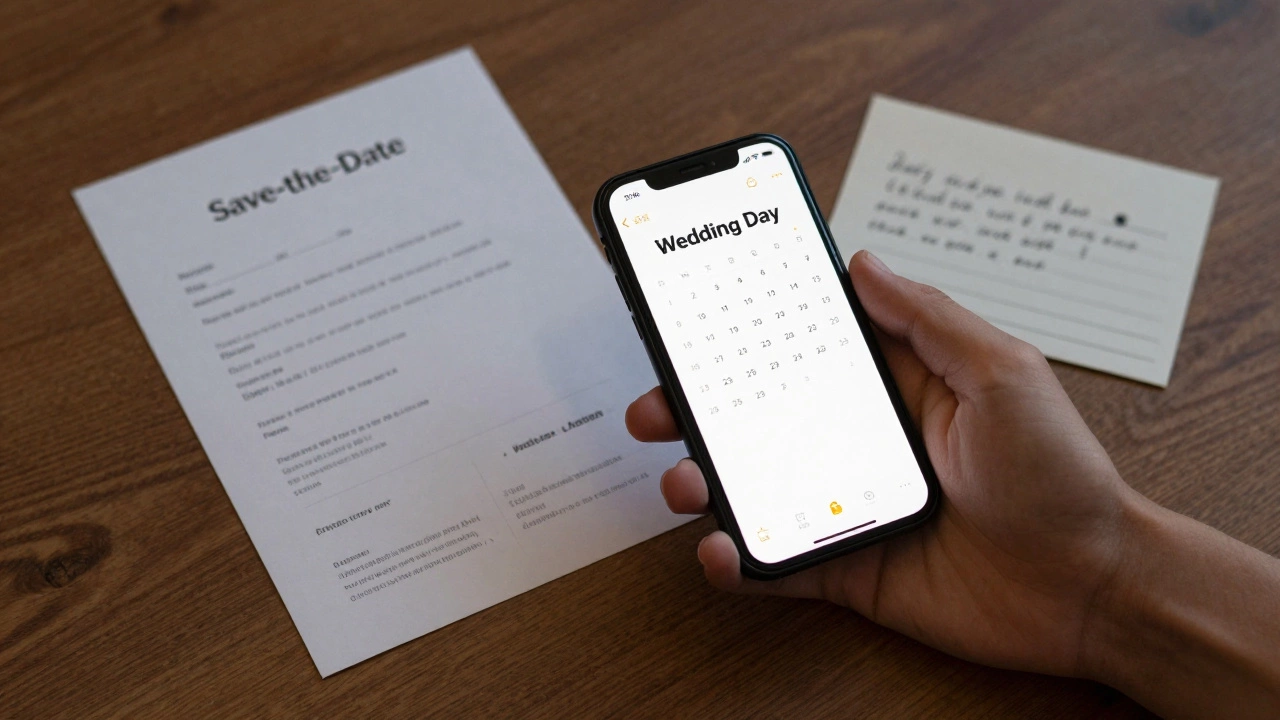
Yes. Even with digital calendars and Facebook events, people still miss things. Digital invites get buried. Texts get ignored. Save the dates are physical, tangible, and hard to overlook. They sit on the fridge. They get shown to coworkers. They’re the first thing guests see when they think about your wedding.
Plus, in 2025, more couples are having multi-day events - welcome dinners, rehearsal brunches, after-parties. Save the dates help people plan for all of it, not just the ceremony. They’re not just about the date. They’re about the whole experience.
What About Budget-Friendly Options?
You don’t need to spend $5 per card. Here are affordable ways:
- Use online design tools like Canva or Minted - print at home or order a small batch.
- Go digital: Send a beautifully designed email with your date and location. Add a link to your wedding website.
- Make a simple postcard-style design and mail it in a standard envelope. No extra postage needed.
- Handwrite the names and addresses. It adds a personal touch and costs almost nothing.
One couple spent $38 total on 40 save the dates - printed on recycled paper, mailed with regular stamps. Their guests loved the handmade look. No one complained about the cost. Everyone appreciated the heads-up.
Final Answer: Are Save the Dates Necessary?
If you care about having your favorite people there - yes. If you’re okay with empty seats and last-minute cancellations - then maybe not. But if you want your wedding to feel full, joyful, and well-planned, save the dates aren’t optional. They’re part of the groundwork.
Think of them as your first gift to your guests: the gift of time. And in a world that’s always rushing, that’s something people truly value.
Do I need save the dates if my wedding is local?
It depends. If most of your guests live nearby and you’re having a casual, small event, you can skip them. But if you’re hosting during a busy season - like summer or around holidays - even local guests might have prior plans. Sending save the dates ensures you’re not competing with their other commitments.
Can I send save the dates and invitations together?
Technically yes, but it’s not smart. Save the dates are meant to give guests early notice. If you send them at the same time as invitations, you lose that advantage. Guests won’t have time to plan travel, book hotels, or request time off. You’ll end up with lower attendance and more last-minute changes.
Should I send save the dates to kids or infants?
No. Save the dates are for people who need to plan - adults who will make travel decisions. You don’t need to send them to babies or toddlers. Wait until you send the formal invitation to include them in the guest count.
Is it rude not to send save the dates?
It’s not rude - but it’s inconsiderate if your guests have to travel. Weddings are expensive for guests too. If you’re asking someone to fly across the country, you owe them a heads-up. Save the dates aren’t about etiquette. They’re about respect.
What if I change the date after sending save the dates?
Changing the date after sending save the dates is stressful - for you and your guests. If you absolutely must, send a clear update immediately via email or phone. Apologize, explain briefly, and thank them for their flexibility. Most people will understand - but you’ll lose trust if it happens more than once.