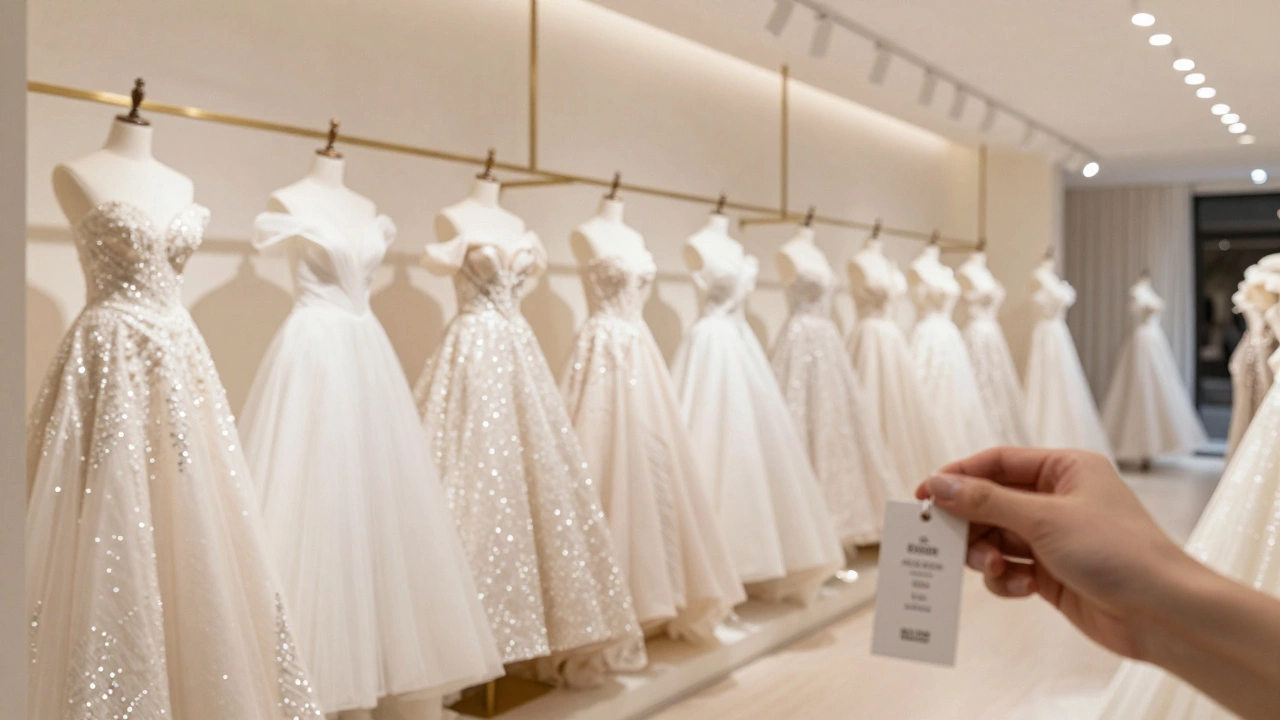
Bridal Attire Budget Estimator
Budget Breakdown
Quick Price Breakdown
- Budget/Off-the-rack: $200 - $1,500
- Mid-range/Boutique: $1,500 - $5,000
- Luxury/Designer: $5,000 - $15,000+
Setting a Realistic Budget
Before you even look at a single Pinterest board, you need a hard number. Most couples spend about 1% to 5% of their total wedding budget on the dress. If your total wedding spend is $30,000, a $300 to $1,500 dress is the mathematical sweet spot. But math doesn't always account for the "dream dress" effect. When you find a gown that makes you feel like a movie star, that percentage often flies out the window.
Ask yourself: are you a fashion lover or a pragmatist? If you're someone who collects high-end shoes and follows couture, you'll likely feel cheated by a $500 dress. If you've never bought a dress over $100 in your life, spending $4,000 will feel like a financial crime. Start by looking at your savings and deciding what 'comfortable' feels like. If you have to put the dress on a credit card with 20% interest, you're overspending.
The Hidden Costs That Bite
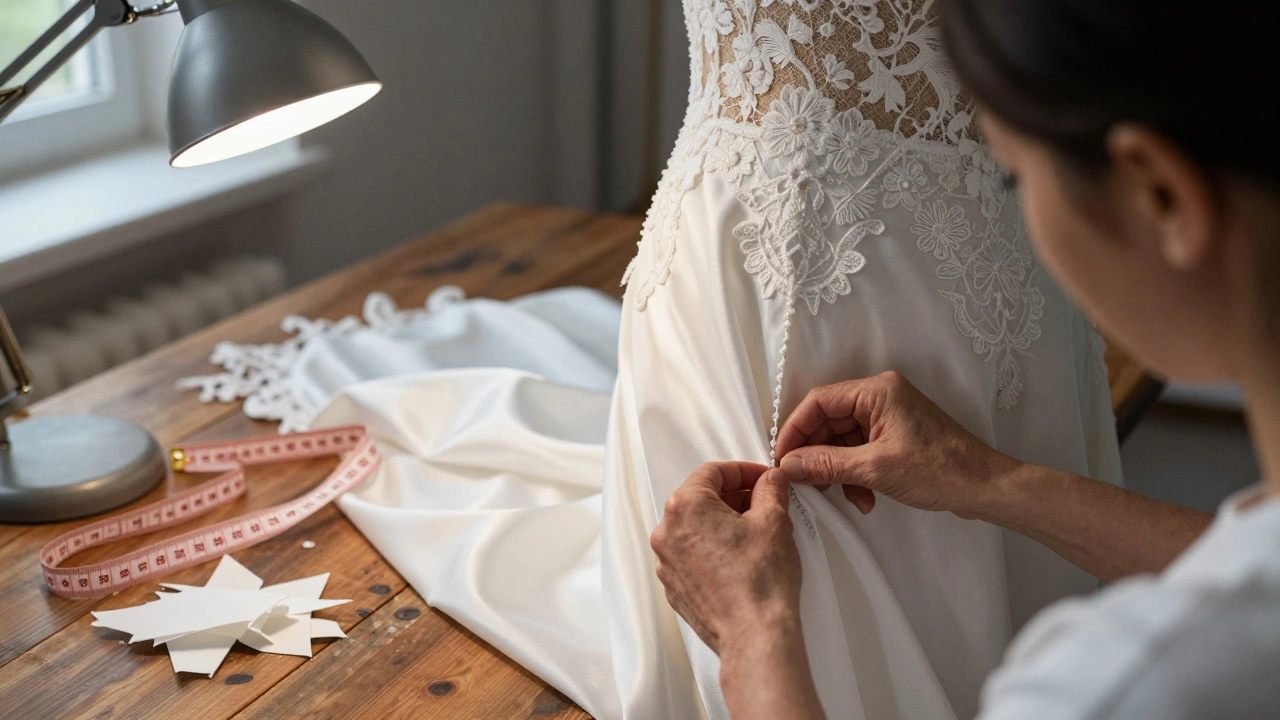
Here is where most brides get tripped up. The price on the tag is almost never the final price. You have to account for Alterations is the process of tailoring a wedding dress to fit the bride's specific body measurements ]. Unless you are exactly the size of the mannequin, you're paying for a seamstress. Depending on the complexity-like adding a bustle or shortening a heavy train-this can easily add $300 to $800 to your total.
Then there are the accessories. A veil might seem simple, but a cathedral-length lace veil can cost as much as a budget dress. Add in specialized bridal underwear, a pair of comfortable but fancy shoes, and jewelry, and you've suddenly added another $500 to your bill. Always set aside a 'hidden cost' buffer of about 15% of your dress budget to avoid any last-minute stress.
Comparing Shopping Paths
Where you buy determines what you pay. A high-end boutique isn't just selling a dress; they're selling the champagne, the appointment, and the expert curation. On the other hand, online shopping can save you thousands, but you lose the tactile experience of feeling the fabric.
| Option | Typical Price Range | Pros | Cons |
|---|---|---|---|
| Designer Boutique | $3,000 - $10,000+ | Personalized service, high quality | Expensive, long wait times |
| Sample Sales | $500 - $2,500 | Designer looks for less | No returns, limited sizes |
| Online Retailers | $200 - $1,200 | Huge variety, budget-friendly | Sizing gambles, no try-on |
| Pre-owned/Vintage | $100 - $2,000 | Unique, sustainable | Requires heavy alterations |
How Fabric and Detail Affect the Price
Ever wonder why two white dresses look similar but have a $2,000 price difference? It usually comes down to the material. Silk is a natural protein fiber produced by silkworms, prized in bridal wear for its luster and drape ]. Pure silk is expensive to produce and difficult to work with. If you see a dress made of high-grade silk mikado or crepe, expect a higher price tag.
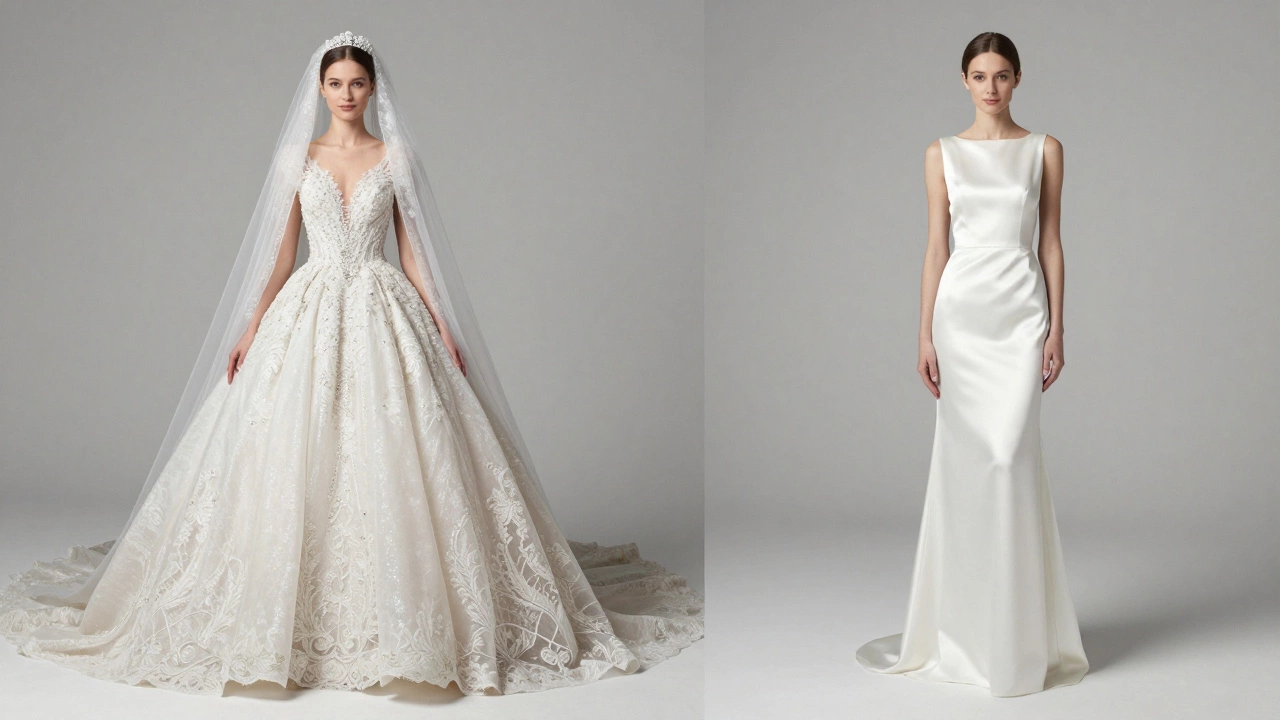
Then there's the lace. Machine-made lace is standard and affordable. However, Chantilly Lace is a delicate, handmade bobbin lace known for its floral patterns and fine outlines ]. When a dress features hand-stitched lace or intricate beadwork that takes hundreds of hours to complete, the cost reflects that labor. If you want a simpler look, a clean satin or chiffon gown will almost always be cheaper than a heavily embellished one.
Ways to Get the Look for Less
You don't have to spend a fortune to look like a million bucks. One of the best secrets is shopping sample sales. Designers often clear out last season's styles at 50% to 70% off. You might have to be flexible with the size, but since you're paying for alterations anyway, a slightly larger sample dress is often the smartest move.
Another route is the "two-dress strategy." Instead of one incredibly expensive gown that tries to do everything, buy a simple, elegant ceremony dress and a separate, cheaper party dress for the reception. This often ends up being cheaper than one high-end couture piece and gives you more versatility for the night.
Don't overlook the power of a great tailor. A $300 dress from a reputable online shop can look like a $3,000 gown if it fits your body perfectly. The difference between a "cheap" dress and a "luxury" dress is often just the precision of the fit. Investing $500 in a master tailor for a budget dress is a much better move than buying an overpriced dress that doesn't actually fit right.
Common Budget Mistakes to Avoid
Avoid the "just in case" purchase. Many brides buy a second dress because they think they might want a change, only to realize they never actually wear it. Stick to your primary choice and a simple change for dancing. This saves you hundreds of dollars and a lot of luggage space.
Also, resist the urge to let your bridesmaids or parents dictate the budget. While it's great if they're contributing, the dress is for you. If they're paying, be honest about what you love, but keep a separate small fund for yourself so you have the final say in the design. There's nothing worse than wearing a dress you hate just because it was a gift.
Is it okay to spend more than 5% of my budget on a dress?
Absolutely. Budget percentages are just guidelines. If fashion is your priority and you're happy to spend less on flowers or the cake to afford the dress, go for it. Just make sure you aren't dipping into your emergency savings or taking on high-interest debt.
How long does it actually take for a dress to arrive?
For boutique designer gowns, the standard wait time is usually 6 to 9 months. This includes the time for manufacturing and shipping. If you're shopping closer to your date, look for "off-the-rack" options or sample gowns that can be taken home immediately.
Do I really need to pay for alterations?
Almost certainly. Wedding dresses are designed for a generic fit. Even if the dress feels close, you'll likely need the hem adjusted so you don't trip while walking down the aisle, and the bodice may need tightening for support. It's one of the most critical parts of the budget.
Can I find high-quality dresses online?
Yes, but you have to be careful. Look for sites with detailed size charts, real customer photos, and a clear return policy. Avoid sites that look too good to be true (e.g., a "designer" gown for $99) as these are often low-quality replicas.
What is the most affordable fabric for a wedding dress?
Polyester-based blends, tulle, and chiffon are generally the most affordable. They are durable, easy to clean, and can be manipulated to look very expensive if the cut of the dress is flattering.