Bridal vs. Regular Makeup Matchmaker
Answer these questions to see which makeup style suits your upcoming event or how to prepare for your big day.
You’re standing in front of the mirror, holding two different palettes. One is your everyday go-to for work or brunch with friends. The other was designed specifically for a high-definition camera and twelve hours of dancing. They look similar-same pigments, same brushes-but they behave completely differently once you put them on. If you’ve ever wondered why your daily routine feels too light for a wedding photo, or why a professional bridal look feels "heavy" when you wear it to the grocery store, you aren’t imagining things. There is a distinct engineering difference between bridal makeup and regular makeup.
This isn’t just about spending more money. It’s about physics, lighting, and longevity. A bride needs her face to survive humidity, tears, sweat, and harsh flash photography without turning into a shiny mess or fading into invisibility. Your Tuesday morning routine doesn’t need to do that. Let’s break down exactly what changes when you switch from daily glam to big-day glam.
The Foundation Formula Is Different
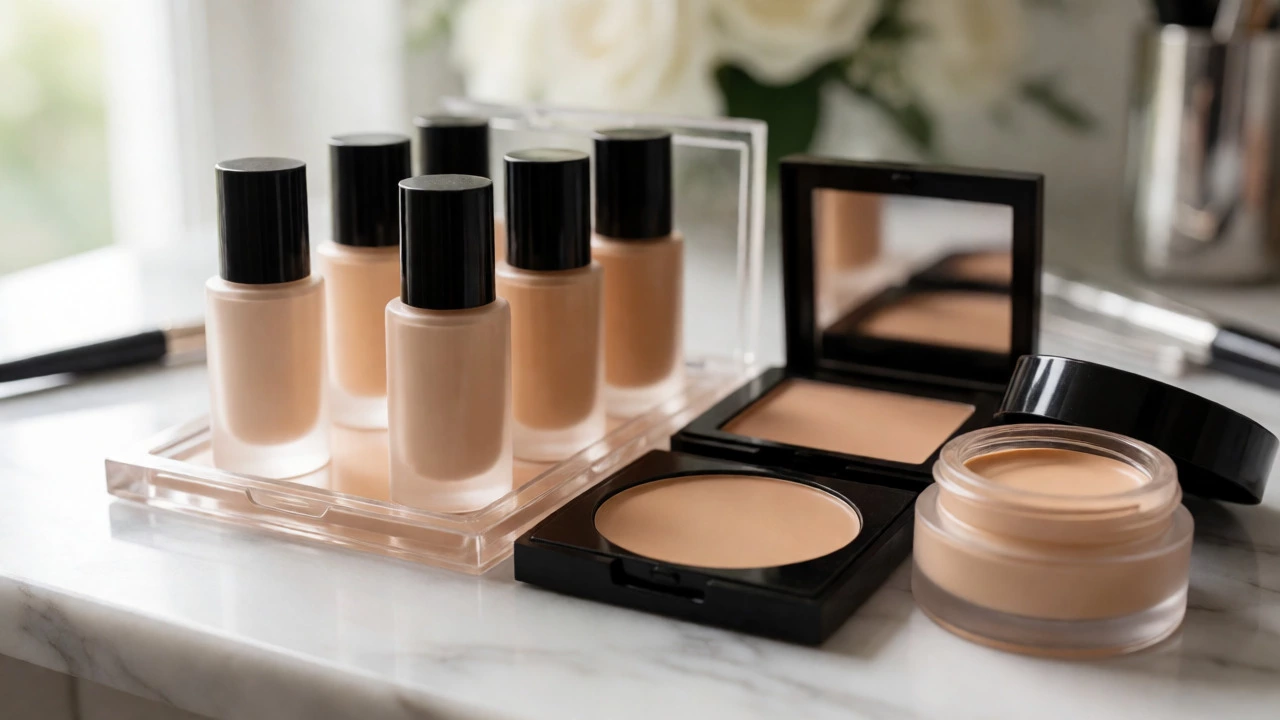
The biggest shock for most people is the base. In your daily life, you probably prefer a foundation that feels like skin. Maybe it’s sheer, maybe it’s dewy, maybe it’s tinted moisturizer. That’s great for comfort. But under a ring light or a photographer’s flash, sheer coverage disappears. You end up looking washed out, with redness and pores popping through in high definition.
Bridal makeup uses foundations with higher pigment concentration and often a matte or satin finish. These formulas are built to be opaque. They cover discoloration, acne scars, and uneven texture completely because cameras pick up every shadow. While regular makeup lets your skin breathe, bridal foundation acts like a second skin that locks everything in place. It’s not necessarily "thicker," but it is denser. This density ensures that even if you cry during vows, the product doesn’t slide off; it stays where you placed it.
Think of it this way: regular foundation is like a cotton t-shirt. Comfortable, breathable, but it wrinkles and stains easily. Bridal foundation is like technical athletic wear. It’s engineered to wick moisture, resist staining, and hold its shape no matter how much you move.
Longevity and Setting Techniques
If you wear regular makeup, you might touch it up at lunch. Maybe you blot some shine off your nose. For a bride, touching up isn’t an option. You’re walking down the aisle, then posing for portraits, then cutting the cake, then dancing until midnight. You don’t have twenty minutes to fix your eyeliner every few hours.
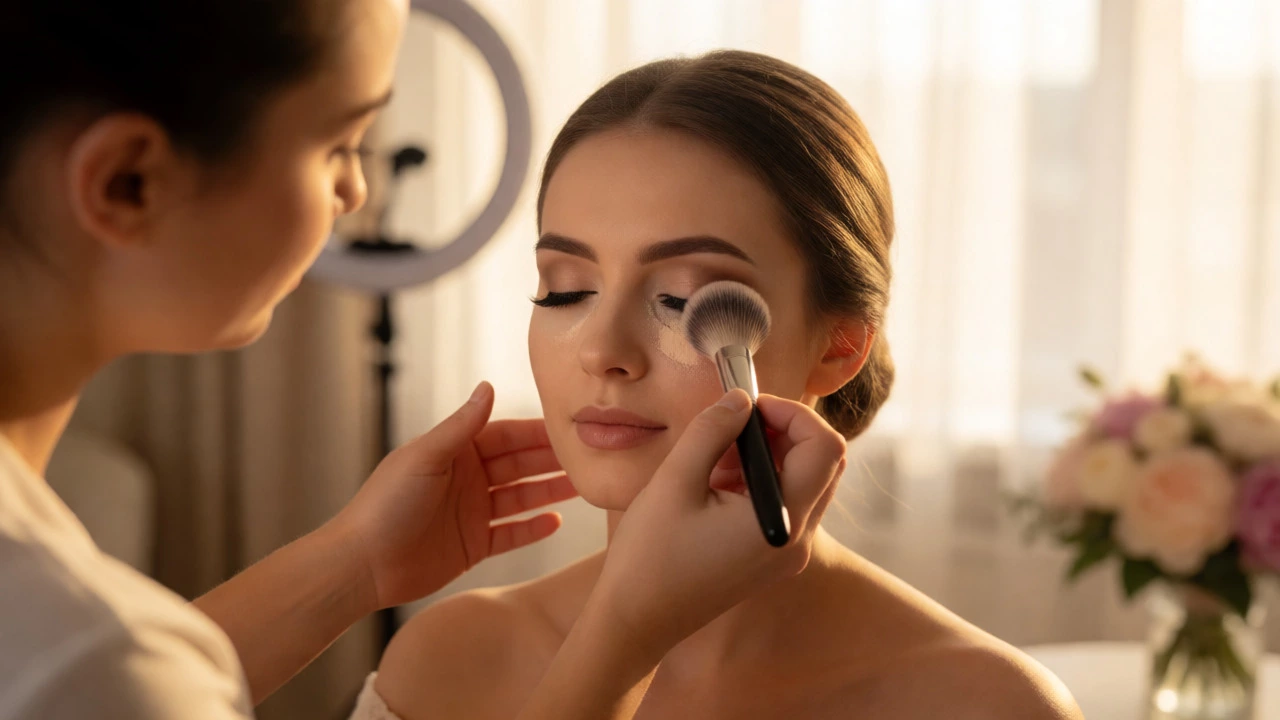
To solve this, bridal artists use a technique called "baking." After applying concealer and foundation, they press loose translucent powder onto areas that crease (under eyes, smile lines) and let it sit for five to ten minutes. This traps heat from the skin, setting the cream products underneath. When brushed away, it leaves a smooth, airbrushed finish that won’t budge. Regular makeup routines rarely include baking because it can look dry or cakey in natural daylight. On a wedding day, however, that extra step is non-negotiable for durability.
- Setting Spray: Bridal looks rely heavily on professional-grade setting sprays (like Urban Decay All Nighter or MAC Prep + Prime) that form a polymer shield over the face.
- Primer Choice: Artists often use gripping primers that act like double-sided tape, rather than hydrating primers that might cause slippage over time.
- Layering: Cream products are set with powder immediately. This prevents the "melting" effect that happens when creams mix with skin oils after three hours.
Eyes and Brows Are Built for Distance
Here’s a hard truth: makeup that looks perfect in a bathroom mirror often looks invisible in a photograph taken from ten feet away. Wedding photos are rarely close-ups. They are wide shots capturing the dress, the venue, and the emotion. To ensure your features read clearly in those images, bridal makeup exaggerates contrast.
Your everyday eyeshadow might be a soft taupe wash. A bridal eye will likely have deeper contouring in the socket line and brighter shimmer on the lid. Why? Because flash photography flattens facial features. Without added depth, your eyes can look sunken or tired. Similarly, eyebrows are drawn sharper and darker. Soft, feathery brows disappear against bright sunlight. Defined arches frame the face and guide the viewer’s attention to your eyes.
False lashes are another major differentiator. Most brides wear individual or strip lashes. Not only do they make eyes look bigger, but they also prevent mascara from smudging onto cheeks if you cry. Mascara alone tends to flake or run with emotional tears. Lashes provide structure and drama that survives the entire event.
Color Theory and Skin Tone Matching
Regular makeup allows for personal preference. You might love a pink blush because it matches your sweater. In bridal makeup, color choice is strategic. The goal is harmony with your dress, flowers, and the season.
A common mistake is wearing colors that clash with white ivory dresses. Pure white reflects cool tones, which can make yellow-based foundations look orange. Bridal artists often adjust undertones slightly cooler to complement the fabric. Additionally, blush placement differs. Daily blush is often swept across the apples of the cheeks for a youthful flush. Bridal blush is sometimes placed higher on the cheekbones to lift the face and catch the light, creating a sculpted look that translates well in black-and-white photography.
Lipstick choices also shift. Nude lips are popular now, but in bridal contexts, nudes must be carefully selected to avoid making the bride look pale or sickly against a white veil. Often, a berry or rose-toned nude is chosen to add warmth and definition. Matte lipsticks are preferred over glosses because gloss transfers onto glasses, teeth, and kiss marks, requiring constant reapplication.
The Role of Lighting Conditions
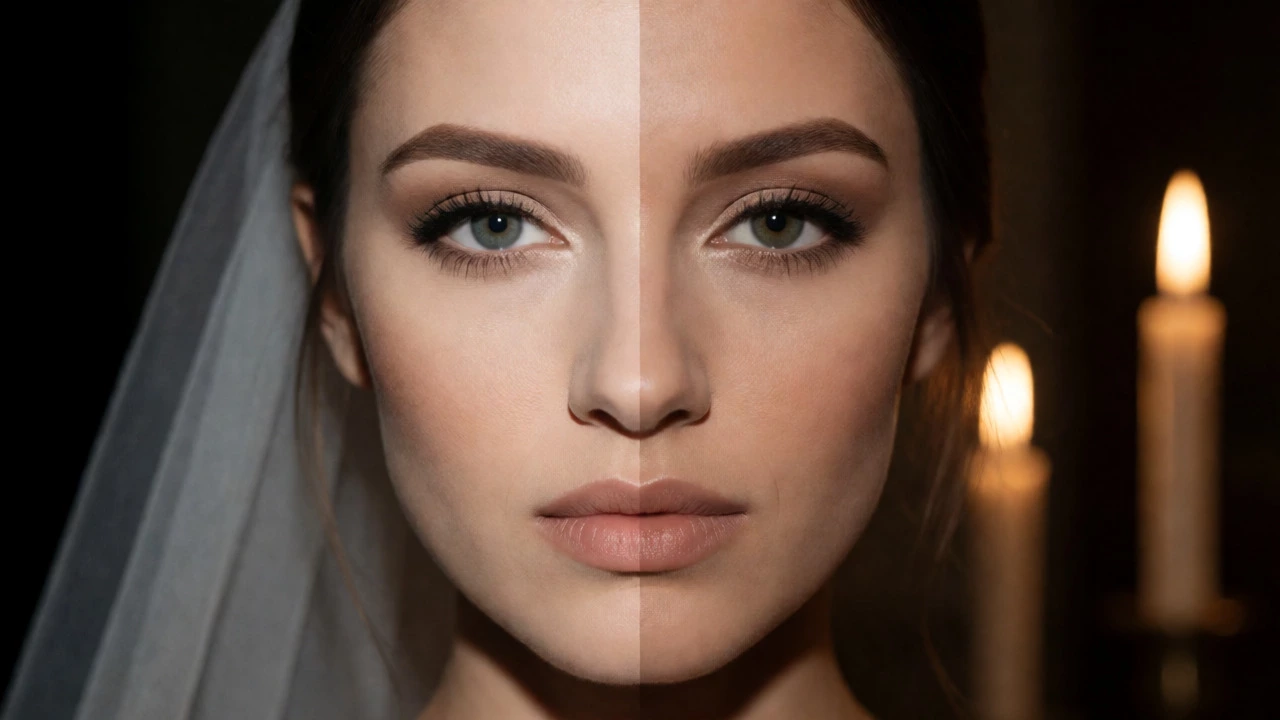
Where you wear regular makeup matters. Office lighting is fluorescent. Home lighting is warm. Both are forgiving. Weddings happen in unpredictable environments. You might have a ceremony in direct noon sun, followed by a reception in dim candlelight, all captured by flash photography.
| Lighting Type | Effect on Regular Makeup | Bridal Makeup Adjustment |
|---|---|---|
| Natural Sunlight | Highlights imperfections; sheer looks bare. | Higher coverage; SPF-free foundation to avoid flashback. |
| Flash Photography | Washes out color; creates oily shine. | Matte finish; increased contour depth; no silica-heavy powders. |
| Candlelight/Dinner | Softens features; shadows deepen. | Brighter highlighter; defined brows to maintain structure. |
One critical detail here is SPF. Many daily foundations contain sunscreen. Under a camera flash, titanium dioxide and zinc oxide can cause "flashback," making your face look ghost-white while your neck remains tan. Bridal artists often choose SPF-free bases or apply sunscreen separately under the makeup to control this reaction. This is a nuance you simply don’t worry about when grabbing coffee.
Cost and Time Investment
Let’s talk logistics. Regular makeup takes ten minutes. You’re rushing out the door. Bridal makeup is a two-hour appointment. Why? Because prep is half the battle. A good artist spends thirty minutes cleansing, exfoliating, and hydrating your skin before touching a brush. They analyze your skin type, check for allergies, and customize products on the spot.
Then there’s the trial run. Unlike buying a shirt online, you wouldn’t book a hair stylist without seeing their work first. Bridal trials allow you to test the look under different lights and see how it wears after four hours. This process involves feedback loops: "Can we make the eyes softer? Can we make the lips last longer?" Adjustments are made in real-time. This level of customization drives the cost up, but it buys you peace of mind. You know exactly what you’ll look like before the day arrives.
Also consider the kit. A pro carries hundreds of shades to match your exact skin tone perfectly, whereas you likely own one or two foundations. Access to professional-grade brands like Charlotte Tilbury, Pat McGrath, or custom-mixed airbrush systems gives access to finishes drugstore brands can’t replicate.
When Can You Wear Bridal Makeup Out?
Some brides ask, "If I pay for this beautiful look, can I wear it to other events?" Yes, but with caveats. Bridal makeup is heavier. If you wear it to a casual brunch, you might feel overdone. However, for evening galas, proms, or important business presentations, the longevity and polish are fantastic assets.
Just remember to remove it thoroughly. The long-wearing polymers require oil-based cleansers to break down properly. Using a simple water-based micellar water might leave residue, leading to clogged pores later. Treat it like waterproof mascara: it needs a dedicated removal step.
Ultimately, the difference comes down to purpose. Regular makeup is about enhancement and ease. Bridal makeup is about endurance and documentation. One serves your daily confidence; the other preserves a memory. Understanding these mechanics helps you communicate better with your artist-and appreciate why that $300 investment is worth every penny when you see the final album.
Is bridal makeup always heavier than regular makeup?
Not necessarily "heavier" in weight, but it is more layered. Modern techniques focus on lightweight, long-wearing formulas that feel comfortable but offer higher opacity and staying power than typical daily products.
Can I use my own makeup for my wedding?
You can, but it’s risky unless you have practiced extensively. Professional artists bring tested, camera-ready products. If you insist on using your own, ensure you have backup kits and have done multiple wear-tests to guarantee they won’t fade or oxidize poorly under flash.
Why does my regular makeup look bad in wedding photos?
Cameras flatten features and amplify shine. Sheer foundations disappear, and lack of contour makes faces look rounder. Flash can also cause SPF flashback. Bridal makeup compensates for these optical distortions with specific textures and depths.
How early should I start skincare for bridal makeup?
Start six months prior. Focus on hydration and gentle exfoliation. Avoid new active ingredients (like strong retinols or acids) within two weeks of the wedding to prevent unexpected breakouts or peeling.
Does airbrush makeup last longer than traditional bridal makeup?
Airbrush lasts longer on average (12+ hours) and offers a seamless finish, but it can feel tight or dry on mature skin. Traditional makeup, when properly baked and set, can also last 8-10 hours and feels more natural to many users.