Wedding Cake Stacking Safety Checker
Answer these questions to get a personalized recommendation on whether you should stack your cake tonight or wait until the morning.
Fill out the form to see if you can sleep easy tonight!
You’ve spent weeks perfecting the flavor profile and months designing the structure. The cake is baked, filled, and frosted. Now comes the nerve-wracking part: stacking. If you’re asking yourself, can I stack a wedding cake the night before, you aren’t alone. It’s one of the most common questions bakers and DIY brides ask, usually right around 2 AM when panic sets in.
The short answer? Yes, you can. But it depends entirely on your filling, your environment, and how you store it. A buttercream cake behaves differently than a ganache or cream cheese creation. Get this wrong, and you might wake up to a leaning tower of disaster instead of a pristine centerpiece. Let’s break down exactly when you should stack, when you shouldn’t, and how to keep that top tier from sliding into the bottom one.
The Filling Factor: Why Buttercream Is Your Best Friend
If you want to sleep peacefully the night before your wedding, use buttercream. Specifically, American meringue buttercream or Swiss meringue buttercream. These frostings harden significantly when chilled. They act like glue. Once they set in the fridge, they lock the tiers together with impressive strength. You can stack a buttercream cake days in advance if needed, provided it stays cold until transport.
Ganache is another strong contender. Dark chocolate ganache firms up beautifully at room temperature and becomes rock-solid in the fridge. It offers excellent structural integrity. If you are using a heavy fondant over a dense sponge, ganache provides the rigid support needed for overnight stacking without sagging.
Cream cheese frosting, whipped cream, and mousse fillings are different beasts. They remain soft and prone to weeping. Stacking these the night before is risky. The weight of the upper tiers will compress the lower ones, causing bulges or even collapse. If you must use these lighter fillings, consider stacking only partially or waiting until the morning of delivery. Alternatively, freeze the tiers individually so they are solid as rocks when you assemble them, then let them thaw slowly in the box.
Structural Integrity: Dowels Are Non-Negotiable
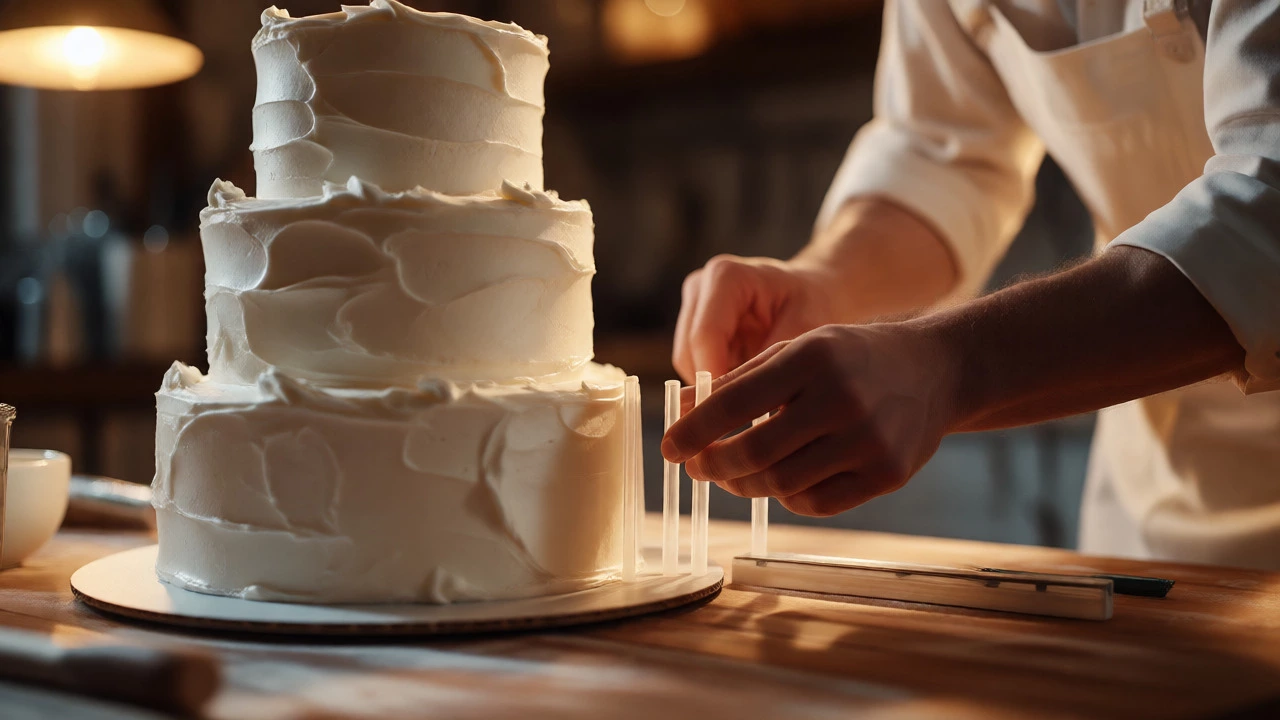
Never stack a multi-tier cake without internal supports. This isn’t just advice; it’s physics. Cake is soft. Cardboard separators are flimsy. Without dowels, the top tier sinks into the middle tier, cracking the frosting and ruining the look.
- Food-safe plastic dowels: Great for light cakes (up to 4-5 inches tall). Easy to cut and insert.
- Bubble tea straws: Often used by home bakers for smaller cakes. Ensure they are sturdy and clean.
- Wooden dowels: Essential for larger, heavier cakes. Cut them precisely flush with the cake surface so the next tier sits flat.
A pro tip: Create a "dowel ring" near the outer edge of each tier, not just in the center. This prevents the top tier from tilting if the table wobbles slightly. If you are stacking the night before, ensure these dowels are inserted correctly. Check that the top of each dowel is perfectly level. If one sticks out, the next tier will sit crooked, and gravity won’t fix it overnight.
Storage Conditions: The Cold Truth About Humidity
Stacking the night before means the cake spends hours in storage. Where you put it matters more than when you stacked it. Most home refrigerators are too small for a full wedding cake. That’s okay. You don’t need a commercial walk-in cooler, but you do need a cool, stable environment.
| Condition | Ideal Range | Risk if Out of Range |
|---|---|---|
| Temperature | 38°F - 40°F (3°C - 4°C) | Too warm: Frosting melts/slides. Too cold: Condensation forms upon removal. |
| Humidity | Low to Moderate | High humidity causes sugar bloom (sticky spots) and color bleeding. |
| Vibration | Minimal | Fridge motors or foot traffic can cause tiers to shift if not secured. |
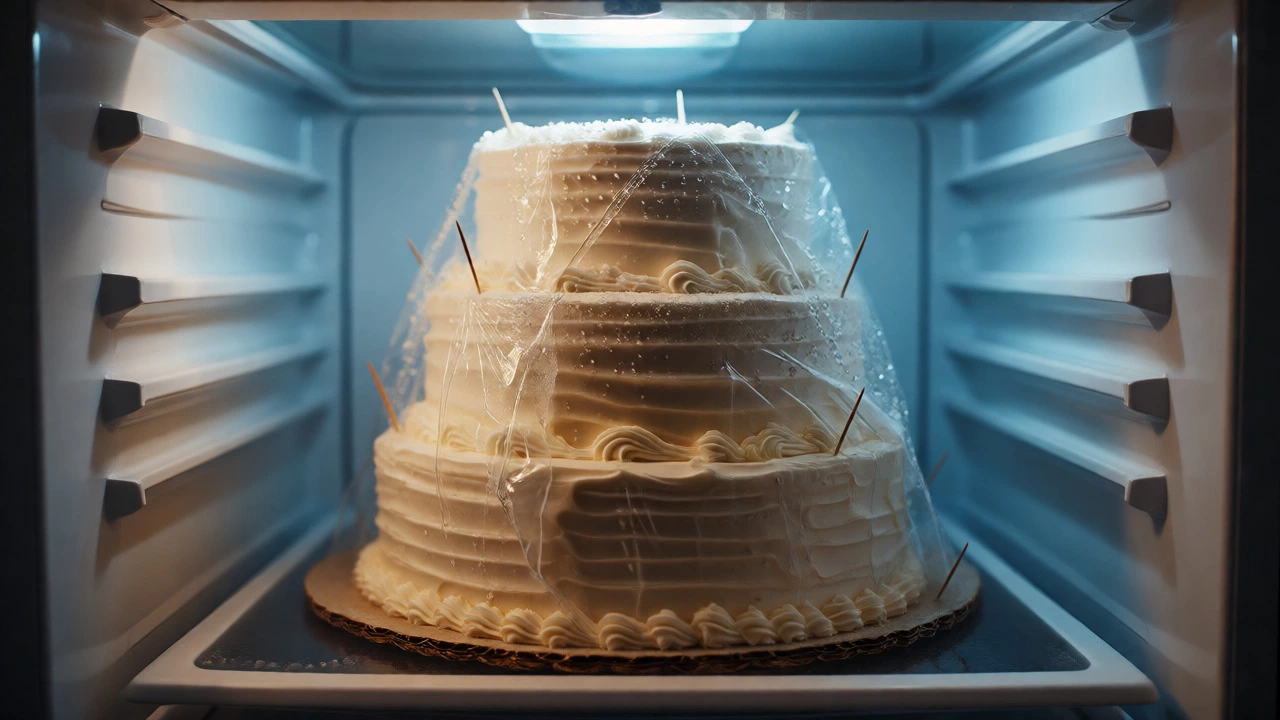
If you have space in your fridge, place the cake on a non-slip mat. Wrap it loosely in plastic wrap, but avoid touching the frosting directly if possible. Use toothpick supports to hold the wrap away from the cake. If you don’t have fridge space, find the coolest spot in your house-often a garage or basement in late September, depending on your location. Keep it away from direct sunlight and heat sources like ovens or dishwashers.
The Morning Of: Thawing and Final Touches
Here is where many people mess up. You stacked the cake last night. It looks perfect. But if you pull it out of the fridge and immediately start decorating or moving it, condensation will form on the surface. Water droplets ruin fondant and make buttercream look sweaty.
Allow the cake to come to room temperature gradually. For a standard three-tier cake, give it at least two to four hours. Keep it boxed during this time to prevent dust from settling and to maintain some humidity control. Do not open the box until the cake has warmed up. When you do open it, check for any shifting. Sometimes, slight settling occurs overnight. Have a piping bag ready with matching frosting to smooth over any cracks or gaps.
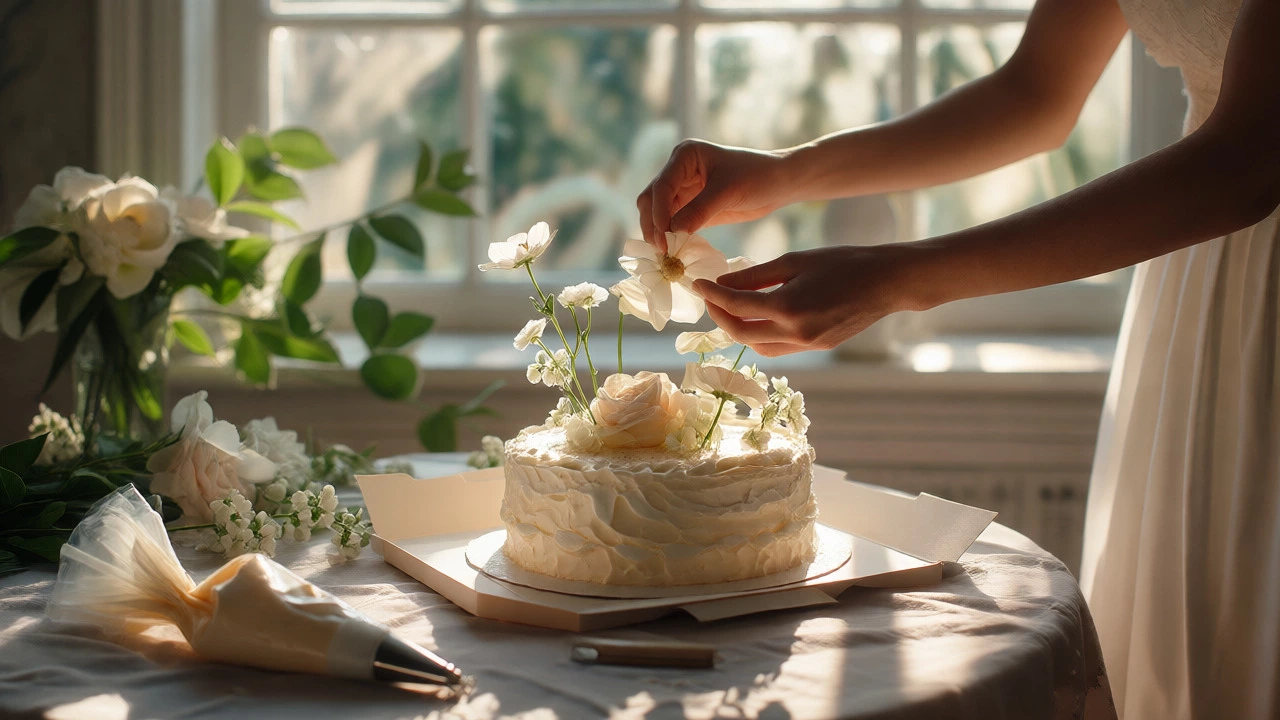
If you added fresh flowers or delicate decorations the night before, remove them before storing. Flowers release moisture and can stain white frosting. Add them in the morning. Same goes for fragile sugar pieces or spun sugar. These are brittle and prone to breaking during overnight storage vibrations.
Troubleshooting Common Overnight Disasters
Even with careful planning, things go wrong. Here’s how to handle the most common issues.
The Lean: Did your cake tilt? Don’t panic. If the tilt is minor, you can often correct it by placing a thin shim (like a folded piece of parchment paper) under the high side of the base tier. Push gently. If the lean is severe, you may need to disassemble the top tier, re-dowel, and restack. This takes time, so budget an extra hour in your morning schedule.
The Crack: Small cracks in buttercream are easy to fix. Warm your spatula with hot water, dry it, and smooth over the crack. For larger gaps, pipe a border or add a decorative element to hide the damage. Fresh flowers work wonders here.
The Sweat: If condensation forms, do not wipe it with a cloth. You’ll smear the frosting. Instead, use a hairdryer on the lowest cool setting, held at arm’s length, to gently evaporate the moisture. Or, simply wait. As the cake warms fully, the condensation will dissipate naturally.
When to Wait Until the Last Minute
Despite the benefits of pre-stacking, there are scenarios where you should wait. If you live in a very humid climate and don’t have air-conditioned storage, the risk of melting outweighs the convenience. If your cake design involves complex, gravity-defying elements (like a floating tier), assembling it on-site ensures precision. Some modern designs require intricate wiring or supports that are easier to adjust when the cake is accessible.
Also, consider the logistics. Transporting a fully stacked cake is harder than transporting individual tiers. If you have a long drive to the venue, especially over bumpy roads, shipping tiers separately and stacking them at the venue is safer. You can stack them in the venue kitchen an hour before service. This reduces transit stress and allows you to inspect the cake in its final lighting conditions.
Quick Checklist for Overnight Stacking
Before you call it a night, run through this list. It saves headaches later.
- Check dowels: Are they flush and secure?
- Level tiers: Use a spirit level to ensure each layer is straight.
- Chill properly: Place in a stable, cool area. Avoid vibration.
- Protect decoration: Remove flowers and fragile items.
- Plan thaw time: Calculate how many hours you need for room temp.
- Prep repair kit: Have extra frosting, a spatula, and a piping bag ready.
Stacking a wedding cake the night before is totally doable. It frees up precious morning hours for hair, makeup, and photos. Just respect the physics of your ingredients. Keep it cold, support it well, and handle it gently. With these steps, your cake will stand tall and beautiful, no matter what time you assembled it.
How long does a stacked cake take to come to room temperature?
A standard three-tier cake typically needs 2 to 4 hours to reach room temperature. Larger cakes or those with thick layers may take longer. Always keep the cake boxed while thawing to prevent condensation buildup on the frosting.
Can I stack a cake with cream cheese frosting the night before?
It is risky. Cream cheese remains soft and can ooze under pressure. If you must stack it, chill the tiers until they are very firm before assembling, and store the stacked cake in the coldest part of your fridge. Expect some settling.
Do I need dowels if my cake is only two tiers?
Yes. Even two-tier cakes need support. The weight of the top tier will crush the bottom tier without dowels, causing bulges and instability. Use at least three to five dowels depending on the size of the top tier.
What happens if my cake leans overnight?
Minor leans can be fixed by inserting a shim under the high side of the base tier. Severe leans may require disassembling the top tier to re-level and re-dowel. Always check stability before leaving the cake overnight.
Should I decorate the cake before or after stacking?
Basic frosting should be done before stacking. However, delicate decorations like fresh flowers, sugar figurines, or gold leaf should be added the morning of the event. This prevents damage during storage and transport.