
Wedding Ring Ownership Estimator
Disclaimer: This tool provides general educational information based on common legal patterns described in the article. It does not constitute legal advice. Laws vary significantly by jurisdiction. Please consult a qualified family lawyer for your specific situation.
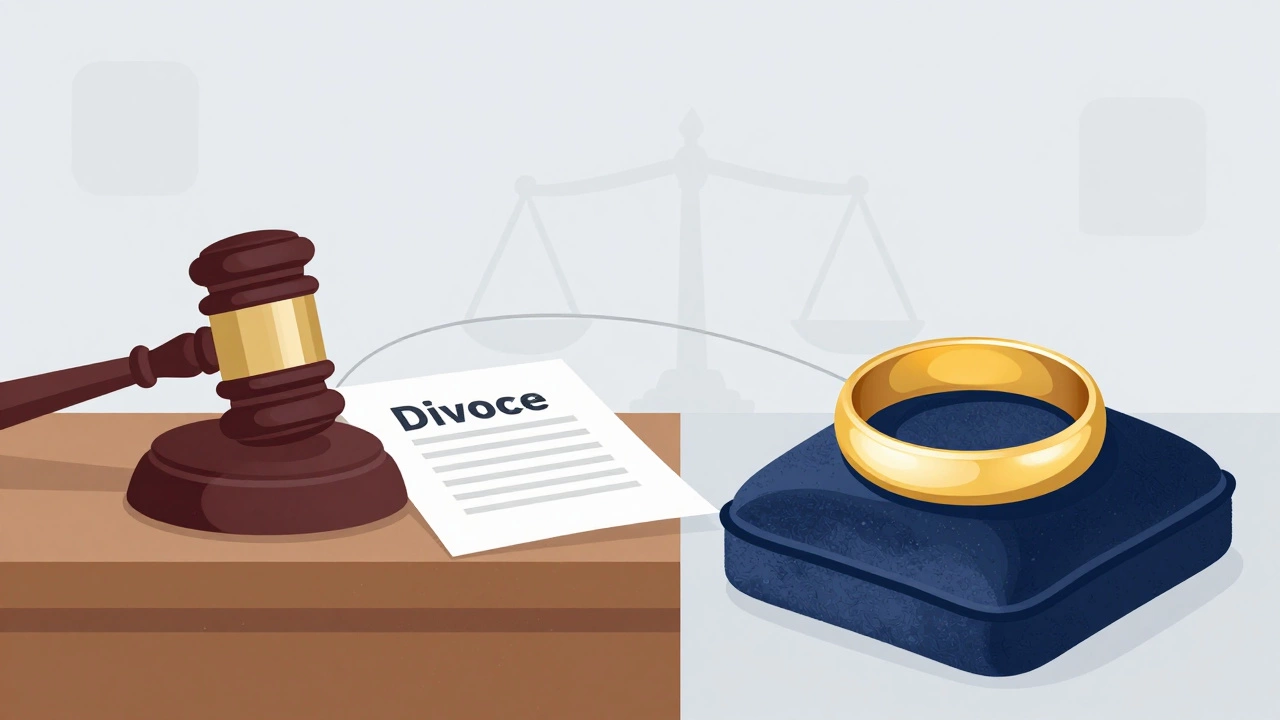
Imagine this scenario: You’re in the middle of a messy separation, and your husband says he wants his money’s worth back. He’s asking for the wedding ring. It feels like a violation of trust, but legally, it’s a surprisingly common question. The short answer is: it depends entirely on who bought it, when you got married, and where you live. There is no single global rule, but there are clear legal patterns that determine whether that diamond belongs to you or him.
This isn’t just about jewelry; it’s about property law. In most jurisdictions, a wedding ring is treated as either a conditional gift or marital property. Understanding which category your ring falls into can save you thousands of dollars in legal fees and heartache. Let’s break down the reality of ring ownership without the fluff.
The Conditional Gift Rule
In many places, particularly across the United States and parts of Europe, an engagement ring and often the wedding band are considered conditional gifts. This means the gift is contingent on the marriage actually taking place. If the wedding happens, the condition is met, and the ring becomes the recipient’s separate property. If the wedding is called off before the ceremony, the giver usually has the right to demand it back.
However, once you say "I do," the condition is fulfilled. The ring transforms from a promise into a possession. In states following common law property systems, such as Texas, Florida, and Virginia, assets acquired during the marriage are often split, but gifts given specifically to one spouse remain their separate property. Since the ring was given to you, not to the couple jointly, it typically stays with you upon divorce. Your husband cannot simply "take it back" because the transaction was completed by the act of marriage.
Think of it like this: If someone gives you a birthday present, they can’t ask for it back next year. The wedding ring is similar, but with a stricter timeline. The "return policy" expires the moment the marriage license is signed.
Community Property vs. Equitable Distribution
Where you live changes everything. If you reside in a community property state like California, Arizona, or Idaho, the rules shift slightly. In these areas, anything acquired during the marriage is presumed to be owned 50/50 by both spouses. However, courts have consistently ruled that wedding rings are exceptions to this rule. They are viewed as personal effects and non-divisible gifts. Even in community property zones, the ring usually remains with the spouse who wore it.
On the other hand, if you live in a state with equitable distribution, like New York or Pennsylvania, judges divide assets fairly, not necessarily equally. Here, the judge looks at factors like the length of the marriage and each person’s financial contribution. Yet, even here, the symbolic nature of the ring protects it. Courts rarely order a ring to be sold and the cash split. It’s too emotionally charged and practically difficult. The standard practice is to award the ring to the wearer.
| Jurisdiction Type | Ring Classification | Outcome in Divorce |
|---|---|---|
| Common Law (e.g., Texas) | Separate Property / Gift | Kept by the recipient |
| Community Property (e.g., California) | Exception to Community Assets | Usually kept by the wearer |
| Equitable Distribution (e.g., New York) | Personal Effect | Awarded to the wearer |
| No-Fault Separation | Conditional Gift (if pre-wedding) | Returnable if marriage doesn't occur |
Who Paid for the Ring?
You might think that if your husband used his pre-marital savings to buy the ring, he owns it. Legally, that’s rarely true. Once the money leaves his account and the ring enters your possession as part of the marriage ceremony, the source of funds matters less than the intent of the gift. The purchase was made to facilitate the marriage. Once married, the asset is yours.
However, there is a gray area if the ring was purchased *during* the marriage using joint funds. For example, if you bought a second, more expensive wedding set five years into your marriage using money from your shared checking account, that ring could be considered marital property. In that case, your husband might argue for its inclusion in the asset division. But for the original wedding bands exchanged at the altar, the payer’s identity is largely irrelevant after the vows are spoken.
The Role of Prenuptial Agreements
If you signed a prenuptial agreement, the default laws don’t apply. A prenup allows couples to define exactly what happens to specific assets in the event of a breakup. If your prenup explicitly states that the wedding ring remains the property of the purchaser, your husband may have a valid legal claim to it back.
This is rare, but it happens. Some high-net-worth individuals include jewelry clauses in their prenups to protect family heirlooms or expensive stones. If you didn’t sign a prenup, or if the prenup is silent on jewelry, the general gift rules apply. Always check your documents. If you did sign one, consult a lawyer immediately to see if the clause is enforceable in your jurisdiction.
What If the Marriage Was Very Short?
Some people believe that if a marriage lasts only a few months, the ring should be returned. This is a myth in most modern legal systems. The duration of the marriage does not automatically void the gift. Whether you were married for three days or thirty years, the condition of the gift (the marriage) was met. The court sees the marriage as valid, regardless of its brevity.
However, in very short marriages, some judges might consider the ring as part of the overall equitable distribution if the total assets are minimal. But this is the exception, not the rule. The prevailing view is that the ring symbolizes the commitment, and since the commitment was legally entered into, the symbol belongs to the recipient.

Practical Steps to Protect Your Ring
If you are facing a situation where your partner is demanding the ring back, here is what you should do:
- Do not return it voluntarily. Once you give it back, it’s gone. Keep it in a safe place.
- Document its value. Find the receipt or get an appraisal. Knowing the monetary value helps if it gets tangled up in broader asset negotiations.
- Check local laws. Laws vary by country and state. In Australia, for instance, family courts look at the "just and equitable" outcome, and personal gifts are generally excluded from the asset pool.
- Consult a family lawyer. A quick consultation can clarify if your specific jurisdiction has unique precedents regarding jewelry.
Emotional vs. Legal Ownership
Legally, you likely own the ring. Emotionally, it’s complicated. The ring represents a union that is ending. Some people choose to sell the ring and use the money for a fresh start, while others keep it as a memento. Neither choice is wrong. But know that your husband’s request is likely driven by emotion or a desire to recoup costs, not by a strong legal standing. Don’t let guilt override your legal rights.
Can my husband take back my wedding ring if we haven't been living together yet?
If you are legally married but haven't cohabited, the ring is still likely yours. The legal marriage occurred, satisfying the condition of the gift. However, if you never officially registered the marriage, it may still be considered a conditional gift that can be returned.
Does it matter if the ring was a family heirloom?
Yes, this can complicate things. If the ring belonged to your husband's family and was lent to him to give to you, the family might have a claim. However, if it was purchased by him as a new gift, it is yours. Heirlooms often require careful legal review to determine if they were truly gifted or just borrowed for the ceremony.
What if I want to sell the ring and keep the money?
If the ring is your separate property, you can sell it and keep the proceeds. The cash then becomes your asset. If the ring is considered marital property (rare), the proceeds would need to be divided. Most courts allow the wearer to retain the ring or its equivalent value.
Are engagement rings treated the same as wedding bands?
Generally, yes. Both are considered conditional gifts. However, some jurisdictions treat engagement rings more strictly as conditional gifts that must be returned if the marriage ends quickly, whereas wedding bands are seen more as personal effects. Check your local laws for nuances.
Can a prenup override the gift rule?
Absolutely. A prenuptial agreement is a contract that supersedes default state laws. If the prenup specifies that the ring remains the property of the buyer, that clause will likely be enforced by the court, allowing your husband to reclaim it.