
When you’re planning a wedding, there’s a lot to figure out - the guest list, the venue, the playlist. But one of the most confusing questions? Does a groom’s suit have to be black? It’s the default choice, sure. But is it the only choice? And more importantly, should it be?
Let’s cut through the noise. No, a groom’s suit does not have to be black. Not anymore. Not in 2026. The old rule that black = formal = only option for grooms? That’s outdated. Today’s grooms are choosing navy, charcoal, even light gray or earth tones - and looking incredible doing it.
Where Did the Black Suit Rule Come From?
Black suits for grooms became popular in the 19th century, mostly because of Queen Victoria’s influence. After Prince Albert died, she wore black for decades, and the fashion world followed suit - literally. Black became the color of mourning, and then, oddly enough, of formality. By the 1950s, it was the default for weddings in Western countries. But here’s the thing: weddings aren’t funerals. And you’re not attending a state funeral. You’re celebrating love.
Modern grooms don’t need to wear black just because it’s tradition. They wear it because they think it looks sharp. And yeah, it can. But so can a lot of other colors.
What Colors Actually Work for a Groom?
Not all suit colors are created equal. Some look great. Others? Not so much. Here’s what works right now:
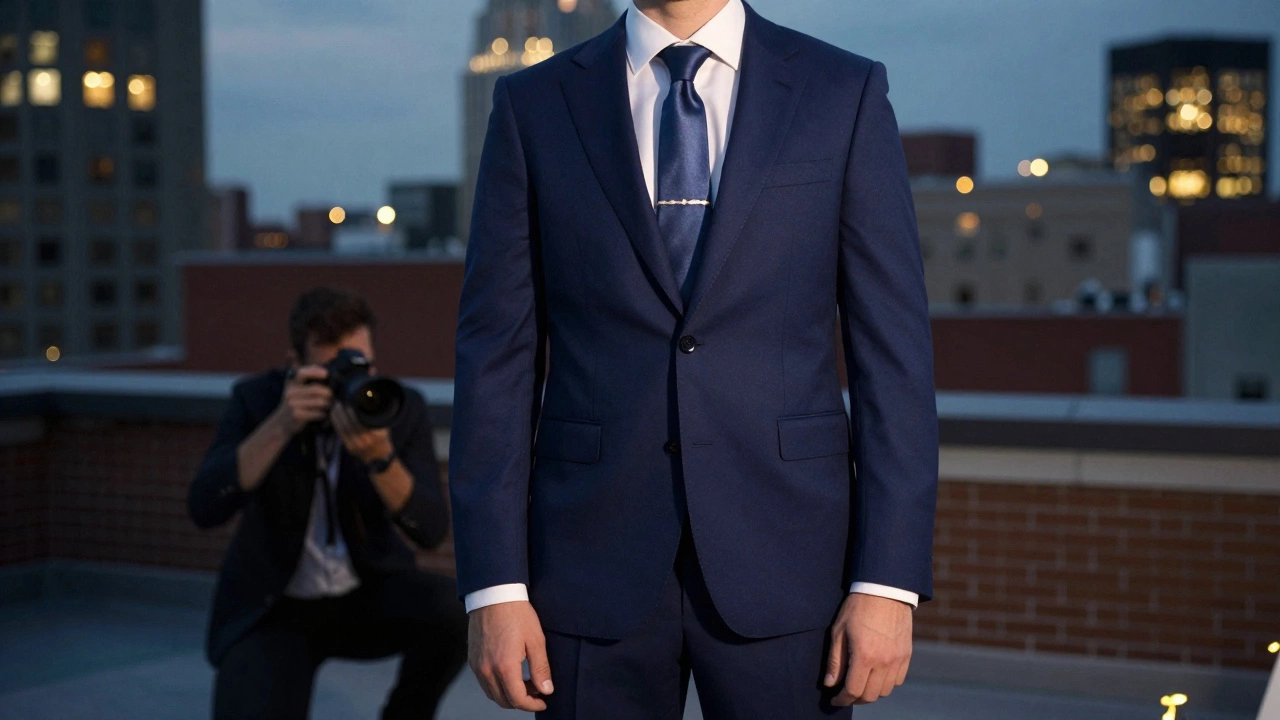
- Navy blue - The most popular alternative to black. It’s formal, it’s versatile, and it photographs better than black under outdoor light. Navy doesn’t wash out in sunlight like black can - it holds depth and texture. A navy suit with a white shirt and a silk tie? Classic, but fresh.
- Charcoal gray - A step lighter than black, but still serious. It’s perfect for winter or evening weddings. It pairs well with both silver and gold accessories, and it’s less likely to look like a tuxedo if you’re going for a semi-formal vibe.
- Light gray or beige - Ideal for beach weddings, garden ceremonies, or destination events. These colors feel relaxed without being sloppy. Pair them with a linen shirt or a cotton pocket square, and you’ve got a look that’s effortlessly stylish.
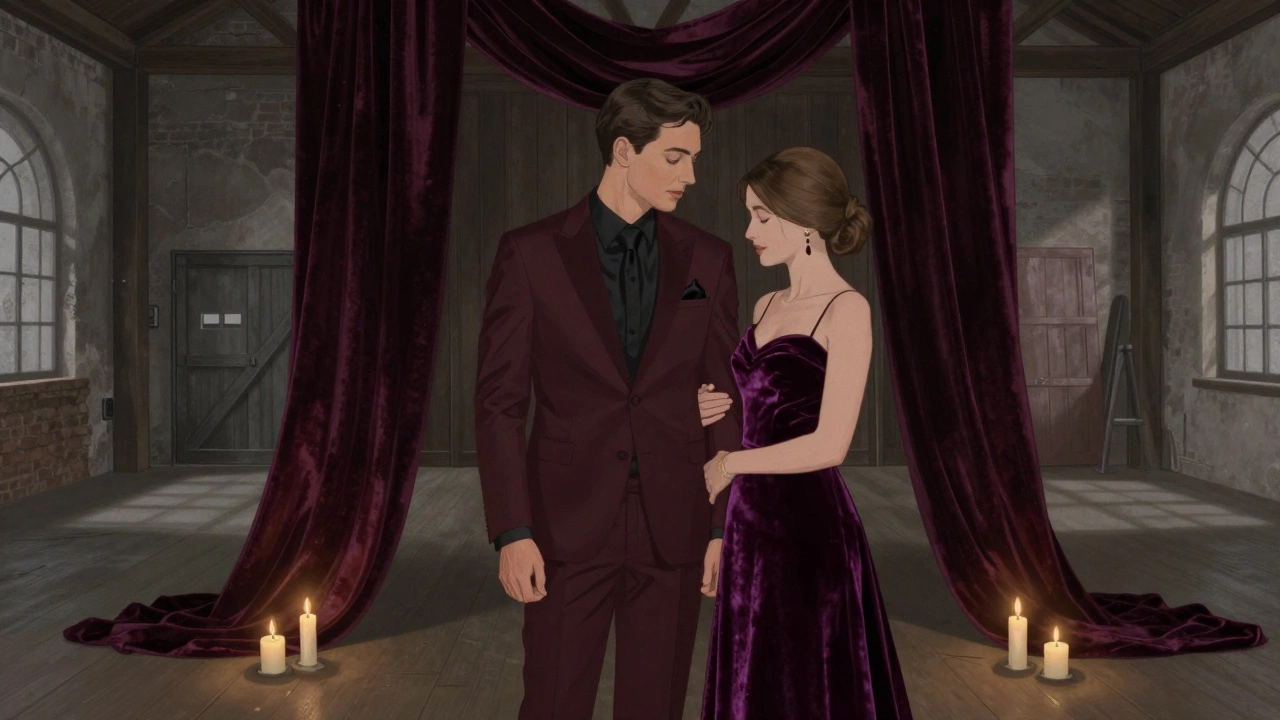
- Burgundy or deep green - Bold, yes. But if your wedding has rich tones - think velvet drapes, dark wood, or autumn leaves - these colors can tie the whole look together. They’re not for every groom, but when they fit? They’re unforgettable.
What doesn’t work? Bright white, neon colors, or anything that clashes with the wedding palette. A lime green suit might make you stand out - but not in the way you want.
What About Tuxedos?
Let’s clear up a common mix-up. A tuxedo isn’t just a black suit with shiny lapels. It’s a different category entirely. Tuxedos are formal, usually worn for black-tie weddings, and traditionally come in black or midnight blue. But even here, the rules are loosening. Midnight blue tuxedos are now more common than black ones in places like Sydney, Melbourne, and even New York. They look richer under lighting, and they don’t blend into night skies in outdoor photos.
If your wedding is formal but not black-tie, a dark suit - navy or charcoal - is often a better choice than a tuxedo. It’s less rigid, more comfortable, and still elegant.
How to Choose the Right Color for Your Wedding
There’s no one-size-fits-all answer. But here’s how to make the right call:
- Match your wedding’s vibe. Is it a rustic barn wedding? Go for charcoal or beige. A rooftop ceremony in the city? Navy or black. A beach wedding at sunset? Light gray or even a cream linen suit.
- Think about lighting. Black suits can look flat under outdoor daylight or bright LED lights. Navy and charcoal hold their depth better. If you’re having photos at golden hour, a navy suit will glow.
- Coordinate with the bride. If she’s wearing ivory, a black suit might look too stark. A navy or gray suit blends better. If she’s in a bold red dress? A black suit might actually be perfect.
- Consider your skin tone. Black can wash out lighter complexions. Navy or charcoal often flatters more skin tones. Try on a few colors in natural light before deciding.
- Ask your photographer. Most wedding photographers have seen hundreds of grooms. They’ll tell you what colors photograph best. And yes, they’ve probably seen a few bad choices.
Real Examples from Real Weddings
In 2025, a groom in Byron Bay wore a light gray linen suit with a white cotton shirt and no tie. His wedding was on the sand at sunset. The photos? Stunning. He looked relaxed, elegant, and totally himself.
Another couple in Melbourne had a winter wedding in a converted warehouse. The groom wore a deep burgundy suit with a black silk pocket square. It matched the bride’s dress - a dark plum velvet. Their wedding album looked like a painting.
These aren’t outliers. They’re trends. And they’re growing.
What About the Groomsmen?
If you’re wearing navy, do your groomsmen have to match? Not necessarily. You can mix textures - some in navy, others in charcoal, or even in different shades of gray. The key is cohesion, not uniformity. Think of it like a color palette, not a uniform.
Some grooms even let their groomsmen choose their own suits within a color range. It’s more personal, more comfortable, and it avoids the dreaded "matchy-matchy" look.
When Black Still Makes Sense
Don’t get me wrong - black isn’t wrong. It’s still a powerful choice. If you’re having a classic, formal, evening wedding in a ballroom or a grand cathedral, black works beautifully. It’s timeless. It’s sharp. It’s what most people expect.
And if you love it? Wear it. No one should pressure you into something just because it’s "trendy." Your wedding is yours. But know this: you’re not limited.
Final Answer: No, It Doesn’t Have to Be Black
So, does a groom’s suit have to be black? No. It never really did. The black suit is just one option - a strong one, sure - but not the only one. Today’s grooms have more freedom than ever to choose what makes them feel confident, comfortable, and true to themselves.
Think of your suit like your wedding vows: it should reflect who you are. Not who someone else thinks you should be.
Can I wear a black suit to a daytime wedding?
Yes, you can - but it might not be the best choice. Black absorbs light and can look heavy or dull in daylight. Navy or charcoal suits photograph better in outdoor or natural light settings. If you love black, pair it with a light-colored shirt and a patterned tie to soften the look.
Is a navy suit formal enough for a wedding?
Absolutely. Navy is now considered just as formal as black for weddings. It’s worn by grooms at black-tie events, luxury resorts, and city ceremonies. Many photographers and wedding planners recommend navy because it looks richer and more dimensional in photos.
Should my suit match my groomsmen exactly?
No, and it’s often better if it doesn’t. Matching exactly can look cheap or like a uniform. Instead, choose a color palette - say, all shades of gray - and let each man pick a suit that fits his body and style. This creates cohesion without uniformity.
What if my wedding is traditional and my family expects black?
You have a few options. You can wear black to please them, then change into a different suit for photos or the reception. Or, you can explain your choice calmly - many families are surprised to learn that black isn’t required anymore. A well-dressed groom in navy or charcoal will still look elegant and respectful.
Do I need a tuxedo if I’m wearing black?
Not necessarily. A black suit with a tie, proper fit, and polished shoes is perfectly appropriate for most weddings. Tuxedos are for black-tie events - think formal evening galas. If your wedding isn’t labeled "black-tie," a tailored black suit is often the better, more comfortable choice.