
Wedding Invitation Timeline Calculator
Your Wedding Details
Critical Milestones
-- Days Remaining| Action | Deadline | Status |
|---|
Interactive Checklist
Enter your wedding date above to generate your personalized mailing schedule.
You’ve picked the venue. You’ve hired the photographer. You’ve even sorted out the cake flavor. But there’s one logistical minefield left that can make or break your guest list accuracy: timing. Sending your wedding invitations is the formal request for guests to attend your ceremony and reception too early, and they’ll get buried under a pile of junk mail. Send them too late, and you’ll be playing phone tag with caterers while your head count remains a mystery.
Getting this right isn’t just about etiquette; it’s about math. Your final numbers dictate your food budget, your seating chart, and whether you need to rent extra chairs. So, how far in advance should you actually send them? The short answer is usually twelve weeks before the big day. But if you’re planning a destination wedding or dealing with international guests, that clock starts ticking much earlier.
The Golden Rule: Twelve Weeks Before
For most local weddings, the industry standard is to mail your formal invitations eight to twelve weeks before the ceremony. Why this window? It strikes the perfect balance between giving guests enough time to adjust their schedules and keeping the event top-of-mind.
If you send them four months out, life happens. People lose jobs, family emergencies arise, or they simply forget the date amidst the chaos of daily life. If you send them three weeks out, you’re stressing everyone out. Guests will feel rushed, and you’ll likely get fewer accurate responses because people haven’t had time to check their calendars properly.
Think of the twelve-week mark as the sweet spot. It gives your guests roughly two months to plan, which is enough time to arrange childcare, book time off work, or schedule travel if needed. For the couple, it means you’ll have your final head count at least three to four weeks before the wedding, allowing plenty of buffer time for last-minute changes without panicking.
Save the Dates: The First Step
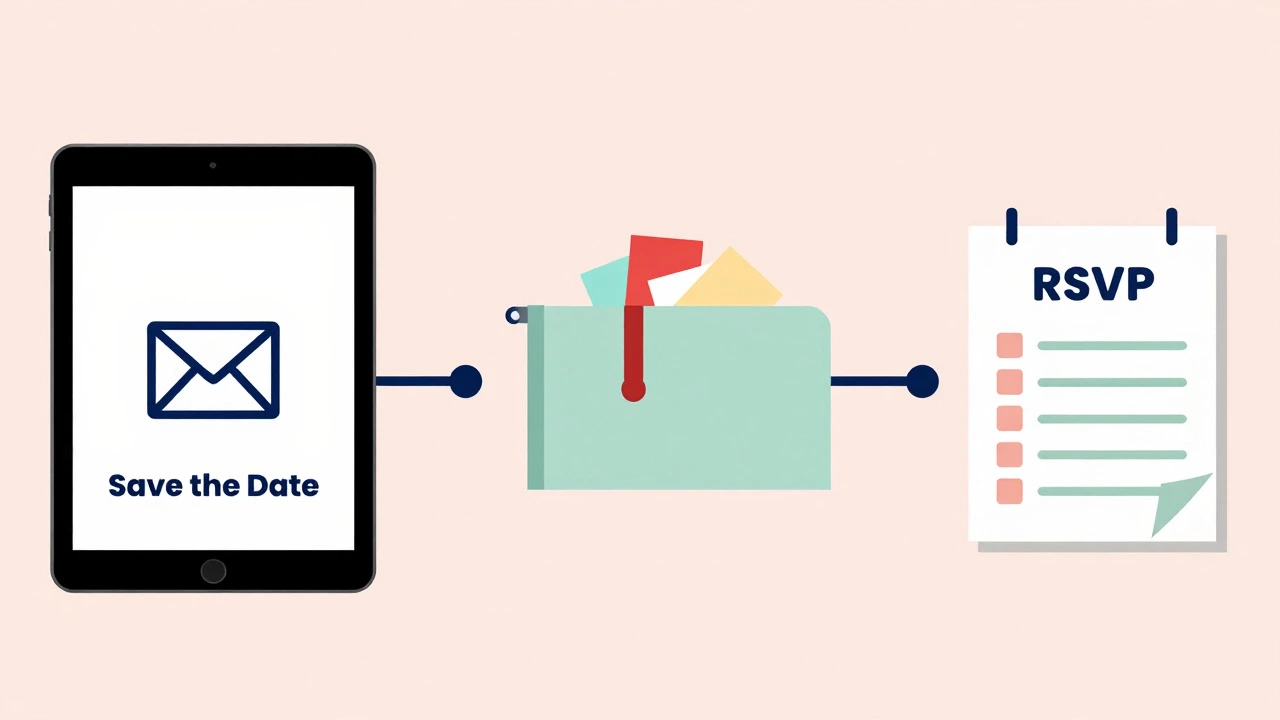
Before you even think about printing those fancy envelopes, you need to handle your save the dates are preliminary notices sent to inform guests of the wedding date and location so they can reserve time. These are not optional if you want a full house, especially if your guest list includes anyone who lives more than an hour away.
You should send save the dates six to twelve months before the wedding. This is crucial for several reasons:
- Travel Planning: Airfares and hotel rooms skyrocket closer to the date. Giving guests a year’s notice helps them secure better rates.
- Calendar Blocking: Weddings often fall on weekends. A save the date ensures your friends and family don’t double-book themselves for other events.
- Budgeting: Attending a wedding costs money (outfits, gifts, travel). Early notice allows guests to budget accordingly.
Don’t wait until you’ve ordered the invitations to send these. In fact, many couples now use digital save the dates via email or wedding websites immediately after booking the venue, followed by physical cards later if desired. This hybrid approach keeps costs down while ensuring no one misses the memo.
Destination Weddings Require Earlier Action
If your wedding is taking place in Bali, Tuscany, or even just across state lines where flights are required, the rules change completely. For destination weddings are weddings held in locations that require significant travel for most guests, you need to start the communication process much sooner.
Send your save the dates nine to twelve months in advance. Then, mail your formal invitations four to six months before the wedding. Yes, that sounds like forever, but consider the logistics your guests face. They need to apply for visas, book international flights, arrange pet sitters, and potentially take extended leave from work.
I once planned a wedding in Sydney for guests coming from London and New York. We mailed invitations five months out. By the time we got our final RSVPs, we realized half the group hadn’t booked flights yet because they were waiting for the "official" invite to confirm their budget. We ended up with a lower attendance rate than expected, not because they didn’t want to come, but because the timeline squeezed their financial planning.
Pro tip: Include a link to your wedding website on both the save the date and the invitation. On that site, provide detailed travel information, hotel block codes, and visa requirements. This reduces the number of emails you’ll receive asking, "Where do I stay?" and "Do I need a passport?"
Setting the RSVP Deadline
The invitation itself needs a clear call to action: the RSVP deadline. This date is non-negotiable for your sanity. You should set this deadline three to four weeks before the wedding.
Why not earlier? Because people procrastinate. If you ask for replies by August 1st for a September wedding, you might get ghosted. If you give them until mid-September, you won’t know your final numbers in time to order the right amount of catering.
Here’s the breakdown of why the three-to-four-week window works:
- Week 3 Before: You collect all RSVPs. You follow up with stragglers who missed the deadline.
- Week 2 Before: You finalize the seating chart. You submit the final guest count to the caterer and venue.
- Week 1 Before: You handle any last-minute cancellations or additions. You print place cards and menus.
Make sure the RSVP method is easy. Digital RSVPs through a wedding website are increasingly popular because they auto-update your spreadsheet. If you’re using paper reply cards, include a pre-stamped envelope. Nothing kills response rates faster than making your guests hunt for a stamp.
What About Plus-Ones?
This is where timelines get tricky. If you’re inviting plus-ones, you need to specify this clearly on the invitation. Ambiguity leads to confusion, and confusion leads to awkward conversations later.
If budgets allow, extend plus-one invitations to all adult guests. If you’re limiting them to married couples or long-term partners, make that distinction clear. When sending invitations, ensure the outer envelope lists both names if a plus-one is invited. If only one name is on the envelope, assume they are attending solo unless stated otherwise.
Clarifying this early prevents guests from assuming they can bring a date when space is tight. It also helps you calculate costs accurately from day one. Remember, every extra person adds to your per-head cost for food, drink, and favors.
Common Mistakes to Avoid
Even experienced planners slip up on timing. Here are the pitfalls to watch out for:
- Mailing Too Late: Rushing orders to printers often results in higher costs and lower quality. Order your invitations at least six months before the wedding to avoid rush fees.
- Ignoring Mail Delivery Times: Standard first-class mail takes three to five days domestically. International mail can take two to three weeks. Factor this into your mailing schedule. If your RSVP deadline is October 1st, and you mail invites on September 15th, you’re cutting it too close.
- Forgetting to Follow Up: Two weeks before your RSVP deadline, send a gentle reminder to those who haven’t responded. A quick text or email saying, "Just checking in on your RSVP!" works wonders.
| Task | Timeline | Notes |
|---|---|---|
| Send Save the Dates | 6-12 Months Before | Crucial for destination weddings and out-of-town guests. |
| Order Invitations | 4-6 Months Before | Allows time for proofing and revisions. |
| Address & Stamp Envelopes | 8 Weeks Before | Batch this task to avoid stress. |
| Mail Formal Invitations | 8-12 Weeks Before | Use certified mail for key vendors if needed. |
| RSVP Deadline | 3-4 Weeks Before | Set this date clearly on the card. |
| Final Head Count to Venue | 1 Week Before | Confirm final numbers with caterer. |
Digital vs. Paper: Does It Change the Timeline?
The rise of digital invitations has shifted some norms. If you’re sending e-invites, you can technically send them later-perhaps six to eight weeks before the wedding. However, I still recommend sticking to the twelve-week rule for the initial save the date or digital announcement.
Why? Because digital invites can easily get lost in spam folders or overlooked in busy inboxes. A physical card on the doorstep demands attention. If you go fully digital, ensure your wedding website is mobile-friendly and that you send multiple reminders. Hybrid approaches-digital save the dates followed by paper or high-quality digital invitations-are becoming the new standard for eco-conscious and budget-savvy couples.
Ultimately, the goal is clarity. Whether your invite arrives in the mailbox or the inbox, your guests need to know exactly when, where, and what to wear. Clear communication reduces anxiety for everyone involved, letting you focus on what really matters: celebrating your love.
Is 8 weeks too late to send wedding invitations?
For a local wedding, eight weeks is the absolute minimum and can be risky. It leaves little room for error if guests delay responding. Ideally, aim for ten to twelve weeks. If you’re already at the eight-week mark, switch to digital RSVPs and follow up personally with key guests to ensure you get timely responses.
When should I send save the dates for a destination wedding?
Send save the dates nine to twelve months in advance for destination weddings. This gives guests ample time to book flights, hotels, and arrange time off work. Follow up with formal invitations four to six months before the wedding to lock in details.
How long does it take for wedding invitations to arrive?
Domestic first-class mail typically takes three to five business days. However, during peak wedding seasons (spring and fall), postal delays can occur. Plan for up to seven days for domestic delivery. International mail can take two to three weeks, so factor this into your timeline if you have overseas guests.
Should I include an RSVP deadline on the invitation?
Yes, always include an RSVP deadline. Set it three to four weeks before the wedding. This gives you enough time to follow up with non-respondents and finalize your head count with vendors. Without a clear deadline, you risk guessing your numbers, which can lead to wasted food or insufficient seating.
Can I send save the dates digitally?
Absolutely. Digital save the dates are cost-effective and environmentally friendly. Send them via email or social media as soon as you book your venue. Just ensure you follow up with a formal invitation (digital or paper) later to provide complete details and maintain a personal touch.