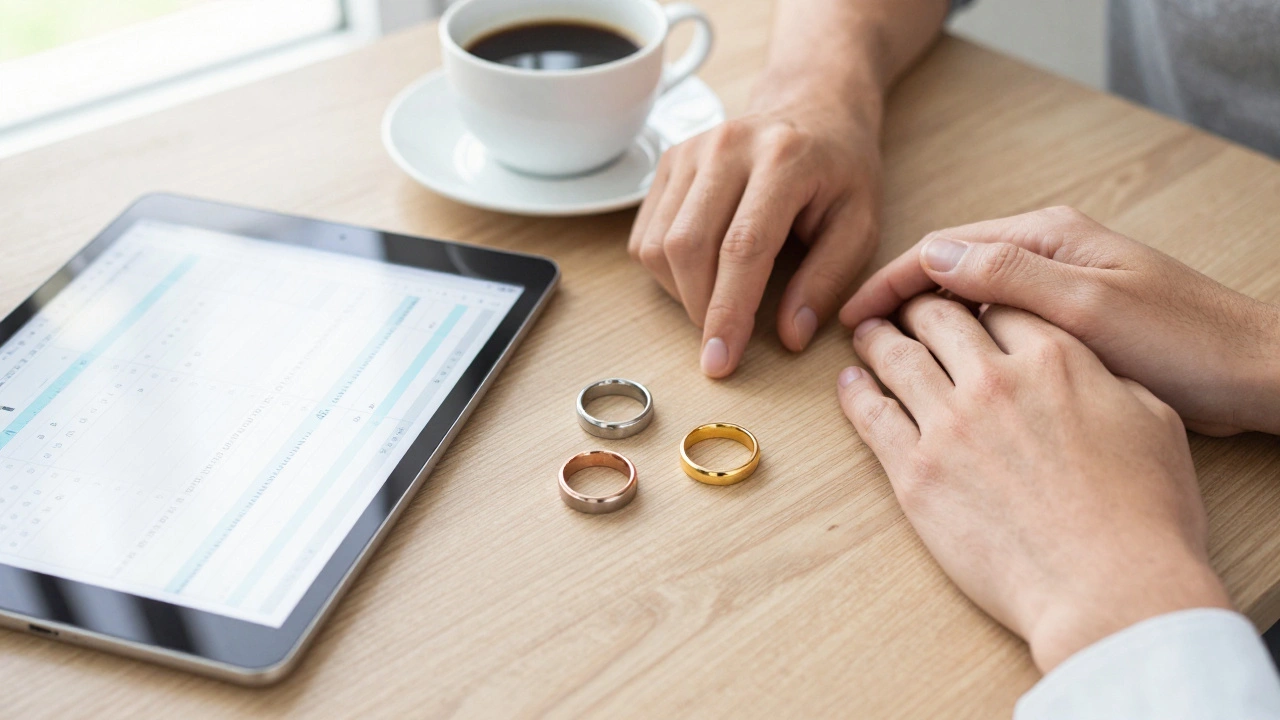
Wedding Ring Budget Estimator
Customize Your Ring Specs
Estimated Total Cost
Note: These figures are estimated ranges based on the guide. Actual prices vary by jeweler, current metal market rates, and specific stone specifications (the 4 Cs).
Quick Takeaways for Your Budget
- Forget the 'three months' salary' myth; it's an outdated advertising slogan.
- Metal choice (Gold, Platinum, Titanium) is the biggest baseline cost driver.
- Lab-grown diamonds offer a similar look to mined ones but usually cost 30-50% less.
- Custom designs always carry a premium over stock options.
- Your budget should be based on your actual disposable income, not social pressure.
The Big Budget Question: How to Actually Decide
If you're staring at a blank spreadsheet and wondering where to start, stop looking at Instagram and start looking at your bank account. The reality is that some couples spend $200 on simple silver bands, while others drop $20,000 on a GIA-certified diamond. Neither is inherently wrong.
A good rule of thumb is to set a limit that feels comfortable. If you're saving for a house in a city like Sydney or New York, spending $10,000 on a ring might feel like a mistake. If you've already got your housing sorted and love luxury, a higher spend makes sense. Ask yourself: Does this purchase interfere with my long-term goals? If the answer is yes, you're overspending.
Breaking Down the Costs by Material
The material you choose dictates the starting price. You aren't just paying for the look; you're paying for durability and rarity. For example, Platinum is denser and rarer than gold, which is why it usually costs more per gram.
Then there's Gold, which comes in different colors. Yellow gold is the classic, while white gold is often plated with rhodium to keep its shine. Rose gold is a popular trendy alternative. Because gold is traded on a global commodity market, prices can fluctuate daily.
If you're on a tight budget, don't sleep on alternative metals. Titanium and Tungsten are incredibly durable and cost a fraction of precious metals. They are perfect for people with active jobs or those who prefer a modern, industrial look.
| Material | Entry Level | Mid-Range | Luxury | Key Attribute |
|---|---|---|---|---|
| Titanium/Tungsten | $100 - $300 | $300 - $600 | $600+ | Scratch-resistant |
| 14k Gold | $400 - $800 | $800 - $2,000 | $2,000+ | Classic durability |
| 18k Gold | $600 - $1,200 | $1,200 - $3,000 | $3,000+ | Higher gold purity |
| Platinum | $800 - $1,500 | $1,500 - $4,000 | $4,000+ | Hypoallergenic/Heavy |
Diamonds: The Cost Multiplier
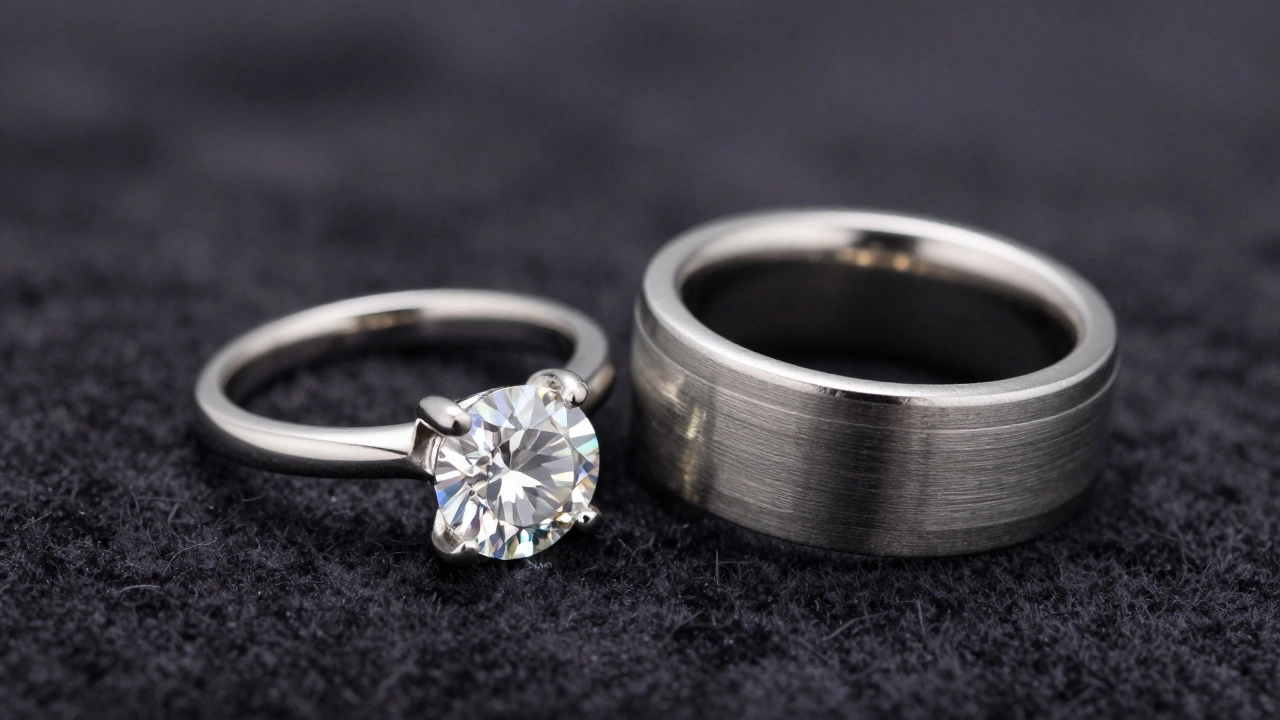
If your wedding ring cost includes a center stone, the pricing becomes more complex. You've probably heard of the '4 Cs': Cut, Color, Clarity, and Carat weight. While all four matter, the cut is the most important for that 'sparkle' factor. A poorly cut diamond will look dull even if it's huge.
Here is a pro tip: You can save thousands by choosing a diamond that is 'almost' perfect. For example, a diamond with a slight yellowish tint (near-colorless) or a tiny internal flaw (inclusion) that can't be seen by the naked eye is significantly cheaper than a 'flawless' stone. Why pay a 40% premium for a perfection that only a jeweler with a microscope can see?
We also have to talk about Lab-Grown Diamonds. These are chemically and physically identical to mined diamonds-they aren't fake 'cubic zirconia'-but they are created in a lab. Because the supply chain is shorter, they are way more affordable. If you want a larger stone without breaking the bank, this is the smartest move you can make in 2026.
Hidden Costs and Added Extras
The sticker price on the ring isn't always the final amount you'll pay. There are a few 'stealth' costs to watch out for:
- Sizing and Alterations: If you buy a ring that doesn't fit perfectly, a jeweler might charge $50 to $150 to resize it.
- Insurance: Once you put a valuable piece of jewelry on your finger, you need it insured. This is usually a small monthly fee added to your homeowners or renters insurance, but it's a necessary cost.
- Certification: A GIA (Gemological Institute of America) or IGI certificate proves the diamond's quality. Rings with these certifications cost more upfront but protect you from buying an overpriced, low-quality stone.
- Custom Design Fees: If you want a unique shape or a specific engraving, expect to pay a design fee on top of the material costs.
Avoiding Common Budget Traps
It's easy to get swept up in the emotion of wedding planning and spend more than you intended. One of the biggest traps is the 'upsell' at the jewelry store. Salespeople are trained to push you toward the 'perfect' diamond, even if the difference between a G and an H color grade is invisible to the human eye.
Another trap is buying a 'set' without thinking. Sometimes buying the engagement ring and the wedding band separately allows you more flexibility. You might find a vintage band that complements your modern engagement ring perfectly for a fraction of the cost of a matching designer set.
Finally, beware of the 'luxury brand' tax. A ring from a high-end boutique in a fancy mall might cost 2x more than an identical ring from a local independent jeweler simply because of the brand name on the box. Focus on the quality of the metal and the stone, not the logo of the store.
The Long-Term Value Perspective
Is a wedding ring an investment? Generally, no. Unless you are buying a rare, museum-grade gemstone, you aren't going to make money selling a ring later. In fact, most jewelry loses value the moment you leave the store. Treat your ring as a sentimental purchase, not a financial asset.
If you're worried about the cost over time, consider the maintenance. White gold needs re-plating every few years to stay bright white. Platinum is more durable but can scratch over time (though it doesn't lose metal like gold does). Factor in a small annual budget for professional cleaning and prong checks to ensure your stone doesn't fall out.
Is it okay to spend very little on a wedding ring?
Absolutely. The value of a wedding ring is in the commitment it represents, not the price tag. Many couples choose simple bands or even alternative materials like silicone or wood to keep costs down and prioritize other spending like the honeymoon or a house deposit.
What is the average cost of a wedding band?
For a standard gold band without diamonds, prices typically range from $300 to $1,500 depending on the width and gold purity. If you add diamonds or choose platinum, the cost usually jumps to $1,000 - $3,000.
Are lab-grown diamonds actually real diamonds?
Yes, they are chemically, physically, and optically identical to mined diamonds. They are made of carbon and have the same hardness (10 on the Mohs scale). The only difference is that they are grown in a controlled environment rather than underground.
How do I know if a ring is overpriced?
The best way is to get a written quote and a detailed description of the stone's specs (carat, cut, color, clarity) and then compare it with 2-3 other jewelers. If one store is charging significantly more for the same specs, they are likely charging a brand premium.
Should I buy a ring with a certificate?
Yes, especially for diamonds over 0.5 carats. A certificate from a reputable body like the GIA ensures that you are getting exactly what you're paying for and provides an unbiased assessment of the stone's quality.
What to do next
If you're still feeling overwhelmed, start by discussing your budget with your partner. Be honest about what you can afford without stress. Once you have a number, decide on your priority: do you want a larger stone, a more prestigious metal, or a unique custom design? You can't usually have all three without spending a fortune.
Next, visit a few different types of stores. Go to a big-name retailer to see the standard options, then visit a local independent jeweler who might be more willing to negotiate or find a unique vintage piece. Finally, look into lab-grown options to see if the cost savings allow you to get a more impressive ring than you originally thought possible.