Wedding Guest Engagement Calculator
Create Your Guest Engagement Plan
This tool helps you estimate ideal activity frequency based on your wedding size and guest demographics.
Photo Booth
Recommended: Every 45 minutes (with 20-min sessions). Add themed props and a custom backdrop.
Memory Station
Recommended: Set up 30 minutes before dinner. Include photo albums and blank cards for stories.
Guest Spotlight
Recommended: 15 minutes after dinner. Invite 3 guests to share quick stories about the couple.
Enter your wedding details to see personalized recommendations
Weddings aren’t just about the ceremony and the cake-they’re about the people. If your guests are bored, scrolling on their phones, or stuck in a corner with no one to talk to, no amount of fancy décor or gourmet food will save the vibe. The real magic happens when people feel seen, included, and having a good time. So how do you actually spend time with guests at a wedding so they leave smiling, not checking the time?
Start with the layout that invites connection
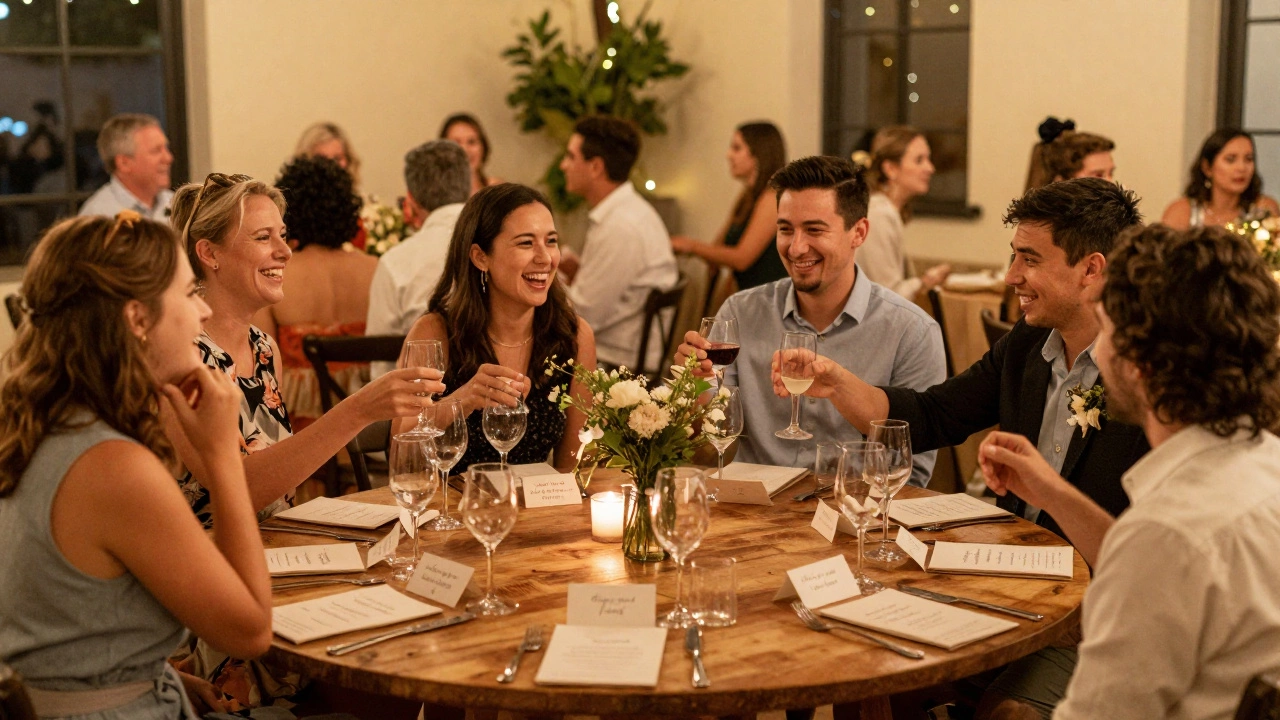
A poorly arranged reception space kills conversation before it even begins. Long banquet tables where strangers sit shoulder-to-shoulder with people they’ve never met? That’s a recipe for awkward silence. Round tables of 8-10 work better. They naturally encourage group chats. Place cards with fun prompts like “Share your favorite travel story” or “What’s the weirdest thing you’ve ever eaten?” next to names help break the ice. Guests don’t need to be forced to talk-they just need a little nudge.Also, avoid putting all the older relatives on one side and all the young friends on the other. Mix it up. Aunt Linda might bond with your college roommate over a shared love of bad 90s pop music. You never know what connections will stick.
Plan activities, not just entertainment
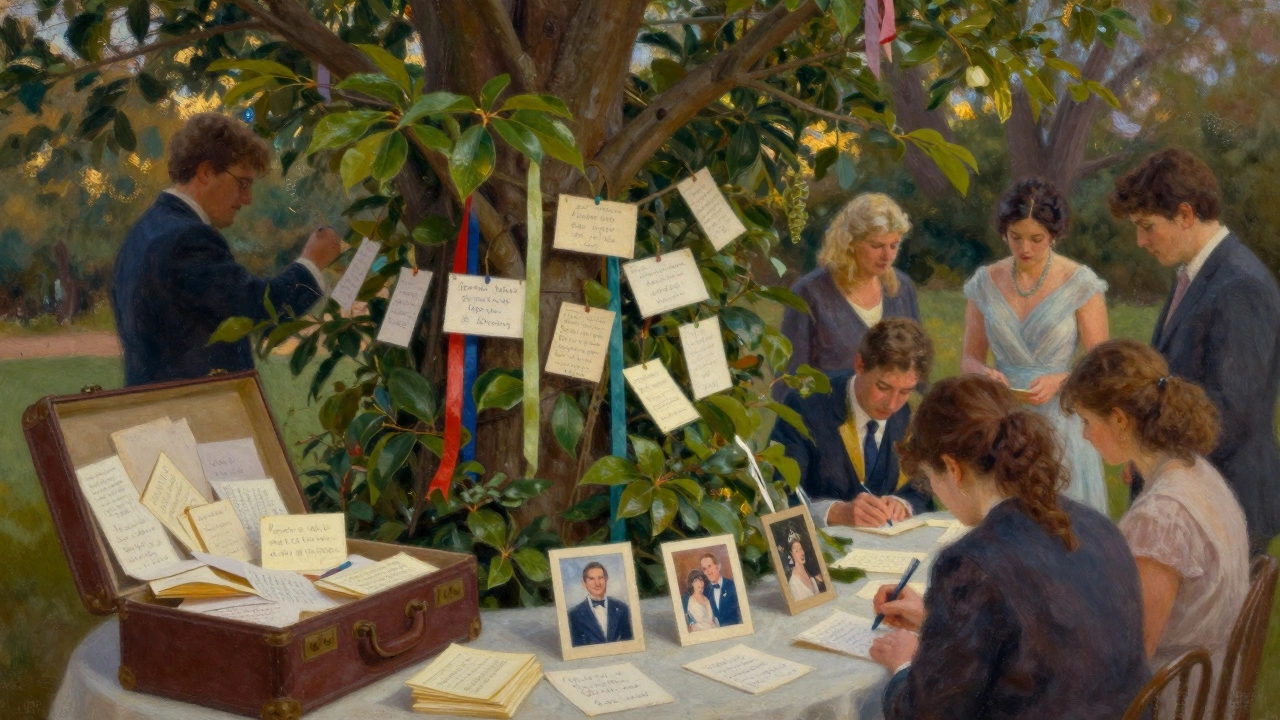
A live band or DJ is great, but music alone doesn’t keep people engaged. Think of activities as social glue. A photo booth with silly props is classic for a reason-people laugh, take silly pictures, and post them. But go further. Set up a guest book where people write messages on postcards and drop them into a vintage suitcase. Or create a “Wish Tree”-guests tie handwritten notes to branches and leave them as gifts for the couple.For smaller weddings, try a “memory station.” Have a table with old photos of the couple, blank cards, and pens. Ask guests to write down their favorite memory with the bride or groom. Collect them later and make a little book. It’s personal, meaningful, and gives guests something to do while waiting for dinner to be served.
Don’t just hire performers-invite participation
A magician performing on a stage? Guests watch. A magician walking around the room, pulling people into quick tricks, asking them to pick a card, making them laugh? That’s engagement. Same goes for a jazz quartet versus a dance instructor leading a 10-minute group lesson in the first dance style. Even something simple like a line dance taught by the best man gets people moving together.One couple in Sydney hired a local artist to sketch guests in real time. People lined up not because they wanted portraits-they wanted to see themselves drawn with humor and heart. The sketches were later printed and mailed as thank-you gifts. It turned a passive experience into a memorable keepsake.
Food and drinks as social tools
Serving food at a wedding shouldn’t just be about calories-it should be about connection. Instead of a plated dinner with long waits, try food stations. A taco bar, a build-your-own pasta station, or a dessert cart with mini treats lets people mingle while they eat. Staff at each station can be trained to say something fun: “That’s the spicy one-your future mother-in-law says you’re brave.”For drinks, skip the standard bar. Create a signature cocktail named after the couple (“The Sydney Sunrise”) and offer a second, quirky option (“The Groom’s Regret”-a weird mix of ginger beer, lavender syrup, and a dash of bitters). People will talk about it. They’ll ask each other, “Have you tried it yet?”
Use the timeline wisely
Too many weddings follow the same rigid script: ceremony, cocktail hour, dinner, speeches, cake, dance. That’s a long stretch with no real interaction. Break it up. After dinner, have a 15-minute “guest spotlight.” Invite three people (chosen ahead of time) to share a 90-second story about the couple. Not formal speeches-just real, funny, heartfelt moments. It makes guests feel like they’re part of the story, not just spectators.Don’t let the dance floor sit empty after the first dance. Have a friend or wedding planner start dancing with someone who’s sitting alone. Don’t wait for someone to “get the vibe.” Be the one to pull someone up. Even if they’re shy, they’ll appreciate it.
Watch for the quiet ones
It’s easy to focus on the loud, outgoing guests. But the ones sitting alone, sipping sparkling water, checking their phone? They need you the most. Don’t assume they’re just being reserved. Maybe they’re introverted, or they don’t know anyone. Maybe they’re traveling alone. Make it your job to find them.Go over. Say, “Hey, I saw you laughing at the photo booth earlier-I didn’t know you knew my cousin. How’d you two meet?” That’s it. One question. One moment of attention. That’s often enough to turn someone from a bystander into a guest who feels like they belong.
Give guests a role
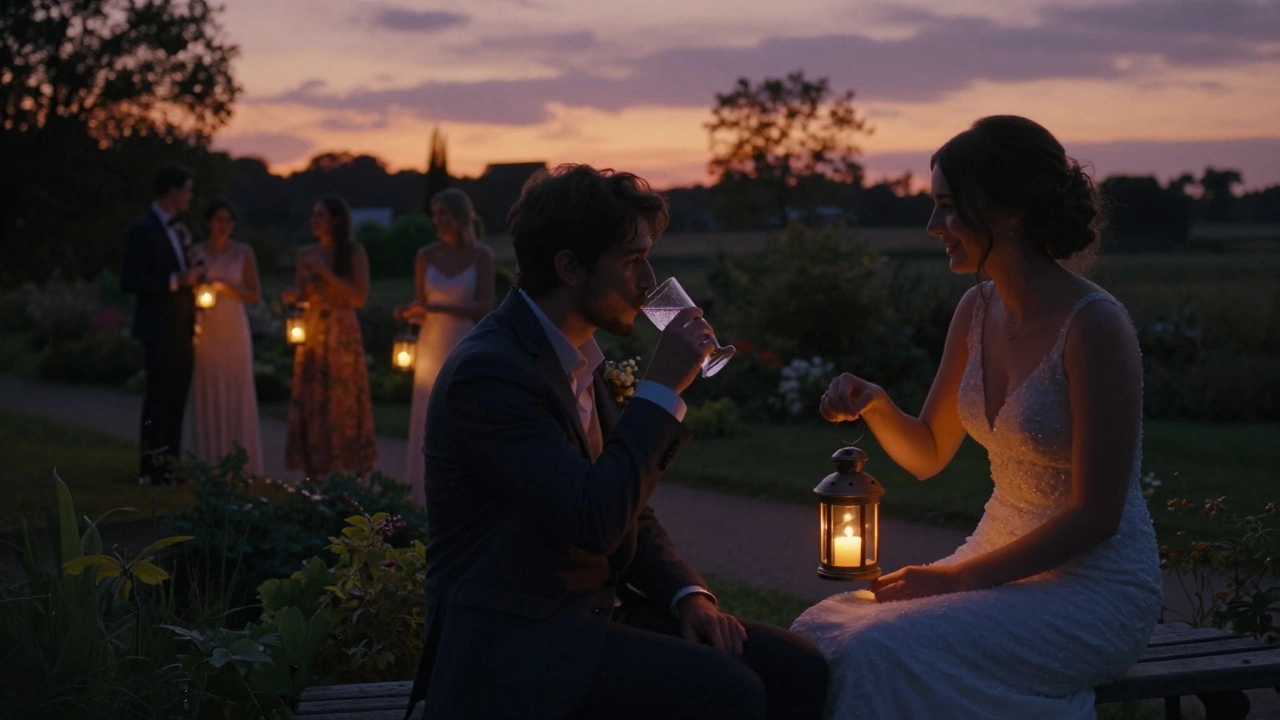
People love to feel useful. Instead of just asking friends to be ushers or ring bearers, give them real roles. Have someone be the “memory collector”-they walk around with a small notebook and jot down funny quotes or stories from guests. Have another person be the “dance floor enforcer”-they’re the one who starts the conga line or pulls people onto the floor. Even assigning a guest to be the official “toast reminder” (they gently cue the couple when it’s time) makes them feel involved.One couple gave each guest a small lantern at the end of the night. As the sun set, everyone lit them and walked together to the garden. It wasn’t just a photo op-it was a shared ritual. Guests didn’t just watch the moment; they helped create it.
Leave room for unplanned magic
You can plan every detail, but the best moments are the ones you didn’t schedule. A grandparent teaching the kids a traditional dance. Two strangers bonding over their shared love of vintage vinyl. A toddler stealing the mic during the first toast and saying, “I love my Auntie!”Don’t over-schedule. Leave gaps. Let the music fade for a minute. Let people wander. Let laughter happen without a cue. The most memorable weddings aren’t the ones with the most fireworks-they’re the ones where people forgot they were at a wedding because they were just having fun.
It’s not about perfection. It’s about presence.
You don’t need a fireworks display or a celebrity DJ to make your wedding unforgettable. You just need to care enough to notice who’s there, who’s quiet, who’s waiting to be included. Spend time with your guests not by forcing them into activities, but by creating space where connection happens naturally.At the end of the night, the guests won’t remember if the cake had three tiers or if the band played “Uptown Funk.” They’ll remember how they felt. Did they laugh? Did they feel seen? Did they leave thinking, “That was the best night ever”? That’s the real success of your wedding.
What are the best wedding activities for large groups?
For large groups, focus on activities that encourage movement and interaction without requiring everyone to participate at once. Photo booths with themed props, food stations with interactive elements (like build-your-own dessert bars), and live music with dance prompts work well. A memory wall where guests write notes on cards and pin them up also creates a collective keepsake without needing coordination.
How do you keep older guests entertained at a wedding?
Older guests often enjoy quieter, meaningful interactions. Set up a cozy lounge area with comfortable seating, soft lighting, and a small table with photo albums or a guest book. Offer a signature non-alcoholic drink with a name like “The Classic” or “Grandma’s Lemonade.” Invite them to share stories during a short, informal spotlight segment. Avoid loud, high-energy dancing unless it’s optional.
What if my guests don’t know each other?
If your guests come from different parts of your life-family, work, school-mix seating on purpose. Use place cards with conversation starters. Have a few trusted friends or family members assigned to sit with smaller groups and gently guide the conversation. A quick icebreaker game, like “Two Truths and a Lie,” can also spark natural talking.
Is it okay to skip traditional wedding entertainment?
Absolutely. Traditional entertainment like a DJ or band isn’t required. Many couples now choose a playlist, a live acoustic set, or even a silent disco. What matters is creating space for connection. A simple card game table, a book exchange station, or a group walk around the venue can be more memorable than a fireworks show.
How can I spend time with guests without being overwhelmed?
You don’t need to talk to everyone. Assign a few trusted people-your best man, maid of honor, or a close family member-to be your “guest ambassadors.” They can check in on people, introduce guests to each other, and make sure no one’s left out. This frees you to enjoy the night while still ensuring everyone feels included.
If you’re planning your wedding, remember: the goal isn’t to impress. It’s to connect. The people who show up are the ones who love you. Give them a reason to stay, to laugh, to remember.