
Wedding Ring Budget Calculator
What Can $1,000 Buy You?
The average engagement ring costs $6,000, but you can get a beautiful, meaningful ring for less. Calculate your options:
Your Budget: $
Possible Options
Pro Tip: Consider lab-grown diamonds or moissanite for 70%+ savings while getting quality and brilliance.
Is $1000 enough for a wedding ring? The short answer is yes-but only if you know what to look for and where to cut corners without sacrificing meaning. In 2025, the average engagement ring in the U.S. costs around $6,000, according to data from The Knot and Jewelers of America. That number makes $1,000 seem like a joke. But here’s the truth: most couples don’t need to spend thousands to get a ring that feels special. Thousands of people wear beautiful, well-made rings under $1,000 every day. The trick isn’t spending more-it’s spending smart.
What You Can Actually Get for $1,000
With $1,000, you’re not limited to cheap, thin bands or fake stones. You can get a real diamond, a solid metal band, and a ring that lasts. Here’s what’s possible:
- A 0.30-carat round diamond with G-H color and SI1 clarity in a 14k white gold setting
- A 0.50-carat lab-grown diamond with excellent cut and VS2 clarity in 14k gold
- A 10k or 14k gold band with small accent diamonds (total weight under 0.20 carats)
- A moissanite ring that looks identical to diamond but costs 90% less
- A vintage or estate ring with character and history, often priced under $800
These aren’t hypotheticals. They’re real options you’ll find at reputable online jewelers like Blue Nile, James Allen, Brilliant Earth, and even Etsy sellers with 5-star reviews. You can see the diamond grading reports, zoom in on 360-degree videos, and read customer photos before you buy.
Why People Think $1,000 Isn’t Enough
The myth that engagement rings must cost two or three months’ salary comes from aggressive marketing-mostly by De Beers in the 1940s. Their "A Diamond is Forever" campaign convinced people that spending big = showing love. That idea stuck. But today, 68% of couples under 30 say they prioritize financial stability over a flashy ring, according to a 2024 NerdWallet survey. And 42% of newly engaged couples say they spent under $1,500.
Real life doesn’t look like a movie. People aren’t proposing on yachts or in front of fireworks. They’re proposing after a walk in the park, over coffee, or in their kitchen. The ring should match the moment-not a billboard.
Where to Save Without Sacrificing Quality
You don’t need to buy a 1-carat diamond to have a ring that sparkles. Here’s how to stretch your $1,000:
- Choose lab-grown diamonds. They’re chemically identical to mined diamonds but cost 50-70% less. A 0.50-carat lab diamond with good cut and color runs $300-$500.
- Go for moissanite. This gemstone has more fire than diamond and is nearly as hard. A 0.75-carat moissanite ring in 14k gold costs around $400-$600.
- Lower the metal karat. 10k gold is still durable and lasts decades. It’s less expensive than 14k or 18k and holds up just fine for everyday wear.
- Skip the big center stone. A 0.25-carat diamond surrounded by tiny side stones can look more impressive than a single 0.50-carat stone.
- Buy vintage or estate. Antique rings often have unique designs and higher-quality craftsmanship. You can find 1920s-1970s rings in good condition for under $800.
One couple I spoke with bought a 1950s platinum ring with a 0.35-carat diamond for $950. It had a slightly worn band, so they had it resized and polished for $75. Total cost: $1,025. They still wear it every day.
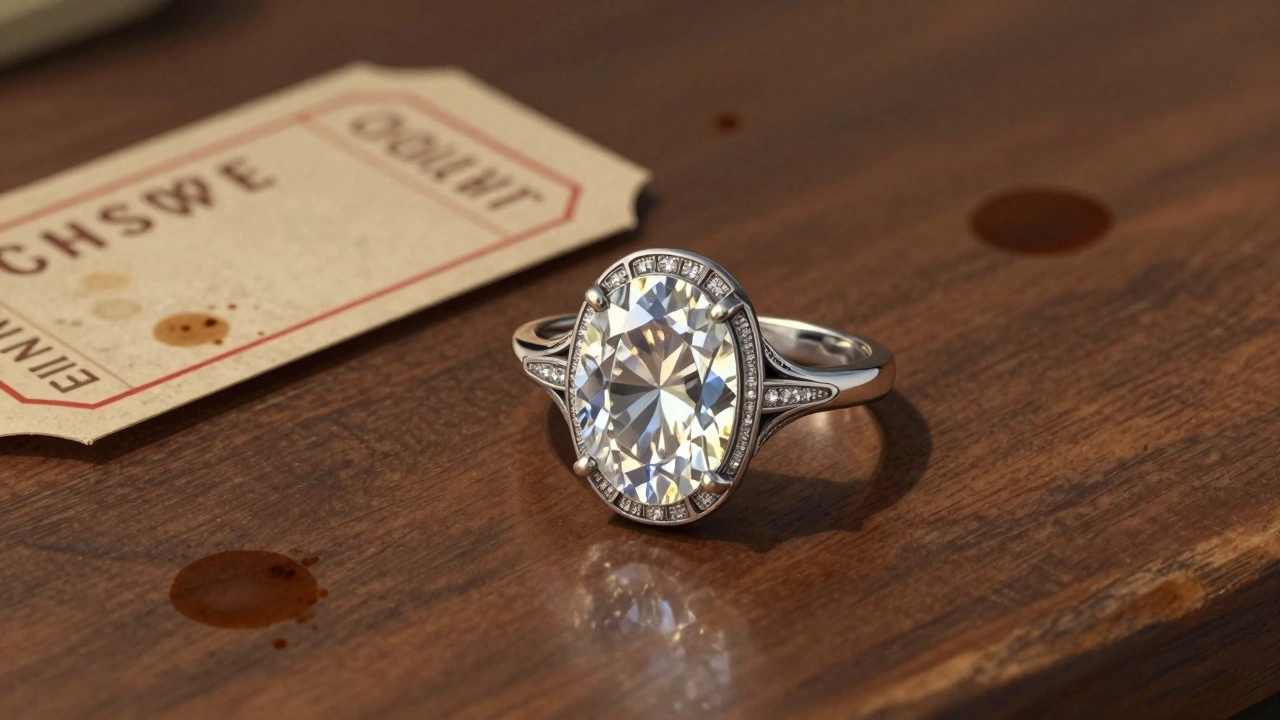
What to Avoid at All Costs
Not all cheap rings are worth it. Here’s what to steer clear of:
- Plated metals. Gold-plated or silver-plated rings tarnish, flake, and turn your finger green within months. Skip them.
- Uncertified stones. If there’s no GIA, IGI, or AGS report for a diamond, you’re guessing. Always ask for proof.
- Too many add-ons. Custom engraving, rush shipping, and fancy packaging add up fast. Stick to essentials.
- Department store rings. Brands like Kay, Zales, and Jared often mark up prices 200-400%. A $1,000 ring there might be worth $300 elsewhere.
One woman bought a ring from a mall store for $1,200. A year later, the diamond fell out. She took it to a local jeweler who told her the setting was cast in weak metal and the diamond was low-grade. She spent $150 to reset it with a better stone. She ended up paying $1,350 for something she could’ve bought new for $700.
How to Make $1,000 Feel Like More
Value isn’t just about size. It’s about meaning. A ring that fits your partner’s style, matches their daily life, and reflects your story costs more than money-it costs thought.
Here’s how to add emotional value without adding cost:
- Choose a band with texture-hammered, brushed, or twisted-instead of a plain shine.
- Pick a vintage setting with character, like an Art Deco filigree or a 1970s halo.
- Engrave a date, initials, or a short phrase inside the band. It’s free or under $25.
- Use a family stone. A grandmother’s old diamond or a birthstone from your childhood can be reset for under $200.
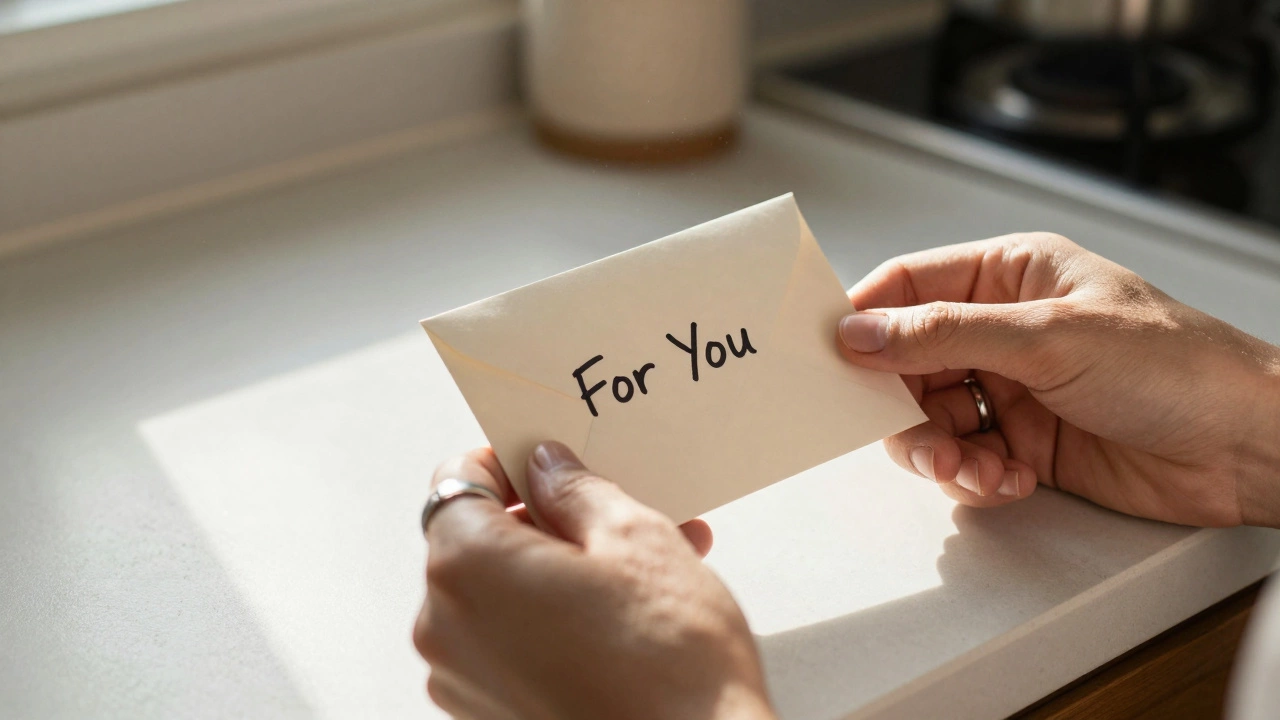
- Pair the ring with a handwritten letter. Many people keep the letter more than the box.
One man bought a $900 moissanite ring and wrapped it in a letter he wrote about how he noticed the way his partner smiled when they watched old movies. She cried when she opened it. The ring? It’s still on her finger. The letter? Framed on their nightstand.
What Comes After the Ring
Spending $1,000 on a ring doesn’t mean you’re stuck with it forever. Many couples upgrade later-after a promotion, a bonus, or a milestone anniversary. One couple bought a $950 ring for their engagement. Two years later, they saved up and bought a $3,000 ring for their 5th anniversary. They kept the first one as a backup and wear it on casual days.
You don’t have to get it perfect the first time. You just have to get it right.
Final Thought: It’s Not About the Price Tag
What makes a wedding ring valuable isn’t the carat weight or the brand name. It’s the fact that someone chose it for you. That they thought about your hand, your style, your life. That they didn’t go for the most expensive option, but the one that felt true.
$1,000 can buy that. It can buy a ring that lasts, sparkles, and fits. It can buy peace of mind, too-no debt, no stress, no guilt. And in a world that tells you to spend more, choosing to spend less is its own kind of love.
Can you get a real diamond for $1,000?
Yes. You can get a real diamond under $1,000, but you’ll need to compromise on size or quality. A 0.30-carat diamond with G-H color and SI1 clarity in a 14k gold setting fits this budget. Lab-grown diamonds give you more size for the same price.
Is moissanite a good alternative to diamond?
Yes. Moissanite is nearly as hard as diamond (9.25 vs. 10 on the Mohs scale) and has more sparkle. It’s nearly indistinguishable to the naked eye, costs 70-90% less, and comes in sizes up to 1 carat for under $600. Many couples choose it for its brilliance and affordability.
Should I buy online or in-store?
Buy online if you want the best value. Online jewelers like James Allen and Blue Nile have lower overhead, so prices are 30-50% lower than brick-and-mortar stores. Plus, you get 360-degree videos and free returns. Only go in-store if you want to try on rings in person-then buy online at the same price.
Is 10k gold okay for a wedding ring?
Yes. 10k gold is 41.7% pure gold and is more durable than 14k or 18k because it has more alloy metal mixed in. It resists scratches better and costs less. It’s perfect for everyday wear, especially if you work with your hands. Just make sure it’s solid gold, not plated.
Can I get a custom ring for $1,000?
Yes, but not with a large center stone. Custom designs using smaller stones, vintage settings, or alternative metals like titanium or palladium can work. Etsy artisans often offer custom bands under $800. Avoid custom designs with 1-carat diamonds-that’s not realistic at this budget.