
Wedding Invitation Timeline Calculator
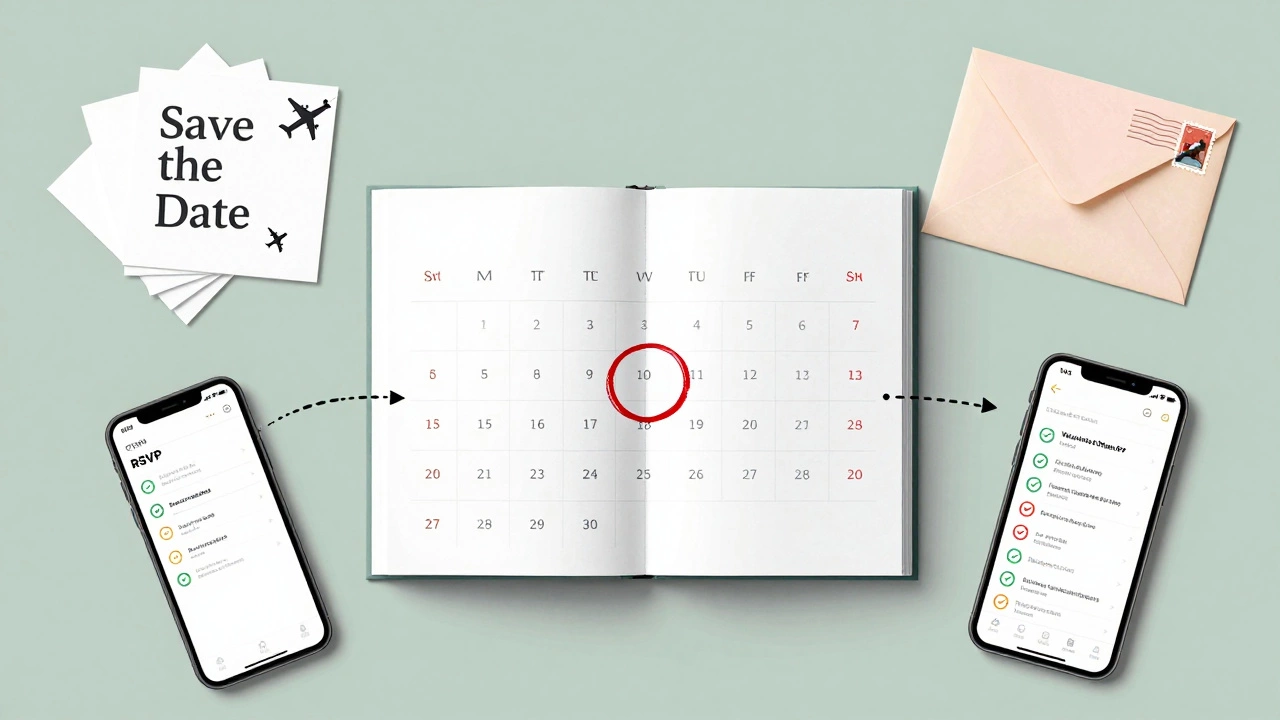
Send Invitations
Mail or email formal invites.
RSVP Deadline
Guests must reply by this date.
Final Headcount
Submit numbers to vendors.
You’ve finally booked the venue, picked the dress, and now you’re staring at a stack of beautiful paper. You want your guests to know the details, so you think about mailing those wedding invitations are formal requests for attendance that include essential event details like date, time, location, and RSVP instructions. right now. But wait-is four months too early?
The short answer is no, it’s not too early. In fact, for many couples in 2026, sending invites four months out is actually quite standard. However, timing depends heavily on whether you’ve already sent Save the Dates are preliminary notifications sent to guests to reserve the wedding date, typically mailed 6-12 months before the ceremony.. If you skipped the Save the Dates, four months might feel a bit rushed for out-of-town guests. Let’s break down exactly when to send what, why timing matters, and how to handle the logistics without stressing yourself out.
Why Four Months Is Usually the Sweet Spot
Most wedding planners recommend mailing formal invitations 6 to 8 weeks before the big day. This window gives guests enough time to adjust their schedules but isn’t so far away that they forget the details. Sending them four months (about 16 weeks) out puts you on the earlier side of this range, which can be beneficial for several reasons.
First, it reduces last-minute stress. If you mail them now, you can start collecting RSVPs sooner. Second, if any issues arise-like a printing error or a missing address-you have plenty of time to fix them. Third, for destination weddings or holidays, guests need more lead time to book flights and hotels. Even if your wedding is local, some guests may need to arrange childcare or take time off work, which requires advance notice.
However, there’s a catch. If you send invites too early, say six months out, people might lose track of them or forget to respond. Four months strikes a good balance: it’s early enough to be helpful but recent enough to stay top-of-mind.
The Role of Save the Dates in Your Timeline
To understand if four months is right for you, you need to look at your Save the Date strategy. Save the Dates are not just a luxury; they’re a crucial tool for guest management. They serve as an early heads-up, allowing guests to mark their calendars without the pressure of immediate confirmation.
If you sent Save the Dates 6 to 12 months ago, then sending formal invitations at the four-month mark is perfect. Guests already know the date, so the invitation serves its true purpose: providing specific details like the ceremony address, reception venue, dress code, and RSVP deadline. In this scenario, four months is ideal.
But what if you didn’t send Save the Dates? Then four months might be cutting it close. Without prior notice, guests receive the full weight of the request all at once. For local friends and family, this is usually fine. But for anyone traveling from another city or country, four months’ notice can be tight, especially during peak travel seasons. In this case, consider sending a digital reminder or a quick email blast a few weeks before mailing the physical invites to give everyone a heads-up.
| Scenario | Recommended Timing | Risk Level | Best For |
|---|---|---|---|
| Sent Save the Dates | 6-8 weeks before wedding | Low | All weddings, especially destination |
| No Save the Dates (Local) | 8-10 weeks before wedding | Medium | Small, local gatherings |
| No Save the Dates (Travel Required) | 3-4 months before wedding | High | Budget-conscious couples skipping Save the Dates |
Setting the Right RSVP Deadline
When you send your invitations, you must also set an RSVP deadline. This date is critical because it determines when you can finalize numbers with your caterer and venue. A common mistake couples make is setting the RSVP deadline too late, which leaves them scrambling for answers just days before the wedding.
A good rule of thumb is to set your RSVP deadline 3 to 4 weeks before the wedding. If you’re sending invites four months out, this gives guests three months to respond. While this seems generous, life happens. People get busy, mail gets delayed, or they simply forget. To mitigate this, consider using online RSVP tools. Platforms like Zola is a popular wedding website builder and registry platform that offers free digital RSVP tracking and guest list management. or The Knot is a comprehensive wedding planning platform providing checklists, vendor directories, and digital invitation services. allow guests to respond instantly via a link in the invite. This speeds up the process and gives you real-time data.
If you’re relying on postal mail for RSVPs, make sure to include a pre-addressed, stamped envelope. Friction kills response rates. Every extra step you ask a guest to take increases the chance they won’t reply. By making it easy, you’ll get accurate headcounts faster, reducing your anxiety as the date approaches.
Digital vs. Paper: How Format Changes Timing
In 2026, the line between digital and paper invitations is blurring. Many couples opt for hybrid approaches: sending a digital Save the Date followed by a paper invitation, or vice versa. Some even skip paper entirely, opting for e-invites through platforms like Paperless Post is a leading digital invitation service offering customizable designs, automated reminders, and eco-friendly options..
If you’re going fully digital, four months is still a great time to send. Digital invites can be tracked easily, and you can send automated reminders to non-responders. This flexibility means you don’t have to worry about postal delays. However, keep in mind that older relatives or less tech-savvy guests might prefer paper. A hybrid approach ensures no one feels left out.
For paper invites, remember that postal delivery times vary. In Australia, for example, domestic mail can take 3-5 business days, while international mail can take longer. Factor this into your timeline. If you mail invites on June 25, expect them to arrive by early July. Set your RSVP deadline accordingly, giving guests at least 3-4 weeks from the expected arrival date to respond.
Handling Last-Minute Additions and Changes
Even with careful planning, things change. You might add a plus-one, change the venue, or realize you forgot a key detail. If you send invites four months out, you have a buffer to handle these changes gracefully.
If you need to update information after sending invites, don’t panic. For minor changes (like a slight shift in cocktail hour start time), a note on your wedding website is often sufficient. Most guests will check the site for final details. For major changes (like a new venue), you may need to send correction cards or follow-up emails. The earlier you send the original invite, the more time you have to manage these corrections without causing confusion.
Also, consider who you’re inviting. Close friends and family are more likely to forgive minor hiccups than distant acquaintances. Tailor your communication style to your audience. For example, a text message to a sibling about a schedule change is perfectly acceptable, whereas a formal letter might be needed for older relatives.
Common Pitfalls to Avoid
While four months is generally safe, there are pitfalls to watch out for. One common mistake is sending invites too early without a clear RSVP mechanism. If you mail invites four months out but don’t provide a way to respond until two months later, guests may feel confused or pressured. Always include clear instructions on how and when to RSVP.
Another pitfall is assuming everyone will read the fine print. Important details like dress code, parking instructions, or accommodation blocks should be highlighted. Consider adding a QR code that links to your wedding website for more information. This keeps the invite clean while ensuring guests have access to all necessary details.
Finally, don’t neglect the importance of follow-ups. As your RSVP deadline approaches, send gentle reminders to those who haven’t responded. A simple email or phone call can go a long way in securing accurate headcounts. Remember, your goal is to reduce stress, not create it. Clear communication is key.
What if I didn't send Save the Dates? Is 4 months too late?
If you didn't send Save the Dates, four months is not too late, but it is on the shorter side. For local guests, this is usually fine. For out-of-town guests, consider sending a digital reminder or email a few weeks before mailing the physical invites to give them ample time to plan travel and accommodations.
How long before the wedding should I send formal invitations?
The standard recommendation is 6 to 8 weeks before the wedding. However, sending them 4 months (16 weeks) out is also acceptable, especially if you want to secure RSVPs early or if you have a destination wedding. Just ensure your RSVP deadline is set appropriately, typically 3-4 weeks before the event.
Should I use digital or paper invitations in 2026?
Both have their merits. Digital invites are cost-effective, eco-friendly, and offer instant RSVP tracking. Paper invites provide a tangible keepsake and are preferred by some traditional guests. A hybrid approach-digital Save the Dates followed by paper invites-is increasingly popular and balances convenience with tradition.
When should I set my RSVP deadline?
Set your RSVP deadline 3 to 4 weeks before the wedding. This gives you enough time to finalize numbers with vendors while giving guests a reasonable window to respond. If you send invites 4 months out, this provides a comfortable 3-month response period.
What if I need to change details after sending invites?
For minor changes, update your wedding website and encourage guests to check it for the latest info. For major changes, like a venue switch, send correction cards or follow-up emails. The earlier you send the original invite, the more time you have to manage such updates smoothly.