DIY Wedding Catering Cost Estimator
Enter your wedding details below to see if going it alone actually saves you money once hidden costs are included.
Professional Total
$0
Includes food, labor, service, cleanup.
DIY Total (Real)
$0
Food + Staff + Equip + Fees.
Net Savings
$0
Break Even| Item | Professional | DIY Approach |
|---|
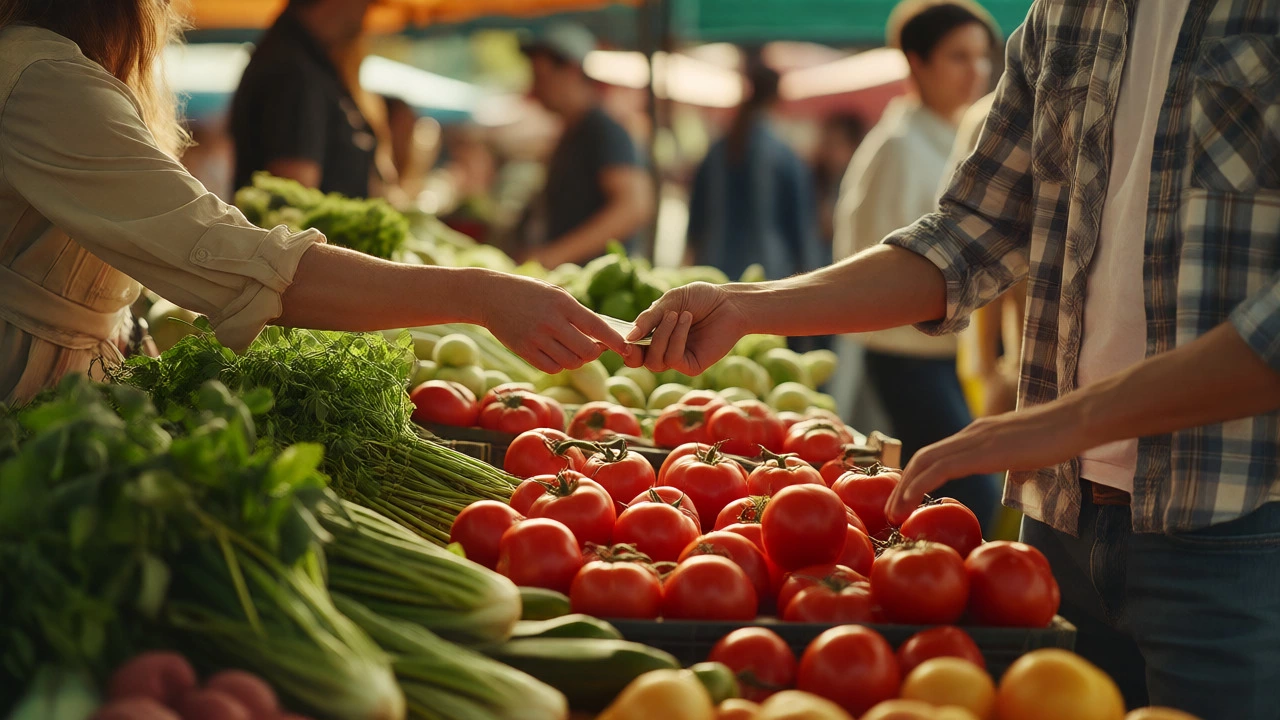
You see the price tag on a catered meal and your eyes water. $120 per head? For what? Chicken that tastes like cardboard and rice that’s been sitting in a warmer since Tuesday. So you think, "I can do this better." You picture yourself buying fresh produce at the market, cooking with love, and serving guests food they’ll actually remember. It sounds perfect. It sounds cheap.
But here is the uncomfortable truth: DIY weddings are rarely cheaper than professional ones unless you have free labor, free equipment, and zero stress tolerance. In fact, for many couples, going it alone ends up costing more once you factor in the hidden variables. Let’s break down why the math doesn’t always add up, specifically when it comes to the biggest budget line item: wedding catering.
The Illusion of Savings
The core argument for DIY is simple arithmetic. A professional caterer charges $80-$150 per person. If you buy ingredients yourself, maybe you spend $25-$35 per person. That looks like a massive win. But that calculation ignores the "invisible" costs. When you hire a pro, you aren't just paying for food. You’re paying for logistics, insurance, staffing, and expertise.
Think about the last time you hosted dinner for six people. Now multiply that chaos by fifty or one hundred. Who washes the dishes? Who keeps the drinks cold? Who ensures the chicken isn’t raw? If you don’t pay someone else to do it, you pay with your sanity-and often, with overtime costs if you hire casual help.
Catering Costs: The Big Comparison
Let’s look at the numbers concretely. We’ll assume a wedding for 100 guests in Sydney (where I live), using mid-range pricing as our baseline. This isn’t luxury, but it’s not fast food either.
| Cost Component | Professional Caterer | DIY Approach | Notes |
|---|---|---|---|
| Food Ingredients | $8,000 - $12,000 | $3,000 - $4,500 | DIY saves ~60% on raw materials only. |
| Labor (Cooks/Servers) | Included | $1,500 - $3,000 | Even with friends helping, you need paid staff for safety/hygiene. |
| Equipment Rental | Included | $800 - $1,500 | Ovens, chafing dishes, cutlery, glassware, tables. |
| Insurance & Licenses | Included | $200 - $500 | Venues often require public liability insurance. |
| Waste/Food Safety Risk | $0 (Pro handles it) | $500+ (Potential spoilage) | If the fridge fails, you lose the whole batch. |
| Total Estimated Cost | $8,000 - $12,000 | $6,000 - $9,500 | DIY saves $2k-$3k, but adds huge stress. |
See that gap? Yes, DIY is cheaper on paper. But you’re saving roughly $2,000-$3,000 while taking on the workload of a small restaurant kitchen for three days. Is that worth it? For some, absolutely. For most, it’s a false economy.
The Hidden Labor Trap
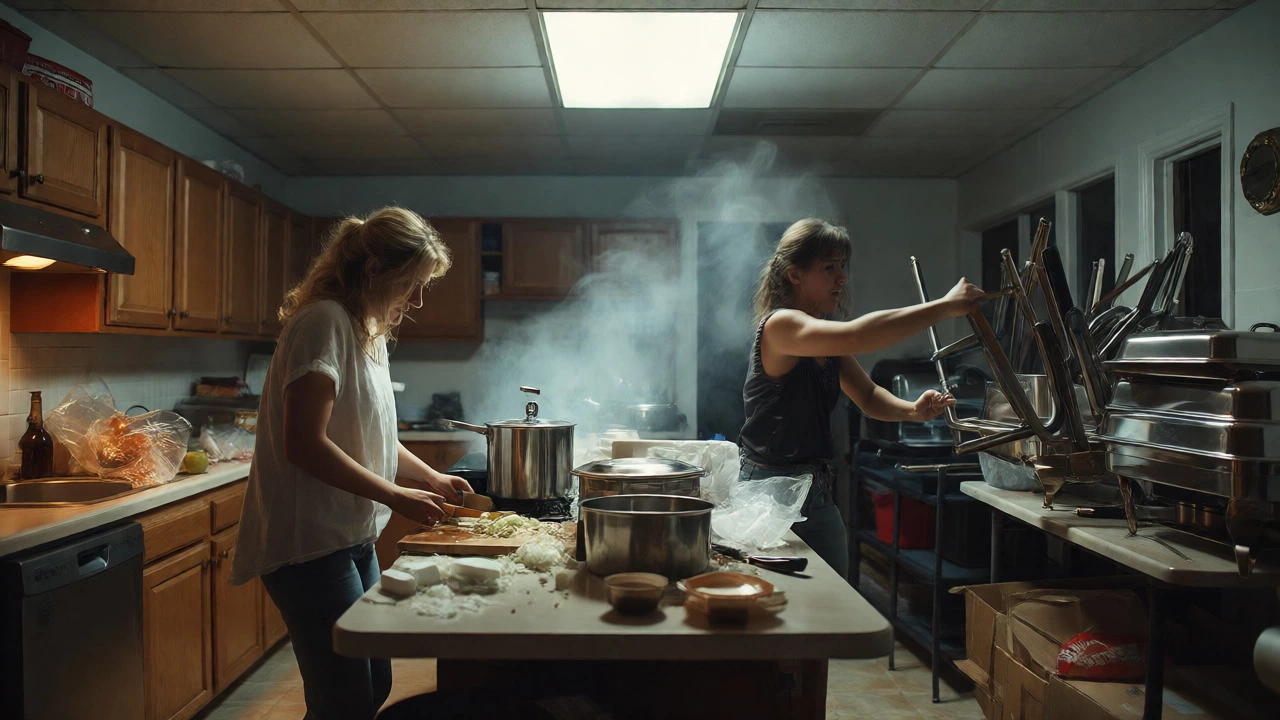
Here is where budgets blow up. You plan to ask your aunt to cook and your college buddies to serve. Sounds great until:
- Your aunt gets sick two days before the wedding.
- Your buddies get drunk and drop trays of expensive wine glasses.
- No one knows how to safely handle raw chicken near cooked vegetables (cross-contamination).
- You spend 12 hours a day prepping instead of enjoying your engagement period.
Professional caterers charge high rates because they manage these risks. They have backup staff. They know health codes inside out. They have industrial ovens that can hold temperature for hours without drying out the food. When you go DIY, you become the project manager, chef, procurement officer, and crisis negotiator. Time is money, even if you aren’t technically spending cash.
When DIY Actually Saves Money
So, should you abandon the idea entirely? Not necessarily. There are specific scenarios where DIY wins big. It’s all about picking your battles.
1. The Bar Setup
Alcohol markup is insane. A bottle of good Australian Shiraz might cost $20 wholesale but sells for $15 a glass at a venue. Buying beer kegs and boxes of wine directly from distributors can cut bar costs by 50%. Hire a professional bartender (yes, just one or two) to pour them. You control the inventory; they control the service. This is the easiest place to save real cash.
2. Dessert Tables
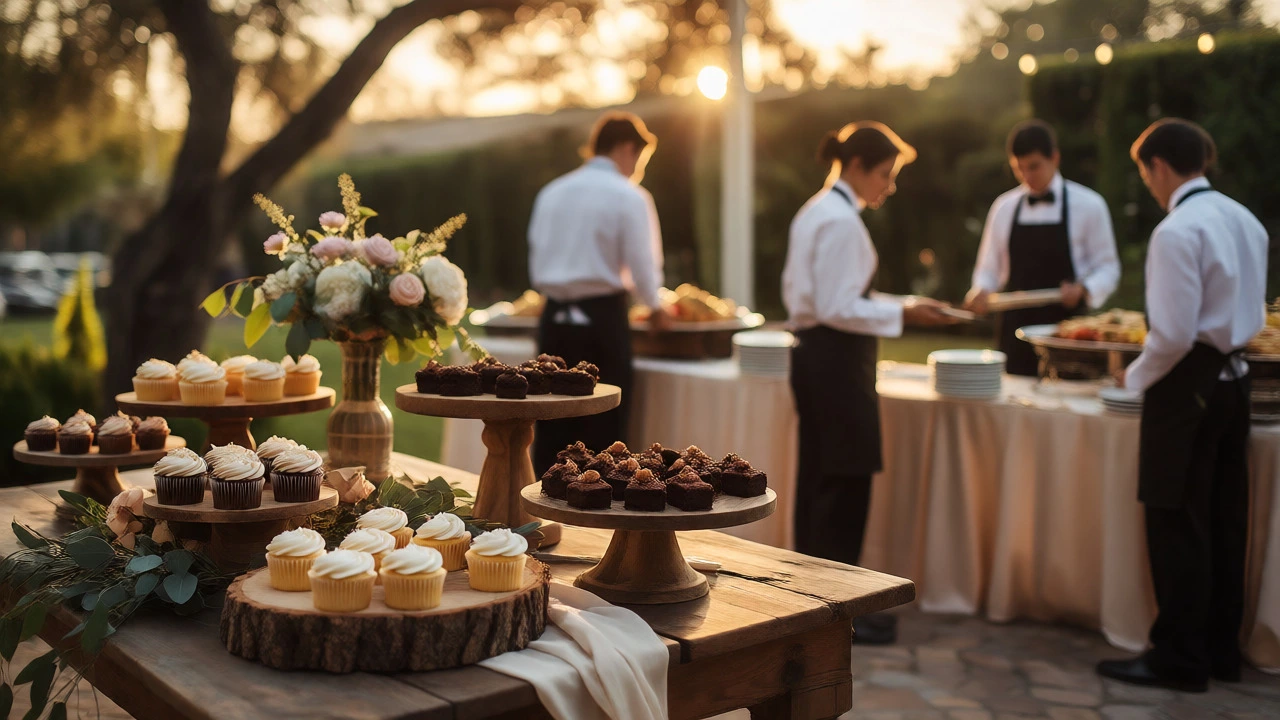
Instead of a $500 custom cake plus $20 per head for dessert platters, ask local bakeries for bulk orders of cupcakes, brownies, or doughnuts. Present them beautifully on rented stands. You get variety, lower cost, and less pressure on the main kitchen.
3. Simple Buffet Styles
If you insist on DIY main meals, choose foods that scale well. Tacos, pasta bars, or BBQ ribs are forgiving. Plated dinners are not. One bad plate ruins the vibe; a slightly messy taco station feels rustic and fun. Choose menu items that don’t require precise timing or complex heating.
The Venue Factor
This is the dealbreaker for many. Some venues have exclusive catering contracts. You literally cannot bring outside food. Others allow "external catering" but charge a "corkage fee" or "kitchen usage fee." This can range from $500 to $2,000 flat, or $10-$20 per guest. Always read the fine print. If your venue charges $15/head for kitchen access, your $25 DIY food cost becomes $40/head. Suddenly, the savings evaporate.
Also, consider space. Do you have a commercial-grade kitchen? Home fridges aren’t built for 100 pounds of shrimp. You’ll need to rent coolers, transport food safely, and ensure it stays at safe temperatures during transit. A broken chain of custody means food poisoning, which is an expensive and embarrassing way to end a party.
Decision Checklist: Should You Go DIY?
Before you sign up for the culinary marathon, run through this quick audit. If you check more than two boxes, stick with professionals.
- [ ] You hate cooking for large groups.
- [ ] Your venue has strict external catering rules or high fees.
- [ ] You don’t have access to a reliable team of sober helpers.
- [ ] You want to be present at your own wedding, not stuck in the back room.
- [ ] You are sensitive to stress and perfectionism.
If you checked mostly "No," then DIY might work for you. But treat it like a business venture, not a hobby. Create a spreadsheet. Track every dollar. Buy insurance. And for the love of everything, hire a professional to handle the heavy lifting-like bartending or final plating-even if you cook the rest.
Final Verdict
Is a DIY wedding cheaper? Technically, yes. Financially, it’s marginal. Emotionally, it’s costly. Most couples find that the $2,000 saved on catering is eaten up by equipment rentals, extra staffing, and the sheer exhaustion of managing a pop-up restaurant. The best approach is hybrid: let pros handle the risky, high-stakes elements (main course, alcohol service), and DIY the low-risk, high-impact items (desserts, welcome drinks, decor). That way, you save money without sacrificing your weekend.
How much does it really cost to DIY feed 100 guests?
Expect to spend between $6,000 and $9,500 total. This includes food ($3,000-$4,500), equipment rental ($800-$1,500), and basic staffing ($1,500-$3,000). Compare this to $8,000-$12,000 for full-service catering, and the savings are modest.
Do I need insurance for DIY catering?
Yes. Most venues require public liability insurance. If a guest gets sick from undercooked food or slips on spilled sauce, you are liable. Pro caterers include this in their quote; DIYers must purchase it separately, usually costing $200-$500.
What is the cheapest type of food to serve at a wedding?
Pasta bars, taco stations, and BBQ meats are generally the most cost-effective. They use affordable staples, scale easily, and are less prone to drying out compared to plated fish or beef tenderloin.
Can I hire just servers and cook myself?
You can, but it’s tricky. Servers expect a certain workflow. If you’re still cooking when they arrive, they stand idle (paying them to wait). Better to hire a private chef who cooks and serves, or use a hybrid model where you prep ahead and a pro finishes the service.
Does DIY catering mean no alcohol markup?
Not necessarily. Venues often charge a "corkage fee" or "BYO fee" per bottle or per guest. Calculate this carefully. Sometimes buying beer kegs directly saves money, but premium wines might still incur significant venue handling fees.