
Wedding Budget Realism Calculator
You see a friend’s Instagram story: a lush floral arch, a string quartet, and a venue that looks like it belongs in a fairy tale. The caption says "Best day ever!" but your brain immediately does the math. If you try to copy that vibe, will you end up paying off debt for the next decade? Or worse, will you spend so much on flowers that you can’t afford the honeymoon?
Here is the uncomfortable truth: there is no single "correct" number for a wedding budget. A $5,000 backyard ceremony and a $50,000 ballroom gala can both be perfect. But knowing what is realistic helps you avoid two major pitfalls: overspending out of guilt or underspending until your event feels cheap. Let’s break down what people actually pay, where the money goes, and how to set a number that lets you sleep at night.
The Global vs. Local Reality Check
First, let’s kill the myth that everyone spends six figures. In the United States, the average wedding cost hovers around $30,000 to $35,000 according to recent data from The Knot. In Australia, where I live, the numbers are slightly different but follow a similar trajectory; the Australian Bureau of Statistics and industry reports often cite averages between AUD 25,000 and AUD 35,000. However, these are medians pulled from a wide range of couples. Many savvy planners are keeping costs under $15,000 by cutting the fat.
Your location matters more than you think. A wedding in Sydney or New York City will naturally cost more per head due to venue rents and labor rates than one in rural Ohio or regional Victoria. When you ask "how much should I spend," you aren't just asking about your bank account; you're asking about the market rate in your specific zip code. Always adjust national averages down by 20-30% if you’re planning outside a major metropolitan hub.
Where Does the Money Actually Go?
If you look at a typical wedding spreadsheet, you’ll notice a clear hierarchy of expenses. It’s not random. Vendors know their worth, and certain categories eat up the lion’s share of the pie. Understanding this breakdown prevents sticker shock when you get quotes.
| Category | Average % of Budget | Why It Costs This Much |
|---|---|---|
| Venue & Catering | 40-50% | Food, drink, service charges, and room rental fees are fixed high-cost items. |
| Photography & Video | 10-15% | Professionals charge for shooting time plus hours of editing and equipment. |
| Attire & Beauty | 8-10% | Dresses, suits, alterations, hair, and makeup require skilled labor. |
| Flowers & Decor | 8-10% | Perishable goods and setup labor make this surprisingly expensive. |
| Entertainment | 5-8% | Bands or DJs need to cover travel, gear, and performance hours. |
| Stationery & Rings | 3-5% | Invitations and rings are smaller line items but add up quickly. |
Notice that Venue and Catering dominate. This is because you are feeding and housing every guest for several hours. You cannot easily cut costs here without impacting the guest experience directly. If you want to save money, you usually have to reduce the guest count or choose a less prestigious venue, rather than trying to negotiate the price of the chicken down.
Calculating Your Personal "Realistic" Number
So, forget the national average. What is realistic for you? A common rule of thumb used to be "three months' salary," but that advice is outdated. For many couples, especially those saving independently, a better formula is looking at disposable income and savings goals.
- The Savings Cap: Never dip into emergency funds. If you have $20,000 saved specifically for the wedding, that is your hard ceiling.
- The Monthly Impact Test: Calculate what your monthly loan payment would be if you financed the remaining balance. Can you comfortably afford an extra $300/month for three years? If not, scale back.
- The Per-Guest Metric: Work backward from your desired guest list. If you have 100 guests and a total budget of $20,000, that’s $200 per person. Is that enough for food, drinks, and decor in your area? Often, $150-$250 per head is the sweet spot for a nice, non-luxury event.
Be honest with yourself about family contributions. If parents are offering $5,000, do they expect control over the playlist? Money comes with strings. Decide early if you want to accept help and the associated opinions, or stay independent and keep the budget tighter.
The Hidden Costs That Blow Up Budgets
Most couples create a budget based on vendor quotes, then forget the "invisible" expenses. These are the things that don’t show up in the initial proposal but hit your credit card later.
Gratuity is a tip added to service bills, typically ranging from 18% to 20% of the catering and bar bill. On a $10,000 catering contract, that’s an extra $2,000 you might not have planned for. Then there are Service Charges, which venues sometimes add as a flat fee for cleaning and staffing, separate from tips.
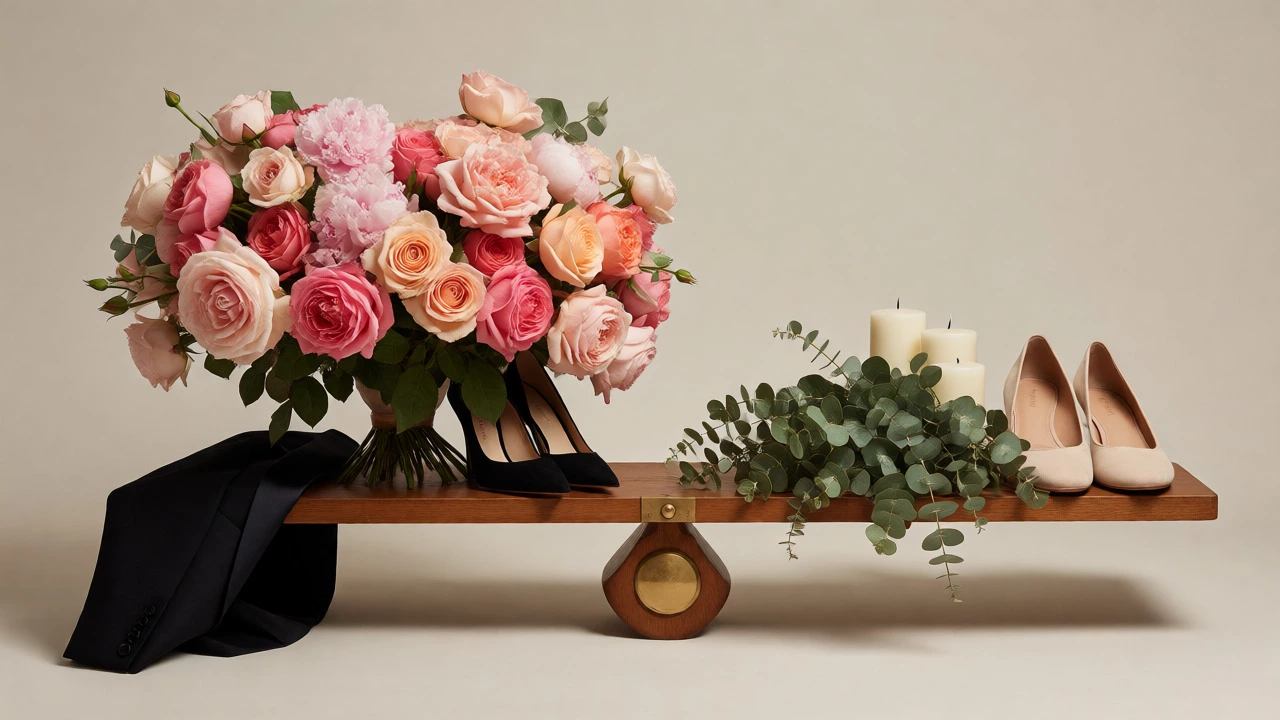
Don’t forget attire extras. The dress price tag rarely includes alterations, steaming, accessories, shoes, or underwear. A $1,500 dress can easily become a $2,500 outfit once you add a veil and professional tailoring. Similarly, ring insurance and shipping fees for invitations are small amounts individually but collectively drain hundreds of dollars.
Decorations: Where to Save and Where to Splurge
Since this article touches on decorations, let’s zoom in there. Flowers are notorious budget killers. A full floral installation for a reception can cost $3,000 to $5,000 alone. Is it worth it? Only if florals are your top priority.
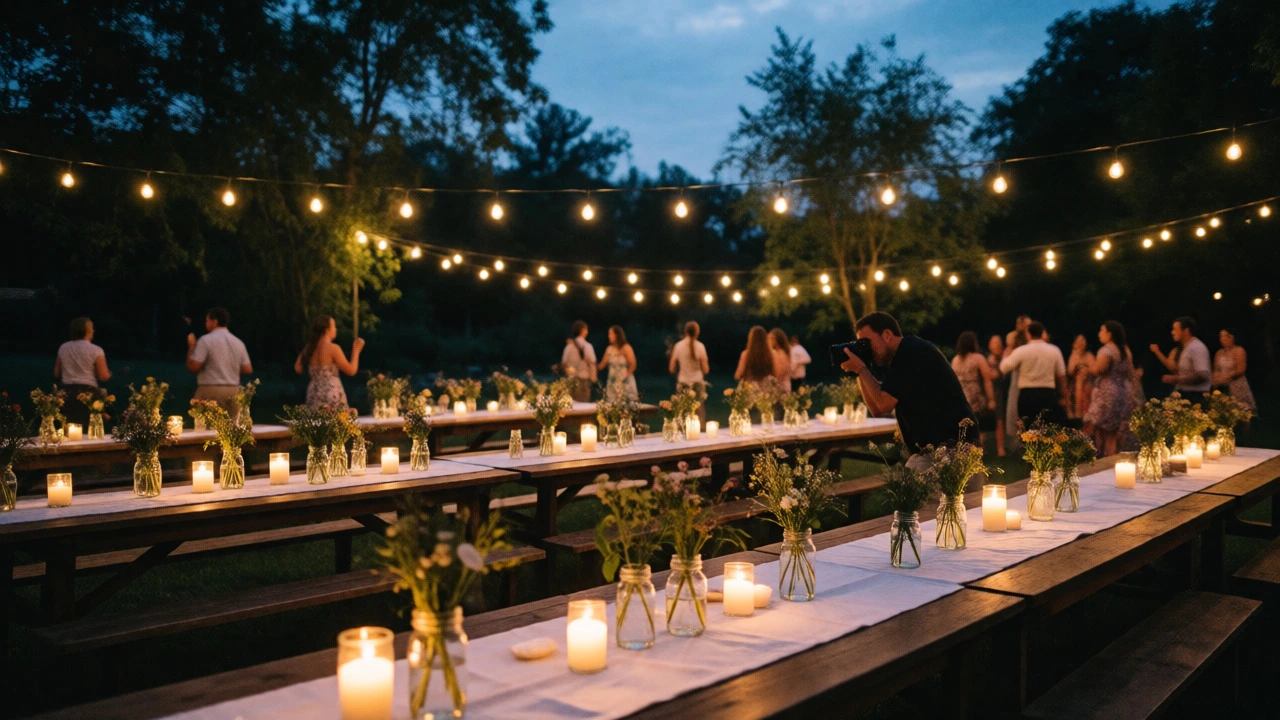
If you love flowers, splurge on the focal points: the bridal bouquet and the centerpieces for the head table. Use greenery (eucalyptus, ferns) mixed with fewer blooms to fill space cheaper. If you don’t care about fresh flowers, switch to potted plants, candles, or fabric draping. Candles provide ambiance for pennies compared to roses.
Another trick: repurpose. Use ceremony flowers at the reception. Move the welcome sign to the cocktail hour backdrop. Buy bulk faux flowers for aisle markers if you plan to donate them to a hospital afterward. Realism means accepting that no one remembers the exact type of lily on table 12, but they remember if the lighting was romantic or the music was loud.
When "Cheap" Becomes "Costly"
There is a difference between being frugal and being cheap. Cutting corners on critical vendors can cost you more in stress or regret. Here is where you shouldn’t skimp too aggressively:
- Photographer: You only get one shot. A bad photographer can’t fix blurry images in post-production. Pay for quality.
- Catering Quality: Hungry guests are unhappy guests. Better to serve a simple, well-executed meal than a complex, mediocre one.
- Coordinator (Day-of): Even if you DIY everything else, hiring a coordinator for the final 6 hours ensures you aren’t running around fixing chairs while your mother-in-law asks where the cake is.
Conversely, you can safely cut costs on favors (most go in the trash), elaborate save-the-dates (digital works fine), and excessive signage. Prioritize experiences over objects.
Final Thoughts on Financial Peace
A realistic amount to spend is whatever allows you to start your marriage without financial anxiety. For some, that’s $10,000. For others, it’s $40,000. The key is intentionality. Every dollar spent should align with your values. If you value travel, skip the custom wedding website subscription and put that cash toward the flight tickets. If you value food, splurge on the steak dinner and wear a secondhand suit.
Track every expense in a shared spreadsheet. Review it weekly. Adjust as needed. Remember, the wedding is one day; the marriage lasts decades. Don’t let one party ruin the long-term financial health of your partnership.
Is it rude to have a low-budget wedding?
Not at all. Most guests understand that weddings are expensive and appreciate being invited regardless of the venue's grandeur. Focus on hospitality-good food, good music, and warm welcomes-and guests won't notice the lack of expensive decor.
How much should I spend on my wedding dress?
The global average is around $1,000 to $1,500, but this varies wildly. A realistic approach is to allocate 8-10% of your total budget to attire (including suit, alterations, and accessories). If you prioritize fashion, you might spend more; if you prioritize other areas, consider renting or buying pre-owned.
Do we need to pay for our guests' travel?
No, traditionally guests cover their own travel and accommodation. However, providing a block of hotel rooms at a discounted rate is a helpful gesture. Some hosts offer shuttle services for local transport, which is appreciated but not mandatory.
What is the most effective way to lower wedding costs?
Reducing the guest list is the single most effective way to lower costs. Since catering and venue minimums are often based on headcount, cutting 20 guests can save thousands. Other methods include choosing off-peak days (Friday/Sunday) or seasons (winter) and opting for buffet-style dining instead of plated meals.
Should we use a wedding planner?
A full-service planner can cost 10-15% of your budget but may save you money by negotiating vendor contracts and avoiding costly mistakes. If you are organized and have time, a "month-of" coordinator is a more affordable option that handles logistics without managing the entire planning process.