Wedding Ring Budget Value Calculator
Your Budget
Enter your wedding ring budget to see what you can get for your money
* Average US wedding ring budget: $3,000-$5,800
What Your Budget Gets You
At your budget of , you can expect:
""
Enter your budget to see what you can get.
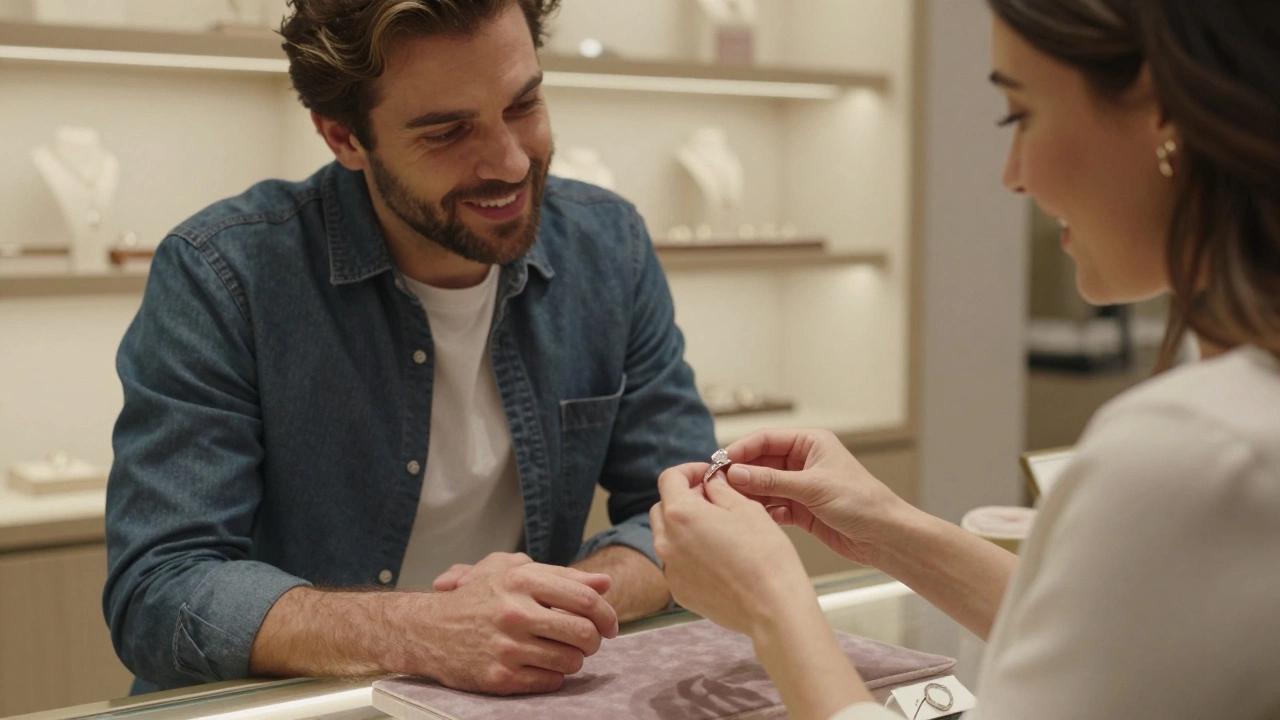
Buying a wedding ring shouldn’t feel like a negotiation you’re unprepared for. Yet too many people walk into a jewelry store nervous, guessing, or worse-overpaying because they didn’t say anything about what they could actually afford. The big question: Should I tell the jeweler my budget? The answer isn’t just yes-it’s essential.
Why hiding your budget backfires
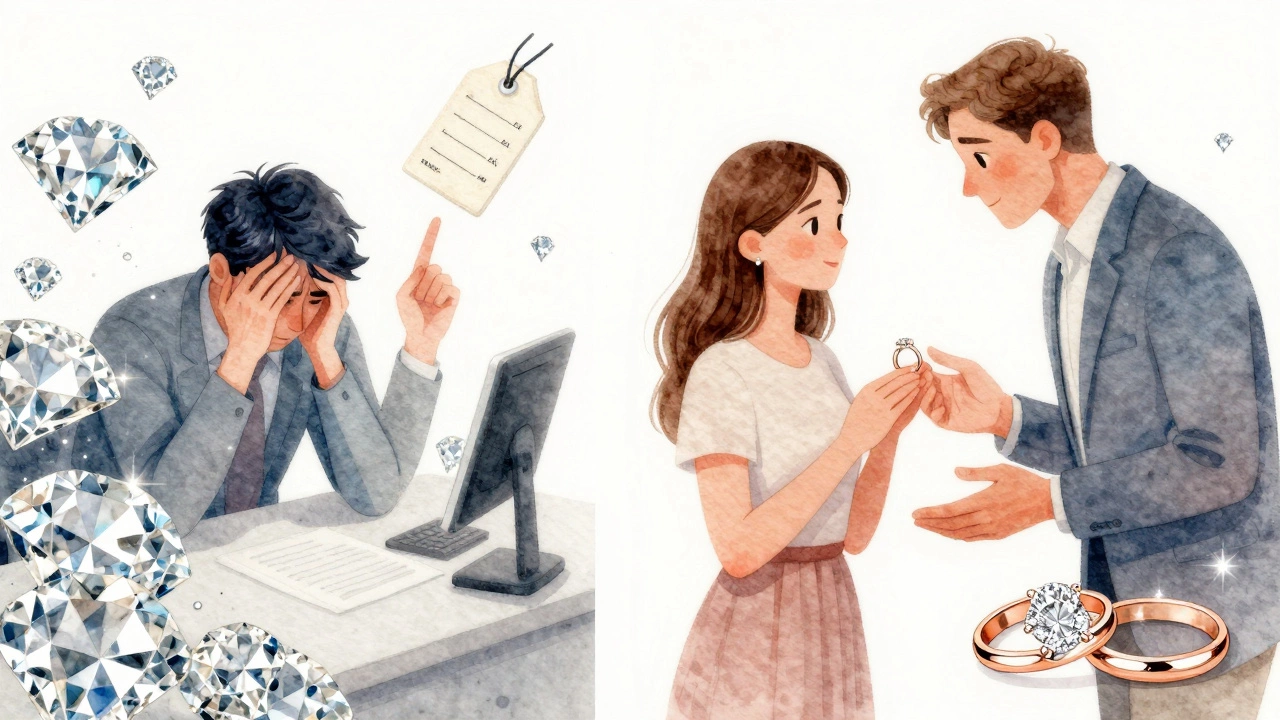
If you don’t tell the jeweler your budget, they’ll assume you can spend more. That’s not malice-it’s business. Jewelers are trained to start with higher-end pieces and work down. Without knowing your limit, they’ll show you $8,000 rings before even mentioning a $2,000 option. You might walk out thinking you got a "deal" on a $5,000 ring, when you could’ve gotten something just as beautiful for half the price. Real talk: one couple told me they spent $6,200 because they didn’t mention their $3,500 limit. The jeweler showed them a ring with a 1.2-carat diamond, convinced them it was "a rare find," and they left feeling proud. Two weeks later, they found the exact same setting with a 0.9-carat diamond at a different store for $2,800. The difference? The second jeweler asked, "What’s your budget?" upfront.How to tell your budget without sounding cheap
You don’t need to say, "I only have $3,000." That sounds like a limit. Instead, say: "I’m looking to stay around $3,000 so I can keep the rest of the wedding costs balanced." That’s not a restriction-it’s a plan. Jewelers hear this all the time. They respect clarity. A good jeweler will respond by showing you options that fit. Maybe they’ll suggest a lab-grown diamond, a different metal like rose gold instead of platinum, or a halo setting to make a smaller stone look bigger. All of these are smart, beautiful, and budget-friendly. But they won’t suggest them if you don’t give them a target.What happens when you do tell your budget
When you say your budget out loud, you shift the conversation from sales pitch to problem-solving. The jeweler becomes your advisor, not your salesperson. Here’s what typically happens next:- They’ll show you rings that match your price range-no fluff, no upselling.
- They might suggest alternatives you didn’t know existed, like vintage settings or custom designs that cost less than mass-produced ones.
- You’ll get honest answers about diamond quality. "That 1-carat diamond looks great, but the color is J and clarity is I1-those aren’t ideal for a wedding ring. Here’s a 0.8-carat G-SI1 that will look just as bright and last longer."
- They might even offer payment plans or trade-in options you didn’t know were available.
What to say-and what not to say
There’s a difference between being honest and being vague. Here’s how to talk about your budget the right way:Good phrases:
- "I’m working with a budget of around $X. I’d love to see what fits well within that range."
- "I want to make sure this ring lasts a lifetime, so I’m looking for the best value, not just the biggest stone."
- "I’ve done some research and I know what matters to me-cut, clarity, and craftsmanship. I’d appreciate your advice on how to maximize those within my budget."
Avoid these:
- "I don’t want to spend too much." (Too vague-sounds like you’re embarrassed.)
- "I’m broke." (No one wants to work with someone who feels defeated.)
- "I’ll buy whatever you think is best." (You’re handing over control-and likely overpaying.)
What jewelers won’t tell you (but you need to know)
Jewelers make more profit on high-priced rings. A $1,000 ring might have a 50% markup. A $10,000 ring? The markup could be 100% or more. That’s why they push bigger stones and higher karat metals. But here’s the truth: you don’t need a 2-carat diamond to look like you spent a fortune. A well-cut 0.8-carat diamond in a 14k gold setting with a halo of smaller stones can look just as stunning as a 1.5-carat solitaire-and cost $3,000 less. That’s not a compromise. That’s strategy. Also, remember this: the price tag doesn’t reflect the ring’s emotional value. Your partner won’t remember how much you spent. They’ll remember how you looked when you gave it to them. How you made them feel. Whether the ring felt personal, thoughtful, and real.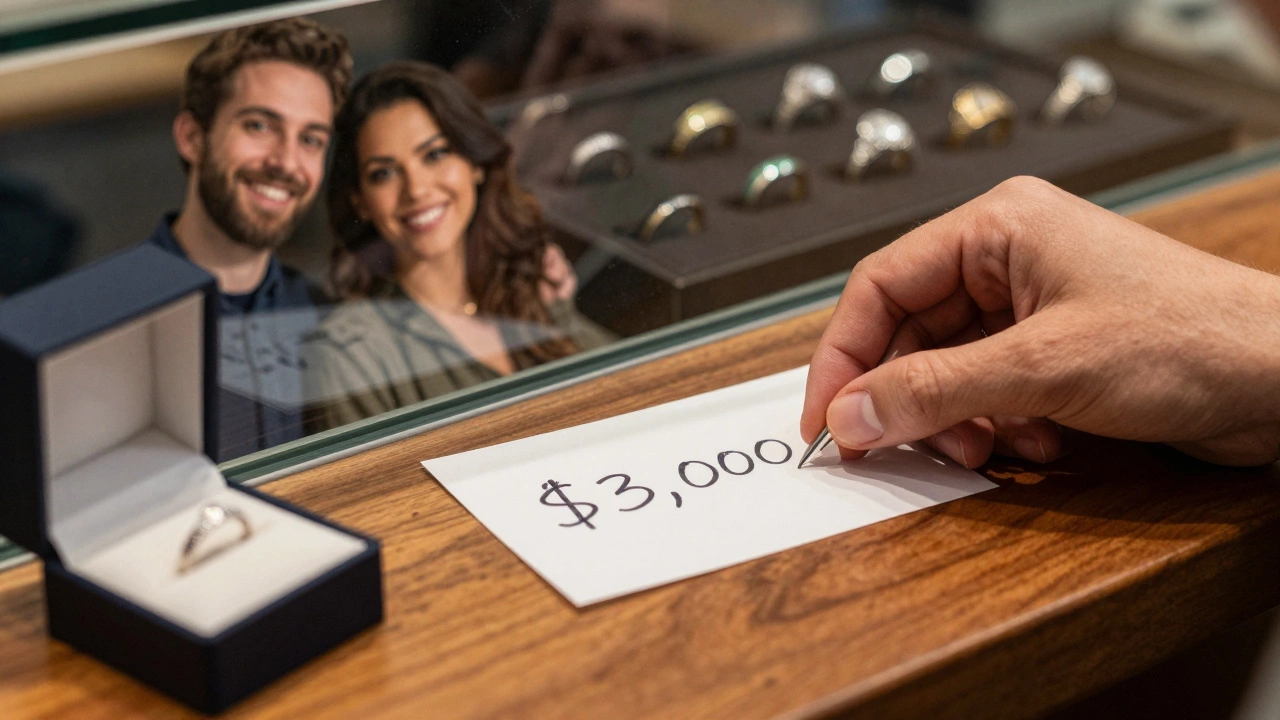
When to walk away
If you tell your budget and the jeweler acts surprised, dismissive, or tries to pressure you into spending more? Walk out. That’s not a jeweler who cares about you. That’s a salesperson who cares about their commission. Good jewelers don’t push. They guide. They ask questions like:- "What’s your partner’s style? Minimalist or bold?"
- "Do you want something classic or unique?"
- "Are you planning to wear this every day?"
Pro tip: Get quotes from multiple places
Don’t just go to one store. Visit three: a local independent jeweler, a chain like Kay or Zales, and an online retailer like Blue Nile or James Allen. Bring your budget to each one. You’ll notice something: the independent jeweler will often give you the best value. They don’t have the overhead of big brands. They’ll show you real stones, not just catalog images. And they’ll let you hold the ring in natural light to see how it sparkles. One man spent $1,800 at a local shop after seeing a $3,200 ring at a mall store. The ring was the same shape, same setting, same diamond certification-but the local jeweler didn’t have a marketing budget. That’s where the savings are.Your ring, your rules
There’s no rule that says you need to spend two months’ salary on an engagement ring. That myth was created by a diamond company in the 1940s. Today, the average American couple spends $5,800 on an engagement ring. But the median? Around $3,000. And those couples are just as happy. Your ring should reflect your values-not someone else’s expectations. If you’re saving for a house, paying off student loans, or just don’t want to start your marriage in debt? That’s smart. And you deserve to feel proud of your choice. Telling your jeweler your budget isn’t weakness. It’s clarity. It’s confidence. It’s taking control of a process that’s been designed to make you feel like you’re not enough unless you spend more. You are enough. Your love is enough. Your ring just needs to be real.Is it rude to tell a jeweler my budget?
No, it’s not rude-it’s smart. Jewelers expect you to have a budget. In fact, they appreciate customers who are clear about their limits because it helps them serve you better. Being upfront saves time, reduces pressure, and leads to better choices.
Will telling my budget limit my options?
Actually, the opposite is true. When you give a jeweler your budget, they can show you creative alternatives you wouldn’t have considered-like lab-grown diamonds, vintage settings, or alternative metals. Without that boundary, you’ll only see the most expensive pieces they have on display.
Should I tell my budget over the phone or in person?
In person is best. Phone calls can feel impersonal, and you won’t be able to see the rings or feel the weight and craftsmanship. If you’re nervous, write down your budget and the key points you want to make ahead of time. Bring the note with you. You’ll feel more confident.
What if the jeweler says my budget is too low?
If they respond with judgment or push you to spend more, walk out. A professional jeweler won’t shame your budget-they’ll work with it. They might say, "That’s a tight budget, but here’s what we can do," then show you thoughtful options. If they don’t, they’re not the right fit.
Can I negotiate the price after stating my budget?
Yes, but only if the jeweler is open to it. Independent jewelers often have more flexibility than big chains. You can say, "I love this ring, but it’s slightly over my budget. Is there any room to adjust the price?" Sometimes they’ll offer a small discount, a free resizing, or a complimentary cleaning service. Don’t expect a huge cut, but polite negotiation is normal.
If you’re still unsure, start with a simple rule: only buy a ring you’d be proud to show your parents, your friends, and your future self. That’s not about the price. It’s about the meaning.