Cake Cutting Ceremony: What It Means and How It Fits Into Your Wedding
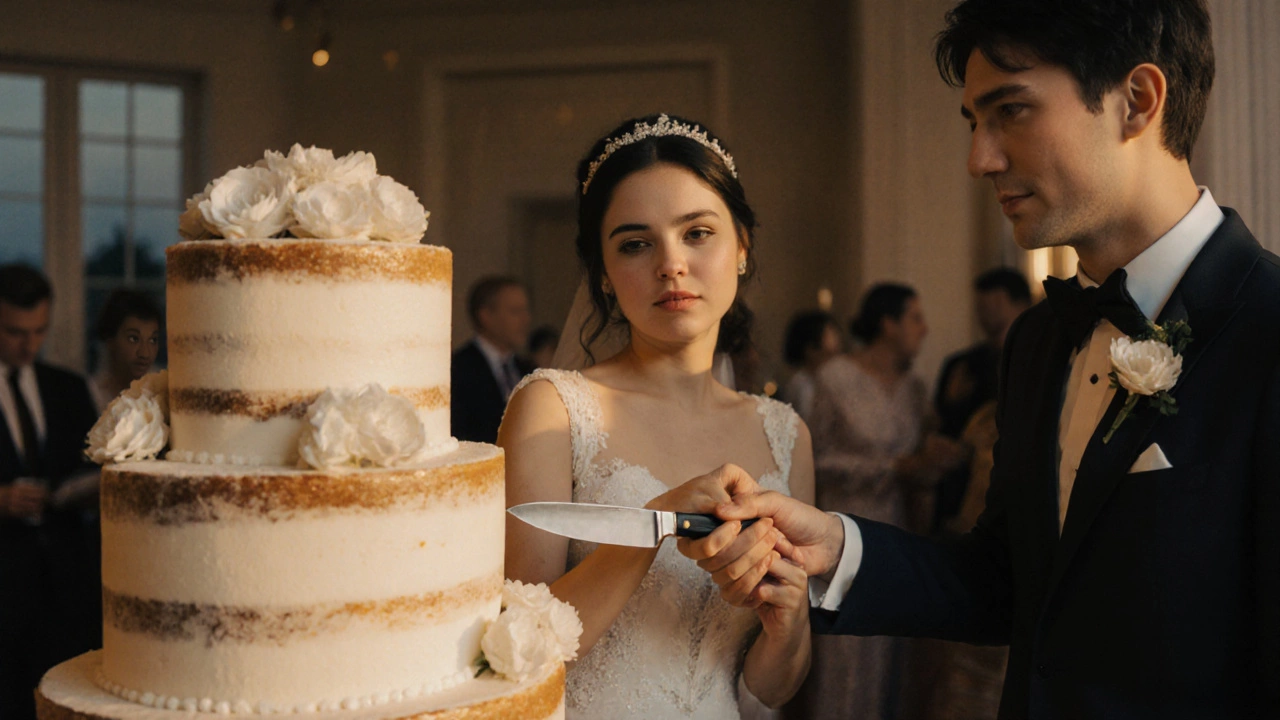
When you think of a cake cutting ceremony, a symbolic moment in a wedding reception where the couple cuts their first slice of cake together. Also known as cake slicing tradition, it’s one of those moments that feels both timeless and deeply personal. It’s not just about dessert—it’s about sharing something sweet, intentional, and built together. This ritual isn’t mandatory, but if you choose to include it, it carries weight. It’s a quiet act that says, "We’re starting this life side by side," and it’s often one of the few moments in the reception where the couple pauses, looks at each other, and just *is*.
The wedding cake, a central decorative and symbolic element of the reception, often tiered and custom-designed to reflect the couple’s style doesn’t just sit there for photos. It’s meant to be eaten, shared, and remembered. The way you cut it—hands together, knife in sync—mirrors how you’ll navigate life’s big and small moments. You don’t need a seven-tier masterpiece to make this meaningful. A simple two-tier cake, a homemade loaf, or even cupcakes arranged like a tower work just fine. What matters is the intention. And while some traditions say the bride feeds the groom first to symbolize her provision, modern couples often switch it up—or skip the feeding entirely. There’s no rulebook anymore, just what feels true to you.
It’s also tied to wedding reception rituals, structured moments during the reception that mark transitions, celebrate the couple, and engage guests. The cake cutting usually follows the first dance and before the open dance floor. It’s a signal: the formal part is winding down, the party is heating up. Guests gather around, phones come out, and suddenly everyone’s part of the moment. That’s why timing matters. Cut too early, and people are still eating dinner. Too late, and the energy’s fading. Most couples do it right after the toast or just before the dance floor opens—when the room is full and the mood is light.
And let’s talk about cake serving, the practical process of portioning and distributing wedding cake to guests after the ceremonial cut. You don’t need to serve every guest from the main cake. Many couples use a smaller display cake for the ceremony and a separate, budget-friendly cake for serving. It’s smart, practical, and still looks beautiful in photos. Some even skip the traditional cake entirely and go for a dessert bar—cookies, donuts, or mini pies. If your guests are more into ice cream than fondant, that’s perfectly fine. The ceremony isn’t about the cake’s price tag. It’s about the gesture.
There’s a reason this tradition stuck around: it’s simple, visual, and emotional. It doesn’t require a speech, a dance, or a budget. Just two people, a knife, and a cake. And maybe a little flour on the bride’s dress afterward. That’s the part people remember—not the flavor, not the height, not the cost. It’s the laughter, the sticky fingers, the way they leaned into each other while cutting. That’s the real cake cutting ceremony.
Below, you’ll find real advice from couples who’ve been there: how to plan the timing, what to do if your cake is too big, how to handle family pressure, and even how to make this moment yours without following the script. Whether you’re planning a tiny elopement or a big reception, there’s something here for you.
What to Say When Cutting a Wedding Cake: Traditional Lines and Real-Life Ideas
What to say when cutting a wedding cake? Learn traditional phrases, real-life examples, and what to avoid. Make this moment meaningful without overthinking it.
Read more