Wedding Ring Tradition: What It Really Means and How It Evolved
When you think of a wedding ring tradition, a centuries-old custom where partners exchange bands as a symbol of lifelong commitment. Also known as marriage ring customs, it’s one of the most universal rituals in human history—found in nearly every culture, yet deeply personal in how it’s practiced today. It’s not just about the ring itself. It’s about what the ring represents: trust, continuity, and a promise made in front of everyone who matters.
This tradition didn’t start with diamonds or gold bands. Ancient Egyptians tied reeds or hemp around the fourth finger of the left hand, believing a vein there led straight to the heart—the vena amoris, the "vein of love". vein of love. Romans later adopted metal rings, often made of iron, as a legal symbol of ownership and binding. Fast forward to medieval Europe, and rings became more ornate, sometimes engraved with poems or religious symbols. The modern white gold or platinum band? That’s a 20th-century shift, pushed by marketing and the rise of mass production. But even now, the core idea hasn’t changed: a ring on the finger says, "I choose you, today and every day after."
It’s not just about the ring. The engagement ring customs, the practice of presenting a ring before marriage as a public declaration of intent. proposal ring tradition evolved separately, often tied to economic status and family expectations. In some cultures, the groom’s family still pays for the ring. In others, couples buy it together. Some skip it entirely. And that’s okay. The wedding symbolism, the meaning behind objects, gestures, and rituals used in marriage ceremonies. marriage rituals today are less about following rules and more about what feels true to you. That’s why you’ll see couples wearing matching bands, stacking rings, choosing non-traditional metals, or even going ringless. The tradition isn’t broken—it’s being rewritten.
What’s clear from the stories shared by couples today is that the wedding ring tradition isn’t about perfection. It’s about presence. It’s about the moment you slip that band on, the way your hand feels when you hold theirs, the quiet understanding that this isn’t just a piece of jewelry—it’s a daily reminder. And that’s why, even in a world full of changing norms, this ritual still holds weight. You’ll find posts below that dig into the real stories behind who pays for the ring, why some couples don’t wear theirs, how cultural backgrounds shape the choice, and what modern alternatives look like. These aren’t rules. They’re reflections. Real people, real choices, real love.
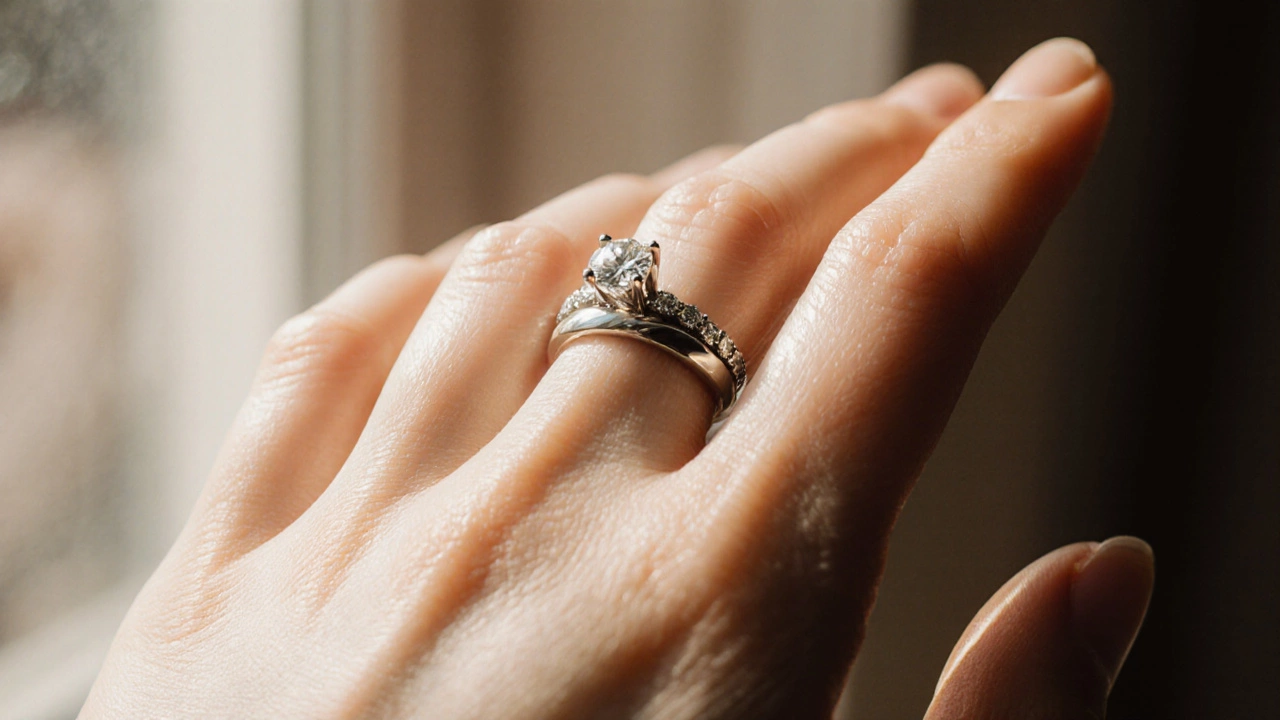
Do You Still Wear Your Engagement Ring After You Get Married?
After marriage, do you keep wearing your engagement ring? Many couples stack it with the wedding band, while others switch to just the band or repurpose the ring. There's no right or wrong-just what feels true to you.
Read more