Engagement Ring Budget & Value Planner
Step 1: Determine Your Budget
Step 2: Optimize Value (The 4 Cs)
Estimated Budget: $0
Adjust the settings above to see your target budget.
Your Value Strategy:
Quick Takeaways for Ring Shopping
- Forget the "three months' salary" myth; it's outdated marketing.
- Prioritize the "4 Cs" based on what is visible to the naked eye.
- Focus on the lifestyle of the wearer (e.g., an active job needs a secure setting).
- Budget for the total cost, including the band and potential insurance.
The Truth About the Three-Month Salary Myth
Back in the day, De Beers is the global diamond mining company that pioneered the modern engagement ring marketing decided that diamonds should be the standard for proposals. They created the "three months' salary" guideline to push people toward spending more. In 2026, this approach is practically a financial trap. Why? Because salaries have risen, but the cost of living has soared even faster.
If you make $100,000 a year, spending $25,000 on a ring might be doable for some, but for others, that's a house deposit or a wedding fund. The modern shift is toward "value-based spending." Instead of a fixed number, look at your monthly cash flow. If you can put aside $200 a month for a year, your budget is $2,400. If you have a lump sum, decide how much of it you can lose without feeling a pinch in your daily life. A ring is a symbol of love, not a receipt of your bank balance.
Decoding the 4 Cs for Maximum Value
When you walk into a jewelry store, the staff will talk about the 4 Cs is the international standard for grading diamond quality, consisting of Cut, Color, Clarity, and Carat weight. To follow the golden rule of spending wisely, you need to know where to compromise and where to splurge.
Cut is the most important C. A diamond with a poor cut will look dull, even if it's huge. Focus on "Excellent" or "Ideal" cuts because they reflect the most light. Color is where you can save. Most people can't tell the difference between a colorless (D) diamond and a near-colorless (G or H) diamond once it's set in a ring. Clarity is about internal flaws. You don't need a "Flawless" stone; a "VS2" (Very Slightly Included) diamond is usually "eye-clean," meaning you can't see the flaws without a microscope.
Finally, Carat is just weight. A 1.1 carat diamond often looks identical to a 0.9 carat diamond but costs significantly more because it crosses a whole-number threshold. Buying just under the carat mark is a pro move to save hundreds of dollars.
| Characteristic | High Priority (Don't Skimp) | Low Priority (Save Here) | Why? |
|---|---|---|---|
| Cut | Excellent / Ideal | Good / Fair | Determines the sparkle and brilliance. |
| Color | D - F (Colorless) | G - J (Near Colorless) | Hard to notice the difference in settings. |
| Clarity | VVS1 - VVS2 | VS1 - SI1 | "Eye-clean" is all that matters. |
| Carat | Exact Target Weight | Just under the 1ct/2ct mark | Price jumps sharply at whole numbers. |
Matching the Ring to the Person, Not the Trend
The biggest mistake people make is buying a ring they like, rather than a ring their partner likes. The golden rule here is to research their style. Do they wear gold, silver, or rose gold? Do they like vintage looks or a clean, modern aesthetic? If you're unsure, take a look at their current jewelry. If they wear a thin, dainty bracelet, a massive, chunky ring might feel overwhelming to them.
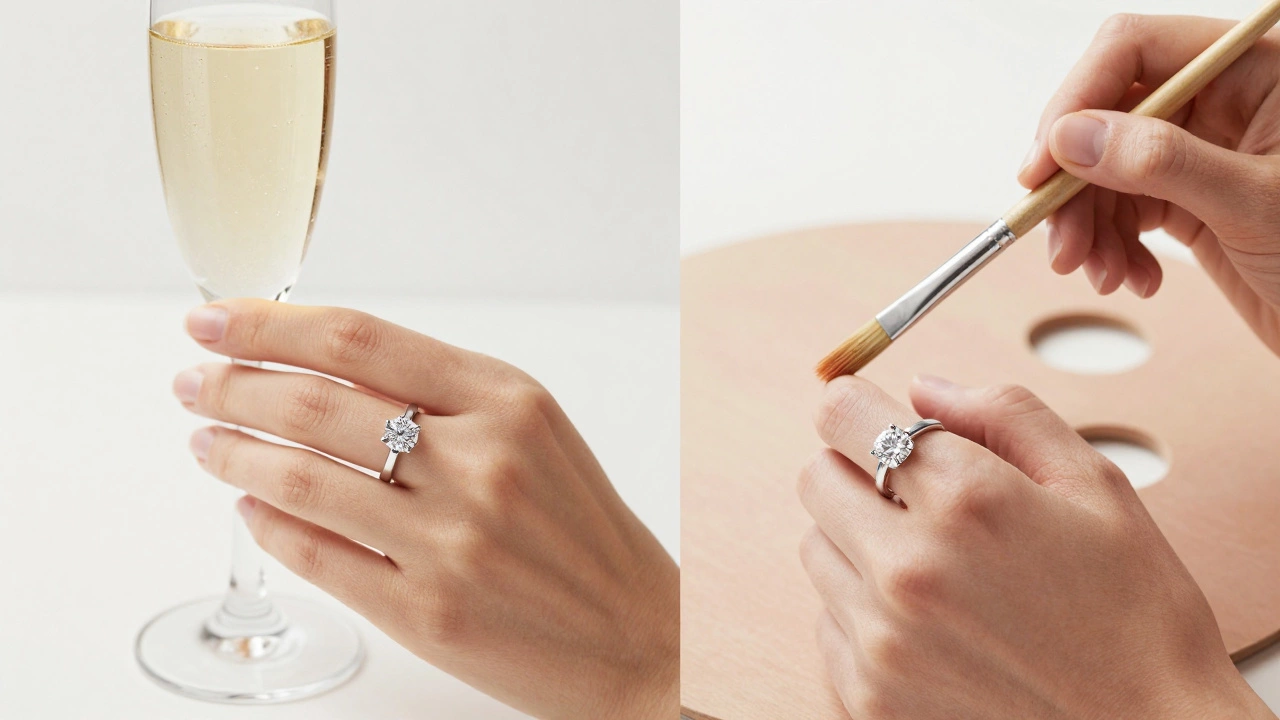
You also have to consider the Setting is the metal part of the ring that holds the gemstone in place, such as prong, bezel, or halo settings. A prong setting is classic and lets in the most light, but if your partner works with their hands-maybe they're a nurse or an artist-a bezel setting (where metal wraps around the edge of the stone) is much more practical because it won't snag on clothes or get bumped.
Exploring Lab-Grown vs. Natural Diamonds
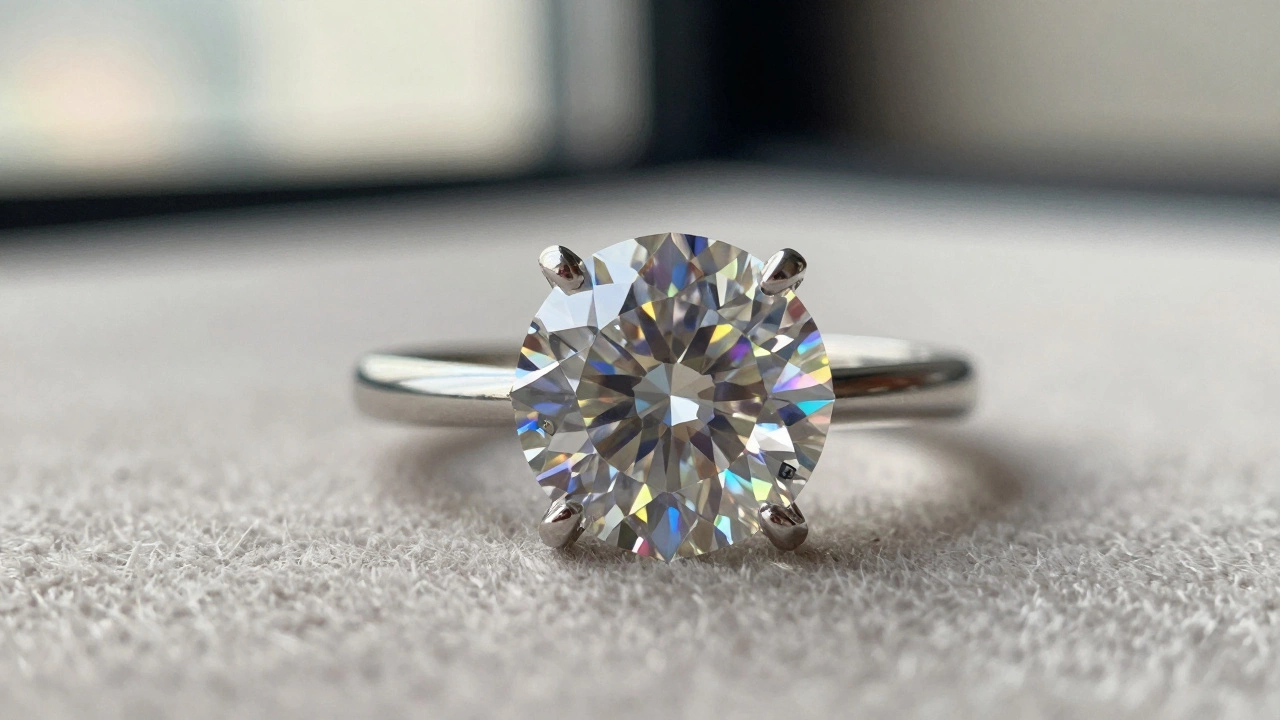
In 2026, the debate between Lab-Grown Diamonds is diamonds created in a laboratory that are chemically, physically, and optically identical to mined diamonds and mined diamonds is a huge part of the budget conversation. Here is the reality: they are the same material. They aren't "fake" like cubic zirconia; they are real diamonds.
The main difference is the price. Lab-grown diamonds are often 30% to 70% cheaper than mined ones. This allows you to get a larger, higher-quality stone without spending a fortune. Some people prefer mined diamonds for the perceived rarity and traditional value, while others prefer lab-grown for ethical reasons or simply to save money for the honeymoon. There is no wrong choice here, only the choice that aligns with your partner's values.
The Hidden Costs of the Ring
Buying the stone is only part of the battle. To avoid financial surprises, you need to account for the "extras." First, there's the Wedding Band is a second ring worn alongside the engagement ring, usually exchanged during the wedding ceremony. Many people forget that the engagement ring needs to pair well with the band. If you spend your entire budget on the center stone, you might struggle to afford a matching band later.
Then there's insurance. You wouldn't leave a $5,000 asset unprotected. Jewelry insurance usually costs a small monthly fee but covers loss, theft, or damage. Also, consider the cost of resizing. Most rings are bought in a standard size and then adjusted. While some jewelers do this for free, others charge for the labor, especially if the ring has diamonds embedded all the way around the band (eternity bands), which are incredibly difficult to resize.
Common Pitfalls to Avoid
Don't let the pressure of the moment lead you into a bad deal. One common trap is buying based on a "sale" or a "special offer" without checking the certification. Always ask for a certificate from a reputable body like the GIA is the Gemological Institute of America, the world's foremost authority on natural diamonds or AGS is the American Gem Society, which provides grading and certification for diamonds. A certificate proves that the stone's grade is accurate and not just the jeweler's opinion.
Another mistake is ignoring the "fire" of the diamond. Some stones are a perfect grade on paper but look "dead" in person. Always view the diamond under natural light, not just the high-powered spotlights of a jewelry store. If the diamond doesn't dance with light when you move it, it's not the right one, regardless of the specs.
Is the 3-month salary rule still a thing?
No, it is widely considered an outdated marketing tactic from the 1930s. Most modern couples prefer to set a budget based on their actual financial situation and priorities rather than an arbitrary percentage of income.
Which is better: Lab-grown or Natural diamonds?
Chemically and visually, they are identical. Lab-grown diamonds are significantly more affordable and often more ethical, while natural diamonds are valued for their rarity and traditional prestige. The best choice depends on your partner's preferences.
What is the most important of the 4 Cs?
Cut is the most critical. A diamond with a poor cut will not sparkle, regardless of how clear or colorless it is. Prioritize an "Excellent" or "Ideal" cut to get the most brilliance from your stone.
How do I find the right ring size?
You can borrow a ring they already wear on their ring finger and trace the inner circle on paper, use a cheap sizing kit from online, or ask a close friend or sibling to help you sneakily find their size.
Should I buy a ring with a certification?
Absolutely. A GIA or AGS certificate ensures that the diamond's quality is verified by an independent third party, preventing you from overpaying for a lower-grade stone.
Next Steps for the Ring Buyer
If you're just starting, your first step is a "style audit." Spend a weekend looking at your partner's Pinterest boards or the jewelry they already wear. Once you have a style in mind, set your hard budget limit-the maximum you can spend without feeling stressed. Then, decide between natural and lab-grown stones.
When you visit a jeweler, don't be afraid to ask to see "the stone that's just under the carat mark." This simple request can often save you 15-20% of the price for a diamond that looks identical to the more expensive one. Finally, once you purchase, immediately look into a specialized jewelry insurance policy to protect your investment.