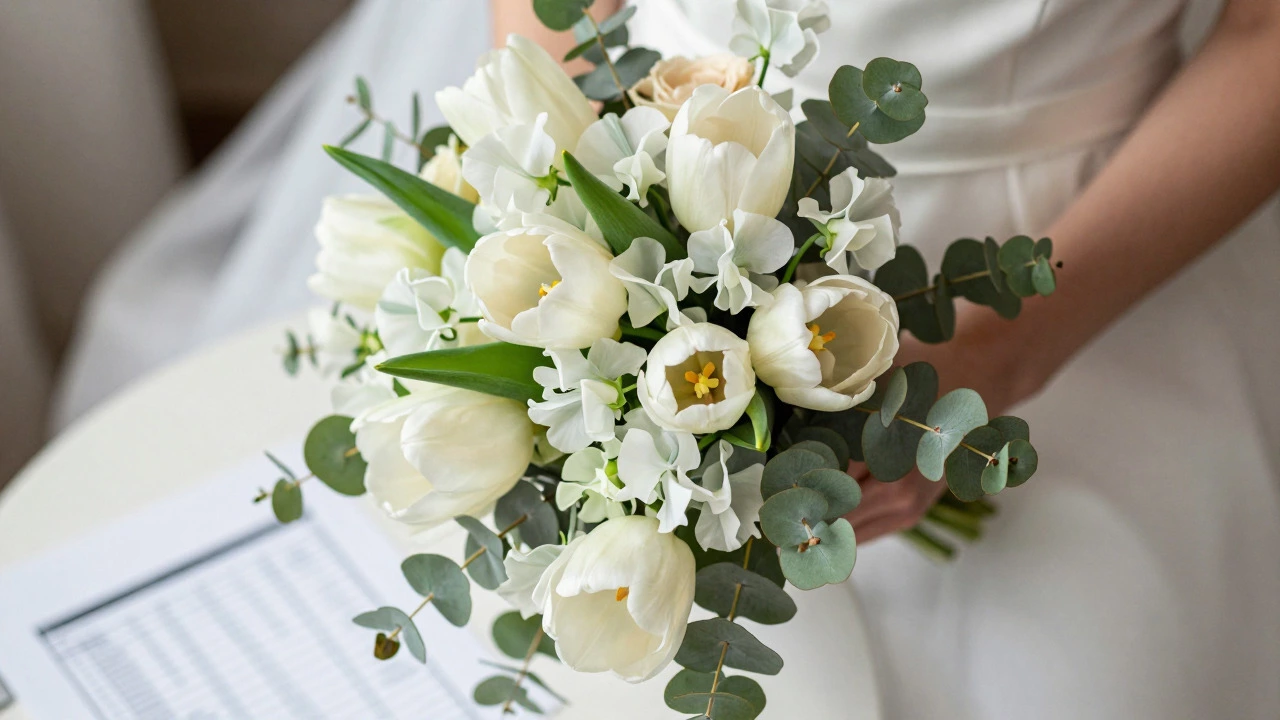
Wedding Flower Budget Estimator
Enter your details to get a personalized floral budget range and allocation advice.
Recommended Floral Budget
What This Covers
Standing in the aisle with your bouquet in hand is one of those moments you’ll replay for years. But before you get there, you’re likely staring at a spreadsheet trying to figure out if $1,500 or $4,000 is reasonable for flowers. The answer isn’t a single number-it depends on your venue size, guest count, and how much you want to DIY. Let’s break down what couples actually spend so you can set a realistic budget without breaking the bank.
The Realistic Average: Where Your Money Goes
In Australia, the national average for wedding floral costs sits between $1,200 and $3,500 for a standard ceremony and reception setup. This includes your bridal bouquet, buttonholes, hair pieces, ceremony arches, and table centerpieces. If you’re planning a larger event with 100+ guests, expect to lean toward the higher end of that range. For intimate weddings under 40 people, you might get away with $800-$1,500 if you keep designs simple.
Floral expenses typically account for 7-10% of your total wedding budget. If your total budget is $20,000, allocating $1,400-$2,000 to flowers is a healthy baseline. Why the wide range? Because “flowers” isn’t just stems. It includes labor for design, delivery, setup, teardown, and sometimes rentals like stands or vases.
| Guest Count | Budget Range (AUD) | Typical Inclusions |
|---|---|---|
| Under 40 | $800 - $1,500 | Bouquet, buttonholes, simple altar arrangement |
| 40 - 80 | $1,500 - $2,500 | Bouquet, buttonholes, arch, 6-8 table centers |
| 80 - 150 | $2,500 - $4,000 | Full suite: bouquets, arch, aisle, 10-15 tables, dance floor accents |
| 150+ | $4,000 - $7,000+ | Luxury installations, hanging florals, extensive tablescapes |
What Drives the Price Up?
Not all flowers cost the same. Three factors drastically impact your quote:
- Seasonality: Buying peonies in February (out of season) can double their price compared to November. Roses, lilies, and eucalyptus are consistently affordable year-round in Australia.
- Rarity & Import Status: Exotic blooms like orchids, anthuriums, or imported ranunculus carry premium prices due to shipping and care requirements. Native Australian flowers like banksia or grevillea are often cheaper and more sustainable.
- Complexity of Design: A loose, garden-style bouquet is faster to assemble than a tightly structured, symmetrical one. Hanging installations or large arches require structural engineering, which adds labor costs.
Florists also charge for “greenery.” Don’t underestimate it-eucalyptus, ruscus, and ferns make up 40-60% of most arrangements and add volume without the high cost of premium blooms.
DIY vs. Hiring a Florist: The Cost-Benefit Breakdown
Many couples think DIY saves money, but it only works if you have experience, access to wholesale suppliers, and help from friends. Here’s the honest math:
- Florist Quote: $2,000 for full service (design, sourcing, delivery, setup, cleanup).
- DIY Estimate: $900 in flowers + $150 in supplies (vases, tape, wire) + 10 hours of your time + risk of wilting or mismatched colors.
If you save $1,100 but spend two weekends assembling stems and worry about them dying in the heat, is it worth it? For most couples, hiring a professional for key pieces (bouquet, arch) and doing simpler table accents yourself offers the best balance. Ask your florist if they offer “partial services”-they bring the main pieces, and you handle the rest.
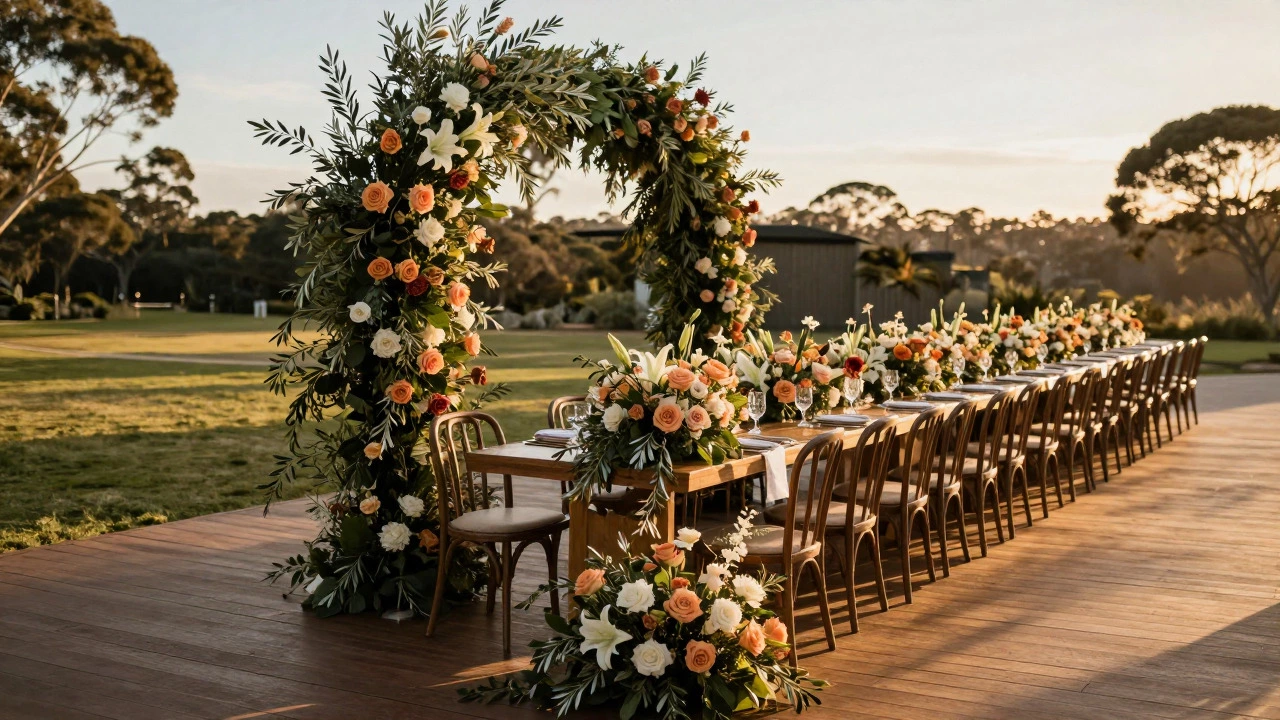
Smart Ways to Stretch Your Floral Budget
You don’t need to cut corners to look elegant. Try these strategies:
- Go Seasonal: Stick to blooms available in your wedding month. In Sydney, spring (September-November) means tulips, daffodils, and sweet peas are peak-season and affordable.
- Reuse Ceremony Flowers: Have your florist move the altar arrangement to the reception head table. One big statement piece instead of two separate ones.
- Use Greenery as Filler: Eucalyptus and olive branches are cheap, fragrant, and fill space beautifully. They reduce the need for expensive filler flowers like baby’s breath.
- Skip Table Centerpieces for Some Tables: Use candles, books, or decorative objects for half your tables. Save the floral budget for the head table and dance floor.
- Choose Local Grown: Australian-grown flowers are fresher, support local farms, and avoid import fees. Check with regional growers for bulk discounts.
Common Mistakes That Blow the Budget
Even experienced planners stumble here. Watch out for:
- Underscoping the Venue: A long, narrow room needs more linear floral coverage than a square one. Always send your florist a floor plan.
- Last-Minute Additions: Adding a second row of aisle flowers or extra boutonnieres after the quote is finalized usually incurs rush fees.
- Ignoring Hidden Costs: Delivery, setup labor, and rental fees (for stands or chandeliers) can add 15-20% to the base flower price. Get a detailed line-item quote.
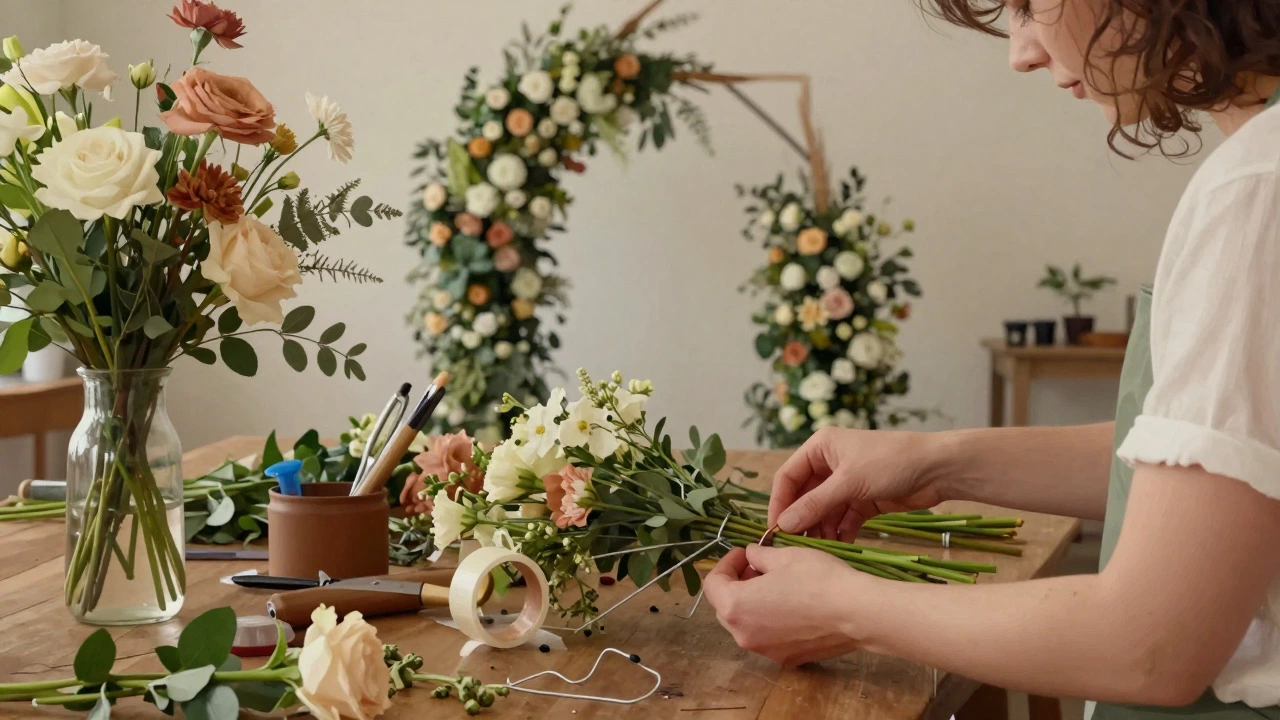
How to Talk to Your Florist Like a Pro
When booking, ask these questions to avoid surprises:
- “Is this quote inclusive of delivery, setup, and teardown?”
- “Can I see photos of past work in a similar style and budget?”
- “What happens if a bloom is out of stock? Do you substitute without extra cost?”
- “Do you offer payment plans? Most charge 50% deposit and 50% on the day.”
- “Can we do a trial for the bouquet? (Some charge for this; some include it.)”
A good florist will be transparent about substitutions and won’t pressure you into upgrades. Trust your gut-if they seem pushy, shop around. You should feel confident, not overwhelmed.
Frequently Asked Questions
Is $2,000 enough for wedding flowers in Australia?
Yes, for a mid-sized wedding (40-80 guests), $2,000 is a solid budget. It covers a bridal bouquet, groom buttonhole, ceremony arch, and 6-8 table centerpieces using seasonal blooms. If you want luxury installations or exotic flowers, you’ll need $3,500+.
Which months are cheapest for wedding flowers in Sydney?
Spring (September-November) and early autumn (March-April) are the most affordable. Blooms like roses, lilies, and eucalyptus are abundant and locally grown. Winter (June-August) can be pricier due to lower supply and heating costs for greenhouses.
Should I pay for a floral trial?
It’s recommended if you’re unsure about color combinations or styles. Many florists charge $100-$300 for a trial, which is often credited back to your final invoice. If you have clear inspiration photos, you might skip it to save money.
Are artificial flowers worth the savings?
High-quality silk or preserved flowers can look stunning and last forever, but they often cost more upfront than fresh seasonal blooms. They’re best for outdoor ceremonies where wind or heat might damage fresh flowers. For most indoor weddings, fresh flowers offer better value and fragrance.
How far in advance should I book my florist?
Aim for 6-12 months in advance for popular dates (Friday/Saturday in spring). Popular Sydney florists book out fast during peak season. Off-peak dates (weekday, winter) may allow 3-6 months’ notice.