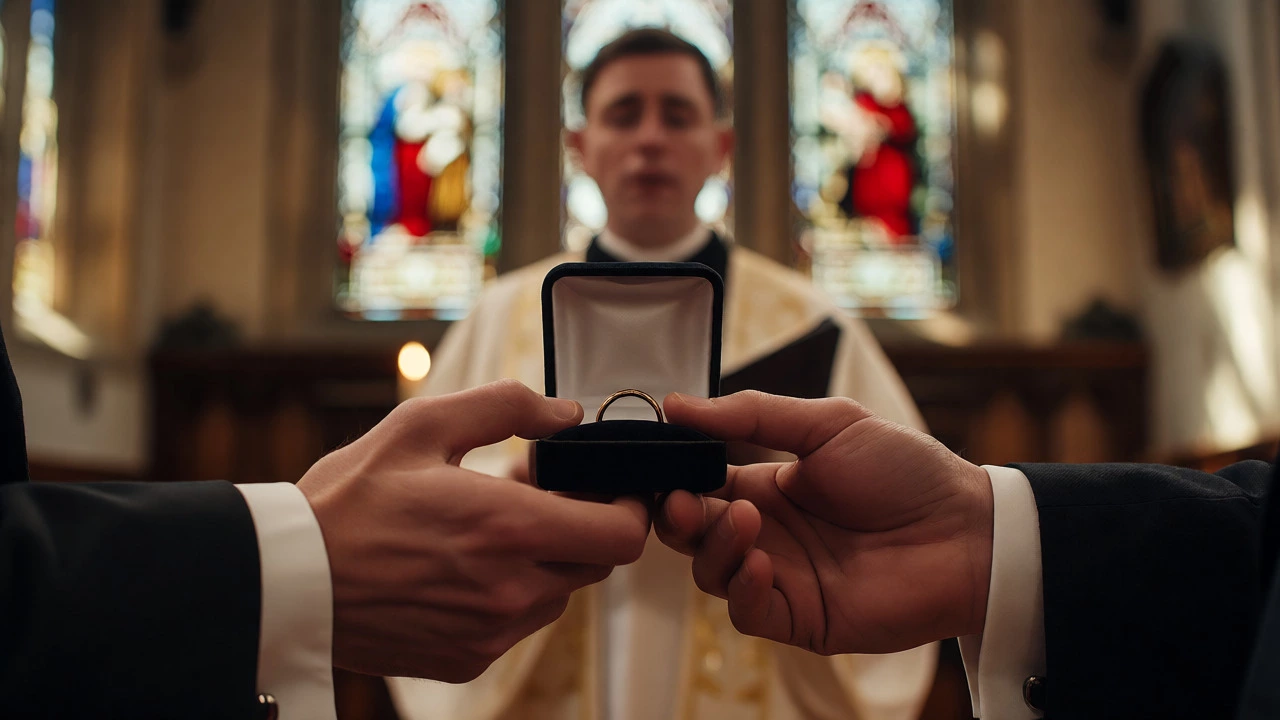
Wedding Ceremony Sequence Planner
Select a ceremony style to see the recommended flow for vows, rings, and pronouncements.
Choose when you prefer the rings to be exchanged relative to the spoken vows.
💡 Expert Tip
Most modern ceremonies place the ring exchange after the spoken vows. This creates a logical narrative: promise first, then seal with the symbol. However, if you choose "Before," ensure your officiant adjusts the script so it doesn't feel like accepting an object before agreeing to the commitment.
Ceremony Checklist
You’re standing at the altar, heart pounding, palms slightly sweaty. The officiant is speaking, the guests are watching, and suddenly a panic hits: When do we actually put the rings on? It’s one of those details that seems trivial until you’re in the moment, and then it feels like the most important logistical hurdle of your life. You’ve seen movies where they exchange rings before saying "I do," and others where it happens after. So, which is right? Does it matter if you get it wrong?
Here’s the short answer: there is no single universal rule. But there is a standard convention that most couples follow, and knowing why helps you decide what works for you. Most modern ceremonies place the wedding ring exchange after the spoken vows. This sequence makes logical sense-you promise yourself to each other first, then seal that promise with the physical symbol. However, traditions vary wildly depending on your faith, culture, and personal preference. Let’s break down exactly how this works so you can walk down that aisle without second-guessing every step.
The Standard Modern Sequence
If you hire a secular officiant or work with a civil registrar, you’ll likely see this flow:
- The Declaration: The couple states their intent to marry (e.g., "Do you take...").
- The Vows: Personal or traditional promises are spoken aloud.
- The Ring Exchange: The rings are placed on fingers while repeating specific words.
- The Pronouncement: The officiant declares them married.
- The Kiss: The first kiss as a married couple.
Why does the ring come after the vows? Think of it as a legal and emotional checkpoint. The vows are the verbal contract; the rings are the receipt. By placing the ring after the vow, you’re physically demonstrating that you accept the terms just spoken. If you were to put the ring on before the vow, it might feel like you’re accepting the object before agreeing to the commitment. It’s subtle, but it creates a clearer narrative arc for your guests.
| Ceremony Type | Vows Order | Ring Exchange Order | Pronouncement |
|---|---|---|---|
| Standard Secular/Civil | After Declaration | After Vows | After Rings |
| Traditional Christian | Before Rings | During Blessing | After Rings |
| Jewish (Chuppah) | N/A (Contract signing) | Under Chuppah | After Breaking Glass |
| Hindu (Vivaha) | Saptapadi (Seven Steps) | Often Integrated | Varies by Region |
Why Timing Matters More Than You Think
It’s not just about etiquette; it’s about logistics and emotion. When you schedule the ring exchange immediately after the vows, you maintain momentum. The emotional peak of the ceremony is usually the vows themselves. If you pause too long between the vows and the rings, you risk deflating that energy. Guests start shifting in their seats. The photographer has to wait for the next cue. Keeping the transition tight-vow, pause for breath, ring, pronouncement-keeps everyone engaged.
There’s also a practical reason. In many traditions, the person holding the rings (the best man, maid of honor, or a dedicated ring bearer) needs a clear signal to hand them over. If the ring exchange is buried in the middle of the vows, the ring holder might miss their cue. Placing it clearly after the vows gives everyone a distinct moment to act. No one is left wondering, "Should I be handing these over now?"
Religious and Cultural Exceptions
If you’re having a religious ceremony, check with your officiant early. They aren’t being picky; they’re following centuries of liturgy.
In traditional Catholic masses where the Eucharist is included, the structure is rigid. Vows are exchanged, followed by the blessing of the rings, and then the actual placement of the rings. You don’t have much wiggle room here because the priest follows a set script from the Roman Missal.
For Jewish weddings, the concept is different. There isn’t always a public "ring exchange" in the Western sense during the main service under the Chuppah a canopy representing the new home. Often, the groom places a ring on the bride’s finger while reciting a Hebrew phrase, sealing the marriage contract (Ketubah the Jewish marriage contract). This happens before the final blessings. Some modern egalitarian Jewish ceremonies have both partners exchange rings, but the timing remains tied to the legal acceptance of the contract, not necessarily after personal vows.
Hindu weddings involve complex rituals like the Saptapadi seven steps around the sacred fire. Rings may be exchanged at various points depending on the family’s specific regional traditions. Sometimes it’s part of the garland exchange (Jaimala exchange of flower garlands), sometimes later. Always consult your Pandit or priest.
What If You Want To Break The Rules?
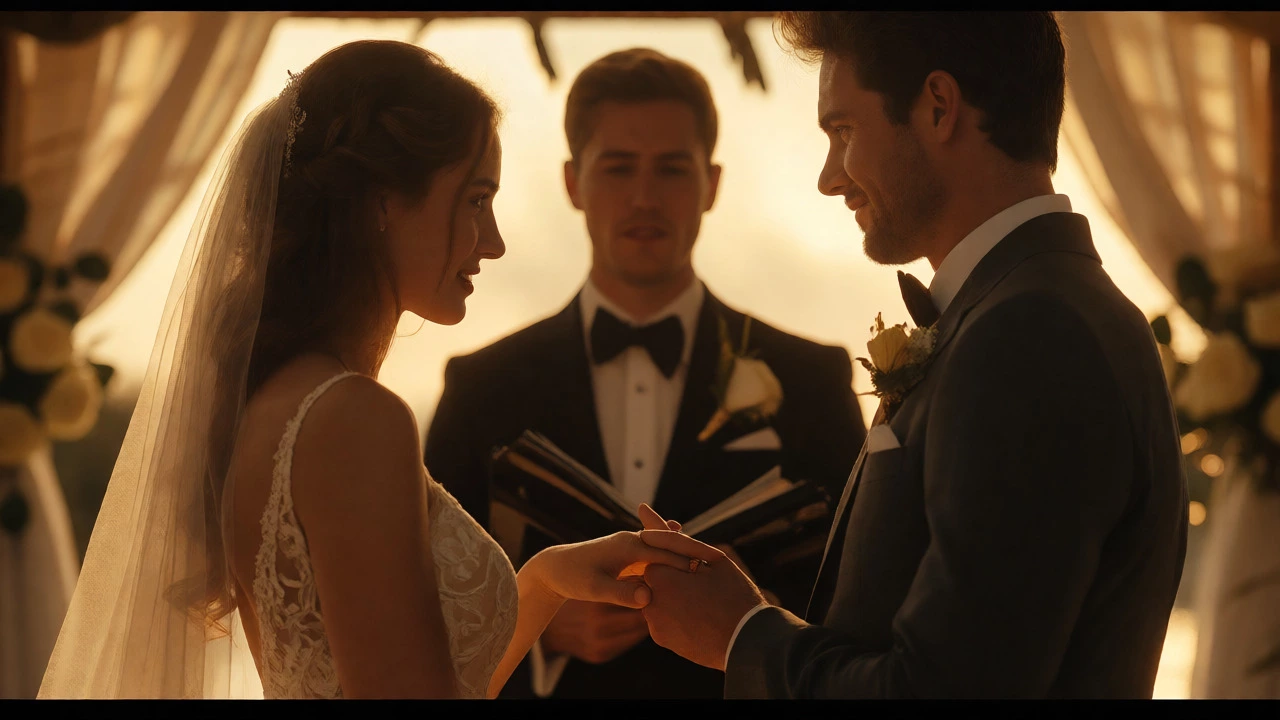
Maybe you want to write your own vows and include the ring exchange within them. Maybe you want to skip the formal exchange entirely and just slip the rings on quietly during the pronouncement. That’s totally fine.
Here’s how to handle non-traditional orders without confusing your guests:
- Communicate with your Officiant: If you want the rings before the vows, tell your officiant. They will adjust the script so the flow makes sense. For example, they might say, "With this ring, I wed you," *before* the longer personal vows.
- Brief Your Attendants: Whoever holds the rings needs to know exactly when to step forward. If the order changes, their cues change. A simple text message saying, "Rings go out after the first vow, not the last," saves awkward pauses.
- Tell Your Photographer: Photographers anticipate certain moments. If you move the ring exchange, let them know. They need to position themselves for the close-up shots of hands and faces at the right time.
One popular variation is the "double ring exchange." Instead of the officiant speaking lines for you to repeat, you simply place the rings on each other’s fingers silently, or with brief private words, while the officiant speaks generally. This puts the focus entirely on the couple’s connection rather than a scripted performance.
Practical Tips for Smooth Ring Exchanges
Regardless of when you choose to exchange rings, these tips prevent disaster.
Size Check One Week Before: Fingers swell with heat and stress. Try your rings on at the end of the day when your hands are largest. If they’re tight, resize them now. If they’re loose, wear a sizing band underneath. Nothing ruins a photo like a ring sliding off mid-ceremony.
The Box vs. The Pocket: Decide how the rings will be presented. A velvet box held by a pageboy looks classic but adds a layer of complexity (opening the box, removing the ring). Handing the ring directly from the best man’s pocket is faster and less prone to fumbling. If you use a box, ensure it opens easily. Practice opening it with one hand.
Practice the Motion: Seriously. Stand in front of a mirror. Put the ring on your own finger. Notice how hard it is to slide it over the knuckle smoothly. Now imagine doing it while crying, laughing, or shaking. Practice making eye contact with your partner while you do it. It looks more intimate and less like a task.
Backup Plan: What if the ring bearer forgets the rings? Have the best man or maid of honor keep a spare set in their pocket. Yes, even if you have a cute dog walking down the aisle. Dogs drop things. Humans forget things. Redundancy is your friend.
Frequently Asked Questions
Can I exchange rings before the vows?
Yes, you can. While the standard order is vows then rings, some couples prefer to exchange rings first as a gesture of offering themselves to each other before making verbal promises. Just ensure your officiant adjusts the script so the transition feels natural and doesn't leave a awkward silence.
Who holds the wedding rings during the ceremony?
Traditionally, the Best Man holds the groom's ring and the Maid of Honor holds the bride's ring. Alternatively, a designated Ring Bearer (often a child or pet) carries them down the aisle. Many couples now assign this role to a trusted friend or family member who is comfortable managing small, valuable items under pressure.
Do we have to repeat words while exchanging rings?
No. Traditional scripts often include phrases like "With this ring, I thee wed," but modern ceremonies allow for silent exchanges or personal, private words spoken only to your partner. Silence can be incredibly powerful, allowing the visual action of placing the ring to speak for itself.
What happens if the ring won't fit on the day?
If your finger swells due to nerves or heat, try cooling your hands with ice water briefly before the ceremony. If the ring is still stuck, apply a little soap or lotion to the finger. As a last resort, wear it on a chain around your neck for the ceremony and put it on properly after the reception begins. Don't force it and risk injury.
Is it bad luck to see the ring before the wedding?
The superstition about seeing the dress applies mostly to attire. There is no widespread taboo against seeing the rings beforehand. In fact, many couples shop for rings together. The key is ensuring the rings are secure and accessible for the ceremony, regardless of whether you've seen them.
Next Steps for Your Ceremony
Now that you know the options, here’s your checklist:
- Ask your Officiant: Send an email asking, "What is your preferred order for the ring exchange relative to the vows?"
- Decide on Words: Will you repeat traditional lines, write your own, or stay silent?
- Assign a Ring Holder: Pick someone reliable. Brief them on the exact moment to step forward.
- Rehearse: Do a dry run of the ring exchange motion at home. Time it. Make sure it takes less than 10 seconds per person.
- Final Fit Check: Try the rings on the morning of the wedding. Adjust if necessary.
Remember, the ring exchange is a symbolic gesture, not a test. If you stumble over the words or fumble the ring, it becomes a charming memory, not a mistake. Focus on the person across from you, not the choreography.