Wedding Flower Type Selector
Recommended Options
Budget Breakdown Estimate
Based on your inputs, here is how your budget might look per stem type.
You’ve seen them in magazines. They look perfect. They never wilt. But what do you actually call those non-living blooms when you’re talking to your florist or browsing online? The answer isn’t just one word. It depends entirely on the material.
If you are looking to save money, avoid allergies, or simply have a centerpiece that looks fresh at midnight, understanding the terminology is your first step. Using the right terms helps you find exactly what you want without getting scammed by low-quality plastics disguised as luxury items.
Quick Summary: What to Call Your Non-Living Blooms
- Faux Florals is the modern, industry-standard term for high-quality artificial flowers.
- Silk Flowers refers specifically to blooms made from fabric, though most "silk" today is polyester.
- Dried Flowers are real plants that have been preserved; they are natural but not fresh.
- Foam Flowers are budget-friendly options made from polyurethane foam, often used for large installations.
- Avoid using the word "plastic" unless you want cheap-looking results; aim for "hand-tipped" or "high-end faux" instead.
The Modern Term: Faux Florals
When you walk into a high-end boutique in Sydney or scroll through top-tier wedding blogs, you won’t hear people say "fake flowers." That term carries a stigma of cheapness and obvious fakery. Instead, the industry uses the term faux florals. This comes from the French word for "false," but in English, it has become synonymous with luxury and realism.
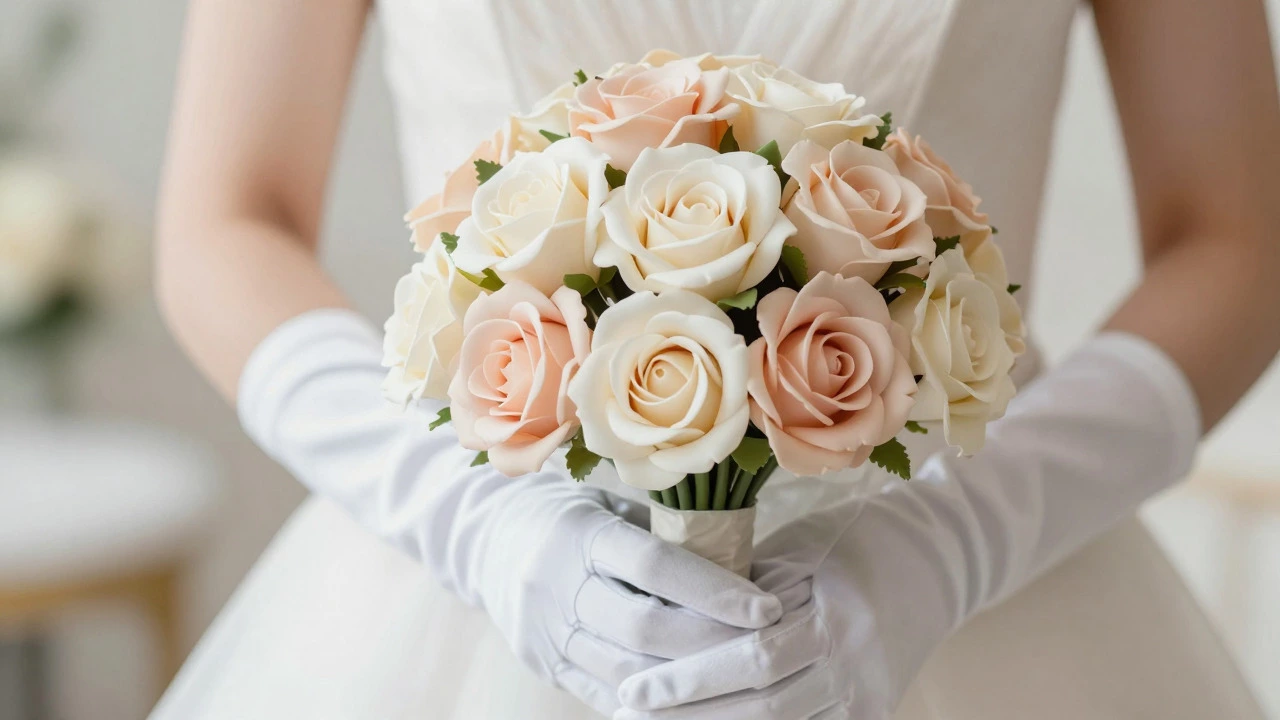
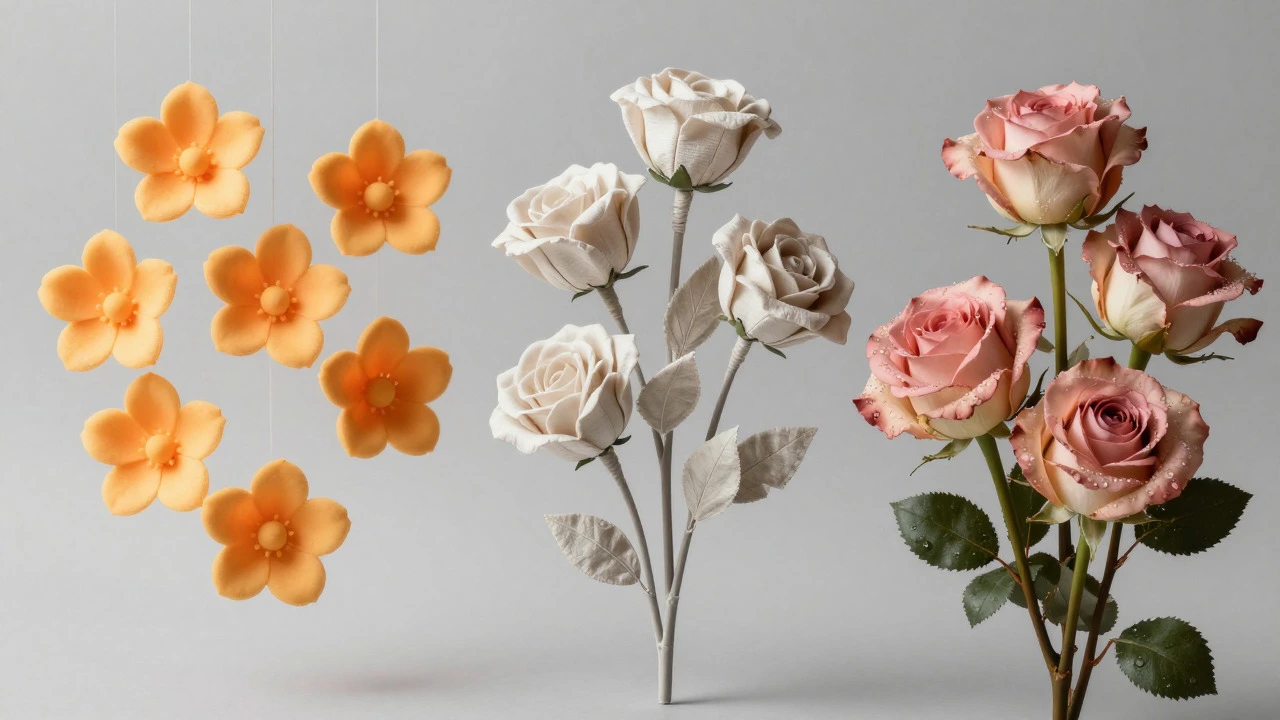
Faux florals are artificial flowers designed to mimic the texture, color, and structure of real blooms with extreme precision. These aren’t your grandmother’s plastic carnations. Today’s faux florals are often hand-painted, hand-shaped, and made from materials like latex, rubber, and high-grade polyester. Brands like Nearly Natural or DecoArt create pieces so realistic that guests might reach out to touch them, only to realize there’s no scent.
Why does this distinction matter? Because if you search for "fake flowers," you’ll get results ranging from $5 craft store bouquets to $500 designer arrangements. If you search for "luxury faux florals," you filter out the junk. You are signaling to suppliers that you care about quality. In Australia, where labor costs are high, buying high-end faux allows you to reuse expensive arrangements for multiple events, making the per-use cost lower than renting fresh flowers.
The Classic Term: Silk Flowers
You will still see the term silk flowers everywhere, especially among older generations or in traditional catalogs. Historically, these were made from actual silk fabric. However, true silk is expensive and difficult to maintain. Most modern "silk" flowers are actually made from polyester or nylon blends that are treated to look like fabric petals.
Silk flowers refer to artificial blooms constructed from fabric layers, offering a soft, matte finish that differs from the glossy look of plastic. While "silk" is technically a misnomer for most products on the market, it remains a useful keyword. When shopping, look for descriptions like "poly-silk" or "fabric-wrapped." These tend to hold up better over time than pure synthetic fibers, which can fade under direct sunlight-a common issue if your reception is near large windows.
In Sydney, where summers can be harsh, silk-style fabrics resist wilting and heat damage better than fresh roses. However, they require careful handling. Real silk tears easily; polyester silk is more durable but can attract dust. A quick vacuum with a brush attachment keeps them looking new for years.
The Natural Alternative: Dried Flowers
Here is where things get tricky. Dried flowers are not "fake" in the sense of being manufactured. They are real plants that have undergone a preservation process. Yet, many couples group them with artificial options because they don’t need water and last indefinitely.
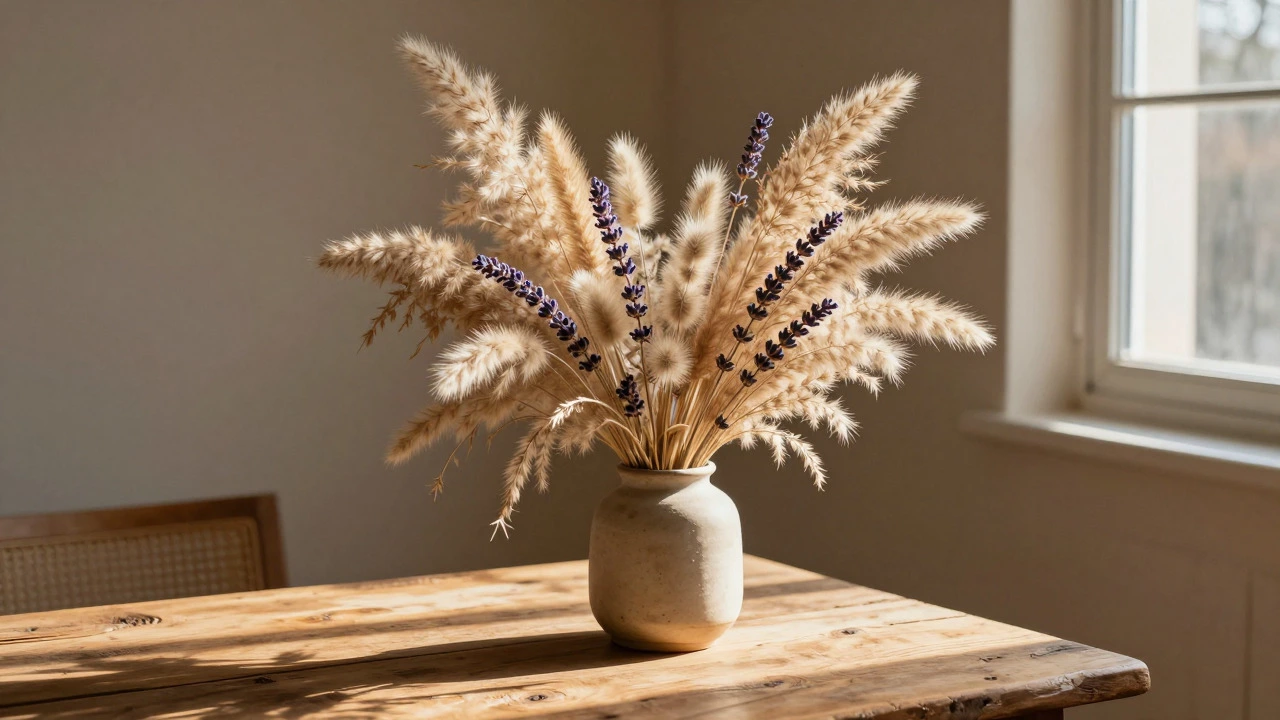
Dried flowers are botanical specimens that have had their moisture removed, preserving their shape and color for months or years. Popular choices include bunny tails, pampas grass, lavender, and statice. Unlike faux florals, dried flowers have a rustic, organic aesthetic. They fit perfectly into bohemian, minimalist, or eco-conscious weddings.
The key difference? Dried flowers are fragile. They crumble if you squeeze them. They also change color over time, turning deeper browns or fading to pale pastels depending on light exposure. If you love the look of wheat fields or autumn tones, dried florals are unbeatable. But if you need bright red roses that look wet and dewy, dried flowers won’t cut it. They are a hybrid category: natural origin, artificial longevity.
The Budget Option: Foam Flowers
If you are planning a massive installation-like a flower wall or a ceiling canopy-and your budget is tight, you might encounter foam flowers. These are made from polyurethane foam, carved and painted to resemble roses, peonies, or hydrangeas.
Foam flowers are lightweight, inexpensive artificial blooms created from molded polyurethane, ideal for large-scale decor. They are incredibly light, which makes hanging them from ceilings easy and safe. However, they lack the fine detail of silk or latex faux florals. From a distance, they look great. Up close, the texture can appear smooth and uniform, lacking the imperfections that make real flowers beautiful.
In the Australian wedding market, foam flowers are popular for outdoor festivals or beach weddings where wind might knock over heavier fresh arrangements. Just be aware that foam can degrade in high humidity. If you live in a coastal area like Sydney, ensure your supplier uses UV-resistant paint and sealant to prevent cracking.
How to Spot High-Quality Artificial Flowers
Not all faux florals are created equal. Here is how to tell the difference between a $10 bouquet and a $300 one before you buy:
- Check the leaves: Cheap flowers have green plastic stems and stiff, shiny leaves. High-end ones have brown, textured stems (often wrapped in floral tape) and veined, matte leaves.
- Look for variation: Real flowers are imperfect. Good faux florals have slight color variations, bent petals, and asymmetrical shapes. If every petal looks identical, it’s mass-produced plastic.
- Feel the texture: Run your finger over the petals. Silk should feel soft and slightly fuzzy. Latex should feel firm but pliable. Plastic feels cold and slick.
- Smell test: High-quality faux florals often have no smell or a faint floral scent added during manufacturing. Strong chemical odors indicate low-grade materials that may off-gas in an enclosed venue.
| Type | Material | Realism Level | Durability | Best Use Case |
|---|---|---|---|---|
| Faux Florals | Polyester, Latex, Rubber | Very High | High (Years) | Bridal Bouquets, Centerpieces |
| Silk Flowers | Fabric Blends | Medium-High | Medium (Fades in Sun) | Indoor Decor, Traditional Arrangements |
| Dried Flowers | Natural Plant Matter | High (Natural Look) | Low (Brittle) | Boho Weddings, Eco-Friendly Themes |
| Foam Flowers | Polyurethane Foam | Low-Medium | Medium (Cracks in Humidity) | Flower Walls, Ceiling Installations |
Cost Comparison: Fresh vs. Artificial
Let’s talk numbers. In Sydney, a full-service floral design for a wedding with 100 guests can easily exceed $3,000 AUD for fresh flowers. This includes delivery, setup, and teardown. With faux florals, the upfront cost might be similar if you buy high-end pieces, but you own them forever.
If you rent faux florals, the cost drops significantly. Many local designers offer rental packages where you pay a fraction of the retail price. After the wedding, they take the flowers back, clean them, and rent them again. This is a sustainable option that reduces waste. For dried flowers, the cost varies wildly based on seasonality. Pampas grass, for example, has seen a price surge due to global demand, so sourcing locally is crucial.
Consider the hidden costs too. Fresh flowers require hydration stations, ice baths, and careful monitoring by your coordinator. Artificial flowers need zero maintenance. You set them up, and they stay perfect until the end of the night. No drooping heads, no fallen petals on the dance floor.
Where to Buy in Australia
Finding quality faux florals in Australia requires knowing where to look. Big-box stores like Kmart or Target offer budget options, but the quality is inconsistent. For wedding-grade pieces, consider specialized retailers:
- Online Marketplaces: Etsy Australia hosts many independent makers who customize colors to match your palette. Look for sellers with reviews showing real photos, not just stock images.
- Specialty Shops: Stores like Nearly Natural (available through select Australian distributors) or local bridal boutiques often carry curated collections.
- Wholesale Suppliers: If you are DIY-ing, check out wholesale floral supply companies in Sydney or Melbourne. They sell bulk stems at lower prices, but you’ll need to arrange them yourself.
Always order samples first. Colors on screens can be deceiving. A "blush pink" silk rose might look peachy in person. Seeing the texture and scale in your home lighting is essential.
Making Them Look Real
Even the best faux florals can look fake if arranged poorly. Here are three pro tips to elevate your display:
- Fluff and Shape: When you unpack faux flowers, gently bend the petals and leaves. They come compressed in boxes. Give them life by separating layers and curving stems naturally.
- Mix Textures: Don’t use only one type of flower. Combine faux roses with dried eucalyptus or real greenery. The contrast in textures tricks the eye into seeing realism.
- Add Scent: Since artificial flowers lack fragrance, place small vials of essential oils nearby or mist the arrangement lightly with a floral-scented spray. This engages another sense and enhances the illusion.
Environmental Impact
Are fake flowers bad for the planet? It’s complicated. Fresh flowers involve carbon-heavy transport, pesticides, and water usage. They also create significant waste after the event. Faux florals are made from plastics, which are derived from fossil fuels and take centuries to decompose.
However, if you reuse your faux florals for multiple events, anniversaries, or even resale, their environmental footprint decreases with each use. Dried flowers are generally the most eco-friendly option, provided they are sourced from sustainable farms that use minimal chemicals. Always ask your supplier about their sourcing practices.
What is the difference between silk and faux flowers?
"Silk flowers" traditionally refers to blooms made from fabric, while "faux florals" is a broader term encompassing all artificial flowers, including those made from latex, rubber, and high-tech polymers. Today, most "silk" flowers are actually polyester, making the terms largely interchangeable in casual conversation, though "faux" implies higher realism.
Do fake wedding flowers look real?
High-end faux florals can look indistinguishable from real flowers, especially from a distance. Key indicators of realism include matte finishes, varied petal shapes, and textured stems. Low-quality plastic flowers often have a shiny, uniform appearance that gives them away.
Are dried flowers considered fake?
No, dried flowers are natural plant matter that has been preserved. They are not manufactured like silk or foam flowers. However, they are often grouped with artificial options because they do not require water and last longer than fresh cuts.
How much do artificial wedding flowers cost in Australia?
Prices vary widely. Budget foam flowers can cost $5-$15 per stem. Mid-range silk flowers range from $20-$50 per stem. High-end faux florals can cost $60-$100+ per stem. Rental options may reduce this cost by 50% or more.
Can I use fake flowers for my bridal bouquet?
Yes, many brides choose faux bouquets for their durability and photo-perfect appearance. Ensure you select high-quality, hand-tipped flowers to avoid a stiff look. Practice holding the bouquet beforehand to get comfortable with its weight and balance.