Centerpiece Compatibility Checker
Check Your Centerpiece Design
Answer these questions to see if your centerpiece meets wedding planning best practices
Nothing sets the mood for a wedding reception like a well-thought-out table centerpiece. It’s not just decoration-it’s the heartbeat of each table, pulling together the color scheme, theme, and emotion of the day. But too many couples make the same mistakes: centerpieces that block views, overwhelm the space, or fall apart before the first toast. The good news? Getting it right is simpler than you think. Here’s what actually works-and what you should avoid at all costs.
Do: Keep It Low and Clear
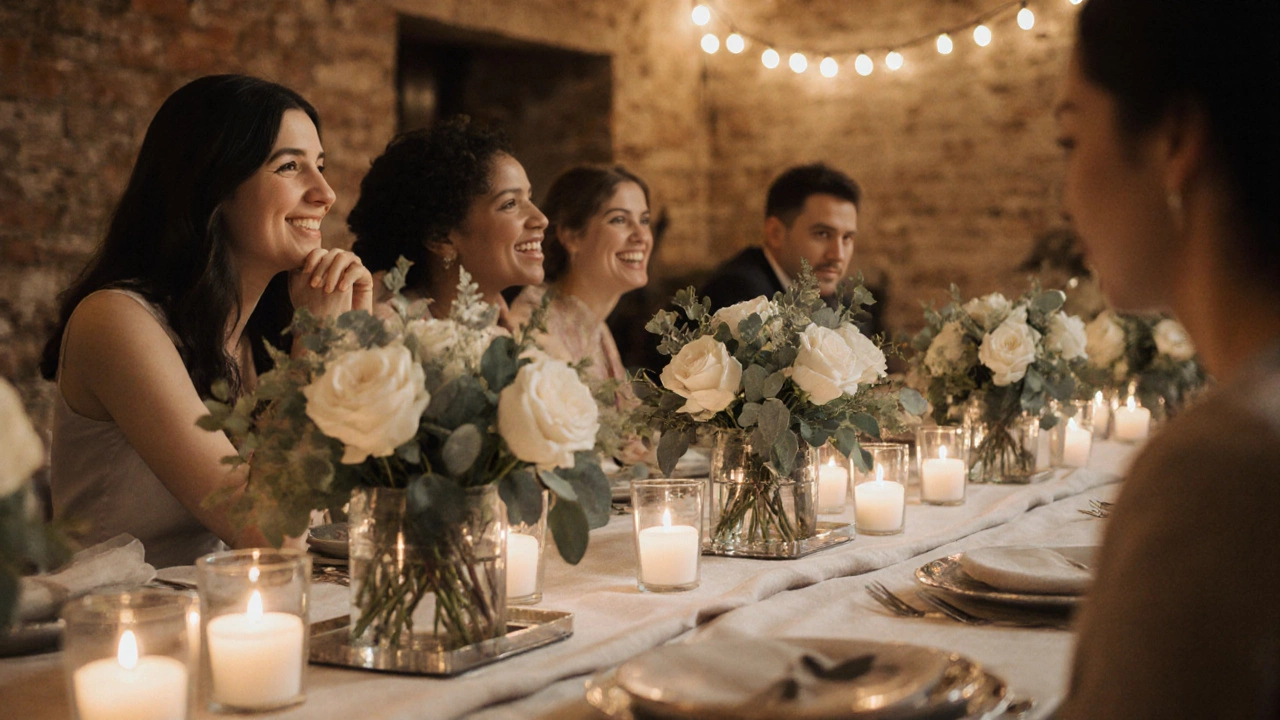
Guests need to see each other. A centerpiece that towers over the table turns your reception into a game of hide-and-seek. Anything taller than 12 inches blocks eye contact, makes photos look cluttered, and turns conversation into shouting. Stick to low-profile designs. Think candles in glass jars, clusters of small flowers, or layered greenery spread across the table. A 6- to 10-inch height is ideal. You can go slightly taller if you use open, airy elements like floating blooms or hanging vines, but never let it crowd the table.
Real wedding planners in Sydney and Melbourne see this mistake all the time. One couple spent $800 on tall, dramatic floral towers-only to realize halfway through the night that no one could see their best man’s speech. They ended up removing half the centerpieces by dessert. Save yourself the stress. Low and open wins every time.
Don’t: Use Fragile or Messy Elements
Glitter, loose petals, candles without holders, or water-filled vases that leak? These might look pretty in Pinterest photos, but they’re nightmares in real life. Glitter sticks to everything-clothes, hair, plates-and won’t come off until next week. Loose petals turn into slippery hazards on hardwood floors. Candles without proper bases tip over. Water seeps into table linens and ruins them.
Instead, choose sturdy, contained elements. Use silicone trays under candles. Put petals in small glass bowls or embed them in resin. Opt for LED candles if you want flame without risk. If you’re using fresh flowers, make sure they’re properly hydrated and placed in sealed containers. A clean, safe centerpiece lasts all night without a single cleanup crew running around.
Do: Match the Centerpiece to the Table Shape
Round tables? Go for circular or radial designs. Long rectangular tables? Use linear arrangements that follow the shape. Don’t force a round centerpiece onto a 10-foot banquet table-it’ll look lost. Same goes for putting a long runner on a small 4-person table. It looks off.
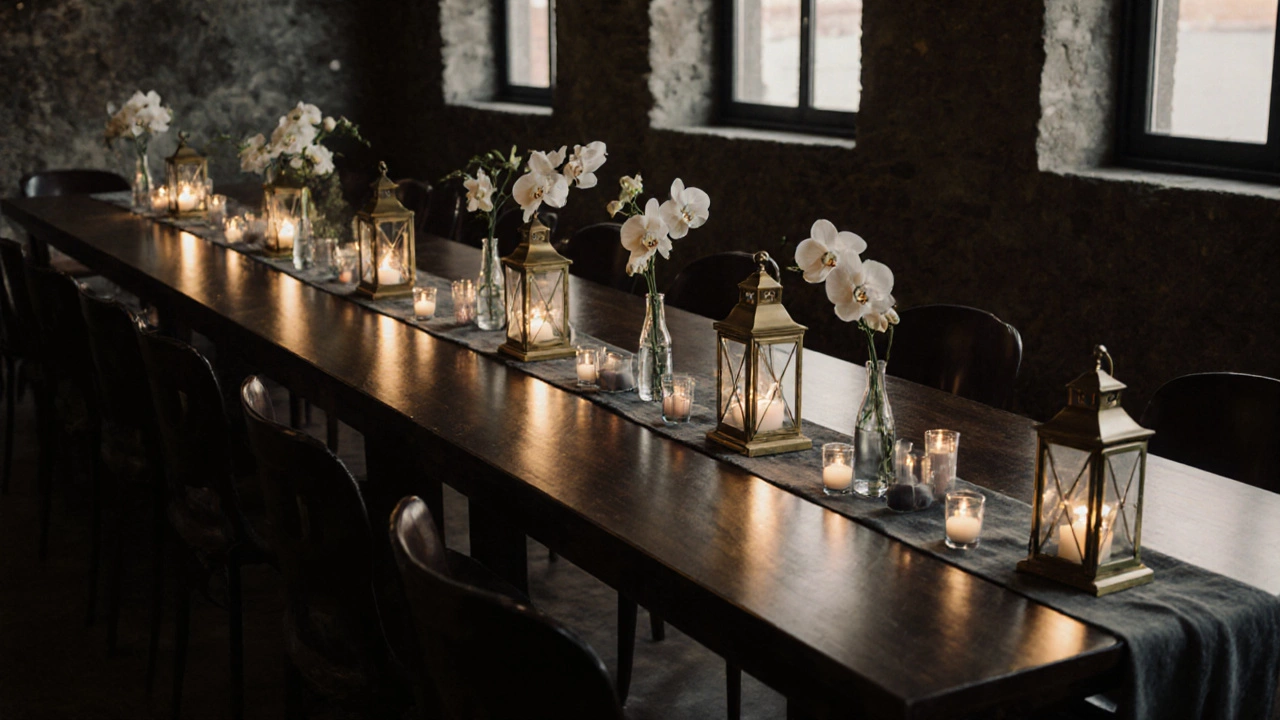
For round tables, try a central cluster with smaller accents around it. For rectangular tables, a single long runner with spaced-out elements (like small bud vases or lanterns every 2 feet) works best. This isn’t about decoration-it’s about balance. A centerpiece should feel like it belongs, not like it was dropped there by accident.
Don’t: Copy Pinterest Perfectly
That centerpiece with 30 types of flowers, hand-painted eggs, and tiny fairy lights? It took three people 8 hours to make. And it cost $400. Real talk: most couples don’t have the time, budget, or help to recreate those looks. And if you do, you’ll be exhausted the night of your wedding.
Don’t get sucked into the trap of “perfect.” Choose one or two strong elements and repeat them. One type of flower, three candle styles, two textures. Repetition creates cohesion. A simple, repeated design looks intentional. A chaotic mix of 10 different ideas looks messy-even if each piece is beautiful on its own.
Do: Use What You Already Have
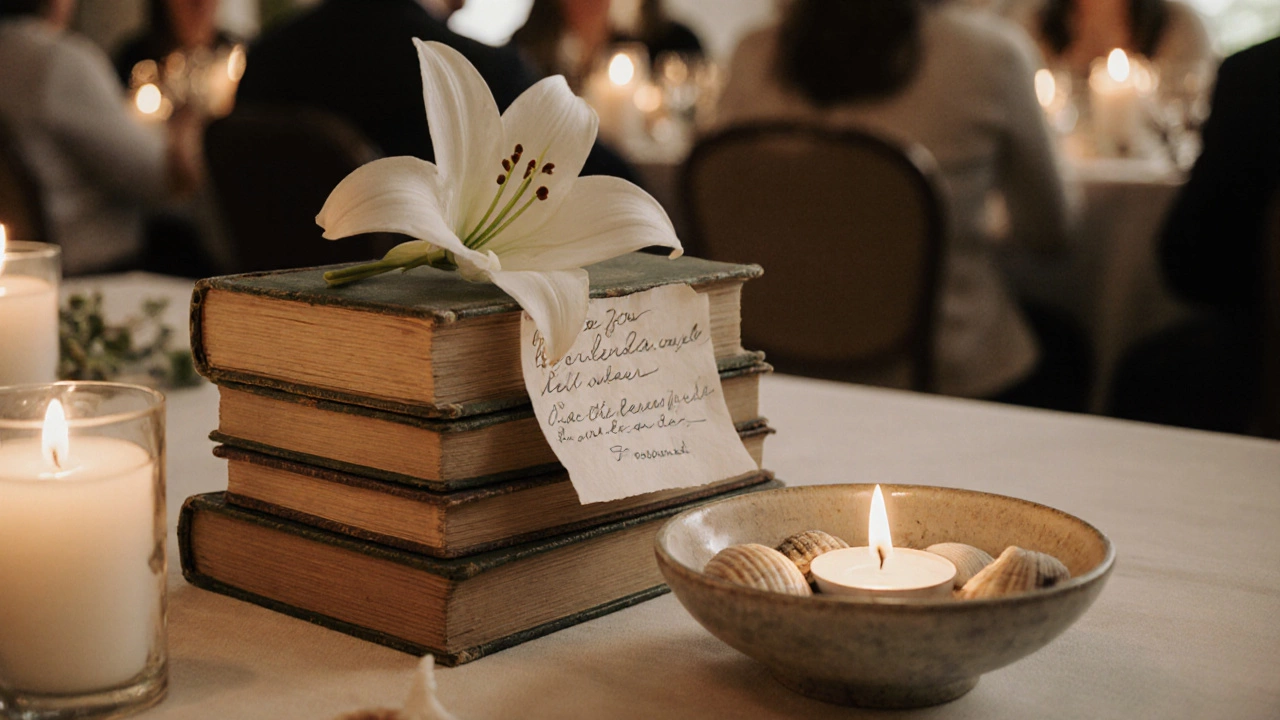
Before you buy anything new, look around. Do you have vintage books, glass bottles, wooden crates, or brass trays? These can become stunning centerpieces with a little creativity. A stack of old books with a single rose on top? Classy. Mason jars with fairy lights and eucalyptus? Warm and inviting. A tray of candles with sea shells from your honeymoon beach trip? Personal and meaningful.
Many of the most memorable centerpieces aren’t bought-they’re repurposed. It saves money, reduces waste, and adds soul to your day. Plus, guests remember the personal touches far longer than the expensive florals.
Don’t: Forget the Lighting
Centerpieces don’t exist in a vacuum. They’re part of the room’s lighting scheme. If your venue has dim lighting and your centerpiece is dark (like deep red roses or black candles), it’ll disappear. If your table is under bright overhead lights and you use white flowers with glass vases, you’ll get glare and reflections that ruin photos.
Think about how your centerpiece interacts with light. Use warm-toned candles or LED lights inside clear glass to add glow. Avoid shiny metallics if your lighting is harsh. If you’re using flowers, pick ones that contrast with your table color-dark green leaves on a white table? Perfect. Pale pink on a blush table? You’ll barely notice it.
Do: Test It Before the Big Day
Set up your centerpiece exactly how it’ll look on the day-at the same height, with the same tablecloth, under the same lighting. Do this a week before the wedding. Sit at the table. Walk around it. Take photos from every angle. Does it block the view? Does it look too busy? Does the scent overpower the food?
One bride in Brisbane tested her centerpiece with fresh lavender and roses. It smelled amazing… until the guests started sneezing during dinner. She swapped it out for unscented white lilies the next day. No one noticed the change-but everyone enjoyed their meal.
Don’t: Overdo the Theme
Just because your wedding is “rustic” doesn’t mean every centerpiece needs a wooden sign, burlap ribbon, and a tiny cowbell. Same goes for “boho,” “modern,” or “vintage.” Too many themed elements make the space feel like a costume party.
Let the theme show up subtly. One consistent material-like wood, metal, or glass-can carry the style without shouting it. A few well-placed accents (a single sign, one type of texture) do more than ten mismatched props. Less is more. Always.
Do: Plan for the Afternoon and Evening
Your centerpieces need to work from the cocktail hour through to the last dance. Morning light hits differently than evening candlelight. What looks elegant at 3 p.m. might look dull at 9 p.m.
Use elements that transition well. Candles are perfect-they glow when the lights go down. Foliage stays fresh. Clear glass keeps the look light. Avoid things that fade or wilt quickly. If you’re using flowers, pick hardy varieties like orchids, chrysanthemums, or succulents. They last longer and look better under low light.
Don’t: Ignore the Guest Experience
Centerpieces aren’t for Instagram. They’re for your guests. Ask yourself: Can they reach their food? Can they talk without shouting? Can they move their chairs without knocking something over? Can they take a photo without a flower in their face?
One couple spent $2,000 on a custom centerpiece with hanging crystals. The crystals caught the light beautifully… and kept hitting guests in the head when they leaned forward. They had to remove them after the first course. Don’t be that couple. Prioritize comfort over spectacle.
Final Tip: Less Is More, But Meaning Matters
The best centerpieces aren’t the most expensive or the most elaborate. They’re the ones that feel true to you. A single candle with a handwritten note from your parents. A stack of your favorite books with a photo tucked inside. A bowl of fruit from your hometown market. These don’t cost much-but they stay with people long after the cake is gone.
Remember: your guests aren’t there to judge your centerpieces. They’re there to celebrate you. Make it simple. Make it safe. Make it meaningful. That’s all that matters.
What height should wedding table centerpieces be?
Keep them between 6 and 10 inches tall. Anything taller than 12 inches blocks guests’ views and makes conversation difficult. Low centerpieces let people see each other, take photos easily, and move around without knocking things over.
Can I use real candles in centerpieces?
Yes, but only if they’re securely placed in heat-resistant holders with trays underneath to catch wax. Never use loose candles or those without bases. LED candles are a safer, cleaner alternative that still give the same warm glow without fire risk.
How do I make centerpieces fit a long rectangular table?
Use a linear design-like a runner with evenly spaced elements. Place small bud vases, lanterns, or candle clusters every 2 to 3 feet. Avoid one large centerpiece in the middle; it looks disconnected. Let the arrangement follow the table’s shape for balance and flow.
Should centerpieces match the bridal bouquet?
Not exactly, but they should share the same color palette and style. If your bouquet has peonies and eucalyptus, use the same flowers in smaller doses at the tables. Matching exactly looks forced. Harmonizing looks intentional and polished.
What are the cheapest but still beautiful centerpiece ideas?
Use items you already own: glass jars with candles, stacks of books with a single flower, wooden crates with fairy lights, or fruit in ceramic bowls. Repurposed items cost little and feel personal. A single rose in a wine bottle with a ribbon costs under $5 and looks elegant.
How far in advance should I make centerpieces?
Assemble non-floral elements a week ahead. Fresh flowers should be arranged no more than 24 hours before the event. If using greenery or hardy blooms like orchids, you can prep them 2-3 days early and keep them cool. Always test your setup before the big day to check for issues.