Wedding Red-Eye Risk Calculator
Understand why red-eye happens and how to prevent it during your big day.
Photography Conditions
Red-Eye Probability
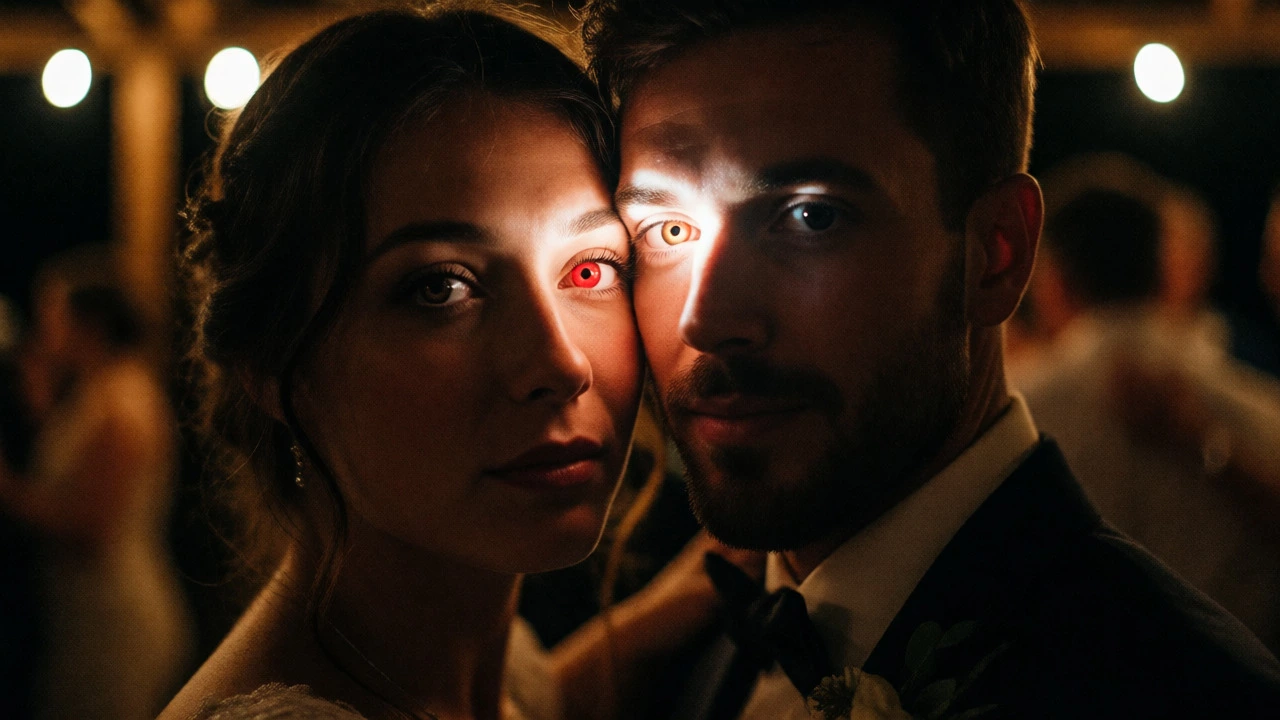
You’re scrolling through your wedding album, smiling at the cake cutting, tearing up at the vows, and then you hit it. One single photo where you or your partner looks like a vampire with glowing red pupils. It’s jarring. It breaks the immersion of that perfect memory. But before you toss the image into the trash folder, ask yourself: what does one red eye in a photo mean?
Is it a sign of bad luck? A technical failure? Or just physics doing its thing? Spoiler alert: it’s mostly physics, but there are ways to prevent it and easy ways to fix it if you missed the moment. Let’s break down exactly why this happens, especially in the high-pressure environment of a wedding, and how you can handle it.
The Science Behind the Glow
First off, let’s clear up the myths. There is no mystical omen attached to a red eye. It’s not a sign your marriage will be fiery or that someone is watching you. It’s purely optical. The phenomenon occurs when a camera’s flash fires directly into a person’s eyes while their pupils are dilated. This usually happens in low-light conditions, which is standard for evening receptions and dimly lit churches.
Your eye acts like a mirror. When light hits the retina (the back of your eye), it reflects back out. If the pupil is wide open, that reflected light has nowhere to go but straight back into the camera lens. The retina is full of blood vessels, giving it a reddish hue. So, when that red reflection bounces back to your sensor, you get the classic "red-eye" effect. Why only one eye sometimes? Usually, it’s because the subject was slightly turned away from the flash, so the light angle hit one pupil more directly than the other. Or, perhaps one pupil was naturally larger due to lighting differences on either side of the face.
Red-eye effect is an undesirable artifact in photography caused by the reflection of a flash from the retina of a subject's eyes, typically occurring in low-light environments with direct flash usage. It is characterized by bright red or orange pupils in the final image.
Why Weddings Are Red-Eye Hotspots
If you’ve ever shot a party or a club event, you know red-eye is common. But weddings have specific triggers that make them particularly prone to this issue. Here’s why your photographer might have struggled with it during the reception:
- Low Ambient Light: Most evening receptions rely on mood lighting-candles, string lights, or dimmed chandeliers. This forces cameras to use flash to properly expose the subject.
- Dilated Pupils: In dark rooms, human pupils expand to let in more light. Wide pupils equal bigger targets for flash reflection.
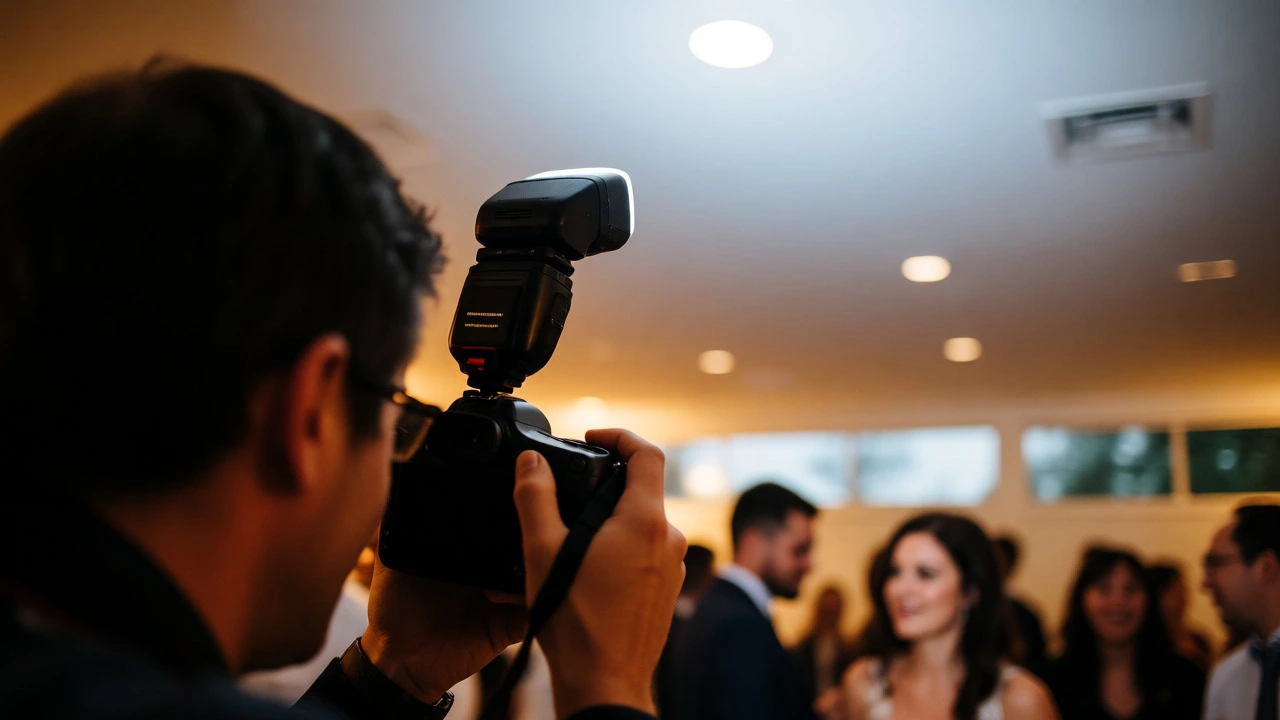
- Direct Flash Usage: While professional photographers often bounce flash off ceilings or walls to soften light, candid shots or tight spaces sometimes require direct on-camera flash. This creates the perfect straight-line path for reflection.
- Fast Movement: During dances or speeches, subjects move quickly. A photographer might fire multiple frames rapidly. If the timing catches a subject looking directly at the lens with dilated pupils, red-eye strikes.
Prevention: How Photographers Stop It Before It Happens
You don’t want to spend hours fixing photos after the fact. Prevention is key. If you’re hiring a photographer, ask them about their flash technique. If you’re shooting your own engagement or casual wedding moments, here’s what works:
Bounce the Flash
The golden rule of indoor photography is never point the flash directly at people unless you absolutely have to. Instead, tilt the flash head toward a white ceiling or wall. The light hits the surface first, scatters, and then falls onto the subject from above or the side. This indirect path means the light doesn’t reflect straight back into the lens, eliminating red-eye almost entirely.
Increase Ambient Light
If possible, turn on more lights. Even turning on overhead room lights can shrink pupils significantly. Smaller pupils mean less surface area for the flash to reflect off. This is why daytime outdoor weddings rarely suffer from red-eye-the sun keeps pupils tiny.
Use Pre-Flash or Anti-Red-Eye Mode
Most modern DSLRs and mirrorless cameras have an anti-red-eye feature. It fires a series of small pre-flashes before the main exposure. These quick bursts cause the subject’s pupils to constrict before the actual picture is taken. It’s annoying for the subject (it feels like strobe lights), but effective.
Change the Angle
If you’re stuck with direct flash, try moving slightly off-axis. Don’t shoot dead-on if you can avoid it. Shooting from a slight angle changes the reflection path. The light still illuminates the face, but it doesn’t bounce straight back into the lens.
Fixing It: Post-Processing Solutions
Okay, the photo is taken. The red-eye is there. You love the composition, the emotion, the smile. Do you delete it? Absolutely not. Fixing red-eye takes seconds in most editing software. Here’s how to do it right.
Automated Tools
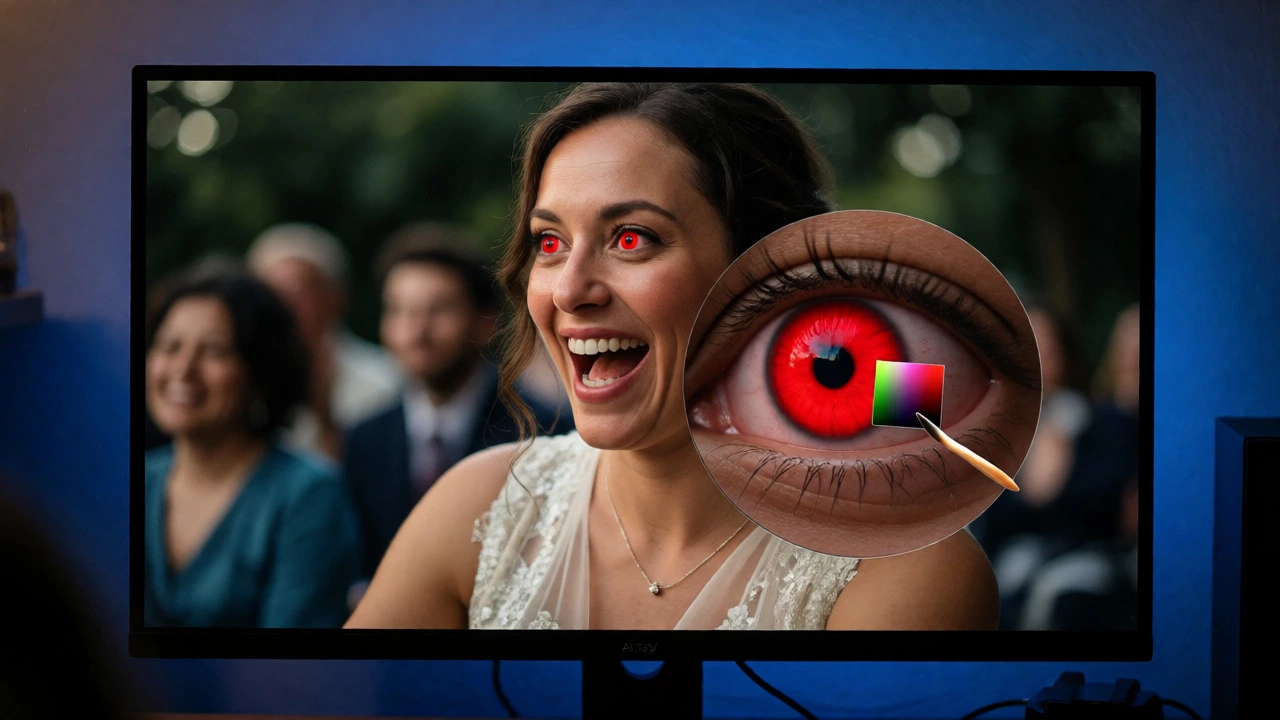
Programs like Adobe Lightroom, Photoshop, Apple Photos, and even smartphone apps have built-in "Red-Eye Removal" tools. You simply click on the affected eye, and the software detects the red pixels and desaturates them, replacing them with a natural black or brown tone. It’s fast and usually accurate for mild cases.
Manual Correction
For stubborn cases or if the auto-tool leaves a weird halo, manual work is better. Use a brush tool set to "Desaturate" or "Color Range." Paint over the iris carefully. Avoid painting over the catchlight (the little white dot of reflection in the eye)-that’s what makes the eye look alive. If you remove the catchlight, the eye looks dead.
Black-and-White Conversion
Sometimes, the color balance is so messed up that fixing red-eye looks unnatural. Converting the photo to black and white removes the color problem entirely. Red becomes gray, blue becomes gray, skin tones remain consistent. This is a great artistic workaround if the red-eye is severe.
| Method | Speed | Accuracy | Best For |
|---|---|---|---|
| Auto Tool (Lightroom/Photos) | Very Fast | High for mild cases | Bulk processing, minor fixes |
| Manual Brush (Photoshop) | Moderate | Very High | Portraits, detailed retouching |
| Black & White Conversion | Instant | N/A (removes color) | Artistic shots, severe artifacts |
| Crop/Retake | Variable | Perfect | When the flaw ruins the moment |
Does One Red Eye Ruin the Photo?
Here’s the truth: clients rarely notice red-eye as much as photographers do. We obsess over pixel-perfect details. Your aunt Susan probably won’t zoom in 400% to check your pupil color. She cares that she looks happy and that the groom is holding the bouquet correctly.
However, context matters. If it’s a formal portrait meant for framing, yes, fix it. If it’s a candid shot of the best man laughing hysterically, leave it alone. The imperfection adds character. In fact, some photographers intentionally keep slight red-eye in documentary-style albums to convey the raw, unpolished energy of the night.
Also, consider the trend of film emulation. Many digital shooters now add grain and color shifts to mimic 35mm film. Slight red-eye can actually enhance this retro aesthetic, making the photo feel authentic rather than sterile.
Superstitions vs. Reality
You asked what it means. Culturally, some older generations might associate strange photo anomalies with omens. In some folklore, capturing a soul in a photograph was tricky business. Red eyes were sometimes jokingly called "devil eyes" or signs of possession. But in modern wedding culture? It just means the flash went off in a dark room.
Don’t let superstition dictate your album choices. If the photo captures a genuine moment of joy, anger, or surprise, it’s worth keeping-even with one red eye. Technology has made it too easy to fix to worry about symbolism.
Pro Tip for Couples
If you’re worried about this ruining your album, talk to your photographer beforehand. Ask them to prioritize bounced flash during the reception. Also, encourage guests to look slightly away from the camera when taking selfies or candid shots with phones. Phone flashes are notorious for causing red-eye because they’re positioned very close to the lens axis. Holding the phone higher or lower than eye level can help reduce the effect.
And remember, if you find a photo with one red eye, don’t panic. It’s a five-second fix in any decent editor. Save the memory, not the myth.
Why does only one eye have red-eye in my photo?
This usually happens because the subject was turned slightly away from the flash, causing the light to reflect directly into one pupil but not the other. Differences in pupil size due to uneven lighting on the face can also cause asymmetrical red-eye.
Can I fix red-eye in iPhone photos?
Yes. Open the photo in the native Photos app, tap Edit, select the Markup tool or use third-party apps like Snapseed or Adobe Lightroom Mobile. Most have a dedicated red-eye removal tool that lets you tap the affected eye to correct it automatically.
Do professional wedding photographers avoid red-eye completely?
They strive to, primarily by bouncing flash off ceilings or using off-camera lighting. However, in fast-paced candid situations, occasional red-eye may occur. Professionals typically correct these in post-processing as part of their standard service.
Is red-eye worse with certain eye colors?
Yes. People with lighter eyes (blue, green, grey) tend to show more pronounced red-eye because there is less pigment in the iris to absorb the flash light. Darker eyes (brown, black) absorb more light, making the red reflection less visible or appearing more orange/yellow.
Should I reject a wedding photo because of red-eye?
Rarely. Unless the red-eye obscures facial features or the expression is critical, it’s easily fixable in editing. Focus on the emotional value of the shot. If the moment is special, keep it and edit the flaw.