Engagement Ring Budget Calculator
Your Financial Details
Enter your details to compare budgets
You’ve heard the pitch. Maybe it was in a jewelry store window, maybe from a well-meaning aunt, or perhaps buried deep in an old marketing campaign. The message is simple and seductive: spend three months’ salary on an engagement ring. It sounds romantic, doesn’t it? A tangible measure of love converted into carats and clarity. But here’s the hard truth that most people don’t tell you until they’re staring at their bank account balance: this rule is a myth. It was invented by a diamond company to boost sales, not to help you plan your future.
So, what is a "3x salary wedding ring" really? It’s a guideline suggesting that if you earn $100,000 a year, you should spend $25,000 on a ring. If you make $60,000, you should drop $15,000. While it provides a quick mental shortcut for budgeting, relying on it can lead to financial stress, debt, and even resentment before the wedding day has even begun. Let’s break down where this idea came from, why it still lingers in our heads, and how to actually decide what to spend without breaking the bank-or your heart.
The Origin Story: De Beers and the Birth of a Myth
To understand why we feel pressured to spend big, we have to look back at the mid-20th century. Before the 1930s, there was no standard amount to spend on an engagement ring. Some men spent pennies; others spent fortunes. It was inconsistent, and for a business model reliant on selling diamonds, inconsistency is bad for growth.
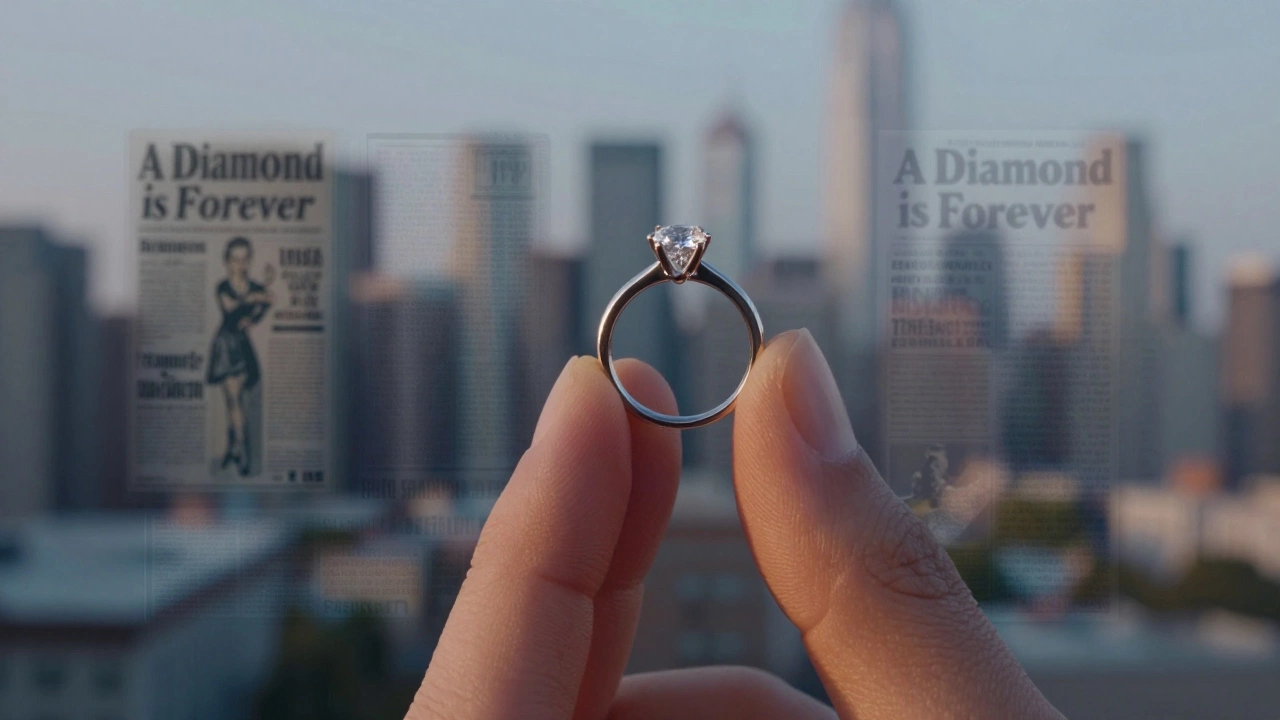
De Beers, the diamond mining conglomerate, faced a surplus of diamonds during the Great Depression. To solve this, they launched one of history’s most successful marketing campaigns. In 1939, they suggested spending one month’s salary. By the 1980s, that number had doubled to two months, and eventually, many retailers pushed it to three months (or 25% of annual income). The famous slogan "A Diamond is Forever" cemented the idea that a diamond wasn’t just a rock-it was a permanent symbol of commitment that required a significant financial sacrifice.
This wasn’t about romance. It was about economics. They needed to create artificial scarcity and emotional urgency. Today, while De Beers’ market dominance has waned, the cultural imprint remains. You’ll still see brochures in jewelry stores referencing "the rule," but remember: it’s a sales tactic, not a moral obligation.
Why the 3x Salary Rule Fails in the Modern World
If you apply the 3x salary rule strictly today, you run into several logical and financial pitfalls. Here is why this metric is outdated and potentially dangerous for your financial health:
- Income Disparity: What happens if one partner earns significantly more than the other? If Partner A makes $200,000 and Partner B makes $40,000, does the ring need to cost $50,000? Or should it be based on the lower earner’s salary, costing only $10,000? The rule doesn’t account for dual-income households or varying career stages.
- Cost of Living Variations: Three months’ salary in Sydney or New York City buys very little compared to three months’ salary in a rural town. A high salary in a high-cost city often goes toward rent and groceries, leaving less disposable income for luxury items.
- Debt Accumulation: For many young couples, student loans, credit card debt, and mortgage deposits are immediate priorities. Spending thousands on a ring can delay homeownership or retirement savings by years.
- Changing Values: Many modern couples prioritize experiences over objects. They might prefer a honeymoon in Italy or a down payment on a house over a large diamond. The ring is a symbol, but it shouldn’t outweigh practical life goals.
The bottom line? Your relationship’s value isn’t measured in carats. Financial stability is a far stronger foundation for marriage than a pricey piece of jewelry.

How to Actually Budget for an Engagement Ring
Instead of following an arbitrary corporate rule, use a personalized approach. Here is a step-by-step method to determine a healthy budget:
- Assess Your Net Worth: Look at your savings, investments, and debts. Do not include money set aside for emergencies or retirement.
- Determine Disposable Income: Calculate what you can comfortably spend without impacting your daily lifestyle or future plans. A common heuristic among financial advisors is to spend no more than 3-6% of your annual gross income, but this varies wildly based on individual circumstances.
- Discuss with Your Partner: This is crucial. Many couples shop together nowadays. Ask them what they expect. Some partners would rather have a modest ring and a debt-free wedding; others dream of a specific stone. Knowing their preference saves time and money.
- Factor in Additional Costs: The ring price isn’t just the diamond. Include taxes, insurance (which can cost 1-2% of the ring’s value annually), resizing fees, and potential engraving costs.
For example, if you save $5,000 specifically for the proposal, that is your budget. Period. You can find beautiful rings within that range. If you stretch to $15,000 because of the "rule," you might end up stressed for months. Stress is not romantic.
Smart Ways to Maximize Value Without Overspending
If you want a larger or higher-quality ring without blowing your budget, you don’t need to borrow money. You need to shop smarter. Here are strategies used by jewelers and savvy buyers:
| Strategy | Pros | Cons |
|---|---|---|
| Lab-Grown Diamonds | 30-50% cheaper than natural diamonds; identical chemical composition; eco-friendly. | No resale value; some traditionalists prefer mined stones. |
| Natural Diamonds (Lower Color/Clarity) | Traditional appeal; potential resale value; widely available. | More expensive per carat; visible inclusions if clarity is too low. |
| Vintage/Antique Rings | Unique designs; often better craftsmanship; lower markup. | May require resizing or cleaning; limited selection. |
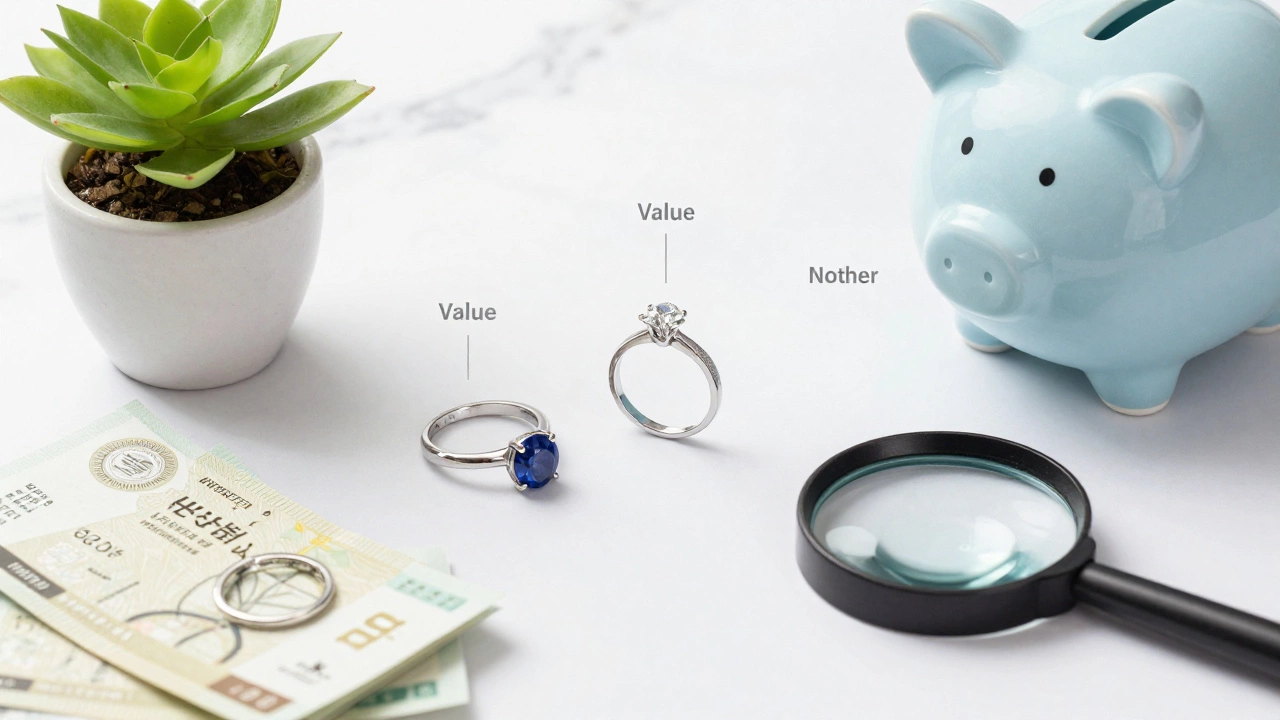
| Alternative Gemstones | Sapphire, ruby, or moissanite are significantly cheaper; vibrant colors. | Less conventional; may not suit all styles. |
Lab-grown diamonds have revolutionized the market. They are real diamonds-carbon crystals arranged in a lattice structure-but created in a lab rather than mined. They cost significantly less because there is no mining equipment, labor, or supply chain monopoly involved. For the average buyer, a lab-grown diamond offers the best visual impact for the dollar.
If you prefer natural diamonds, focus on the "Four Cs" strategically. Cut is the most important factor for sparkle. You can compromise slightly on color (going from D to G) and clarity (VS2 instead of VVS1) to save money without anyone noticing the difference with the naked eye. A well-cut G-color VS2 diamond will look brighter than a poorly cut D-color FL diamond.
The Psychological Aspect: Love vs. Luxury
Let’s address the elephant in the room: guilt. Many people feel inadequate if they can’t afford the "standard" ring. This feeling is manufactured. True love doesn’t require a six-figure purchase. In fact, proposing with a ring that puts you in debt can create tension early in the marriage. Money problems are a leading cause of divorce. Starting your union with financial prudence is a sign of maturity and respect for your shared future.
Consider the story of Sarah and Mark. Mark made a modest income as a teacher. He spent 10% of his annual salary on a beautiful vintage sapphire ring he found online. Sarah loved it because it matched her eyes and represented thoughtful effort, not just a credit card swipe. Five years later, they own a home and have saved for their children’s education. Had Mark followed the 3x rule, they would likely still be renting and struggling with debt.
Your partner wants to marry you, not your wallet. They care about your character, your kindness, and your vision for the future. A ring is a beautiful accessory to that promise, not the promise itself.
Frequently Asked Questions
Is the 3x salary rule still recommended by jewelers?
Some jewelers still mention it as a loose guideline, but most ethical retailers encourage customers to spend what they can comfortably afford. The rule is largely a legacy of marketing rather than current financial advice.
What percentage of my income should I spend on an engagement ring?
There is no fixed percentage. Financial experts generally suggest spending what leaves you financially secure. A common range is 3-6% of annual income, but this depends entirely on your debt, savings, and lifestyle goals.
Are lab-grown diamonds considered "real" diamonds?
Yes. Lab-grown diamonds have the same physical, chemical, and optical properties as mined diamonds. They are graded by the same standards (GIA, AGS) and are indistinguishable without specialized equipment.
Should I buy an engagement ring alone or with my partner?
It depends on your relationship dynamic. Shopping together ensures you get a style they love and helps align expectations on budget. However, some prefer the surprise element. If shopping alone, discreetly gather information about size and style preferences beforehand.
Does a more expensive ring mean more love?
No. The value of a ring lies in its symbolism and the thought behind it, not its price tag. A modest ring chosen with care and financial responsibility demonstrates maturity and long-term thinking, which are essential for a successful marriage.