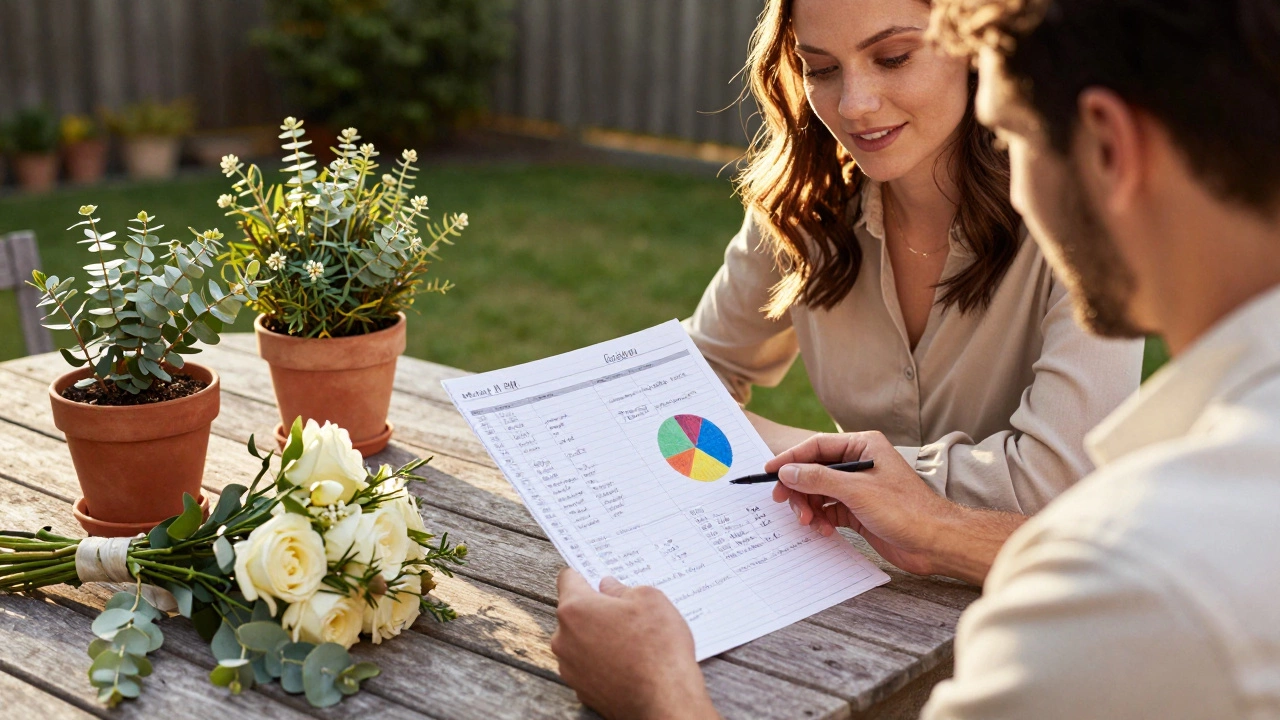
Wedding Flower Budget Calculator
Calculate your flower budget based on your total wedding cost. Based on 2026 Australian wedding data, flowers typically make up 10% of your total wedding budget.
Based on standard 10% allocation
Flower Budget Breakdown
Estimated cost:
Cost per arrangement:
Typical range for mid-sized wedding:
(Based on 2026 Australian wedding data)
Smart Saving Tips
Use these strategies to save on flowers without sacrificing beauty:
- Use greenery (eucalyptus, ferns) instead of expensive blooms
- Reuse arrangements from ceremony to reception
- Go local and seasonal for fresh, affordable flowers
- Focus on 2-3 large centerpieces instead of many small ones
When you start planning a wedding, the first question isn’t about lace or music-it’s about money. What is a good wedding budget? It’s not a one-size-fits-all number. A good budget is the one that fits your life, your values, and your future-not someone else’s Pinterest board.
In 2026, the average Australian wedding costs between $35,000 and $55,000. But that number can be misleading. Some couples spend $10,000 and feel completely happy. Others spend $100,000 and still feel stressed. The real question isn’t how much you spend-it’s how you spend it.
Where Does Your Wedding Money Actually Go?
Most couples think the big expense is the venue or the dress. But in reality, the biggest chunk of your budget often goes to things you don’t even notice until it’s gone: food, drinks, and flowers.
Take wedding flowers. People assume they’re just decoration. But in 2026, floral arrangements for a mid-sized wedding in Sydney can easily cost $3,500 to $6,000. That’s not just bouquets-it’s aisle runners, ceremony arches, table centerpieces, boutonnieres, and even floral ceiling installations. And if you want seasonal, locally grown blooms? You’re looking at $50-$120 per arrangement. A single large centerpiece can cost more than a week’s groceries.
Here’s how a typical $40,000 budget breaks down in Australia right now:
| Category | Percentage | Average Cost |
|---|---|---|
| Venue & Catering | 45% | $18,000 |
| Wedding Flowers | 10% | $4,000 |
| Photography & Videography | 10% | $4,000 |
| Attire (Dress, Suit, Accessories) | 7% | $2,800 |
| Entertainment (Band/DJ) | 6% | $2,400 |
| Wedding Rings | 4% | $1,600 |
| Invitations & Stationery | 2% | $800 |
| Transportation & Accommodation | 3% | $1,200 |
| Extras (Hair, Makeup, Favors, Insurance) | 13% | $5,200 |
Notice something? Flowers alone take up 10% of your budget. That’s more than your rings. More than your invitations. More than transportation. And if you’re not careful, you can blow that entire slice on one overpriced arch.
What Makes a Wedding Budget "Good"?
A good wedding budget isn’t about matching what your cousin spent. It’s about alignment. Does your spending reflect what matters to you?
Some couples care deeply about food. They’ll cut the band, skip the photo booth, and spend an extra $5,000 on a chef who sources local oysters and organic vegetables. Others care about the experience. They’ll hire a live string quartet for the ceremony, even if it means serving pizza at the reception.
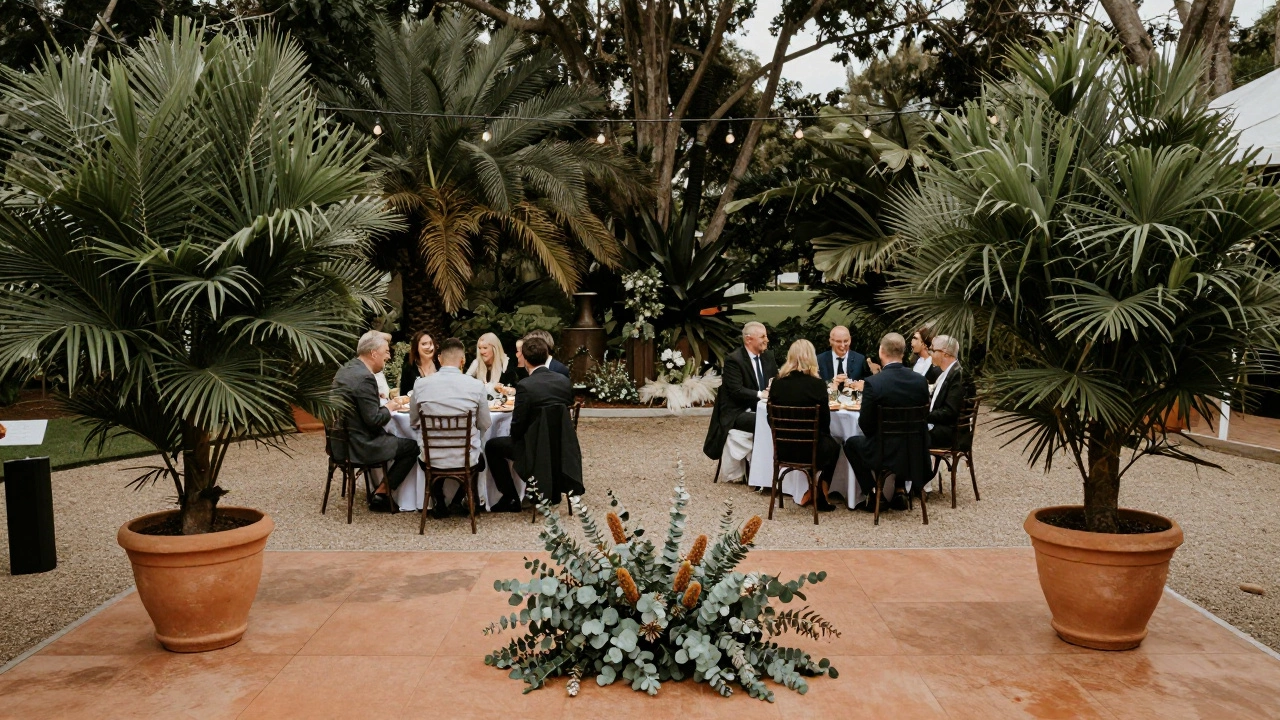
Flowers are the same. If you’re a nature lover who hates plastic, maybe you’ll spend $6,000 on dried eucalyptus and native blooms. If you’re practical, you might use just two large arrangements and scatter potted succulents down the aisle. One costs $5,500. The other costs $1,200. Both look beautiful.
Here’s the truth: your budget should be a reflection of your priorities, not your peer pressure. A good budget is the one you don’t regret six months later.
How to Build a Realistic Wedding Budget
Start with what you can actually afford-not what you think you should spend. Here’s how:
- Set your total limit. Sit down with your partner. Look at your savings, your income, and your debts. What number feels comfortable? Not aspirational. Not Instagram-worthy. Real.
- Put aside 10% for surprises. Weddings always cost more than planned. A last-minute guest. A broken vase. A DJ who cancels. Always add a buffer.
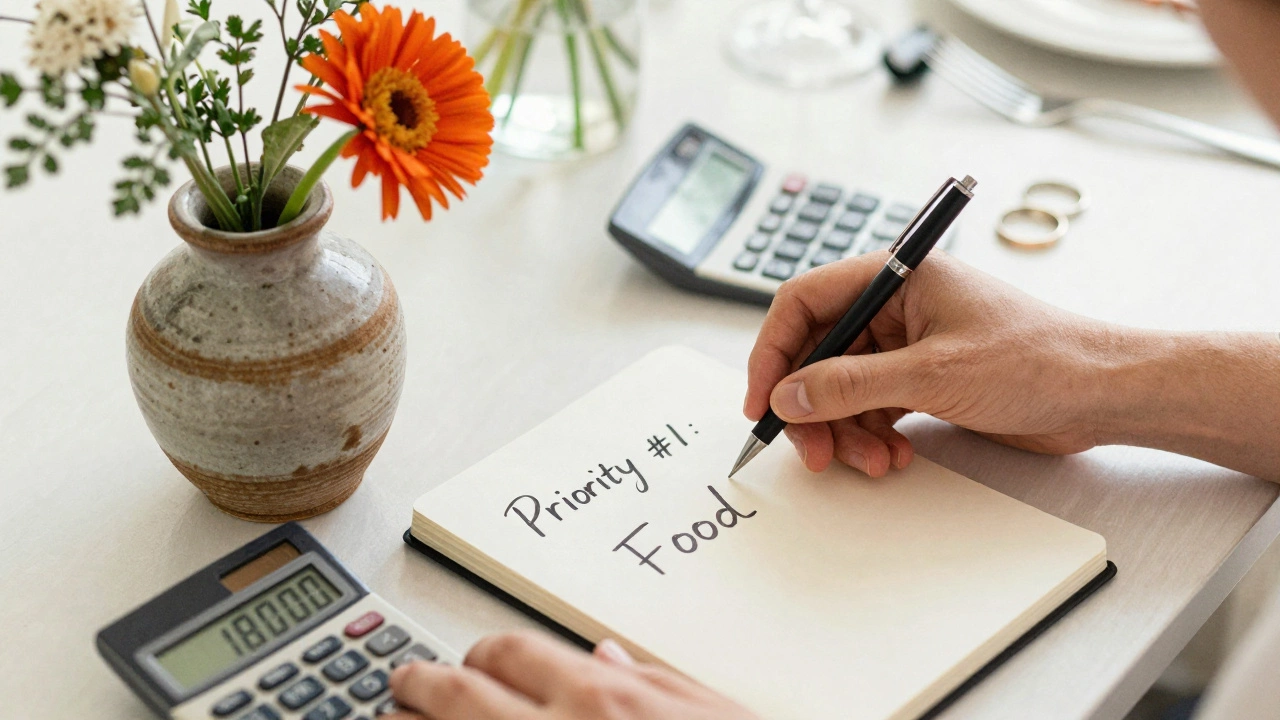
- Rank your top 3 priorities. What’s non-negotiable? Is it the venue? The photos? The flowers? The cake? Write them down. Everything else becomes flexible.
- Get quotes early. Don’t assume. Call three florists. Ask for a breakdown: What’s included? Are delivery and setup in the price? Can you reuse arrangements from ceremony to reception?
- Track every dollar. Use a free spreadsheet or app like WeddingWire or The Knot. Update it weekly. If you overspend on flowers, you’ll know before you’re stuck paying for a $1,200 cake topper.
Flowers: How to Save Without Sacrificing Beauty
Flowers are emotional. They’re symbolic. They’re the first thing guests notice. But they’re also the easiest thing to cut without anyone noticing.
Here’s what works in 2026:
- Use greenery. Eucalyptus, ferns, and olive branches cost 60% less than roses and peonies. They look lush and modern.
- Reuse arrangements. Move the ceremony arch to the reception bar. Use the bride’s bouquet as the center table piece. Florists charge extra for "design reuse"-but it’s worth it.
- Go local and seasonal. In March 2026, Sydney is in full spring bloom. Use native flowers like waratahs, banksias, or bottlebrushes. They’re cheaper, fresher, and more meaningful.
- Skip the fake. Artificial flowers look cheap under natural light. If you’re on a tight budget, fewer real blooms are better than many fake ones.
- DIY the simple stuff. Boutonnieres, aisle markers, and table numbers? You can make those with a pair of scissors and 3 hours of YouTube tutorials.
One couple I know in Bondi spent $1,800 on flowers. They used 15 large potted lemon myrtle plants from a local nursery. They hung them from the ceremony arch, placed them down the aisle, and moved them to the reception tables. Guests thought they were luxury. The florist called it "brilliantly simple."
What to Skip When You’re Tight on Cash
You don’t need a 10-tier cake. You don’t need a live jazz band. You don’t need gold-rimmed napkins.
Here’s what most couples regret spending on:
- Excess guest count (every extra person adds $100-$150 to your food bill)
- Elaborate favor bags (no one keeps them)
- Multiple photo backdrops
- Custom monogrammed everything
- Expensive lighting rigs (natural light + string lights cost less and look better)
And here’s what you should never cut:
- Photography (you’ll look back at these photos for decades)
- Food quality (guests remember how they felt, not the table settings)
- Comfort (a venue with bad seating or no AC is a nightmare)
Final Thought: A Good Budget Is a Peaceful Budget
There’s no magic number. A good wedding budget is the one that leaves you feeling calm, not crushed. It’s the one that doesn’t force you to delay your honeymoon, skip rent, or max out your credit card.
Flowers are beautiful. But they’re not the point. The point is this: you’re starting a life together. Your wedding day should reflect that-not your bank statement.
So ask yourself: What do you want to remember? The petals? Or the laughter? The silence when you said "I do"? That’s what your budget should protect.