Wedding Cake Designer Cost Calculator
Customize Your Wedding Cake
Estimate costs based on tier count, complexity, and location. Remember: wedding cake designers specialize in custom artistry, not mass production.
Estimated Cost Range
Based on cake designer expertise and custom requirements
Note: This estimate includes:
- ● Designer's specialized skills (not standard baking)
- ● Structural engineering & transport preparation
- ● Specialty ingredients (edible gold, imported chocolate)
Ever seen a towering, hand-painted wedding cake that looks like a sculpture and wondered who actually made it? You might call them a baker, a decorator, or even a magician - but there’s a real, official name for the person who turns sugar, butter, and cream into a wedding centerpiece. And it’s not what you think.
The Real Title: Cake Designer or Pastry Chef?
The person who creates wedding cakes isn’t just a baker. While any baker can make a layer cake, a wedding cake maker is more accurately called a cake designer - especially when they’re crafting multi-tiered, custom-shaped, hand-sculpted masterpieces. Some also go by pastry chef, especially if they’ve trained in professional kitchens and hold formal culinary credentials.
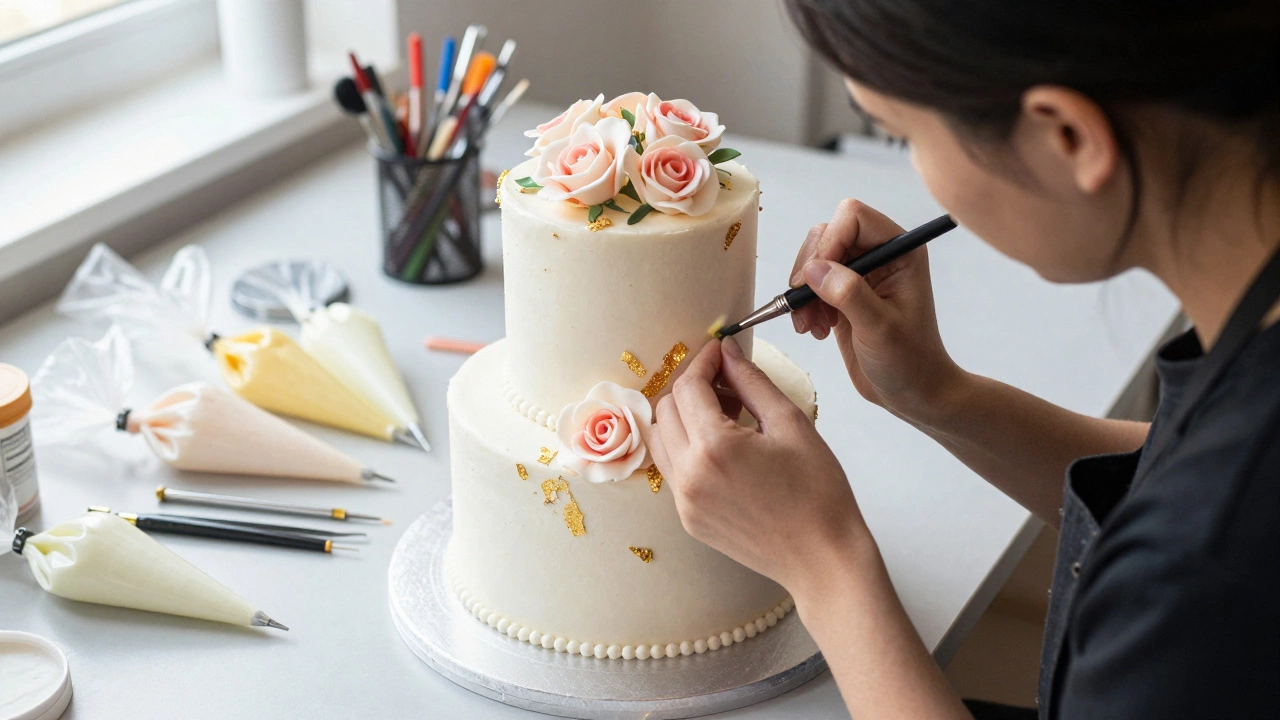
There’s a big difference between a bakery that churns out standard vanilla or chocolate cakes and a cake designer who spends 40+ hours on a single wedding cake. The latter doesn’t just bake. They sculpt. They pipe. They color. They engineer. A cake designer often works with fondant, gum paste, and airbrushing tools - not just mixing bowls and whisks.
Why the Title Matters
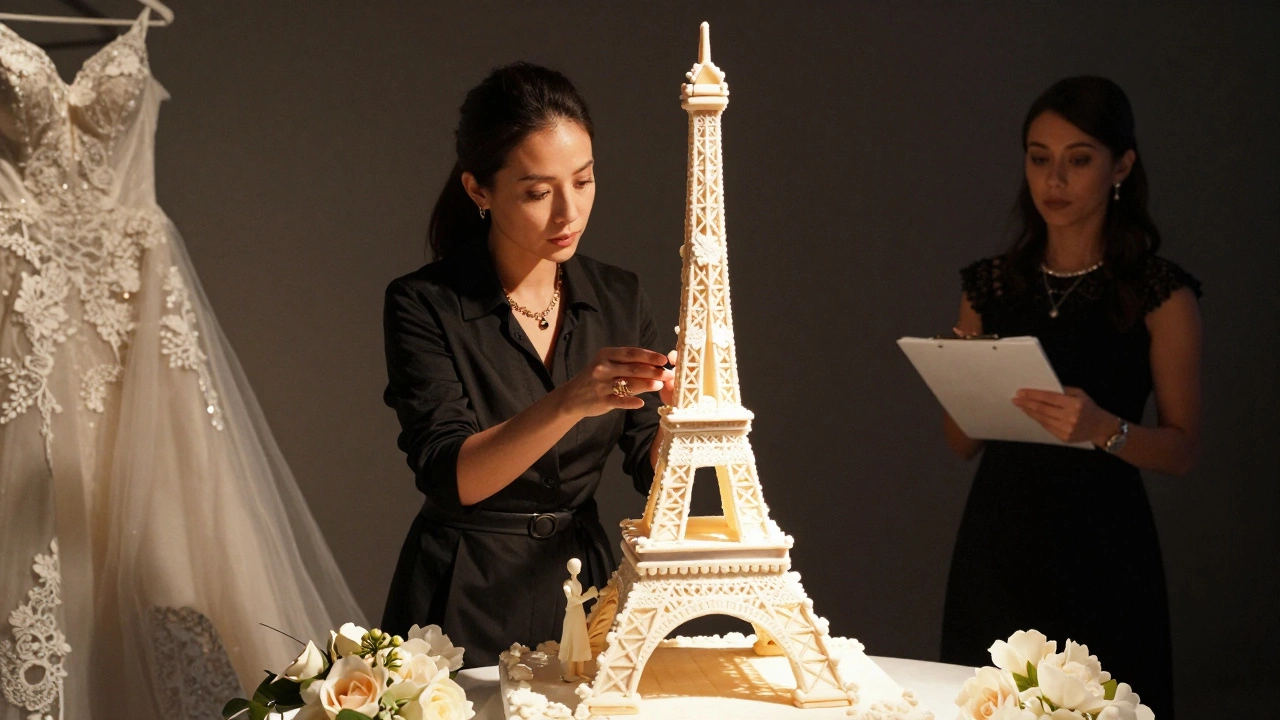
Calling someone a "baker" for a wedding cake is like calling a fashion designer a "seamstress." It’s not wrong - it’s just incomplete. Wedding cakes are custom art pieces. They’re built to match a bride’s dress, the venue’s theme, or even a couple’s love story. One cake might look like a miniature Eiffel Tower. Another might feature hand-painted roses that took three days to dry. These aren’t mass-produced. They’re commissioned.
In Australia, especially in cities like Sydney, Melbourne, and Brisbane, wedding cake designers are often licensed pastry chefs with diplomas from culinary institutes. Many have trained in France or Italy, where cake artistry is treated as a fine art. Some even specialize in sugar flowers, edible lace, or structural engineering - because a five-tier cake has to stay upright during transport, in heat, and under the weight of its own decorations.
What They Actually Do
A cake designer doesn’t just show up with a cake on the big day. Their job starts weeks ahead:
- Meeting with couples to discuss design, flavor, budget, and theme
- Creating sketches or 3D mock-ups of the cake
- Ordering specialty ingredients (like edible gold leaf, imported couverture chocolate, or rare food colorings)
- Baking multiple layers separately - often over several days
- Using dowels and supports to ensure structural integrity
- Hand-painting details with food-grade paints
- Assembling the cake on-site, sometimes under the watchful eyes of wedding planners
Some cake designers even hire assistants just to help with piping hundreds of tiny flowers. One Sydney-based designer told me she once spent 117 hours on a single cake - not including client meetings or test tastings.
Education and Training
Most serious cake designers don’t learn this in a home kitchen. They train through:
- Formal pastry programs (like Le Cordon Bleu or TAFE in Australia)
- Workshops with international cake artists
- Competitions like the World Cake Design Championships
- Years of apprenticeships under established designers
Many hold certifications from organizations like the Australian Pastry and Cake Decorating Association. These aren’t just fancy titles - they mean the person has passed tests on food safety, structural design, and hygiene standards.
How to Spot a True Cake Designer
If you’re hiring someone for your wedding, here’s how to tell if they’re truly a cake designer - not just a baker with a fancy Instagram page:
- They ask about your dress, venue colors, and floral arrangements - not just "Do you want vanilla or chocolate?"
- They show you a portfolio with real, completed cakes - not stock photos or edited images
- They explain how they support tiers and prevent sinking or sliding
- They offer tastings of multiple flavors and fillings - not just one option
- They charge based on complexity, not just size
Some charge $500 for a simple two-tier cake. Others charge $3,000 for a three-tier cake with hand-sculpted sugar figures. The price difference isn’t about size - it’s about hours, skill, and materials.
Common Misconceptions
Many couples think:
- "Any bakery can do it." - Not true. Most bakeries lack the tools, time, or training.
- "It’s just icing." - It’s not. It’s edible architecture.
- "I can make it myself." - Maybe. But if your cake collapses at the reception, no one will remember the "personal touch."
One bride in Perth tried to save money by making her own cake. She spent six weeks on it. On the day of the wedding, the bottom tier cracked during transport. She cried. The guests ate store-bought cupcakes instead.
What to Look for When Hiring
If you want a cake that lasts in memory - not just in photos - look for:
- A portfolio with real wedding photos (not studio shots)
- Clear pricing breakdown (design, labor, delivery, setup)
- References from past clients - especially ones who had outdoor or summer weddings
- Insurance or liability coverage (yes, serious designers carry it)
- Experience with your venue’s restrictions (some venues don’t allow open flames for candles or require specific cake stands)
In Sydney, top cake designers often book 6-12 months in advance. Don’t wait until the last minute. The best ones don’t just make cakes - they make moments.
How the Industry Is Changing
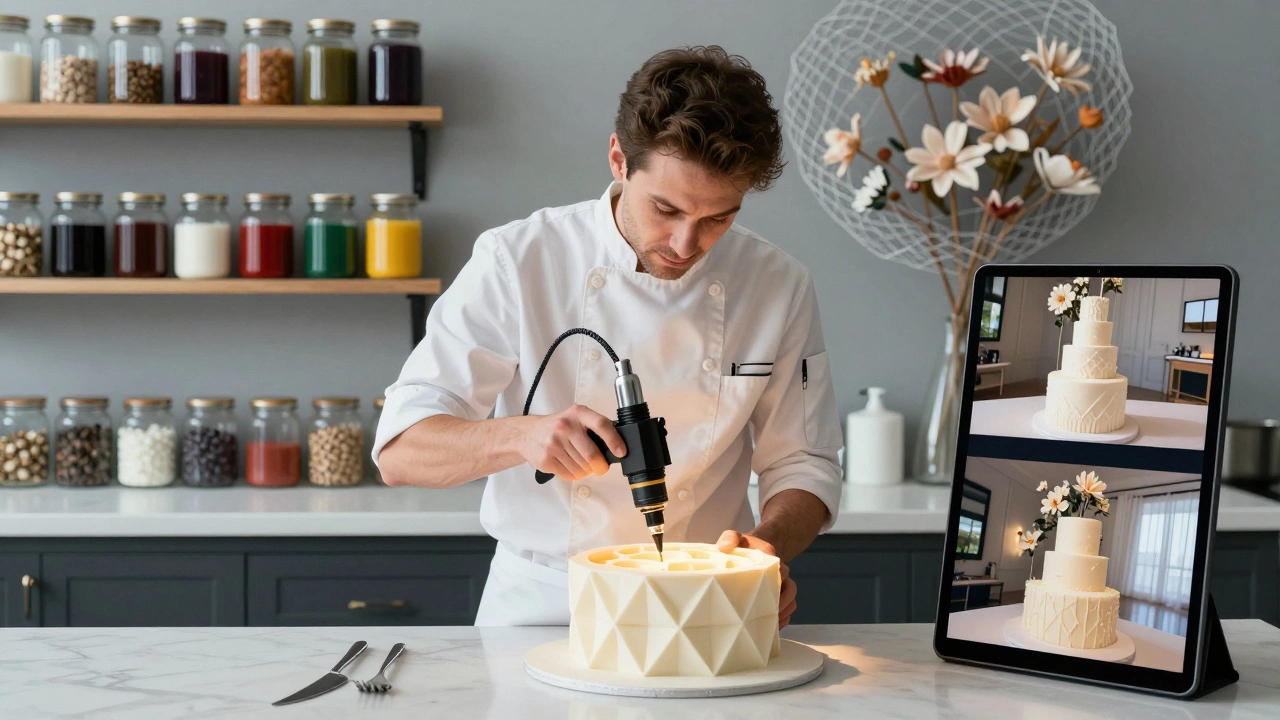
These days, cake designers are blending art with tech. Some use 3D printers to create edible molds. Others use food-safe silicone molds for perfect sugar lace. One Melbourne designer now uses augmented reality apps to let couples "see" their cake in the venue before they commit.
Flavors are evolving too. Gone are the days of just vanilla and chocolate. Now, it’s salted caramel with Earl Grey buttercream, passionfruit curd with white chocolate ganache, or even matcha and yuzu. The cake isn’t just decoration - it’s part of the dining experience.
And yes - there are male cake designers too. They’re not rare anymore. In fact, one of the most sought-after designers in Australia is a man from Adelaide who specializes in minimalist, modern cakes with geometric lines and metallic accents.
Final Thought
So what is a wedding cake maker called? It’s not "baker." It’s not "decorator." It’s cake designer - a skilled artist who works with sugar, patience, and precision. And if you’re planning your wedding, you’re not just hiring someone to make dessert. You’re hiring someone to turn your love story into something sweet, edible, and unforgettable.
Is a wedding cake maker the same as a baker?
Not exactly. A baker can make cakes, but a wedding cake maker - or cake designer - specializes in custom, multi-tiered, hand-decorated cakes that require advanced skills in sculpting, structural engineering, and food art. Most bakers don’t have the training or tools for this level of detail.
Do I need to hire a certified cake designer?
You don’t legally need to, but if you want a cake that’s safe, stable, and stunning, you should. Certified designers have trained in food safety, structural design, and hygiene. They also carry insurance, which protects you if something goes wrong on the big day.
How much does a professional wedding cake cost?
Prices vary widely. A simple two-tier cake might start at $500. A custom, hand-sculpted, multi-tiered design with edible flowers and detailing can cost $2,000-$5,000 or more. You’re paying for hours of labor, specialty ingredients, and expertise - not just the cake itself.
Can I make my own wedding cake?
You can, but it’s risky. Wedding cakes require precise timing, structural support, and transport logistics. Many DIY cakes collapse, melt, or look uneven under stress. If you’re not experienced with fondant, piping, or tiered construction, it’s better to leave it to the pros - especially if you’re paying for a venue, photographer, and planner.
What’s the difference between fondant and buttercream?
Buttercream is soft, creamy, and flavorful - great for taste but harder to sculpt. Fondant is a firm, sugar-based icing that dries hard and holds shapes. It’s ideal for smooth finishes, intricate designs, and figures. Many designers use both: buttercream for flavor, fondant for structure and look.