Interactive Ring Stacking Guide
Configure Your Stack
Legend & Symbolism
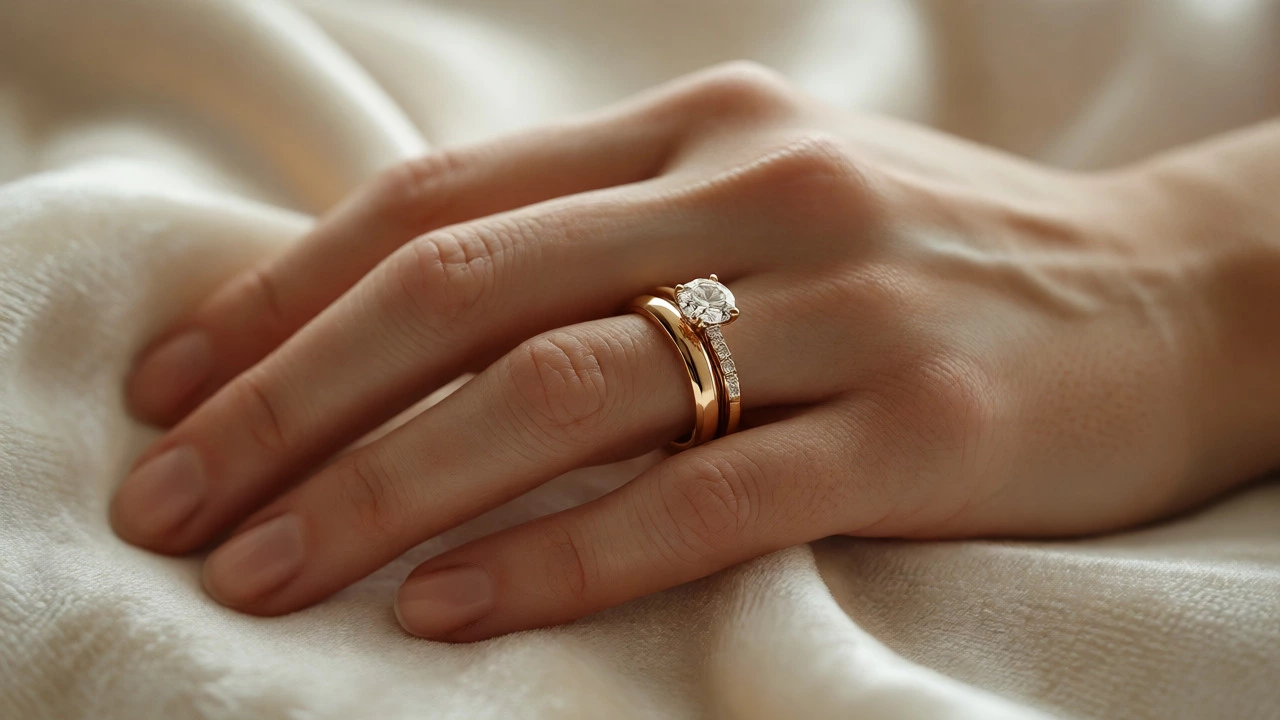
You’ve got the sparkler on your finger. You’ve got the plain gold band waiting in a velvet box. Now comes the moment that trips up half the couples I know: where exactly do these things go? It’s not just about aesthetics; it’s about tradition, symbolism, and making sure you don’t accidentally wear your engagement ring as a pinky promise.
The short answer? The engagement ring goes on first (closest to your heart), followed by the wedding band. But life isn’t always that simple. What if you have an eternity band? What if you’re wearing it on your right hand because you’re in Germany or Russia? Or what if you’re a guy who wants to stack his signet ring with his wedding band?
The Traditional Rule: Why Order Matters
Let’s start with the why before we get to the how. In Western cultures, specifically those influenced by Roman traditions, the fourth finger of the left hand is called the vagus nervus-the nerve believed to run directly to the heart. This is why the wedding ring is a circular band of metal worn on the fourth finger of the left hand to symbolize eternal love and marriage gets placed there.
But here’s the logic behind the stacking order: The wedding band represents the actual legal and spiritual union of marriage. Because it seals the deal, it belongs closest to the heart. The engagement ring, which was given earlier as a promise, sits above it. Think of it like this: The promise (engagement) leads to the commitment (marriage). So, the promise stays on the outside, protecting the core commitment underneath.
If you follow this strict traditional route:
- Step 1: Place the engagement ring on the fourth finger of the left hand.
- Step 2: During the ceremony, remove the engagement ring temporarily (or move it to the right hand).
- Step 3: Slide the wedding band onto the bare fourth finger of the left hand.
- Step 4: After the ceremony, slide the engagement ring back on top of the wedding band.
Left Hand vs. Right Hand: It’s Not Universal
Here is where many people get confused because they assume "left hand" is a global law. It isn’t. If you are living in Sydney, London, or New York, the left hand is standard. But travel east or south, and the rules flip.
| Region/Country | Hand Used | Notes |
|---|---|---|
| USA, UK, Australia, Canada | Left Hand | Engagement below Wedding (closest to heart) |
| Germany, Netherlands, Norway | Right Hand | Often switch hands after marriage |
| Russia, Poland, Ukraine | Right Hand | Strong Orthodox Christian tradition |
| Brazil, Turkey, Lebanon | Both Hands | Wear engagement on right, move to left after vows |
| China, Japan | Flexible | Increasingly adopting Western Left Hand style for fashion |
In countries like Russia and Poland, the right hand is the sacred hand for oaths. So, if you are marrying someone from these backgrounds, or if you simply prefer the look on your dominant hand, there is no shame in breaking the "left-hand-only" rule. The key is consistency between partners. If one person wears theirs on the left and the other on the right, it can look mismatched during photos, though some couples actually like that contrast.
Handling Multiple Rings: Eternity Bands and Stacks
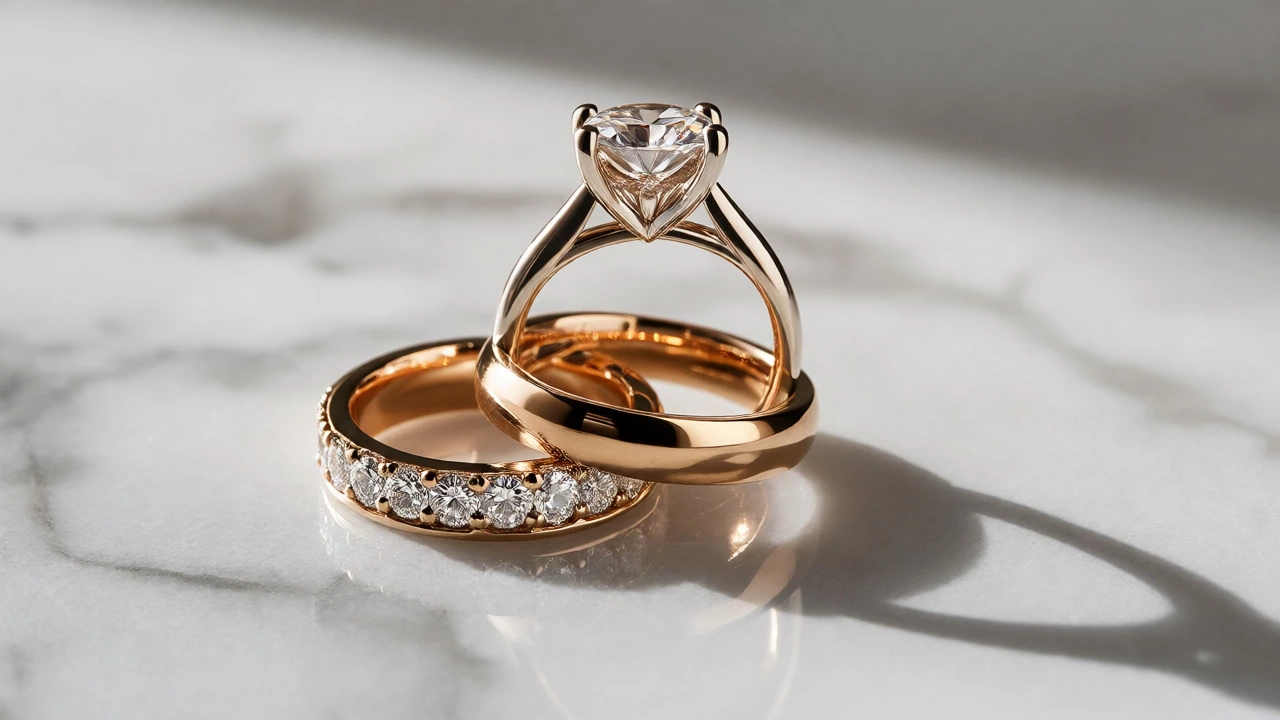
Things get complicated when you add a third player: the eternity band, a ring set with continuous gemstones, often given to mark a significant anniversary or the birth of a child. Where does this fit?
Most jewelers recommend placing the eternity band at the very bottom, closest to the hand, followed by the wedding band, then the engagement ring. Why? Because eternity bands are usually thicker and less delicate than diamond solitaires. Putting the chunkiest ring at the base creates a stable foundation. Plus, since the eternity band symbolizes ongoing love, keeping it closest to the skin feels symbolic.
However, comfort is king. If your eternity band has sharp edges or large stones that dig into your knuckle, put it on top. Seriously. Nobody cares about the metaphysical hierarchy if you can’t make a fist without wincing. Many women in their 50s and 60s tell me they eventually moved the eternity band to a different finger entirely just to save their sanity.
Men’s Rings: Do They Follow the Same Rules?
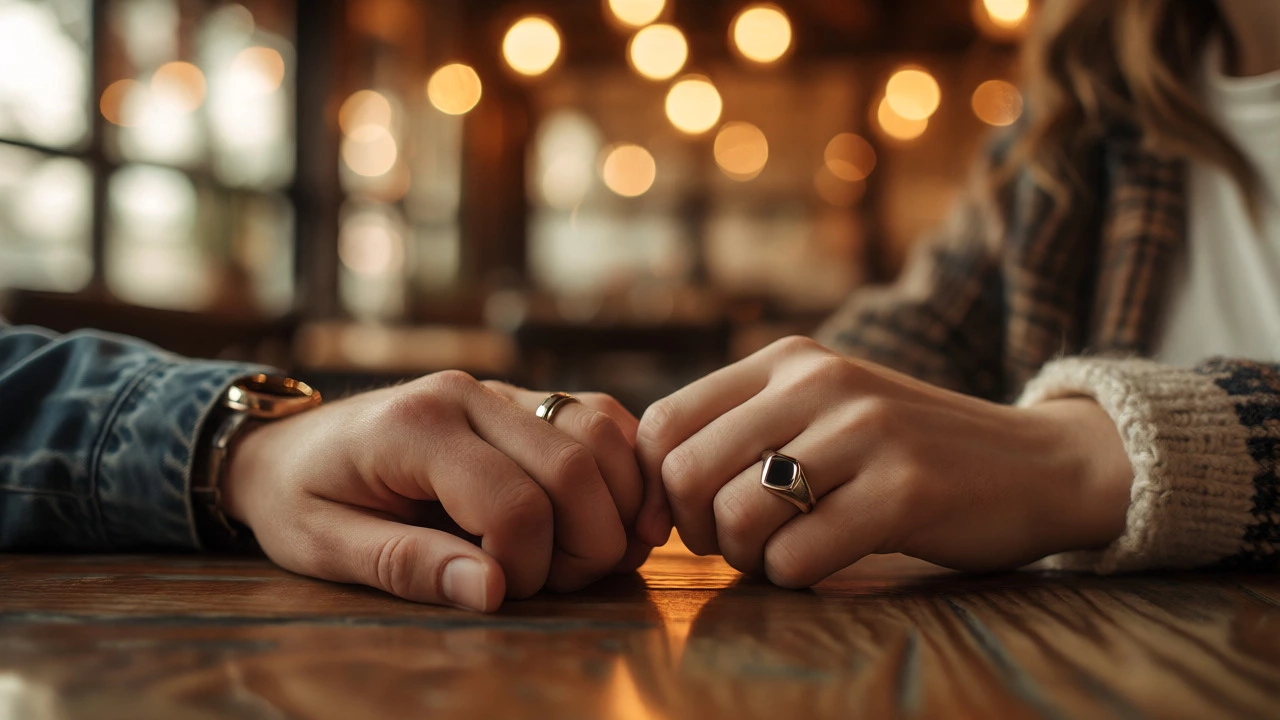
Gentlemen, you aren’t off the hook. Traditionally, men wore only the wedding band. But modern trends show more men stacking rings. If you have a signet ring or a family heirloom, where does it go?
The safest bet for men is to keep the wedding band alone on the fourth finger. If you want to wear a signet ring, put it on the pinky or middle finger of the same hand. Mixing metals? That used to be a fashion faux pas, but now it’s chic. Just ensure the wedding band doesn’t get scratched by a heavier steel or tungsten carbide ring rubbing against it daily. Gold is soft; it will wear down if a hard metal band sits next to it constantly.
Practical Tips for Keeping Your Stack Secure
Once you decide on the order, you need to keep them there. Here are three hacks from professional jewelers:
- Soldering: If you never take your rings off (and you shouldn’t, really, unless you’re doing heavy lifting), consider having a jeweler solder the wedding and engagement bands together. This prevents them from spinning independently and keeps the order fixed forever. Note: This makes resizing harder later, so wait until your weight is stable.
- Ring Guards: These are small silicone or metal inserts that sit inside the band to tighten the fit. Great if your engagement ring slides around and flips over, showing the underside of the stone.
- Shim Rings: Thin, plain bands that fill gaps between larger rings. If your engagement ring has a high setting and leaves a gap under the wedding band, a shim stops dirt from accumulating and keeps the stack tight.
Also, check your ring size seasonally. Fingers shrink in winter and swell in summer. In Sydney, the humidity can make fingers puff up significantly in January. If your rings feel loose in July, don’t panic. If they feel tight in December, remove them before bed to avoid circulation issues.
What About Divorce or Widowhood?
This is the awkward part nobody talks about at parties. If a marriage ends, what happens to the order?
There are no hard rules here, only personal choice. Some women move the engagement ring to the right hand to signify it’s no longer active. Others keep both rings on the left hand but reverse the order, putting the engagement ring below the wedding band. Widows sometimes continue wearing both rings, while others remove the wedding band but keep the engagement ring as a memory of the proposal. There is no "wrong" way to grieve or transition. Wear what gives you peace.
Frequently Asked Questions
Can I wear my engagement ring on my right hand?
Absolutely. While Western tradition places it on the left, many European and South American cultures use the right hand. Additionally, some people simply prefer the right hand for comfort or aesthetic reasons. There is no legal requirement mandating the left hand.
Does the order change if I have an eternity band?
Typically, the eternity band goes at the bottom (closest to the palm), followed by the wedding band, then the engagement ring. However, comfort takes precedence. If the eternity band is bulky, placing it on top may prevent discomfort.
Should I wear my rings every day?
Ideally, yes, to maintain the symbolism. However, you should remove them during activities that risk damage or loss, such as gardening, gym workouts involving heavy weights, swimming in chlorinated pools, or applying harsh cleaning chemicals.
What if my rings don't fit together perfectly?
If your engagement ring has a curved shank designed to hug the wedding band, they will fit snugly. If they are straight bands, they might spin. Consider using a ring guard or having them soldered together to prevent movement and scratching.
Is it bad luck to buy my own wedding ring?
No. Old superstitions suggested it brought bad luck, but modern couples frequently shop together or purchase their own bands to ensure they love the design. Practical satisfaction outweighs folklore for most contemporary buyers.