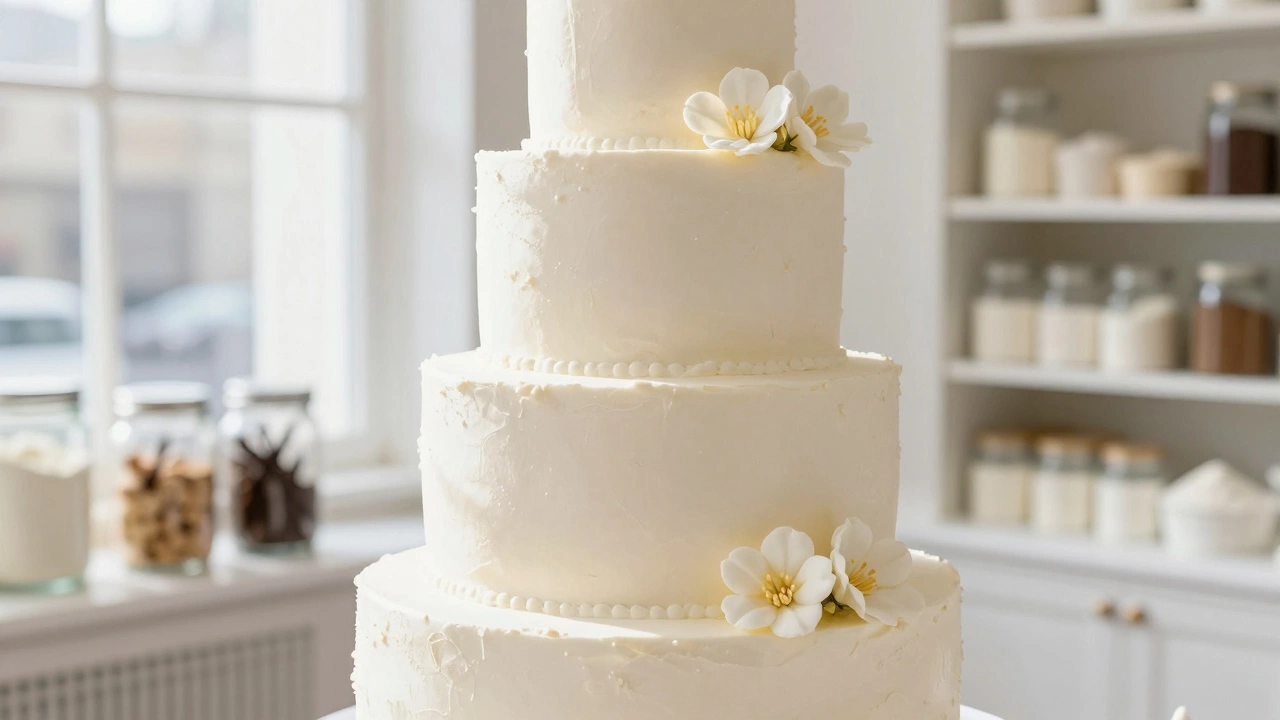
Wedding Cake Flavor & Frosting Selector
Use this tool to determine the ideal traditional cake structure for your specific wedding conditions.
Recommended Choice
Highly RecommendedVanilla Sponge with Stabilized Buttercream
This is the gold standard for a reason. It offers structural integrity for stacking while providing a neutral canvas that appeals to every guest.
- Best for large crowds
- Easy to decorate
Stability Rating
Walk into almost any bakery in Sydney or London, and you’ll see the same towering structure: pristine white tiers, delicate sugar flowers, and smooth icing. But what’s actually inside that shell? If you’re planning a wedding and wondering what the traditional wedding cake flavor is, the answer might surprise you. It isn’t chocolate. It isn’t red velvet. For centuries, the standard has been a simple, sturdy vanilla sponge paired with rich buttercream.
Why this combination? It’s not just about taste-it’s about logistics, history, and tradition. Understanding why vanilla became the gold standard helps you decide whether to stick with the classics or break the mold for your big day.
The Vanilla Sponge: The Backbone of Tradition
When people talk about traditional wedding cakes, they are usually talking about Victoria Sponge or Genoise. These aren’t fancy flavors; they are structural necessities. A wedding cake needs to stand up to being transported, stacked, and cut by hundreds of guests. Dense, moist vanilla sponge does exactly that.
Historically, vanilla was a luxury ingredient. In the 18th and 19th centuries, when the modern wedding cake concept took shape in Europe, vanilla bean paste was expensive and rare. Using it signaled wealth and celebration. Over time, as ingredients became more accessible, vanilla remained the default because it’s neutral. It doesn’t clash with the heavy sweetness of traditional frostings, and it appeals to almost every palate, from kids to grandparents.
- Texture: Light, airy, but dense enough to support weight.
- Flavor Profile: Mild, sweet, slightly floral (if using real vanilla beans).
- Versatility: Pairs well with fruit fillings, nuts, or plain buttercream.
If you’ve ever eaten a slice of wedding cake that tasted like “nothing,” it was probably a poorly made vanilla sponge. Good traditional cake uses high-quality vanilla extract or real bean paste, giving it a warm, comforting aroma that feels nostalgic.
Buttercream vs. Royal Icing: The Frosting Debate
The filling and coating matter just as much as the sponge. Traditionally, British and Commonwealth weddings (including those in Australia) favor Buttercream. This is a mixture of butter and powdered sugar, often flavored with vanilla or lemon. It’s soft, creamy, and melts in your mouth. However, it’s sensitive to heat. If you’re having an outdoor summer wedding in Sydney, buttercream can soften too much unless kept cool.
In contrast, American traditions often lean toward Royal Icing or fondant-covered layers with buttercream underneath. Royal icing is made from egg whites and powdered sugar. It hardens completely, making it perfect for intricate piping and decorations. But many people find it too sweet and dry to eat on its own. That’s why most bakers today use a hybrid approach: royal icing for the exterior structure and buttercream or ganache for the interior layers.
| Frosting Type | Taste | Texture | Best For |
|---|---|---|---|
| Buttercream | Rich, creamy, less sweet | Soft, spreadable | Indoor weddings, cooler climates |
| Royal Icing | Very sweet, hard | Crisp, dry | Decorative details, long-term storage |
| Fondant | Mildly sweet, dough-like | Smooth, pliable | Sleek modern designs, hot weather |
Historical Roots: From Fruitcake to Sponge
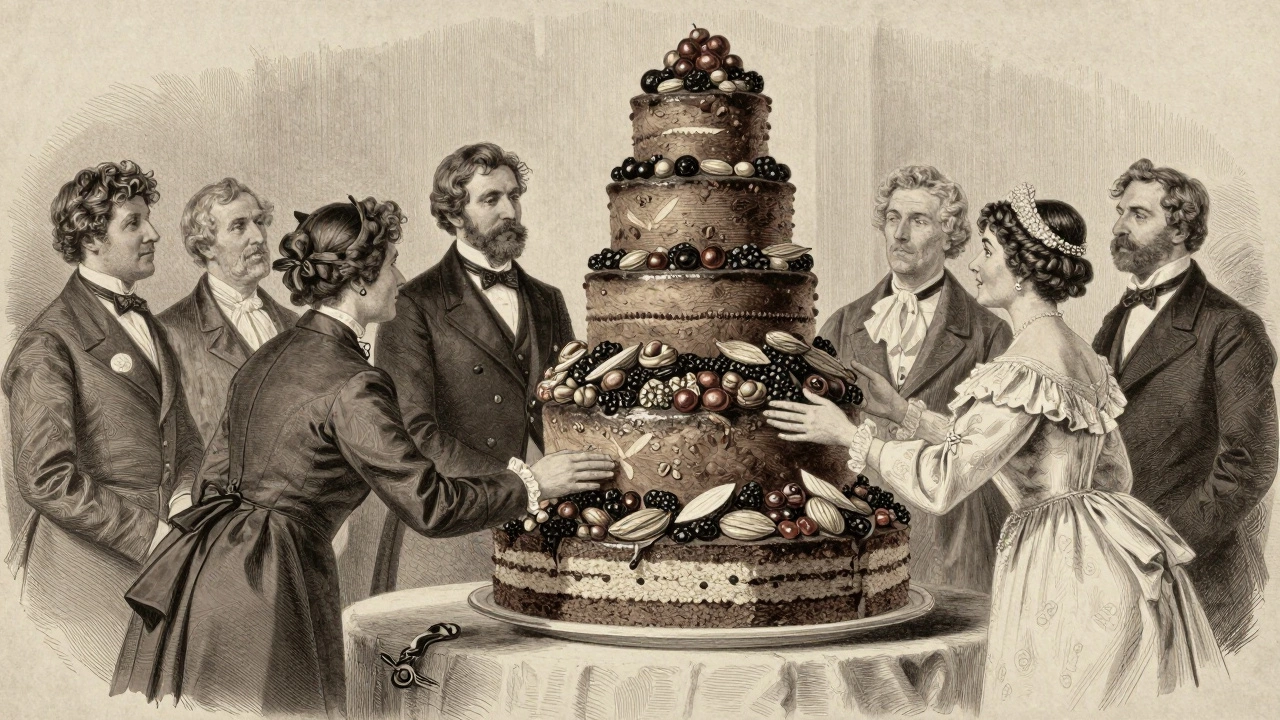
Believe it or not, the very first “wedding cakes” weren’t sponges at all. They were Fruitcakes. In medieval England, couples would stack small breads called “bride’s pies.” Guests would try to kiss the bride under the arch formed by the stacked pies. Later, these evolved into dense cakes loaded with dried fruits, nuts, and spirits.
Fruitcake was practical. It lasted for months without spoiling, which was important before refrigeration. It also symbolized fertility and abundance due to the nuts and seeds inside. But fruitcake is heavy, dark, and polarizing. By the Victorian era, lighter sponges began to take over, especially after Queen Victoria popularized the multi-tiered white cake at her wedding in 1840.
The shift from fruitcake to vanilla sponge marked a change in wedding culture. Weddings became more about elegance and less about survival. White cake represented purity and simplicity, while the light sponge reflected the growing availability of refined sugar and flour.
Regional Variations of “Traditional”
“Traditional” means different things depending on where you live. While vanilla sponge dominates in the UK, US, and Australia, other cultures have their own historic standards.
In Italy, the Panettone or almond-based cakes were once common. In France, you might find Mille-Feuille or genoise with crème pâtissière. In Jewish traditions, the cake is often chocolate or carrot, reflecting community preferences rather than a single national standard.
Even within English-speaking countries, there are differences. In the southern United States, pound cake-a denser, richer version of vanilla sponge-was traditionally used because it held up better in humid climates. In Australia, where summers can be brutal, bakers often recommend adding a stabilizer to buttercream or switching to ganache to prevent melting.
Why Vanilla Remains the Default Choice
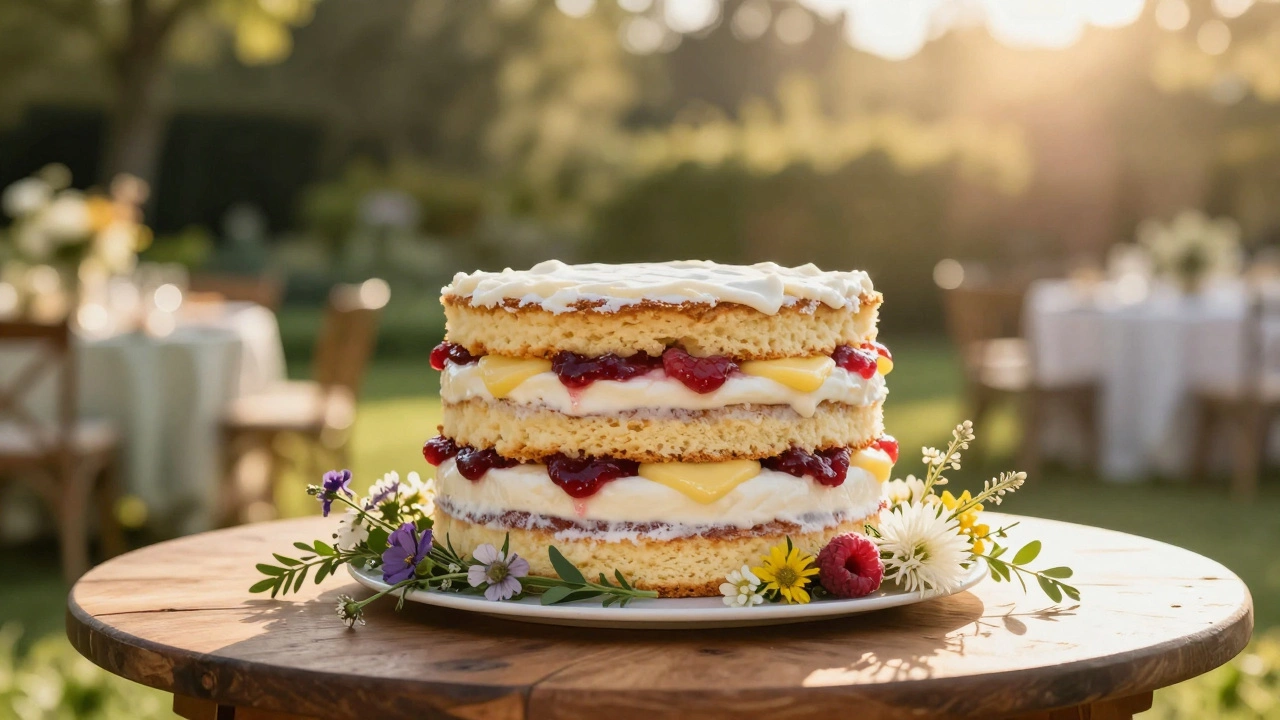
You might wonder why so many couples still choose vanilla if it seems plain. The truth is, vanilla is a blank canvas. It lets other elements shine. When you add raspberry jam, lemon curd, or salted caramel between layers, the vanilla doesn’t compete-it complements.
Also, consider your guests. Wedding receptions serve hundreds of people. Some are diabetic, some dislike strong flavors, and others have dietary restrictions. Vanilla sponge is generally safe. It’s easy to make gluten-free or vegan without losing structure. Chocolate or red velvet cakes can be harder to adapt without changing the texture significantly.
Bakers also prefer vanilla because it’s predictable. It rises evenly, colors consistently, and doesn’t bleed into white frosting. If you want a flawless white cake, vanilla sponge is the only reliable option. Darker batters can tint the frosting, requiring extra work to correct.
Modern Twists on the Classic
Just because vanilla is traditional doesn’t mean it has to be boring. Many modern bakers are reinventing the classic by upgrading the quality of ingredients. Instead of artificial vanilla extract, they use Tahitian vanilla beans or Madagascar bourbon vanilla for deeper flavor. Others add subtle notes like cardamom, rose water, or citrus zest to keep the cake feeling fresh and contemporary.
Some couples opt for a “naked” or semi-naked cake, where the buttercream is thinly applied so the vanilla sponge shows through. This rustic look has become popular in bohemian and garden weddings. It highlights the texture of the cake itself, turning the sponge into part of the decoration.
If you love tradition but want something unique, ask your baker about layering options. You could have vanilla sponge on the bottom tiers for stability and switch to a lighter flavor like lemon or strawberry on top. Or, keep the exterior traditional but hide a surprise filling inside-like passionfruit curd or dulce de leche.
Is vanilla really the most common wedding cake flavor?
Yes, vanilla sponge with buttercream remains the most widely chosen combination globally. Its neutrality, structural integrity, and broad appeal make it the safest and most practical choice for large events.
Why did fruitcake fall out of favor for weddings?
Fruitcake was heavy, dense, and often overly sweet. As refrigeration improved and tastes shifted toward lighter desserts, couples preferred the elegance and simplicity of white sponge cakes. Fruitcake also required aging, which didn’t fit modern timelines.
Can I use chocolate cake for a traditional wedding?
Absolutely. While vanilla is historically traditional, chocolate is now accepted as a classic alternative. Just note that chocolate batter may tint white frosting, so your baker might need to adjust the design or use darker decorations.
What should I do if I’m having an outdoor summer wedding?
Avoid pure buttercream exteriors in hot weather. Opt for fondant, ganache, or stabilized buttercream. Ask your baker to test the cake’s stability in similar temperatures before your event.
How do I make vanilla cake taste more interesting?
Use high-quality vanilla beans instead of extract. Add complementary fillings like lemon curd, raspberry jam, or salted caramel. You can also infuse the sponge with subtle spices like cardamom or almond extract.