Wedding Size Calculator
How big is your wedding?
Enter your expected guest count to see if it's considered "big" in Australia, along with estimated costs and logistics requirements.
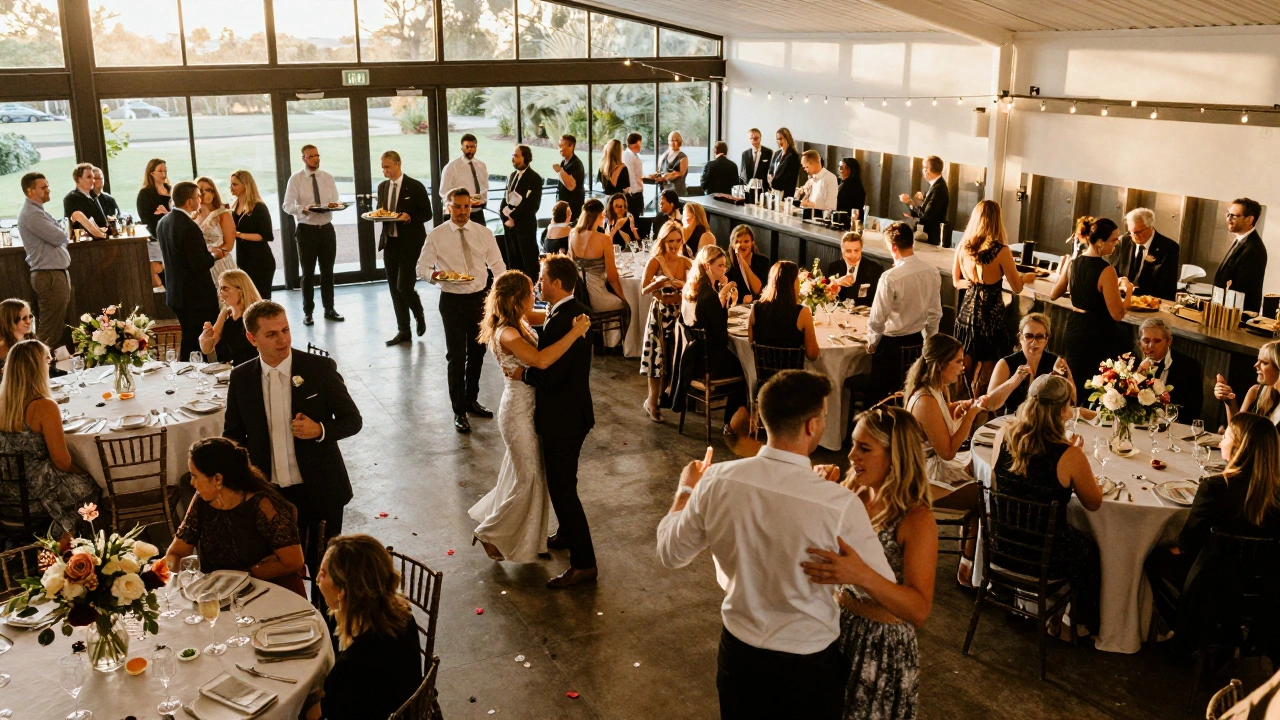
When someone says they’re having a "big wedding," what do they really mean? It’s not just about fancy decorations or a fancy venue. It’s about numbers - real, measurable numbers - that turn a gathering into an event people talk about for years. In Australia, a wedding with 150 guests or more is generally seen as large. But that number shifts depending on where you live, your family size, and even your budget. A wedding with 200 guests in Sydney might feel normal, while the same number in a rural town could be considered massive.
How Many Guests Make a Wedding "Big"?
The standard breakdown among planners and couples is simple:
- Intimate: Under 50 guests
- Small: 50-100 guests
- Medium: 100-150 guests
- Big: 150-250 guests
- Very Big: 250+ guests
These aren’t rules - they’re benchmarks. A wedding with 180 guests in Melbourne might be considered large because most local couples cap attendance at 120. But in Brisbane, where extended families often include cousins, aunts, uncles, and even childhood friends from primary school, 180 is just average.
The real tipping point? When you start needing a ballroom, multiple bartenders, or a second catering team. That’s when it stops feeling like a party and starts feeling like an event.
Why Guest Count Matters More Than You Think
It’s not just about the number on the invitation. Every extra guest changes everything: the cake size, the seating chart, the parking, the dance floor, even how long it takes to serve dinner. A wedding with 100 guests might have a 3-hour reception. Add 50 more people, and suddenly you’re looking at 5 hours of logistics.
Take catering. A 150-person wedding usually needs 3-4 servers per 50 guests. At 250, you’re talking 12-15 staff. That means more uniforms, more training, more coordination. One couple in Adelaide learned this the hard way when they added 40 last-minute guests because their grandparents insisted. They ran out of dessert, forgot napkins for the kids, and had to borrow extra chairs from the church next door.
And don’t forget the invitations. A big wedding means more envelopes, more RSVP tracking, more postage. One planner in Perth told me they once handled a 300-guest wedding where the couple sent out 387 invites because they included +1s for all single guests. The response rate? 82%. That’s 317 people showing up. They had to order two extra platters of seafood at 2 a.m. the night before.
Costs Go Up Faster Than You Expect
Let’s be honest - big weddings aren’t just about guest count. They’re about money. And the cost doesn’t scale linearly. It jumps.
Here’s what happens when you go from 100 to 200 guests:
- Food and drinks: +60-80%
- Venue rental: +40-70%
- Photography: +30% (more people = more shots = more editing time)
- Entertainment: +50% (a DJ needs more speakers, more lighting, more setup time)
- Stationery: +100% (double the invites, programs, place cards, menus)
In 2026, the average cost of a 150-person wedding in Australia is around $38,000. At 250, it’s closer to $65,000. That’s not inflation - that’s physics. More people = more stuff = more complexity. And the margin for error? It shrinks fast.
One couple from Newcastle planned a 200-person wedding on a $50,000 budget. They thought they were being smart. But they didn’t account for the fact that 40 of their guests were flying in from overseas. That meant extra accommodation, airport transfers, and welcome gifts. By the end, they were $12,000 over budget and had to cancel the fireworks.
What About Venue Size?
Most venues classify weddings by capacity. A "small" venue holds 80. A "medium" holds 150. A "large" venue? Usually 200-300. But here’s the catch: a venue that says it holds 250 doesn’t mean it’s comfortable for 250. There’s a difference between fitting people in and letting them move.
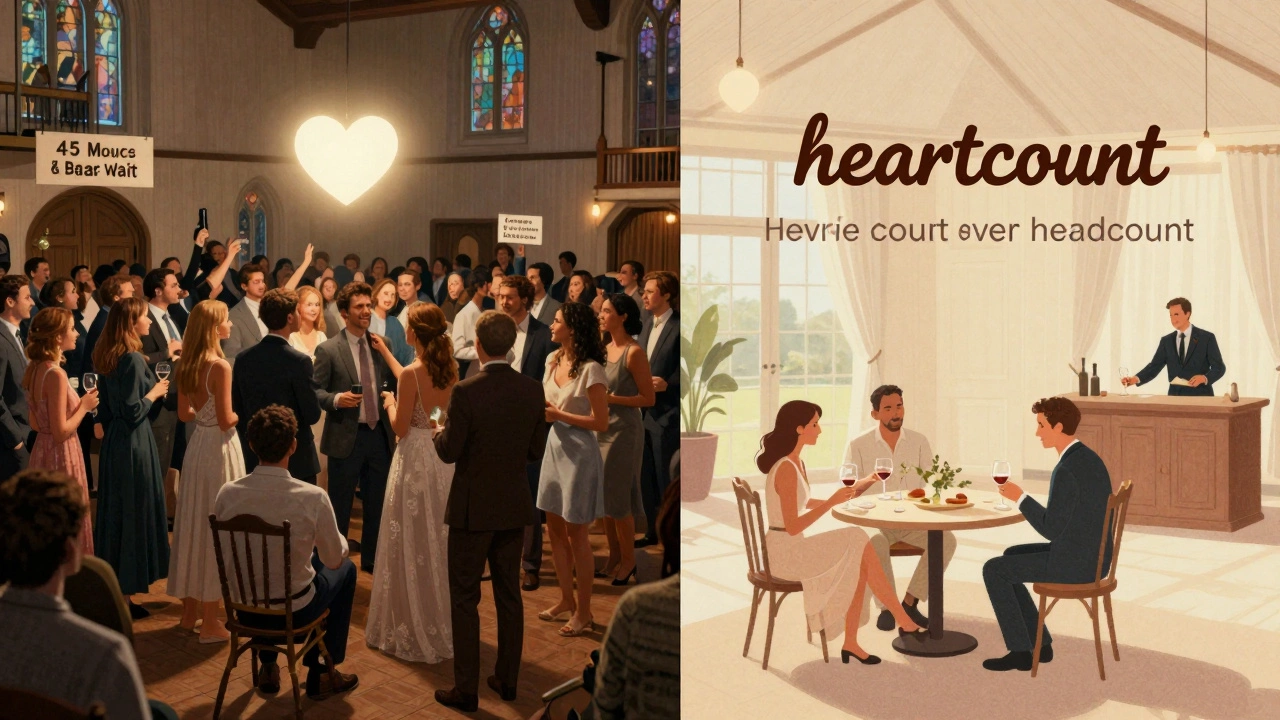
One Sydney couple booked a venue advertised for 240 guests. They had 220 people show up. The dance floor was so packed, people couldn’t turn around. The bar had a 45-minute wait. The restrooms? A line out the door. They thought they’d chosen wisely. Turns out, they’d chosen the minimum capacity for a big wedding - not the ideal one.
Smart planners recommend giving yourself at least 15% more space than your guest count. So if you’re expecting 200 guests, aim for a venue that holds 230+. That way, people aren’t elbow-to-elbow during the first dance.
Family Dynamics and Cultural Expectations
Let’s not ignore the elephant in the room: family. In some cultures, a wedding isn’t a wedding unless every cousin, second aunt, and former neighbor from childhood is there. In others, it’s just the immediate family and a few close friends.
For example, a Filipino-Australian couple might easily have 300 guests because of extended family ties. A Scandinavian-Australian couple might keep it under 100, even if they’re wealthy. Neither is right or wrong - it’s cultural.
One Melbourne bride told me her parents insisted on inviting 80 people from their hometown in Vietnam. She didn’t know half of them. But she knew if she said no, there’d be a scene. So she added them. The wedding went from 140 to 220. She cried during the reception - not from joy, but from exhaustion.
Big weddings aren’t always about love. Sometimes, they’re about obligation.
Is Bigger Always Better?
Not even close.
There’s a quiet trend happening: couples are choosing smaller weddings not because they can’t afford big ones, but because they’ve realized the stress isn’t worth it. A 2025 survey of Australian couples found that 68% of those who had weddings over 200 guests said they felt "overwhelmed" during planning. Only 22% of those with under 100 guests said the same.
Big weddings have perks - more people to celebrate with, more photos, more memories. But they also come with trade-offs: less personal time with guests, less control over the vibe, more pressure to impress.
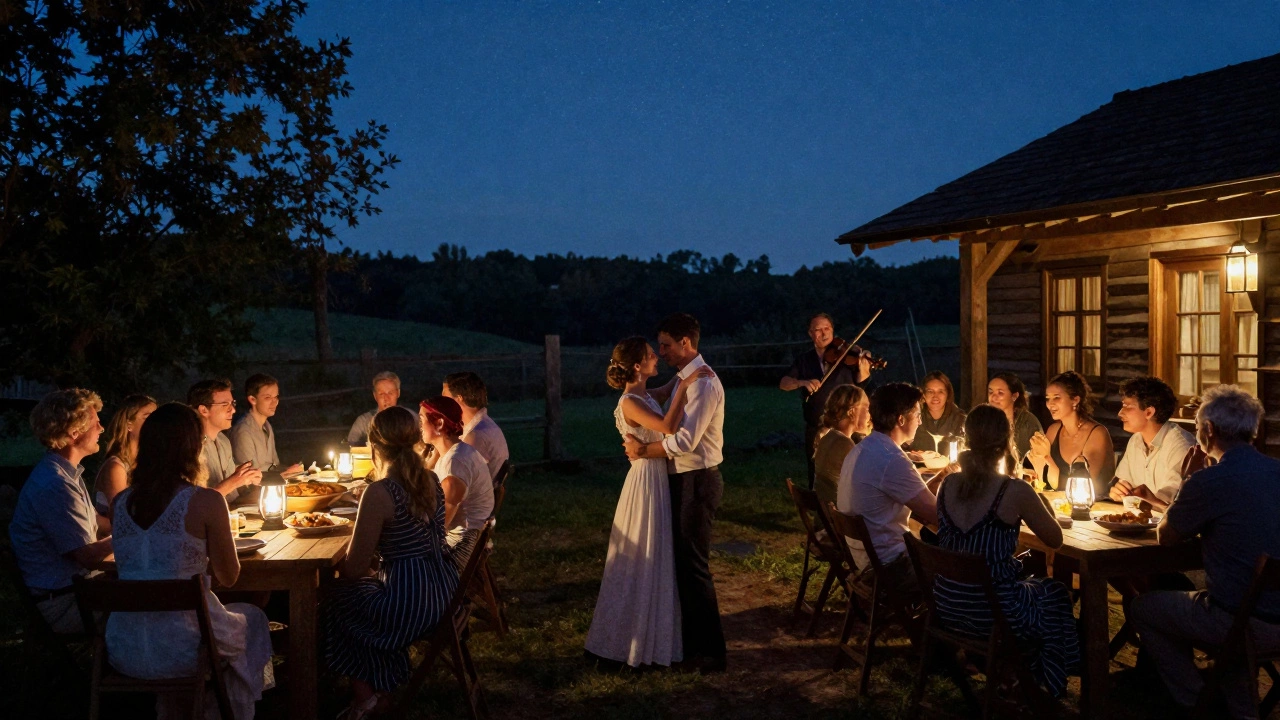
One couple in Hobart skipped the big wedding entirely. They had 48 guests. They rented a cabin. They cooked their own food. They danced under the stars. They spent $12,000. Two years later, they still say it was the best day of their lives.
What Should You Do?
Don’t let anyone tell you what "big" should mean for you. The real question isn’t "How many guests should I invite?" It’s:
- Who do I truly want to be there?
- Am I inviting people out of love - or out of guilt?
- Will this event feel like me, or like someone else’s expectation?
- Can I afford this without going into debt?
- Will I remember the day - or just the chaos?
There’s no magic number. But there is a truth: the biggest weddings aren’t the ones with the most guests. They’re the ones where everyone feels seen. Where the couple isn’t running from table to table, too tired to smile. Where the music plays, the food tastes good, and you actually get to hug your mom without someone asking for a photo.
That’s what makes a wedding big - not the headcount. The heartcount.
Is 100 guests considered a big wedding?
No, 100 guests is considered a small to medium-sized wedding in Australia. Most couples fall in this range. It’s large enough to feel festive but small enough to keep things personal and manageable. You can still have a sit-down dinner, a live band, and a dance floor without breaking the bank or losing sleep over logistics.
What’s the average wedding guest count in Australia?
The average wedding in Australia has between 80 and 120 guests. This number has been steadily decreasing since 2020, with more couples choosing intimate celebrations. Urban areas like Sydney and Melbourne tend to be slightly higher (100-140), while rural areas often stay under 100.
How much does a big wedding cost in Australia?
A big wedding - defined as 150+ guests - typically costs between $35,000 and $70,000 in 2026. This includes venue, catering, photography, music, and stationery. Costs can spike above $100,000 if you’re in a high-demand location like the Barossa Valley or have overseas guests. Budgeting 10-15% extra for unexpected additions is smart.
Do I have to invite everyone from my workplace?
No, you don’t. While it’s polite to invite close colleagues, you’re not obligated to invite everyone. A good rule: invite only those you’d have a drink with outside of work. If you’re unsure, ask yourself: "Would I miss this person if they weren’t here?" If the answer is no, skip them. Most people understand - especially if you keep your guest list consistent across family and friends.
Can I have a big wedding on a small budget?
It’s possible, but it requires serious trade-offs. You can cut costs by choosing a weekday, off-season date, or a non-traditional venue like a public park or community hall. Skip the plated dinner for a buffet. Use digital invites. Hire a local band instead of a DJ. But be honest: a 250-person wedding on a $20,000 budget will feel rushed, thin, or unpolished. Focus on what matters most - your people - and cut where you can.