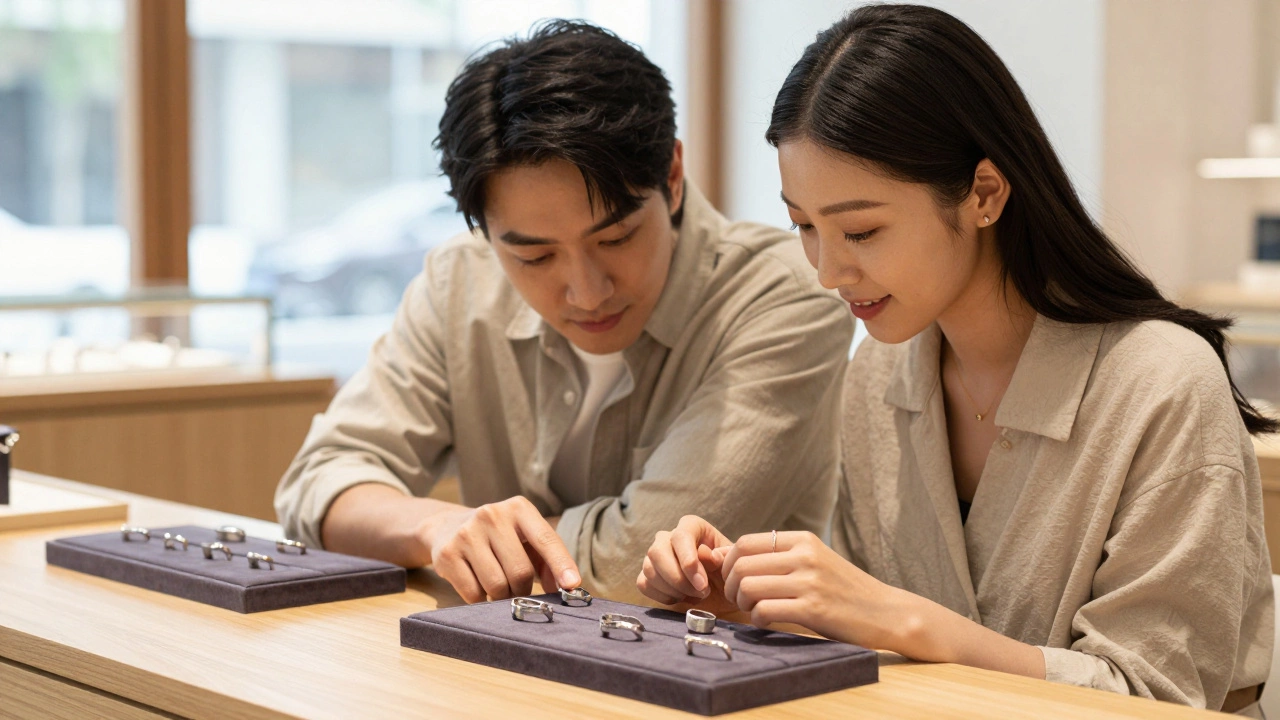
For decades, the answer to who buys the man's wedding ring was simple: the bride did. It was part of an unspoken contract - she picked out her own ring, and he did the same for hers. But today, that rule doesn’t fit most couples. With shifting gender norms, shared finances, and personal preferences taking center stage, the tradition is fading fast. So who really buys the groom’s ring now? The answer isn’t one-size-fits-all.
Where Did This Tradition Come From?
The idea that the bride buys the groom’s ring comes from mid-20th century American culture. Back then, weddings were highly gendered events. The groom presented the bride with an engagement ring - often as a surprise - and the bride was expected to return the gesture with a wedding band. This wasn’t about romance; it was about social performance. The groom’s ring was seen as a smaller, less expensive token, sometimes even purchased secondhand or from a discount store.
By the 1980s, jewelry marketers pushed the idea that both rings should be bought together as a matching set. But even then, the groom’s ring rarely got the same attention. It was often chosen for practicality: a plain gold band, no stones, easy to wear. The emotional weight fell on the bride’s ring. The groom’s? Just a formality.
How Things Changed
Fast forward to 2026, and things look completely different. In Australia, where I live, surveys from the Australian Wedding Industry Council show that over 68% of couples now buy both rings together. That’s up from just 22% in 2010. Why? Three big reasons:
- Shared budgets - Most couples pool money. Whether they’re saving for a home, travel, or just want to be fair, buying rings together makes sense.
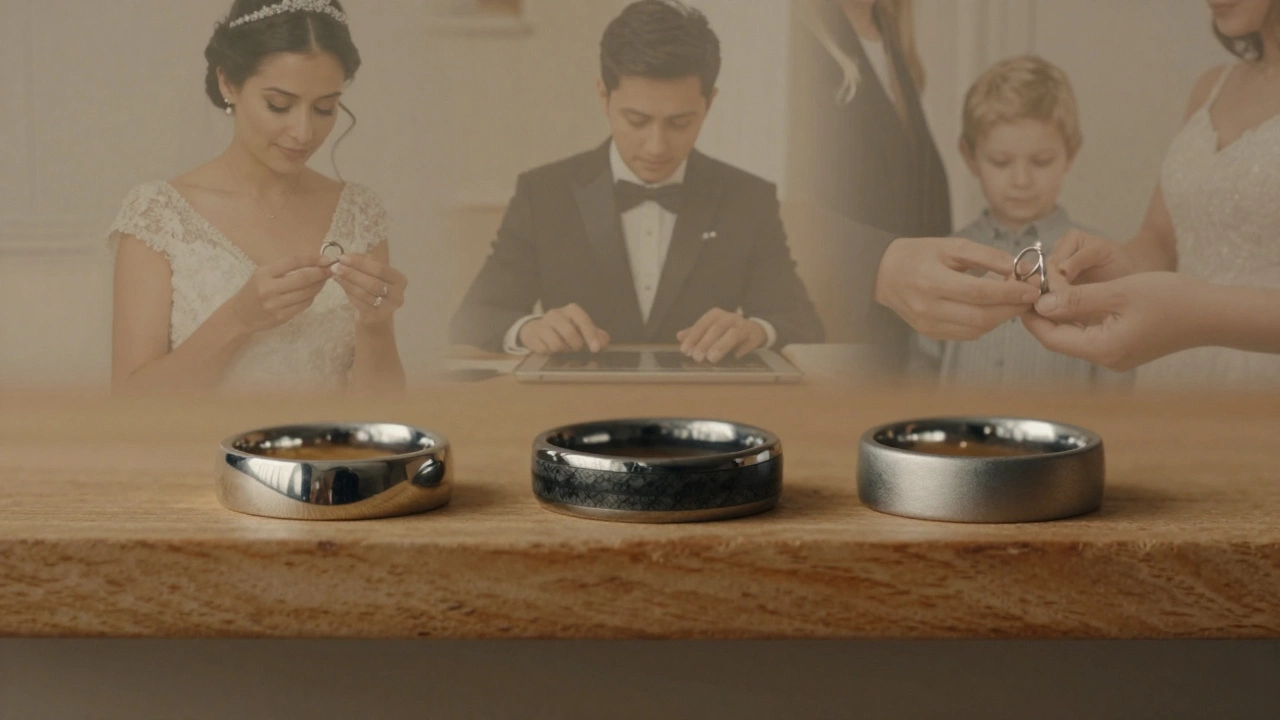
- Personal choice - Grooms don’t want a ring they’ll hate. They want something that fits their style - whether that’s a matte titanium band, a carbon fiber inlay, or a vintage platinum piece.
- Gender neutrality - The idea that only women get to pick their jewelry is outdated. Men are just as invested in how their ring looks, feels, and represents them.
I’ve seen grooms spend weeks researching metals, widths, and finishes. One guy I know spent three months comparing 12 different bands before settling on a brushed tungsten with a hidden engraving of his dog’s paw print. His bride didn’t pick it out. He did - and she loved it.
Who Pays Today? The Real Breakdown
There’s no single answer anymore. But based on real data from Sydney, Melbourne, and Brisbane jewelers over the last two years, here’s what’s actually happening:
| Scenario | Percentage of Couples | Typical Reason |
|---|---|---|
| Both partners buy together | 68% | Shared budget, joint decision-making |
| Groom buys his own | 22% | Wants full control over style, fit, or budget |
| Bride buys it | 7% | Traditional, surprise element, or cultural family expectation |
| Family or friend gives it as a gift | 3% | Heirloom ring, inheritance, or surprise gift |
Notice something? The bride buying the groom’s ring is now the rare case. It’s not wrong - it’s just uncommon. And when it does happen, it’s usually because the couple has a specific emotional reason - like honoring a parent’s tradition or wanting to keep the ring as a surprise.
When the Bride Buys It - And Why It Still Works
Let’s be clear: if the bride wants to buy the groom’s ring, she absolutely can. But it’s not about tradition anymore - it’s about intention.
One couple I spoke with in Bondi Beach had the bride choose the ring because the groom was terrified of making the wrong choice. He’d been overwhelmed by options and didn’t want to stress. She picked a simple 6mm platinum band with a satin finish - and he cried when he saw it. "I didn’t know I’d like it so much," he told me. "But she got me."
That’s the key. It works when it’s thoughtful, not automatic. If you’re going to buy your partner’s ring, ask:
- Does he wear jewelry? If not, a thin, low-profile band might be better.
- What’s his daily routine? A construction worker needs something durable. An office worker might prefer something sleek.
- Does he have metal allergies? Nickel-free options like titanium or palladium are popular now.
And if you’re unsure? Take him shopping. Let him hold the rings. Let him try them on. The right one will feel like it was made for him.
What If You’re Broke?
Money is a real factor. Not everyone can afford two $2,000 rings. And that’s okay. In fact, many couples are choosing simpler, meaningful options:
- Buy one ring first - Some couples start with just the engagement ring, then buy the wedding bands later - maybe after a big trip or a promotion.
- Buy secondhand - Vintage bands from Etsy or local antique shops can cost 60% less than new ones. I’ve seen gorgeous 1950s platinum bands for under $300.
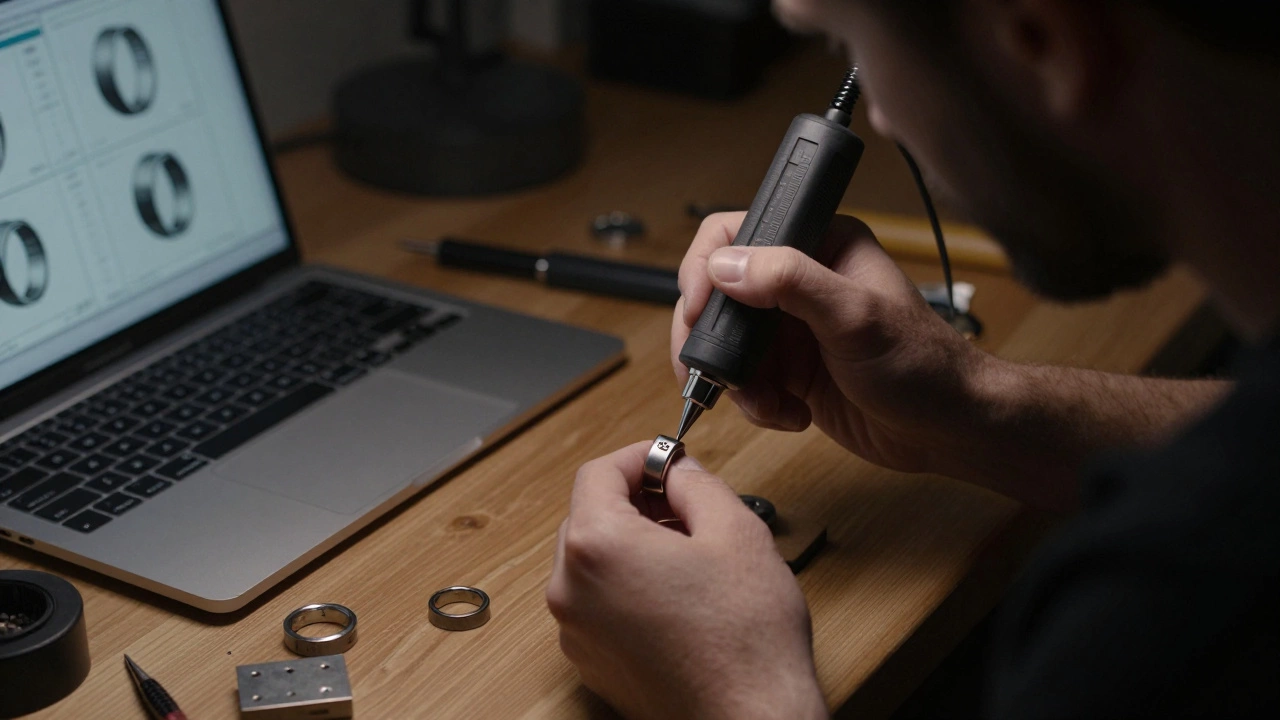
- Make it DIY - One couple in Perth had the groom’s ring laser-engraved with their wedding date and coordinates of where they first met. Cost: $85. Meaning: priceless.
The ring doesn’t have to be expensive to be meaningful. It just has to be right for him.
What About Engagement Rings?
Let’s clear up a common confusion. The engagement ring and the wedding band are two different things. The engagement ring is usually given during the proposal - and traditionally, that’s the one the groom buys. The wedding band is worn during the ceremony and is meant to be worn daily after.
So when people ask "who buys the man’s wedding ring?" they’re not asking about the engagement ring. That’s still mostly bought by the groom’s side - or sometimes by the couple together. But the wedding band? That’s where the real shift has happened.
Modern Rules for Modern Couples
Here’s the new playbook - no tradition required:
- Have the conversation early. Don’t wait until the week before the wedding.
- Set a realistic budget together. No one needs debt for a ring.
- Let him choose. Seriously. If he wants a black titanium ring with a dragon design, let him get it.
- Consider comfort. A ring that’s too thick, too heavy, or too shiny won’t get worn.
- Don’t assume. Just ask: "What would you want on your finger every day?"
There’s no rulebook anymore. No hidden script. The only thing that matters is that the ring feels like him - and that you both agree on how it got there.
Final Thought: It’s Not About Who Buys It - It’s About What It Means
The wedding ring isn’t a transaction. It’s a symbol. It doesn’t matter if it was bought by his sister, his best friend, or his own paycheck. What matters is that it carries meaning.
I’ve seen rings bought for $50 and rings bought for $5,000. The ones that last - the ones that get worn every single day - are the ones chosen with honesty. Not tradition.
So if you’re wondering who should buy the man’s wedding ring? The answer is simple: whoever makes him feel seen.
Do I have to buy my partner’s wedding ring if I bought mine?
No. There’s no rule that says if you bought your own ring, your partner has to buy yours. Many couples split the cost evenly, buy both together, or one person covers both. What matters is what works for your relationship, not outdated customs.
Is it weird for a groom to pick out his own ring?
Not at all. In fact, it’s becoming the norm. More than half of grooms today choose their own wedding band. It’s about personal style and comfort. A ring you’ll wear every day should reflect who you are - not who someone else thinks you should be.
What if my partner wants a ring I don’t like?
That’s okay. Your wedding ring is personal. If he wants a ring with a dark finish, a wide band, or a unique texture, that’s his choice. You don’t have to love the style - just respect it. Your ring is yours; his is his. The beauty of modern weddings is that both can be different and still be perfect.
Can a family member give the groom’s ring as a gift?
Absolutely. It’s common for rings to be passed down - like a grandfather’s platinum band or a mother’s vintage wedding ring resized for her son. These carry deep meaning. Just make sure the groom is comfortable with it. Some people love heirlooms. Others want something new. Talk about it.
Should the groom’s ring match the bride’s?
Only if you both want it to. Matching bands were popular in the 1990s, but today, many couples choose rings that complement each other without being identical. One might be smooth; the other textured. One gold, one platinum. The key is harmony, not sameness.