Wedding Attire Decision Guide
Find Your Wedding Style Strategy
Answer these questions to discover who should lead the decision on your wedding attire and how to navigate the process smoothly.
Your Recommended Approach
Decision Leader
Budget Strategy
Action Plan & Tips
Timing Reminder:
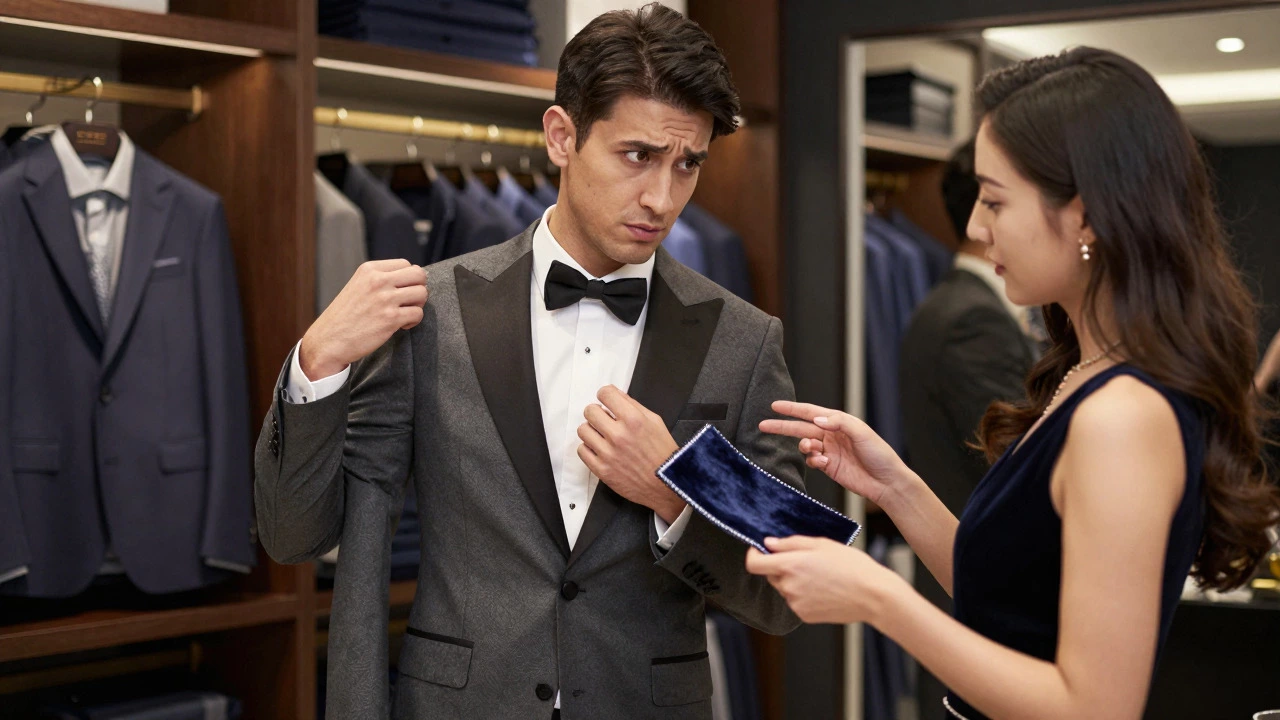
Picture this: You’re standing in a fitting room, holding up a charcoal grey tuxedo against your chest. It looks sharp. But then you remember the bride’s vision was strictly navy blue with velvet lapels. Do you buy it? Do you ask her? Or do you panic and text the best man?
This is the classic dilemma behind the question, who chooses the groom's suit? For decades, the answer was simple: the couple decided together, or the bride had the final say because she was coordinating the entire aesthetic. In 2026, however, that dynamic has shifted. With more couples splitting costs, embracing non-traditional roles, and prioritizing individual comfort over rigid uniformity, the decision-making process has become less about hierarchy and more about collaboration.
If you are navigating this terrain right now, you aren’t just picking fabric; you are negotiating boundaries, budgets, and style identities. Let’s break down who actually holds the power in these decisions and how to handle it without ruining the vibe before the ceremony even starts.
The Traditional Rule vs. Modern Reality
Historically, wedding etiquette dictated that the bride selected the attire for the entire wedding party. This stemmed from an era when weddings were largely viewed as the bride’s production, funded by her family, with the groom playing a supportive role. The logic was practical: if the bride is choosing the flowers, the cake, and the dress, she should also ensure the groom and groomsmen look cohesive in photos.
Today, that model feels outdated to many. According to recent surveys from major wedding platforms like The Knot and Zola, nearly 60% of couples now plan their weddings jointly. When finances are shared, so is the creative control. If the groom is paying for his own suit-and often contributing significantly to the venue and catering-he naturally expects a voice in what he wears.
That said, "jointly" doesn't always mean "50/50 on every button." Usually, one partner takes the lead based on interest and expertise. If the bride is obsessed with color palettes and textures, she might drive the visual direction. If the groom cares deeply about tailoring and fit, he might take charge of the construction and style details. The key is recognizing who cares more about the outcome, not who has the title.
Scenario 1: The Couple Decides Together
This is the most common approach for modern couples. It works best when both partners have similar tastes or are willing to compromise. Here is how it typically plays out:
- The Vibe Check: The couple agrees on a general aesthetic first. Are we doing black-tie formal? Rustic casual? Beach chic? This narrows the field immediately.
- The Color Constraint: The bride usually selects her dress color and the bridesmaids' dresses. The groom’s suit must complement these colors. He can’t wear bright red if the bridesmaids are in sage green unless you’re going for a very specific, bold look.
- The Fit Factor: The groom tries on options within that agreed-upon palette. Since men’s bodies vary wildly, the groom needs to find a cut that flatters him. A slim-fit jacket might look great on a friend but disastrous on another person.
In this scenario, communication is everything. Bring each other to the store. Watch how the other reacts. If the bride loves a texture but the groom hates how it feels against his skin, listen to him. He’s the one wearing it for eight hours, possibly under hot lights or in humid weather.
Scenario 2: The Bride Leads the Vision
Let’s be honest: sometimes the bride has a very strong vision. Maybe she is working with a wedding planner who has already booked a photographer who specializes in high-contrast, dramatic lighting. In this case, the groom’s suit isn’t just clothing; it’s a prop in a larger artistic composition.
If the bride is leading, she should still respect the groom’s comfort. She might say, "I need you in a midnight blue tuxedo with satin lapels," but she should allow him to choose the shirt style, the tie knot, or the pocket square. Giving him small areas of autonomy keeps him engaged and happy.
Warning sign: If the bride dictates every detail without consultation, resentment builds. We’ve seen grooms show up looking miserable in ill-fitting suits because they weren’t allowed to speak up. That energy shows in photos. A comfortable groom is a photogenic groom.
Scenario 3: The Groom Takes Charge
Some grooms are fashion-forward. They know their body type, they follow menswear blogs, and they have a clear idea of what looks good. In these cases, the bride might happily hand over the reins. "You pick it out, I trust your taste," is a powerful sentence in a relationship.
When the groom leads, he should keep the overall wedding theme in mind. Just because he loves a double-breasted pinstripe suit doesn’t mean it fits a bohemian backyard wedding. He should share options with the bride early on to ensure cohesion. Think of it as showing a draft, not a final decree.
This approach works particularly well for male-led weddings or when the groom is handling the majority of the planning logistics. It empowers him to feel confident and prepared, which translates to better performance on the big day.
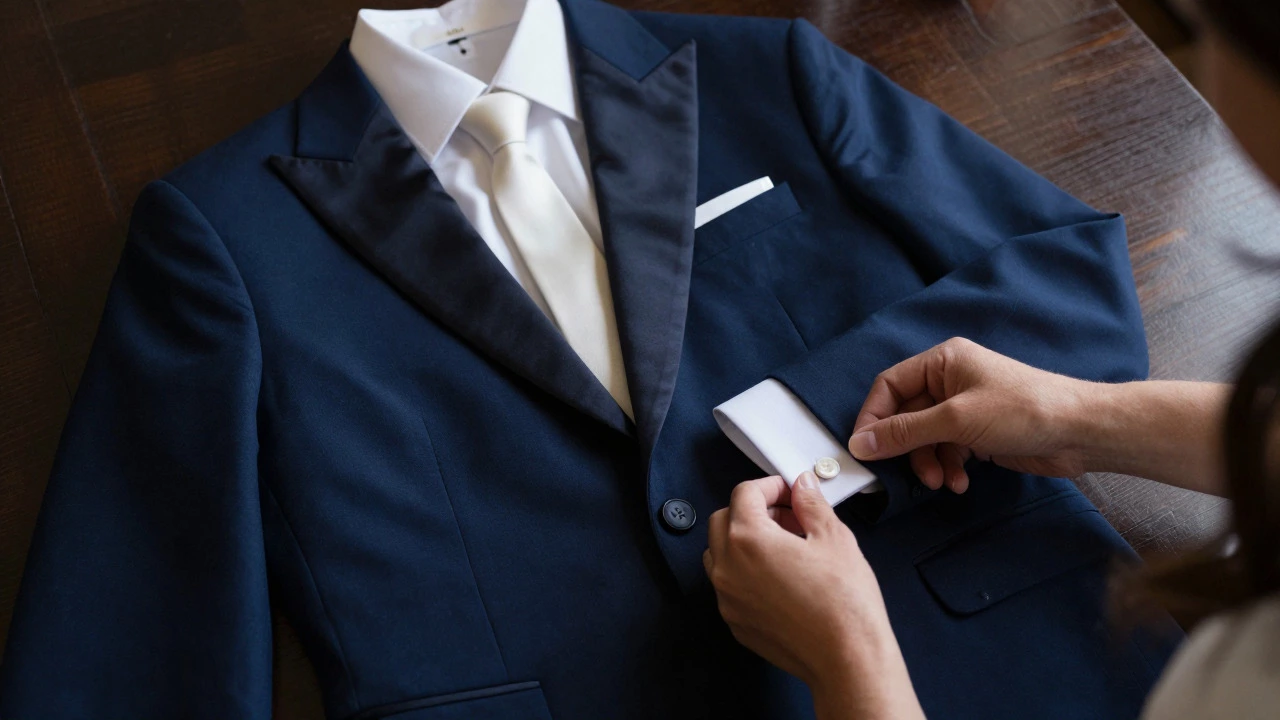
What About the Groomsmen?
Here is where things get tricky. Who chooses the groomsmen’s suits? Technically, it’s the same rule as the groom’s suit: the couple decides. However, the execution is different.
Groomsmen come in all shapes, sizes, and budgets. If the couple demands expensive, custom-tailored suits for friends who are barely close enough to afford a gift card, friction occurs. In 2026, the trend is shifting toward rental services or providing a budget range rather than a specific brand mandate.
A smart strategy? Let the groomsmen choose the suit within a strict guideline. Provide them with a link to a specific color (e.g., Charcoal Grey) and a list of approved retailers or rental companies. Allow them to choose the fit (slim, regular, athletic) based on their body type. This ensures everyone looks coordinated in photos but feels comfortable in person.
| Model | Who Decides Style? | Who Pays? | Best For... |
|---|---|---|---|
| Collaborative | Couple together | Shared/Groom | Most modern couples |
| Bride-Led | Bride | Varies | Highly themed weddings |
| Groom-Led | Groom | Groom | Fashion-conscious grooms |
| Traditional | Bride/Family | Groom’s Family | Cultural/Religious ceremonies |
Timing Is Everything
When should this conversation happen? Ideally, six to nine months before the wedding. Why so early? Because off-the-rack suits can appear instantly, but custom tailoring takes time. Alterations alone can take four to six weeks. If you wait until three months out, you risk limited availability, rushed alterations, and higher prices.
Start with inspiration boards. Pinterest is your friend here. Save images of suits you both like. Look at the lapel width, the button stance, the fabric texture. Once you have a visual language, go shopping. Don’t browse online exclusively; fabric drapes differently on screens than on human bodies.
Budget Realities
Money talks. If the groom is paying for his own suit, he deserves significant input. If the parents are footing the bill, their opinions may carry weight, though they shouldn’t override the couple’s wishes unless there are cultural expectations involved.
Be transparent about costs early. A custom-made wool suit can cost anywhere from $800 to $2,500 AUD. A rental might be $200 to $400 AUD. Decide if the suit is a heirloom piece meant to be worn again or a single-use investment. This decision influences whether you buy quality or rent convenience.

Navigating Cultural Expectations
In many cultures, the groom’s attire is non-negotiable. Indian weddings often require sherwanis or bandhgala jackets chosen by family elders. Jewish weddings might involve specific kippahs or robes. In these contexts, the question "who chooses" is answered by tradition, not preference.
If you are blending cultures, discuss this early. One partner might want a traditional outfit for the ceremony and a Western suit for the reception. Compromise is possible, but it requires sensitivity to heritage and meaning. Don’t treat cultural attire as a costume; treat it as a honor.
Practical Tips for a Smooth Process
- Involve the Tailor Early: A good tailor can transform a mediocre suit into a masterpiece. Find one before you buy.
- Consider Comfort: Will you be dancing? Standing for hours? Choose breathable fabrics like linen or lightweight wool for summer weddings.
- Coordinate Accessories: Shoes, belts, ties, and cufflinks should match. If the bride picks the bridesmaids’ shoes, make sure the groom’s shoes don’t clash.
- Take Photos: Before finalizing, take photos of the suit next to the bride’s dress. Colors can shift under different lighting.
- Plan for Emergencies: Keep safety pins, stain remover, and extra buttons handy. Something always goes wrong.
Final Thoughts on Ownership
Ultimately, the groom’s suit is a symbol of partnership. How you decide on it reflects how you will handle bigger decisions in marriage. Is it collaborative? Is it respectful? Is it communicative?
Don’t let ego drive the choice. Don’t let tradition stifle comfort. Talk it out. Try things on. Laugh at the ridiculous options. And when you finally walk down that aisle, make sure you feel like the best version of yourself. Because if you feel good, you’ll look good. And that’s what really matters.
Does the bride always have the final say on the groom's suit?
No. While traditional etiquette suggested the bride chose the entire wedding party's attire, modern couples typically decide together. The groom, especially if he is paying for the suit, should have significant input on style, fit, and comfort.
How far in advance should the groom choose his suit?
Ideally, start the process 6-9 months before the wedding. This allows time for shopping, ordering, and necessary alterations. Off-the-rack purchases can be done later, but custom work requires lead time.
Can the groomsmen choose their own suits?
Yes, but within guidelines set by the couple. To ensure cohesion, specify the color, fabric type, and formality level. Allow groomsmen to choose the fit and retailer based on their budget and body type.
What if the groom and bride have completely different style preferences?
Compromise is key. Start with a neutral base color like navy, grey, or black. Then, use accessories like ties, pocket squares, or shirts to express individual styles. Consult a stylist or tailor for objective advice.
Should the groom buy or rent his suit?
It depends on budget and future use. Buying is better if you plan to wear the suit again or want a perfect custom fit. Renting is cost-effective for one-time events or if you prefer variety in future outfits.
Who pays for the groom's suit?
Traditionally, the groom’s family paid for the groom’s attire. Today, the groom himself often pays, or the cost is split between the couple. Discuss this openly during budget planning to avoid surprises.
How important is the fit of the groom's suit?
Extremely important. A well-fitted suit enhances appearance and confidence. Even an expensive suit looks bad if it doesn’t fit properly. Invest in alterations to ensure shoulders, sleeves, and trousers are tailored correctly.
Can the groom wear a tuxedo if the wedding is semi-formal?
Generally, no. A tuxedo is for black-tie or formal events. For semi-formal weddings, a standard suit in a lighter color or pattern is more appropriate. Over-dressing can make others feel uncomfortable.