Wedding Ring Exchange Planner
Select your preferred ring presentation style below to see the step-by-step process and essential tips.
Traditional
Best Man carries both rings to Groom.
Shared
Best Man & Maid of Honor each carry one.
Self-Carried
Bride and Groom carry their own rings.
Ring Bearer
Child carries replicas; swap at altar.
You stand at the altar, hearts racing, and then comes the moment that feels like it’s scripted in every movie you’ve ever seen: the ring exchange. But right before you slip that metal band onto your partner’s finger, a small but crucial question pops into your head. Who actually hands the rings to the couple? Is it the groom? The bride? Or does someone else step in with the tiny velvet box?
If you’re planning your own big day or just curious about how weddings work behind the scenes, this is one of those details that can trip you up if you don’t plan ahead. There isn’t one single "right" answer for everyone, but there are traditional norms and modern twists that make the process smooth. Let’s break down who gives the ring first, why it matters, and how to make sure no one fumbles during the most emotional part of your ceremony.
The Traditional Order of Operations
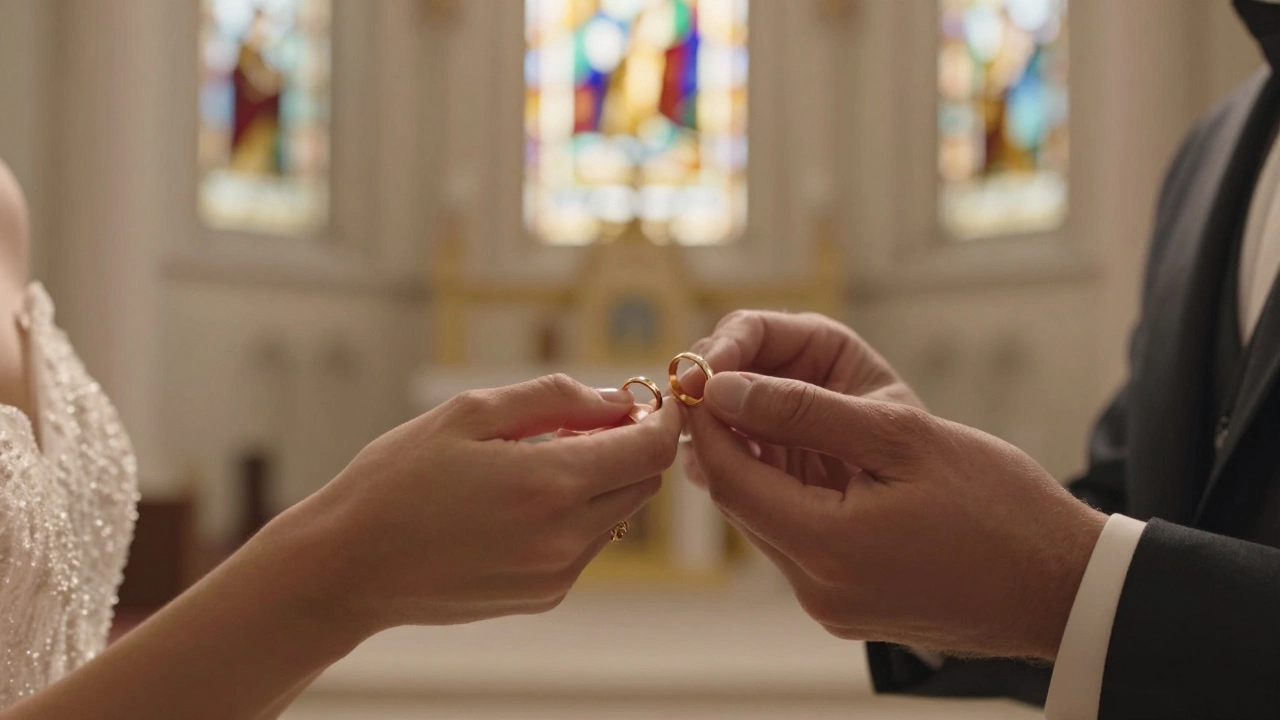
In many Western traditions, especially within Christian ceremonies, the flow of the ring exchange follows a specific script. Usually, the officiant calls for the rings. If the couple didn’t bring them themselves, the best man typically steps forward. He pulls the rings from his pocket-often stored in a small case or even just wrapped in tissue paper-and hands them to the groom.
Here is where the "who gives first" question gets interesting. In the classic setup, the groom receives both rings. He keeps one for himself and places the other on the bride’s finger. Once he has secured her ring, he might hand his own ring back to the best man or keep it ready. Then, the bride takes her turn, placing the ring on the groom’s finger. So, technically, the best man gives the rings to the groom first, and the groom acts as the initial distributor.
This tradition stems from older customs where the groom was responsible for securing all the symbols of the union. It also makes logistical sense because the groom usually stands closer to the best man, who often stands directly behind him. This proximity reduces the chance of dropping the rings while crossing over to the bride’s side.
Modern Twists and Shared Responsibilities
Weddings today are less about rigid rules and more about personal meaning. Many couples now choose to have their rings presented by both the maid of honor and the best man. In this scenario, the maid of honor might hold the bride’s ring, and the best man holds the groom’s ring. When the time comes, they both step forward simultaneously or one after the other.
Another popular modern approach is for the couple to carry their own rings. You might see the bride wearing her ring on a necklace around her neck or tucked safely into her bouquet. The groom might keep his in his tuxedo pocket. This eliminates the need for a "ring bearer" or groomsman intervention entirely. It adds a layer of intimacy to the moment because the couple handles the symbols of their commitment without intermediaries.
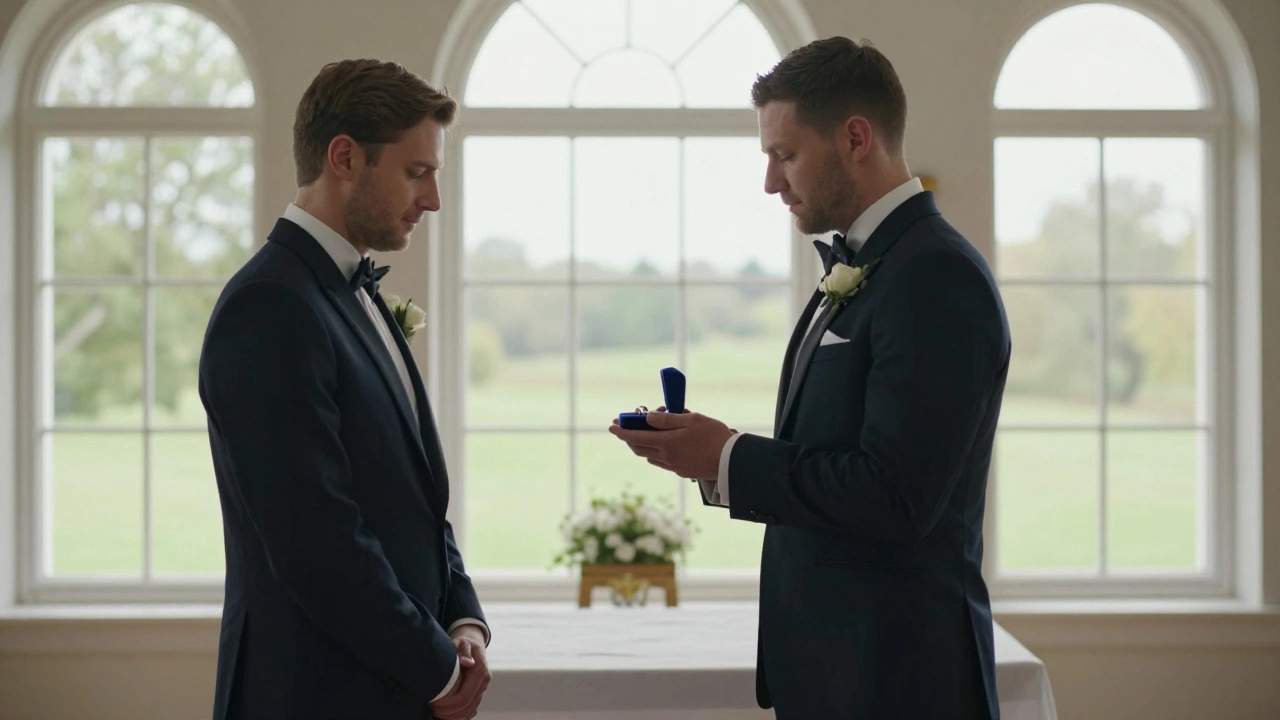
For same-sex couples, the dynamic shifts naturally. Often, both partners will have a designated person present their ring, or they might swap rings together without assistance. The key is consistency and clarity so that everyone knows exactly what to do when the officiant signals the exchange.
The Role of the Ring Bearer
Let’s talk about the little ones. If you have a young child as a ring bearer, you might be tempted to let them carry the actual wedding bands. While adorable, this is generally a bad idea. Real wedding rings are expensive, sentimental, and easily lost. Most planners advise against letting a toddler handle the real goods.
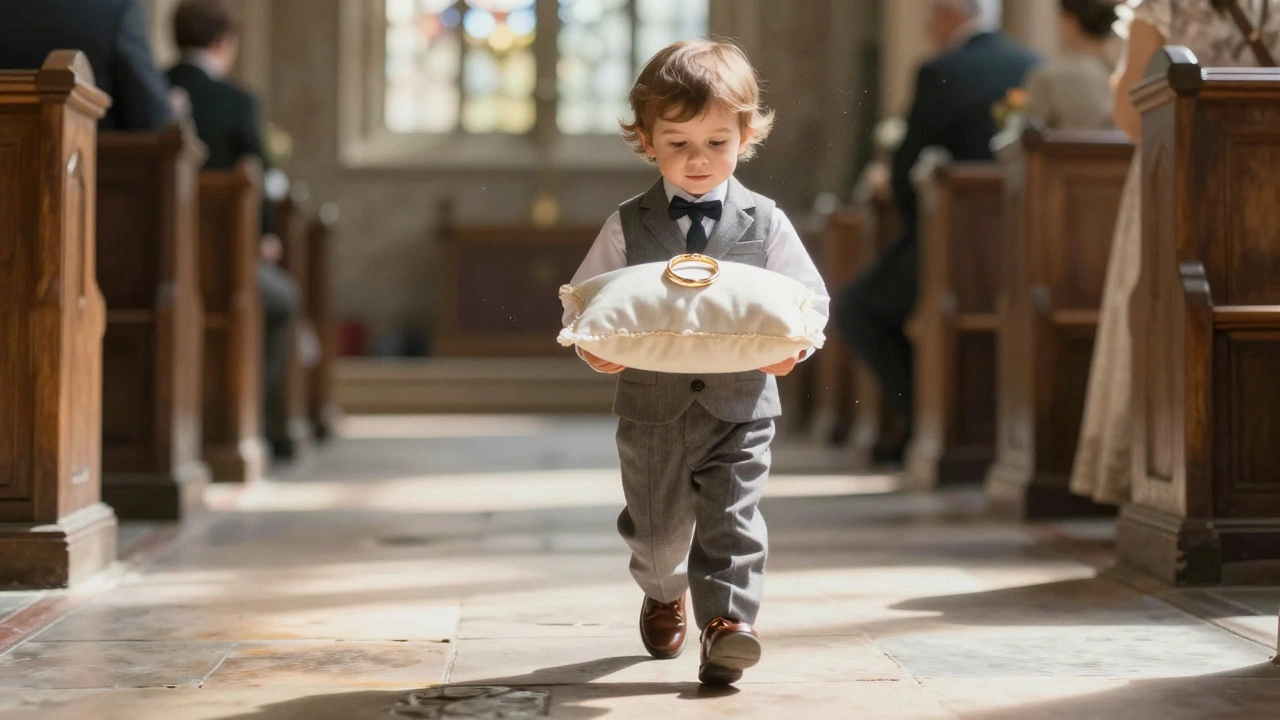
Instead, use replica rings. These look identical to the real thing but are made of plastic or cheaper metal. The ring bearer walks down the aisle with a pillow holding these decoys. At the altar, the best man or maid of honor discreetly swaps the replicas for the real rings before the exchange begins. This way, you get the cute photo op without the risk of a four-year-old running off with your engagement history.
If you decide to skip the ring bearer altogether, that’s perfectly fine too. Many couples prefer to keep the focus on the adults involved in the ceremony structure. The choice depends on your family dynamics and how much chaos you’re willing to manage on your wedding day.
Logistics: Where Do the Rings Go Before the Vows?
Knowing who gives the ring first is only half the battle. You also need to know where the rings are until that moment. Misplacing the rings is a common stressor, so having a clear chain of custody is essential.
- Best Man’s Pocket: The most common spot. Ensure the pocket has a button or zipper to prevent the rings from falling out when he moves.
- Maid of Honor’s Clutch: If she’s carrying the rings, she should keep them in a secure compartment, not loose in a large bag.
- Couple’s Own Possession: If you’re carrying them, double-check their location before walking down the aisle. Don’t rely on memory alone.
- Officiant’s Hands: Some officiants ask to hold the rings during the reading of vows to ensure they are safe and ready for the exchange.
Whatever method you choose, assign a specific person as the "Ring Guardian." This person is responsible for checking on the rings multiple times throughout the day. Have them confirm the rings are present before the rehearsal, before the ceremony starts, and again right before the exchange. Redundancy saves sanity.
Rehearsing the Exchange
You wouldn’t wing the vows, so don’t wing the ring exchange. During your wedding rehearsal, practice the physical act of handing over the rings. It sounds silly, but muscle memory helps under pressure. Stand in your positions. Have the best man walk forward. Practice the hand-off. Make sure the rings aren’t stuck in the box due to tight lids or static electricity.
Also, discuss the timing with your officiant. Some priests or celebrants pause for a long prayer between asking for the rings and the actual placement. Others move quickly. Knowing the pace helps the ring bearer or best man anticipate when to step up. If the officiant drags their feet, the best man shouldn’t be standing there awkwardly holding out a box for thirty seconds.
Consider using props during the rehearsal. Use the actual rings if you’re comfortable, or use coins or buttons as substitutes. The goal is to simulate the weight and size of the objects so the participants know what they’re handling.
What If Things Go Wrong?
Despite your best plans, things can go sideways. The best man might forget the rings. The box might get lost. The ring might slide off the finger and fall into a crack in the floorboards. Here is how to handle common disasters.
If the rings are missing, stay calm. Your wedding party likely has backup options. A simple bracelet, a coin, or even a piece of jewelry from the maid of honor can serve as a temporary substitute. You can always put the real rings on later during the reception or in a private moment. The symbolism remains intact even if the material object changes temporarily.
If a ring falls, stop everything. Have someone retrieve it immediately. Don’t rush through the exchange just to keep the schedule. Guests won’t mind a ten-second pause to recover a valuable item. In fact, they’ll appreciate the care taken with such a significant symbol.
| Style | Who Handles Rings | Pros | Cons |
|---|---|---|---|
| Traditional | Best Man to Groom | Clear roles, low confusion | Groom must manage two rings |
| Shared | Best Man & Maid of Honor | Equal participation, balanced | Requires precise coordination |
| Self-Carried | Bride & Groom | Intimate, no dependencies | Risk of loss if not secured well |
| Ring Bearer | Child (Replicas) | Cute photos, involves kids | High risk of distraction/loss |
Final Tips for a Smooth Exchange
Keep the ring boxes simple. Fancy boxes with complex latches are notorious for failing at critical moments. A simple hinged box or even a soft pouch works better. Test the mechanism beforehand.
Communicate clearly with your wedding party. Tell the best man or maid of honor exactly when to step forward. Use verbal cues if possible, like "Please present the rings," rather than relying on non-verbal nods that might be missed in the excitement.
Finally, remember that the ring exchange is a ritual, not a test. If someone drops a ring, laughs nervously, or hands it over clumsily, it doesn’t ruin the marriage. It just becomes a funny story you’ll tell for years. Focus on the meaning behind the metal, and the rest will take care of itself.
Does the best man always carry the rings?
Traditionally, yes. The best man is usually tasked with holding the rings until the exchange. However, modern weddings often split this duty between the best man and maid of honor, or the couple carries them themselves. It depends entirely on your preference and wedding party structure.
Can the bride give the groom his ring first?
Yes, absolutely. While tradition often has the groom place the bride's ring first, there is no rule against reversing this order. Many couples choose to swap rings simultaneously or let the bride go first to emphasize equality. Just ensure your officiant knows your preference.
What if we don't have a best man or maid of honor?
If you don't have a traditional wedding party, you can assign a trusted friend or family member to hold the rings. Alternatively, you can carry them yourselves. Some couples even have the officiant hold the rings until the exchange moment to simplify logistics.
Should the ring bearer carry the real rings?
It is highly recommended to use replica rings for the ring bearer. Real rings are valuable and easy to lose. Using decoys allows for the cute ceremonial walk without the risk of losing your actual wedding bands. Swap them out discreetly at the altar.
How do we prevent the rings from getting lost?
Assign a "Ring Guardian" to check on the rings multiple times. Keep them in a secure pocket with a button or zipper. Avoid loose bags. Rehearse the hand-off to ensure everyone knows where the rings are and when to move them. Double-check their presence right before the ceremony starts.