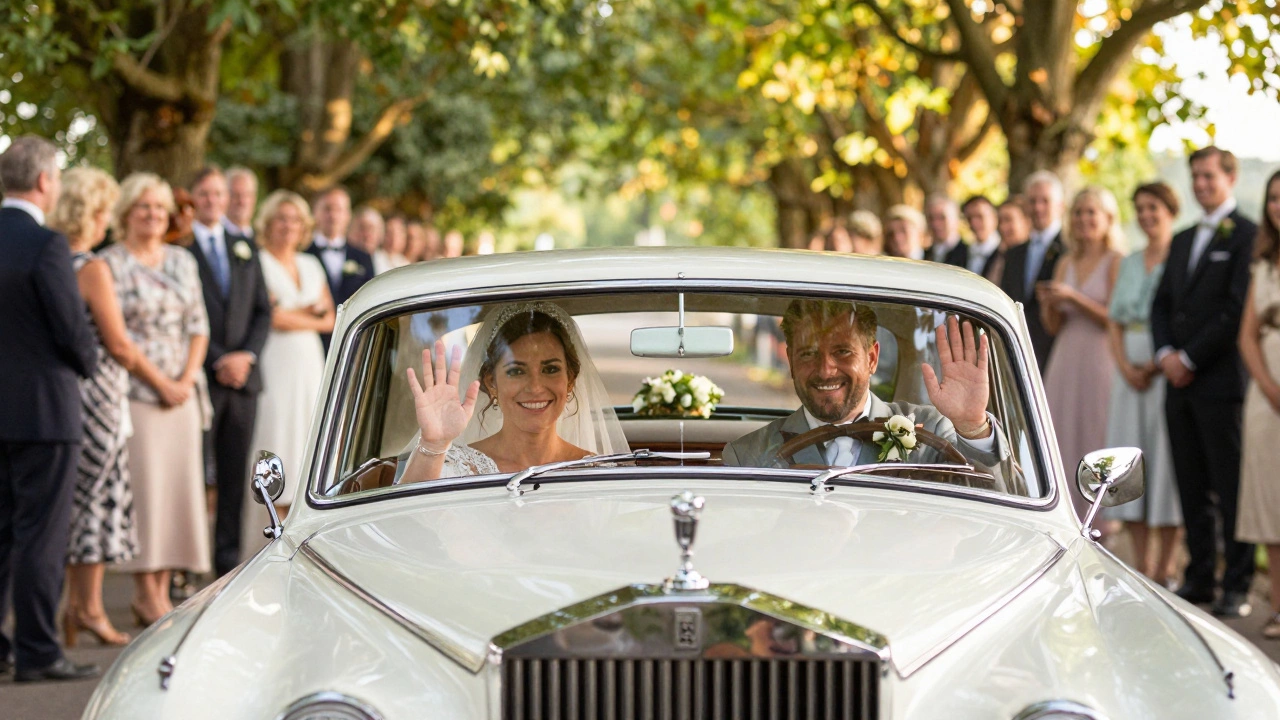
Ever watched a wedding procession and wondered who actually sits in that shiny car out front? It’s not just the bride and groom - at least, not always. The bridal car isn’t just a vehicle; it’s a symbol, a tradition, and sometimes a source of confusion. Who rides in it? Who doesn’t? And why does it matter?
Who traditionally rides in the bridal car?
The classic setup is simple: the bride rides in the front passenger seat, and the groom sits in the back. Sounds odd? It is - but it’s rooted in old etiquette. Back in the day, the groom didn’t sit up front because it was considered improper for him to be too close to his bride before the ceremony. The driver, often a family member or hired chauffeur, sat up front alone.
Today, that rule is mostly gone. Most couples now ride together in the front - side by side, smiling, waving. But even if you ditch tradition, you still need to decide who else gets in. The flower girl? The ring bearer? The maid of honor? That’s where things get messy.
The modern rules: no rules
There’s no wedding rulebook that says you must follow tradition. In fact, over 73% of couples in 2025 skipped traditional seating in their wedding car, according to a survey by The Knot. Instead, they made choices based on comfort, space, and personal meaning.
Here’s what’s actually happening now:
- Bride and groom together - This is the most common choice today. They want to enjoy the ride, take photos, and have a quiet moment before the ceremony.
- Bride alone - Some brides prefer solitude before the big moment. They ride with a parent, their maid of honor, or just a driver.
- Parents in the back - If the car is big enough (like a stretch limo or vintage Rolls), the bride’s parents often ride with her. It’s a sweet gesture - especially if they helped pay for the car.
- Best man and groom’s parents - If the groom’s car is separate, he might ride with his dad, best man, or even his siblings. It’s not about rules - it’s about who you want beside you.
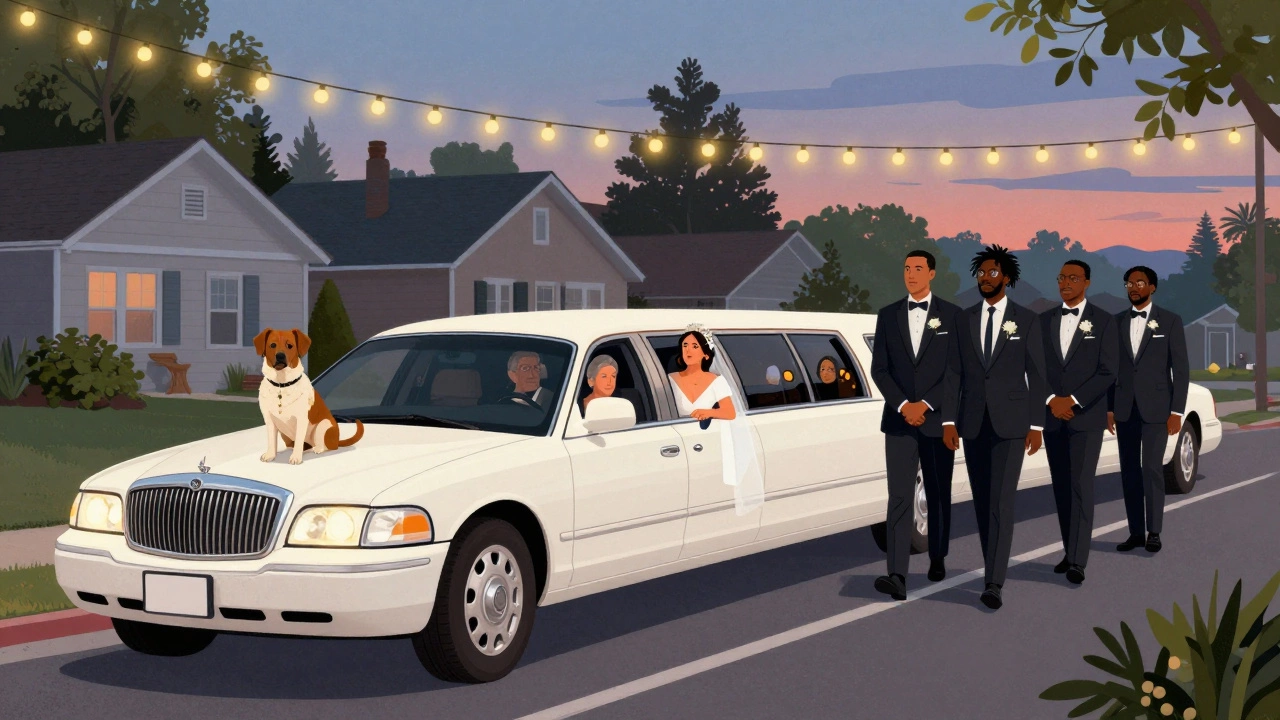
One couple from Austin, Texas, had their dog ride shotgun. Another had their 80-year-old grandmother sit in the back with them. No one blinked. That’s the point: your wedding, your car.
What about the groom’s car?
Many weddings still use two cars: one for the bride, one for the groom. The groom’s car usually carries his closest guys - the best man, ushers, maybe his dad or brothers. Sometimes, it’s just him and his driver. It’s not about tradition anymore - it’s about logistics and vibe.
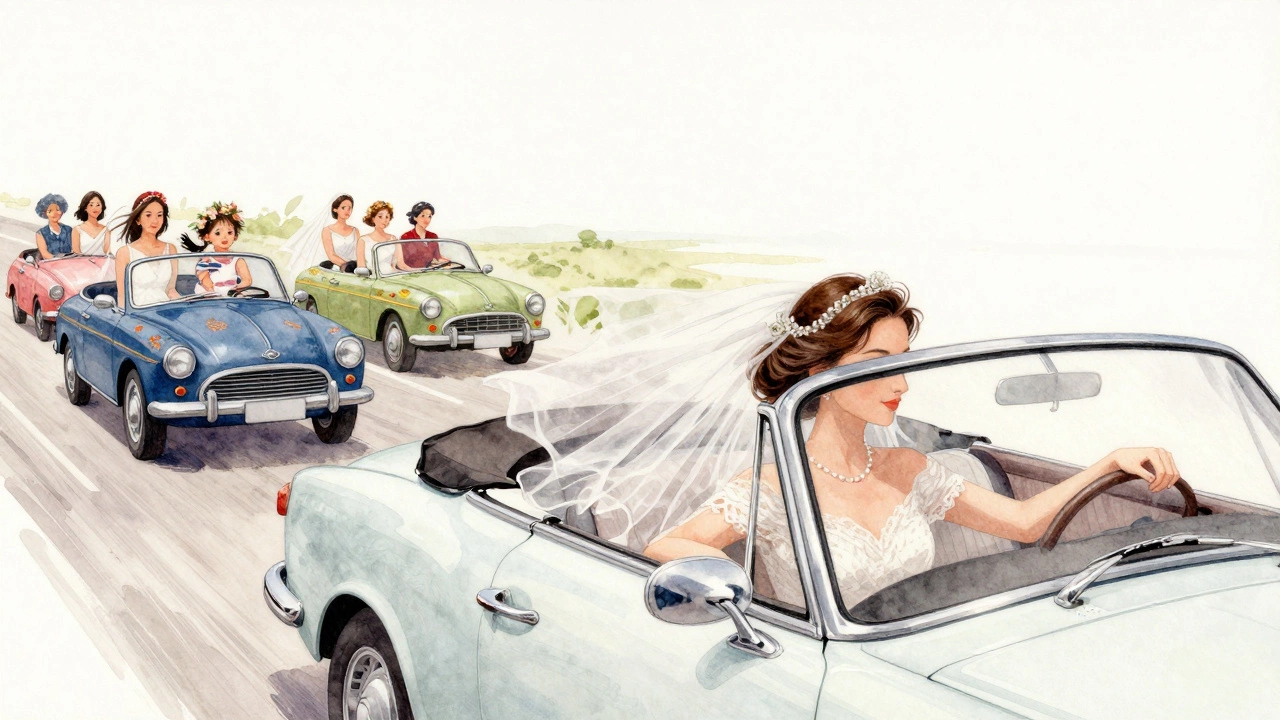
If you’re having a small wedding, you might skip the groom’s car entirely. Just put everyone in one vehicle. Or, if you’re doing a bike parade or horse-drawn carriage, forget cars altogether. The vehicle doesn’t define the wedding - the people do.
Special cases: cultural differences
Traditions vary wildly across cultures. In Indian weddings, it’s common for the groom to ride in on a horse or a decorated car with his whole family. In Chinese weddings, the bride’s car is often escorted by multiple cars filled with relatives, and the driver must be someone with a lucky birth year. In Nigerian weddings, the groom’s car is sometimes chased by friends who demand cash for safe passage.
These aren’t quirks - they’re meaningful rituals. If your family has a custom, don’t feel pressured to drop it just because it’s "unusual." Your wedding should reflect your heritage, not someone else’s Pinterest board.
Practical tips: space, safety, and timing
Before you decide who rides where, ask yourself:
- How many people actually fit in the car?
- Is the car safe? (No, you can’t legally squeeze five people into a two-seater convertible.)
- Will the driver be able to get you to the venue on time?
- Are there seat belts for everyone?
One bride in Chicago had to rearrange her whole plan after her vintage 1967 Cadillac convertible only had two seat belts. She ended up riding with her mom, and her bridesmaids followed in a second car. No one cared - everyone got there, happy and safe.
Also, think about timing. If you’re riding with your parents, make sure they’re not running late. If your flower girl is in the back, make sure she’s got snacks and a toy. Small details make a big difference.
What about the driver?
The driver matters more than you think. A good driver is calm, knows the route, and doesn’t text. A bad driver? You’ll remember it forever.
Many couples hire professional chauffeurs - especially if they’re renting a luxury car. But some use a family friend or relative. If you do, make sure they’re comfortable behind the wheel of a fancy vehicle. And give them clear instructions: when to leave, where to park, how long to wait.
One groom in Seattle hired his uncle, who had never driven a limo before. He got lost, turned around twice, and arrived 20 minutes late. The ceremony started without them. It wasn’t romantic. It was stressful. Don’t let that be you.
What if you’re having a destination wedding?
On a beach in Bali? In a mountain lodge? In a city with no parking? Transportation becomes even more important. You might need shuttles, bikes, or even boats.
Some couples skip the bridal car entirely and walk to the ceremony. Others use a golf cart or a tuk-tuk. One couple in Hawaii had their guests paddle out to the ceremony in canoes. The "bridal car" was a surfboard.
Don’t force tradition where it doesn’t fit. If your venue doesn’t have room for a limo, don’t try to force it. Your guests will remember how you made them feel - not how fancy your wheels were.
Final thought: It’s not about the car
At the end of the day, the bridal car is just a vehicle. The real magic is in who you choose to share it with. Maybe it’s your mom, holding your hand. Maybe it’s your best friend, laughing at your nervous jokes. Maybe it’s just you and your partner, quiet and ready.
There’s no right answer. There’s only what feels right for you.