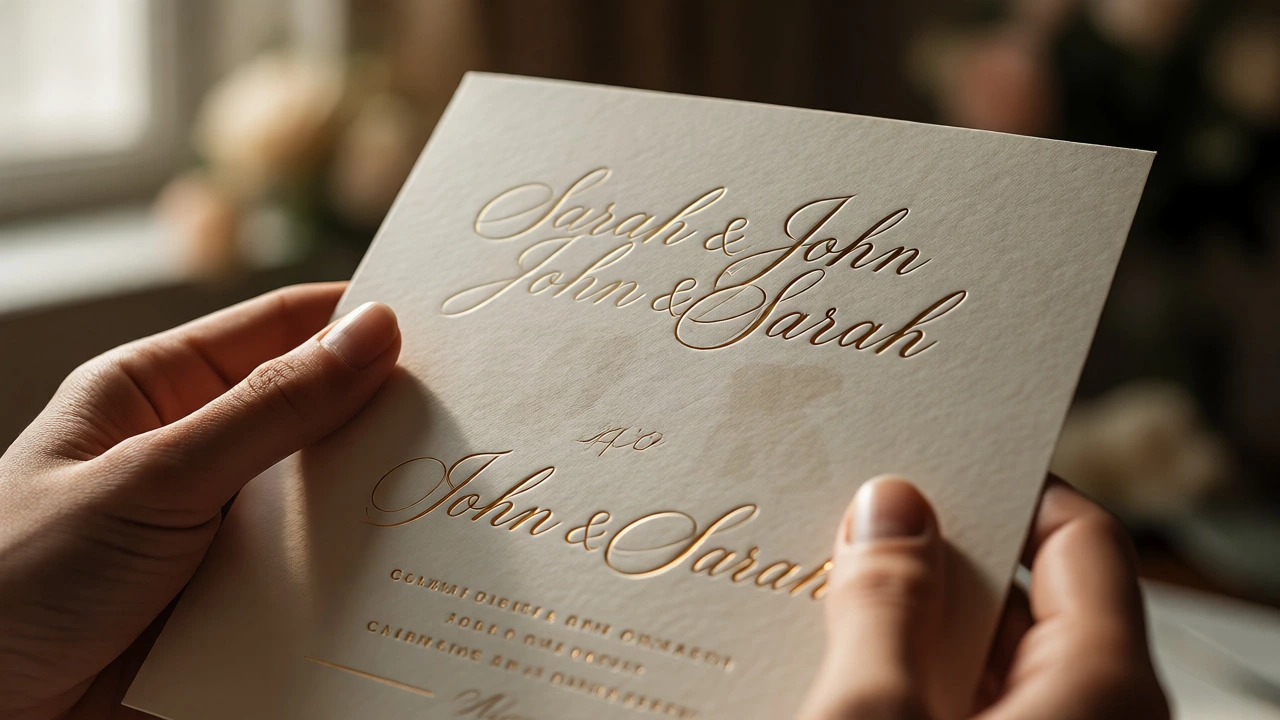
Wedding Invitation Name Order Visualizer
Customize Your Invitation
Tip: Read the names aloud. If one order flows better rhythmically, choose that! Consistency across save-the-dates and programs is key.
You’re staring at the proof for your wedding invitation, and suddenly you’re paralyzed. Should it be "Sarah & John" or "John & Sarah"? It feels like such a tiny detail, yet getting it wrong can spark family debates that last longer than the marriage itself. You want to honor tradition, but you also want to reflect your modern relationship. The truth is, there’s no single rulebook anymore. Etiquette has shifted from rigid hierarchy to personal preference, but knowing the "why" behind the options helps you choose with confidence.
The Traditional Rule: Bride’s Name First
For centuries, standard etiquette dictated that the bride’s name always appeared first. This wasn’t just about vanity; it stemmed from old social structures where women were considered the primary hosts of the wedding event. Historically, the bride’s parents issued the invitation, making her the central figure in the announcement. Even when couples began paying for their own weddings, this convention stuck because it felt familiar and respectful to older generations.
If you are aiming for a classic, formal vibe, putting the bride’s name first is still the safest bet for traditionalists. It signals respect for established norms without needing an explanation. However, don’t assume everyone agrees. Many younger couples view this as outdated gender coding. If your families lean traditional, sticking to this order avoids unnecessary friction during the planning phase.
The Modern Shift: Alphabetical Order
As gender roles evolved, so did invitation design. A popular contemporary approach is listing names in alphabetical order. This method removes any implication of one partner being more important than the other. It’s neutral, logical, and easy to explain to curious relatives. If your last names start with different letters, this creates a clear, unbiased structure.
Consider a couple named Alex Chen and Jordan Smith. Listing them as "Alex Chen and Jordan Smith" follows alphabetical order by first name. If they share a last name, say Taylor Jones and Casey Jones, you might alphabetize by first name (Casey then Taylor) or stick to the traditional bride-first if Casey is the bride. The key here is consistency. Once you pick a system-alphabetical, traditional, or random-stick to it across all materials, from save-the-dates to seating charts.
Who Is Hosting? Let Them Lead
Etiquette experts often point out that the host’s name should come first. If the bride’s parents are paying for and hosting the entire event, their names appear first, followed by the couple. But what if both sets of parents are contributing equally? Or what if the couple is footing the bill entirely?
- Bride’s Parents Hosting: "Mr. and Mrs. Smith request the pleasure of your company..." followed by the couple’s names, bride first.
- Groom’s Parents Hosting: Their names lead, but the couple’s names usually still follow the bride-first tradition unless specified otherwise.
- Couple Hosting: When the couple hosts, the order becomes purely personal. There is no obligation to put the bride first. You can flip a coin, use alphabetical order, or simply choose which sounds better aloud.
This distinction matters because invitations are fundamentally announcements of who is inviting guests. If your aunt insists on helping pay for the venue, she might expect her name to take precedence over yours. Clarify financial contributions early to avoid awkward negotiations later.
Same-Sex Couples and Non-Traditional Orders
For same-sex couples, traditional rules don’t apply neatly. There’s no "bride" or "groom" default, so you have total freedom. Most couples opt for alphabetical order or whichever name flows better rhythmically. Some prefer to list the person who proposed first, adding a subtle nod to their story.
Don’t feel pressured to force a heteronormative template onto your invite. Designers increasingly offer layouts that accommodate two equal partners without hierarchical cues. If you’re worried about confusion, add a small line below the names like "Together with their families." This shifts focus from individual status to collective celebration.
How Title and Surname Choices Affect Flow
Name order isn’t just about first names; titles and surnames play a huge role in how the text reads. Using full names with titles (e.g., "Ms. Jane Doe and Mr. John Smith") adds formality. Dropping titles for just first names ("Jane and John") feels casual and intimate. Mixing styles-like "Dr. Jane Doe and John Smith"-can look uneven unless intentional.
Pay attention to syllable count. "Elizabeth Anne Miller and Robert James Thompson" rolls off the tongue differently than "Li Wei and Zhang Min." Read your draft aloud. Does it stumble? Swap the order. Sometimes, putting the shorter name first improves readability. For example, "Sam and Alexandra" flows faster than "Alexandra and Sam," even if tradition says Alexandra goes first.
Special Cases: Divorce, Remarriage, and Blended Families
Life isn’t simple, and neither are family dynamics. If one parent is divorced and remarried, whose name appears? Typically, biological parents’ names are listed separately rather than combined with step-parents, unless the step-parent played a major role in raising the child. In blended families, clarity trumps strict etiquette.
If you’re remarrying, you might drop previous marital titles. Use "Ms." instead of "Mrs." if you kept your married surname but aren’t currently married. This avoids confusion about your current status. Always check with immediate family members before finalizing. A quick email saying, "We’re thinking of listing names this way-does that work for you?" prevents surprise complaints after the invites arrive.
Design Matters: Visual Hierarchy
Typography can override textual order. Even if you list the groom’s name first, larger font size or bolder weight on the bride’s name visually prioritizes her. Conversely, centered text with equal font sizes treats both names equally regardless of sequence. Work closely with your designer. Ask them to mock up three versions: Bride first, Groom first, and Alphabetical. See which looks balanced on the page.
Remember, the invitation is a preview of your wedding’s tone. A sleek, minimalist card with names side-by-side suggests a modern, egalitarian ceremony. A ornate script with "Miss" and "Mr." hints at black-tie formality. Ensure your name order matches the rest of your stationery suite, including programs and place cards.
| Method | Best For | Tone | Risk Factor |
|---|---|---|---|
| Bride First | Traditional families, formal events | Classic, Respectful | Might seem outdated to progressive guests |
| Alphabetical | Modern couples, same-sex pairs | Neutral, Logical | Can feel impersonal if not designed well |
| Host First | Parents funding the wedding | Grateful, Formal | Complex if multiple hosts contribute unequally |
| Random/Preference | Couples paying themselves | Personal, Intimate | Few risks; purely aesthetic choice |
Common Pitfalls to Avoid
One frequent mistake is inconsistency. Don’t list "Sarah and Mike" on the invitation but "Mike and Sarah" on the website. Guests notice these details, and while they won’t complain loudly, they’ll perceive carelessness. Another trap is using nicknames inconsistently. If you use "Jim" on the invite, don’t switch to "James" on the program. Pick one version of each name and stick to it.
Also, beware of legal name changes. If one partner plans to change their surname after the wedding, do you use their maiden name or new name on the invite? Usually, you use the name they go by now. Adding a note like "(now known as...)" clutters the design. Keep it clean and present-focused.
Final Checklist Before Printing
- Read the names aloud to ensure smooth flow.
- Confirm spelling of every name, including middle names if used.
- Check title consistency (Mr./Mrs./Dr./Mx.).
- Verify host names match financial agreements.
- Ensure design balance doesn’t accidentally elevate one name.
- Ask one trusted friend outside the family for feedback.
Does the groom’s name ever go first?
Yes, absolutely. While tradition favors the bride, many modern couples choose alphabetical order or personal preference. If the groom’s parents are the sole hosts, his name might naturally lead in the host section, though the couple’s names often remain bride-first unless agreed otherwise.
Should I include middle names on the invitation?
Only if they are part of the person’s common usage or if space allows for a very formal layout. Middle names can clutter the design. Most modern invitations omit them unless required for religious ceremonies or specific cultural traditions.
What if we have the same last name?
If you share a surname, you can list it once at the end (e.g., "Jane and John Smith") or repeat it for clarity ("Jane Smith and John Smith"). Repeating it looks more formal; combining it feels more unified. Choose based on your design style.
Do same-sex couples follow specific rules?
No, there are no historical rules for same-sex couples. Most choose alphabetical order for neutrality or arrange names by personal preference. The goal is equality and comfort, so ignore heteronormative templates.
Is it rude to change the order from the save-the-date?
It’s not rude, but it can cause minor confusion. Try to keep the order consistent across all pre-wedding materials. If you must change it due to design constraints, no one will be offended, but consistency looks more polished.