Wedding Photography Hourly Rate Calculator
Most couples see the final price tag, but not the hidden hours. Use this tool to break down a photographer's quote into their actual hourly earnings before taxes and expenses.
Estimated Hourly Earnings
Per hour worked (Gross Revenue)
| Phase | Hours |
|---|---|
| Total Work Hours | 35 hrs |
You just got your quote. It’s more than you expected. Maybe it’s $3,000, maybe it’s $5,000, or perhaps you’re looking at a premium package for $8,000. Your first instinct might be to think, "It’s just eight hours of standing around taking pictures." But if you dig into the math, that hourly rate drops to something surprisingly modest once you account for everything happening off-camera. The sticker shock is real, but so is the workload.
When you hire a wedding photographer, you aren't just paying for the time they spend holding a camera. You are paying for years of training, expensive gear that depreciates fast, insurance, editing software subscriptions, and dozens of hours of post-production labor. Think of it less as buying photos and more like hiring a specialized service provider who manages a complex production on one of the most stressful days of your life.
The Hidden Hours Behind Every Image
Let’s break down the actual time investment. Most couples see the 8-hour reception coverage and assume that’s the whole job. In reality, a typical wedding project consumes 40 to 60 hours of work per event. Here is where those hours go:
- Consultations and Planning (2-4 hours): Initial calls, email back-and-forth, timeline creation, and venue scouting.
- The Wedding Day (8-10 hours): Setup, shooting, travel, and packing up.
- Culling (4-6 hours): Reviewing thousands of raw images to remove blinks, blurry shots, and duplicates.
- Editing (10-20 hours): Color correction, exposure adjustment, retouching, and creative styling.
- Album Design and Printing Coordination (2-4 hours): If physical products are included.
- Business Admin (2-4 hours): Invoicing, marketing, website updates, and equipment maintenance.
If you divide a $4,000 fee by 50 hours of work, the photographer earns $80 an hour. Subtract business expenses-insurance, gear replacement, taxes-and that number shrinks significantly. This isn’t a salary; it’s revenue from which all costs must be paid.
Gear Costs: More Than Just a Camera Body
Photography gear is not a one-time purchase. It’s a recurring expense cycle. High-end DSLR or Mirrorless cameras cost between $2,000 and $6,000 each. Lenses range from $1,000 to over $2,500 per piece. A professional needs backups. If a camera fails mid-ceremony, there is no rescheduling. You need two bodies, multiple lenses, flashes, batteries, memory cards, and lighting stands.
| Item Category | Average Cost | Replacement Cycle | Annual Impact |
|---|---|---|---|
| Camera Bodies (x2) | $6,000 | 3 Years | $2,000 |
| Lenses (Set of 3) | $7,500 | 5 Years | $1,500 |
| Lighting & Accessories | $2,000 | 2 Years | $1,000 |
| Software Subscriptions (Adobe CC, etc.) | $60/mo | N/A | $720 |
| Storage & Backup Solutions | $500 | 1 Year | $500 |
This table doesn’t even include the cost of repairs. Dropping a lens hood or damaging a sensor can cost hundreds instantly. Many photographers also rent specialty gear for specific weddings, adding another line item to their overhead.
Post-Production: Where the Magic Happens
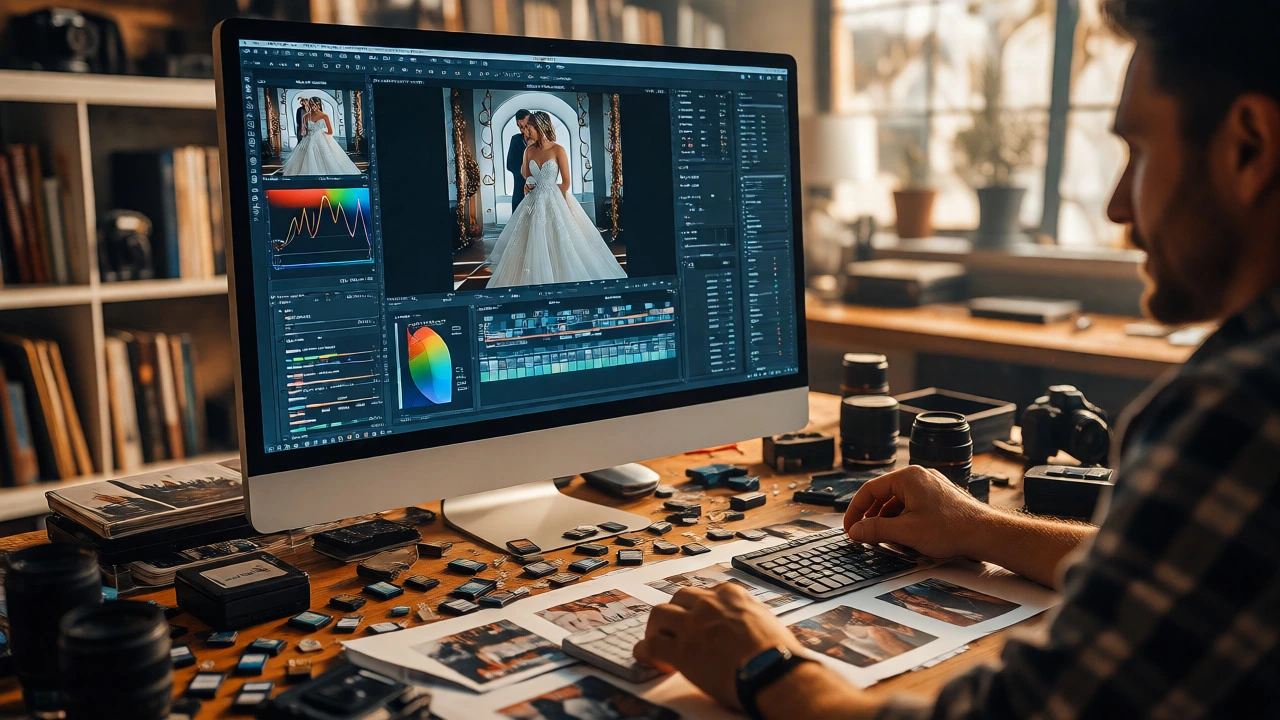
Raw files straight out of the camera look flat and unappealing. They require extensive processing. Professional editing involves color grading to match skin tones, adjusting white balance under mixed lighting (like yellow church lights vs. blue daylight), and dodging/burning to highlight subjects. This isn’t a filter applied in five seconds. It’s manual artistry.
Consider this: if you shoot 3,000 images at a wedding, you might keep 800. Each kept image takes 1-2 minutes to edit properly. That’s 13 to 26 hours of focused screen time. During peak season, photographers often work late nights and weekends to meet delivery deadlines. They are essentially running a small digital darkroom operation from home.
Insurance and Liability Protection
Would you let someone climb a ladder without safety gear? Probably not. Wedding photographers carry liability insurance because accidents happen. Someone might trip over a cable, or a photographer might accidentally scratch a venue floor. General liability policies typically cost $300-$600 annually. Additionally, many venues require proof of insurance before allowing vendors on-site.
There’s also equipment insurance. If a car accident destroys your gear on the way to a wedding, you need coverage to replace it immediately. Without insurance, a single disaster could bankrupt a small business. These premiums are baked into every contract price.

Marketing and Client Acquisition
How did you find your photographer? Likely through Instagram, Google search, or a referral platform like The Knot or Zola. Advertising isn’t free. Photographers spend money on:
- Website hosting and portfolio galleries.
- Social media advertising campaigns targeting engaged couples.
- Listing fees on wedding directories ($50-$100/month).
- Professional headshots and branding design.
- Continuing education workshops to stay current with trends.
A significant portion of every dollar earned goes toward finding the next client. If a photographer books 20 weddings a year, they need to market to hundreds of potential clients to convert those sales.
Experience and Risk Management
You’re paying for peace of mind. A seasoned photographer knows how to handle difficult light conditions, manage shy family members during portraits, and troubleshoot technical issues quickly. They have shot in rain, snow, dim chapels, and bright beaches. They know what angles flatter different body types and how to pose people naturally.
New hobbyists might charge $500 for a day. But do they have backup batteries? Do they understand legal contracts? Can they deliver high-resolution files within four weeks? Experience reduces risk. When you hire a pro, you’re buying certainty that your memories won’t be lost due to human error.
Why do some wedding photographers charge so much more than others?
Pricing varies based on experience, geographic location, demand, and the depth of services included. A senior photographer with 10+ years of experience charges more because they offer reliability, advanced artistic skills, and efficient workflows. Additionally, photographers in major metropolitan areas face higher living and operational costs, which reflect in their rates. Packages including albums, prints, and second shooters will always cost more than basic digital-only options.
Is it worth paying extra for a second shooter?
Yes, especially for larger weddings or tight timelines. A second shooter captures simultaneous moments-like getting ready photos of both partners or candid reactions during vows-from different angles. This ensures comprehensive coverage and allows the lead photographer to focus on key formal shots without missing spontaneous interactions. It doubles the perspective and increases the volume of usable images.
Do wedding photographers make profit from selling albums?
Yes, physical products like albums and prints often have higher profit margins than digital packages. However, creating custom album designs requires additional labor hours. Some photographers bundle albums into base packages to simplify pricing, while others sell them à la carte. The markup covers wholesale printing costs, design time, and shipping logistics.
What happens if my photographer gets sick on the wedding day?
Reputable professionals have emergency plans. Most contracts include a clause stating that if the primary photographer cannot perform due to illness or injury, they will provide a qualified substitute at no extra cost to you. Some photographers maintain networks of trusted colleagues for such situations. Always ask about their contingency plan before signing.
How long until I receive my wedding photos?
Typical turnaround times range from 4 to 8 weeks, depending on the photographer's workload and season. Peak wedding months (May-September) may extend delivery times. Sneak peeks are sometimes provided within 24-48 hours for social media use. Rush edits for an additional fee can reduce this window to 2-3 weeks.