Red-Eye Risk Calculator
Calculate Your Red-Eye Risk
Risk Assessment
Select your eye color and skin tone to see your risk level
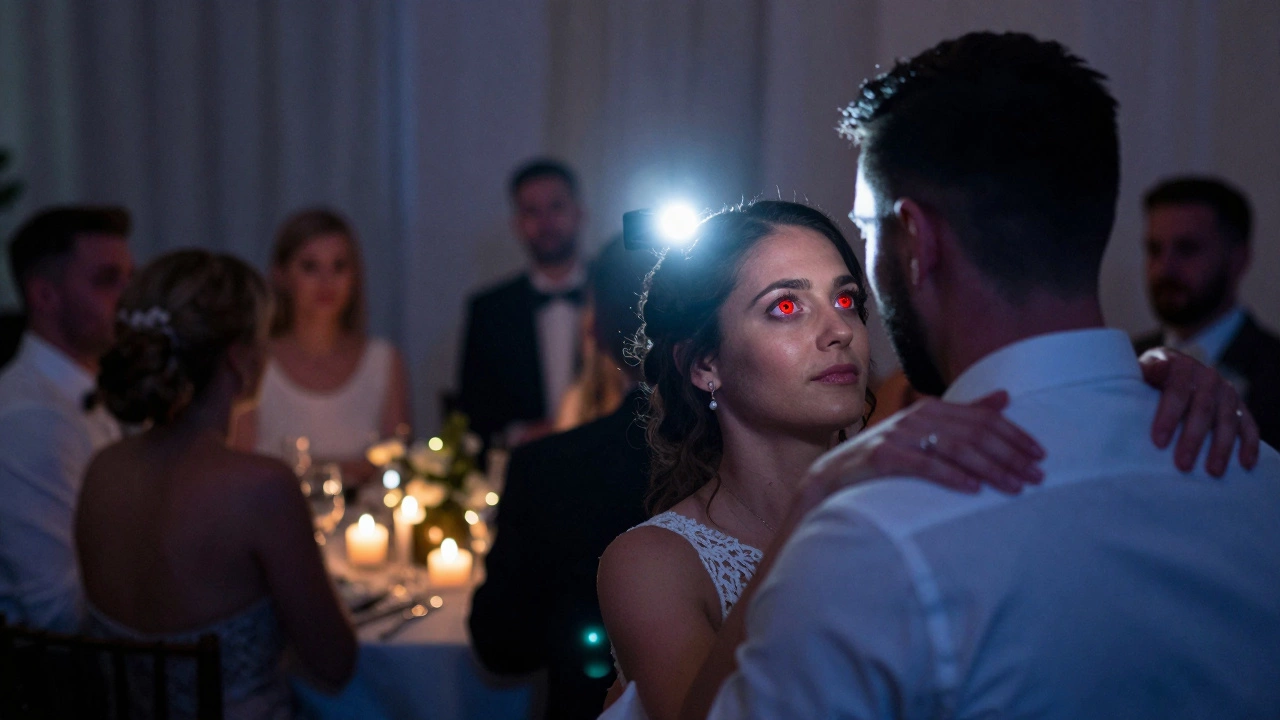
Ever taken a wedding photo and noticed someone’s eyes glowing bright red? It’s not a glitch in the camera. It’s not magic. And it’s not just happening to white people - but it’s way more noticeable on them. Here’s why.
What’s Actually Happening?
When your camera flash goes off, it sends a quick burst of light into the room. That light hits the subject’s eyes, passes through the pupil, and hits the retina at the back of the eye. The retina is full of blood vessels. That light bounces back, and if the flash is close to the lens - like on a phone or a point-and-shoot camera - the reflected light gets caught right in the photo. That’s the red you see.This is called the red-eye effect. It happens to everyone. But it shows up way more often and more brightly in people with lighter skin tones - especially those with blue, green, or gray eyes.
Why It’s More Noticeable in White People
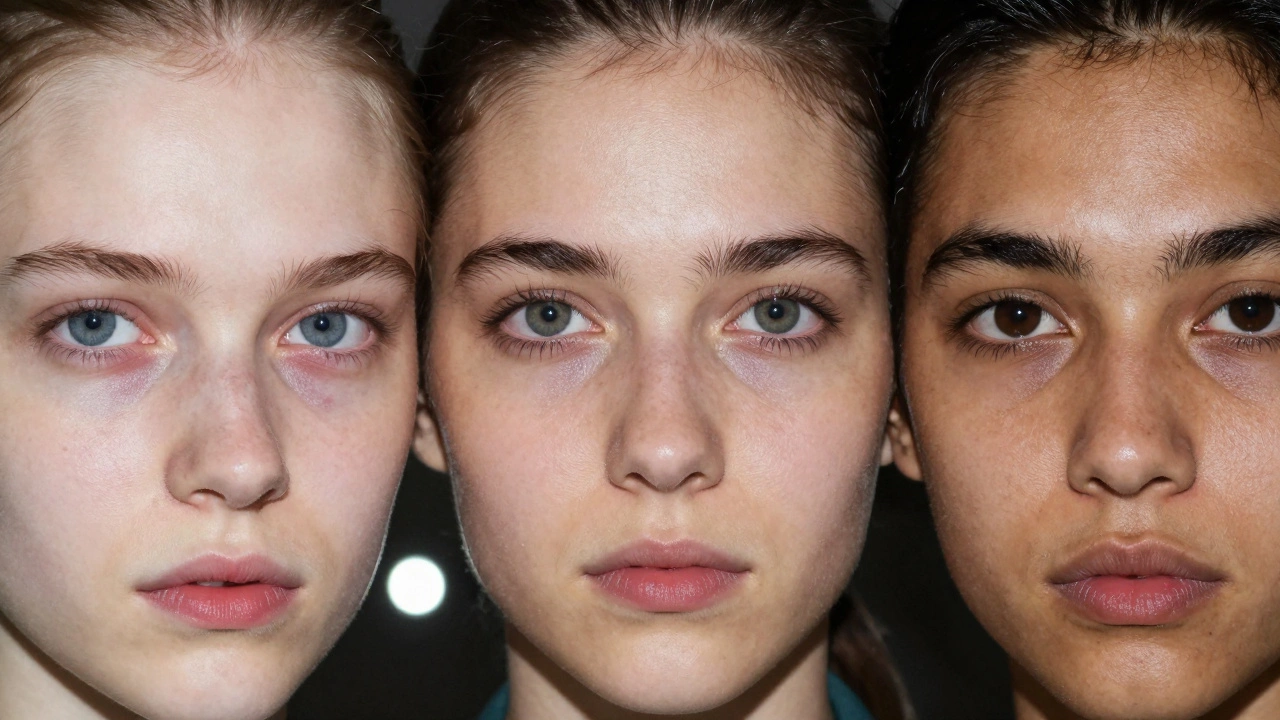
It’s not about race. It’s about pigmentation.People with darker skin have more melanin in their irises and retinas. Melanin absorbs light. So when the flash hits, less light bounces back. The red reflection gets soaked up before it can reflect into the camera. That’s why red-eye is rare in people with darker skin.
People with lighter skin - especially those of European descent - often have less melanin. Their irises are lighter, their retinas are more transparent to light, and their blood vessels show through more clearly. The flash hits, bounces off the rich network of capillaries in the retina, and comes straight back at the camera. Result? Bright, obvious red eyes.
It’s also why blue-eyed people often have the worst red-eye. Less pigment means more light passes through the iris and hits the retina directly. Green and gray eyes? Same deal. Brown eyes? Usually safe.
Why Wedding Photographers See It All the Time
Wedding photos are full of flash. Indoor ceremonies. Dimly lit receptions. First dances under string lights. You’re shooting in low light - so you turn the flash on. Everyone’s looking at the camera. And if half the guests are fair-skinned with light-colored eyes? You’re going to get red eyes.I’ve shot over 150 weddings. In every single one, I’ve had to fix red-eye. Not just one or two - sometimes a whole row of bridesmaids, the groom’s family, even the DJ. It’s not rare. It’s expected.
How to Fix It Before It Happens
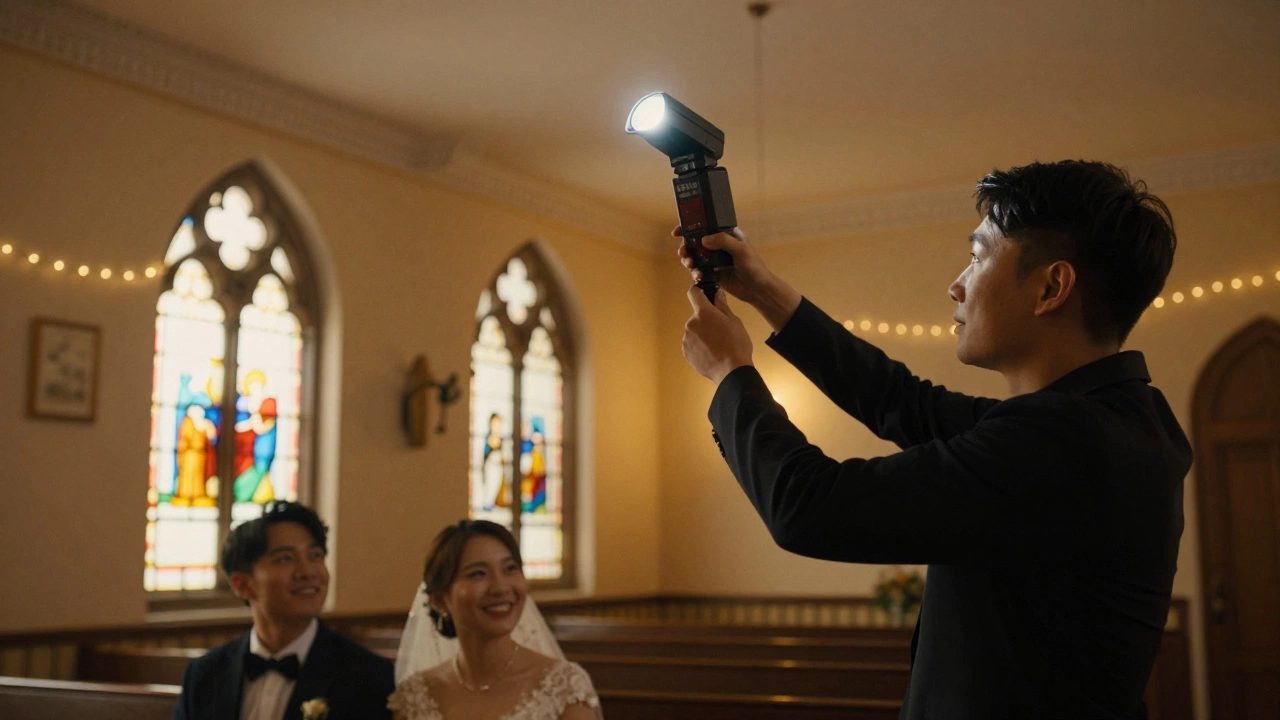
You don’t have to live with red eyes in your wedding album. Here’s how to stop it before the shutter clicks.- Use a diffused flash - Attach a softbox or bounce the flash off the ceiling. This spreads the light so it doesn’t blast straight into the eyes.
- Turn off the built-in flash - If you’re using a DSLR or mirrorless camera, use external lighting. A speedlight angled up at the ceiling gives even, natural light.
- Use ambient light - If the room has enough light (even just candlelight or fairy lights), you can shoot at a higher ISO and wider aperture. No flash needed.
- Ask people to look away - Not at the camera. Look at a spot just beside it. That breaks the direct reflection path.
- Use red-eye reduction mode - Most cameras have this. It flashes a quick pre-light to shrink pupils before the real shot. Works sometimes. Not always.
Why You Can’t Just Edit It Out Later
You might think, “I’ll fix it in Photoshop.” And yeah, you can. But here’s the problem: when you edit red-eye out, you’re painting over the entire pupil. That means you lose detail. You lose the natural sparkle in the eye. You make it look flat.Real eyes have texture. Tiny veins. Light reflections. A healthy sheen. When you slap a black dot on it, you kill the life. People notice. Especially in wedding photos - where eyes are everything. The tear in the bride’s eye. The joy in the groom’s gaze. That’s what you’re selling.
That’s why the best photographers don’t wait to fix it. They prevent it.
What About Pets? Kids?
Pets - especially dogs and cats - get a green or yellow glow. Same reason: their retinas reflect light differently. Kids? They get red-eye even more than adults. Why? Their pupils are bigger. They let in more light. And they don’t blink fast enough to dodge the flash.So if you’re shooting a wedding with kids dancing, grandparents smiling, or a golden retriever in the bridal party? Red-eye is guaranteed unless you change your lighting setup.
The Real Takeaway
Red eyes in photos aren’t about race. They’re about biology. Light. Pigmentation. And camera design.If you’re a wedding photographer, don’t blame the subject. Don’t assume it’s a “white person problem.” It’s a lighting problem. And it’s fixable.
Stop relying on flash. Start using ambient light. Learn to shoot in low light. Invest in a good external flash. Learn how to bounce. Practice. Your clients won’t notice the technical stuff. But they’ll notice the difference in their photos. Their eyes will look alive. Real. Glowing with emotion - not red with light.
That’s what makes a great wedding photo. Not the dress. Not the cake. Not even the venue.
It’s the eyes.
Do only white people get red eyes in photos?
No. Everyone can get red eyes in photos. But it’s much more noticeable in people with lighter skin and lighter-colored eyes because they have less melanin, which means more light reflects back from the retina. People with darker skin have more melanin, which absorbs the light and reduces the effect.
Why do some people get red eyes and others don’t in the same photo?
It depends on eye color, skin tone, and how the light hits their eyes. Someone with blue eyes and fair skin will reflect more light than someone with brown eyes and darker skin. Also, if someone is looking directly into the camera with the flash, they’re more likely to get red-eye than someone looking slightly to the side.
Can I prevent red eyes without using flash?
Yes. Use natural light, candles, string lights, or ambient room lighting. Increase your camera’s ISO and open your aperture wider (like f/2.8 or lower). This lets in more light without needing flash. Many professional wedding photographers shoot this way, especially indoors.
Is red-eye harmful to the eyes?
No. The flash doesn’t hurt your eyes. It’s just bright light reflecting off the retina. Even though it looks startling in photos, it’s completely harmless. The red-eye effect is purely a photographic artifact - not a medical issue.
Why does red-eye look different in dogs and cats?
Dogs and cats have a special layer behind their retina called the tapetum lucidum. It reflects light to help them see in the dark. This layer reflects green, yellow, or even blue light - not red. That’s why their eyes glow differently in photos. It’s normal and not a problem.