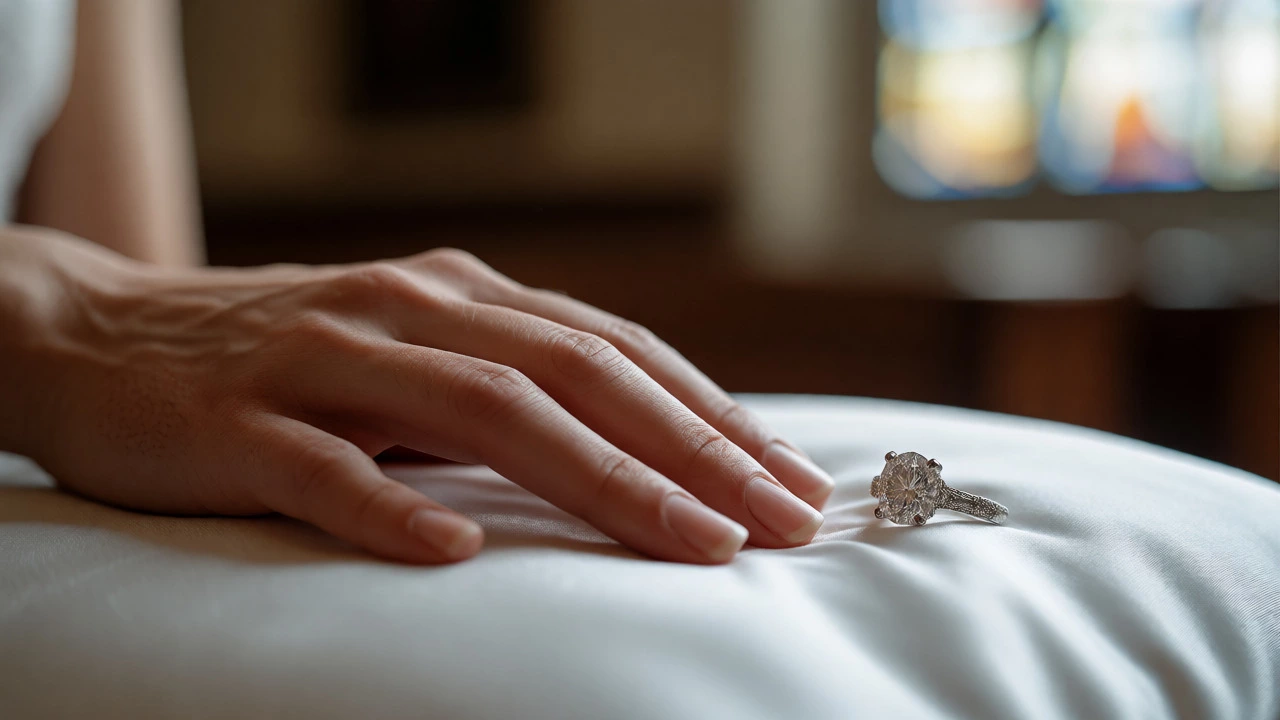
Wedding Ring Placement Planner
Answer a few quick questions about your rings and preferences to get a personalized recommendation for how to handle your engagement ring during the wedding ceremony.
Recommended Strategy
Strategy:
Why:
Visual Guide
You’re standing at the altar, heart pounding, waiting for the moment your partner slides a new band onto your finger. But wait-what happens to that sparkly diamond you’ve been wearing for months or years? It’s one of the most common questions couples face during planning: why do you take off your engagement ring when getting married?
The short answer? Tradition and symbolism. The long answer involves history, practicality, and a whole lot of personal choice. There is no law saying you must remove it, but most people do, at least temporarily, to make room for the wedding band. Let’s break down exactly why this happens, what the rules are (if any), and how to handle your rings on the big day without losing your mind.
The Historical Reason Behind the Switch
To understand the "why," we have to look at the "when." In many Western cultures, particularly those influenced by European customs, the wedding band is considered the primary symbol of marriage. Historically, the plain gold circle represented eternity and unbroken commitment. The engagement ring, often featuring a gemstone, was viewed as a promise or a contract marker-a prelude to the actual union.
The logic follows a specific hierarchy: the wedding band goes closest to the heart because it signifies the active state of being married. The engagement ring sits outside it, acting as a reminder of the proposal and the journey leading up to the wedding. If you wear both simultaneously from the start, the engagement ring physically blocks the wedding band from sitting in its traditional position. By removing the engagement ring before the ceremony, you ensure the wedding band can be placed directly on the bare finger, closest to the heart, honoring that age-old symbolism.
Practical Reasons Couples Remove Their Rings
Beyond tradition, there are very real, physical reasons to swap rings during the ceremony. Have you ever tried to slide two rings over each other? It’s tricky. During the exchange of vows, hands are shaking, emotions are high, and fingers might swell slightly due to heat or nervousness. Trying to force a wedding band over an existing engagement ring can result in:
- Jewelry damage: Prongs on engagement rings can snag on the wedding band or vice versa.
- Awkward moments: Fumbling with tight rings looks less romantic and more stressful.
- Safety risks: If a ring gets stuck, you don’t want to be cutting it off mid-vow.
Removing the engagement ring beforehand ensures the officiant or your partner can slide the wedding band on smoothly. It’s a small logistical step that prevents a major distraction during your most important photos.
What To Do With The Engagement Ring Before The Ceremony
Okay, so you’re taking it off. Where does it go? This is where anxiety spikes. You don’t want to leave it on a table where it could roll away, nor do you want to put it back on after putting the wedding band on if you plan to stack them later. Here are three common strategies:
- The Best Friend Method: Ask your maid of honor or best man to hold it. They usually have a dedicated pocket or a small pouch. This is the safest bet if you trust them implicitly.
- The Left Hand Switch: Move the engagement ring to your right hand before walking down the aisle. After the ceremony, you move the wedding band to the left hand, then transfer the engagement ring back to the left hand, stacking it on top of the wedding band. This keeps it safe and visible.
- The Safe Deposit Box: For expensive heirlooms, some brides leave the engagement ring in a hotel safe or with a family member until the reception. This is rare but valid if you’re worried about theft or loss.
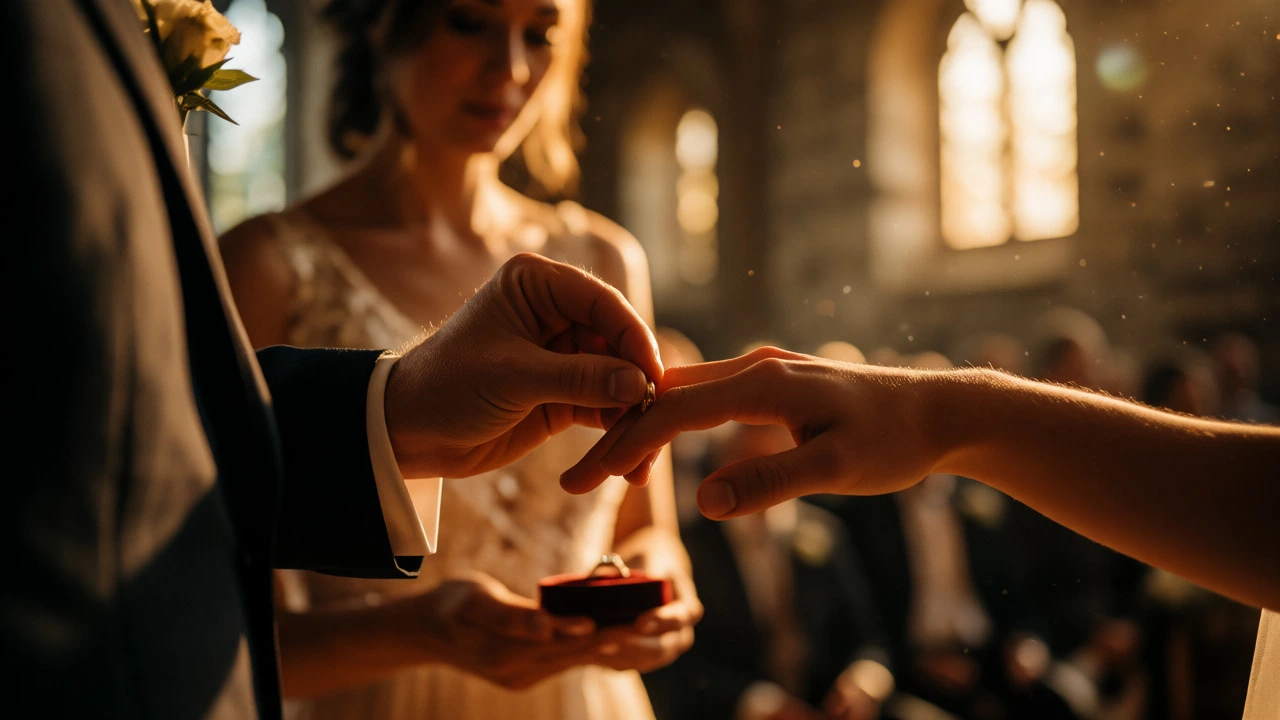
Re-Stacking Your Rings After The Vows
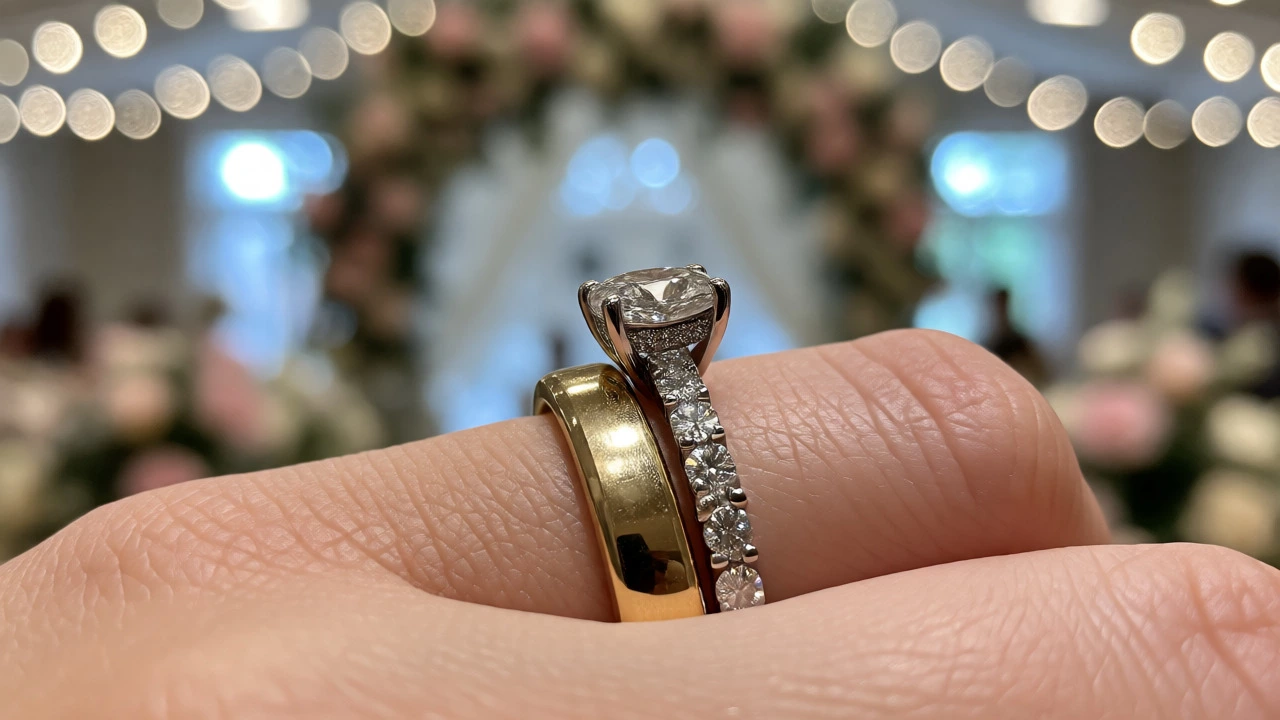
Once the "I do" is said and the kiss happens, you’ll likely want to wear both rings together again. How you arrange them depends on your preference, but the traditional method is to place the wedding band first (closest to the knuckle) and the engagement ring second (closer to the fingertip).
However, plenty of modern couples skip the switch entirely. Some prefer to keep the engagement ring on throughout the ceremony and simply slide the wedding band underneath it if there’s enough space. Others choose to solder the two rings together into a single piece of jewelry after the wedding. Soldering eliminates the gap between rings, making them easier to clean and preventing them from spinning around on your finger. It’s a permanent decision, so think twice before committing.
| Option | Process | Best For |
|---|---|---|
| Traditional Switch | Remove engagement ring; wear wedding band alone during ceremony; re-stack engagement ring after. | Couples who value historical symbolism and want distinct separation of events. |
| Right Hand Transfer | Move engagement ring to right hand before ceremony; move wedding band to left hand; return engagement ring to left hand after. | Couples who want to keep their engagement ring accessible but out of the way. |
| No Removal | Slide wedding band under engagement ring during ceremony. | Couples with thin bands and loose-fitting engagement rings. |
| Soldered Set | Rings are permanently fused before or after the wedding. | Couples who hate gaps between rings and want easy cleaning. |
Does It Actually Matter What You Choose?
Here’s the truth: nobody will judge you if you keep your engagement ring on during the ceremony. Etiquette guides exist to help, not to police. If you have a massive cocktail ring or a vintage piece that won’t fit with a wedding band, wearing just the wedding band during the ceremony and adding the engagement ring for the reception is perfectly acceptable.
Consider the comfort factor. If your engagement ring is loose, it might spin or fall off while you’re dancing. If it’s tight, it might cut off circulation when your hands get hot. Listen to your body. The goal is to feel beautiful and comfortable, not to adhere to a rulebook written centuries ago. Many jewelers now offer "wedding sets" designed to interlock or sit flush, specifically addressing the bulk issue. If you haven’t bought your wedding band yet, ask the jeweler to test it against your engagement ring. See if they stack nicely. If they don’t, you might need to resize one or choose a different style.
Special Scenarios: Second Marriages and Non-Traditional Ceremonies
If this is your second marriage, the rules loosen even further. You might choose to wear only the new wedding band, ignoring the previous engagement ring entirely. Or, you might incorporate stones from a previous engagement into the new setting. There’s no pressure to replicate the first wedding’s jewelry choices.
For same-sex couples or non-traditional ceremonies, the concept of "left hand vs. right hand" varies by culture and country. In Germany, for example, the engagement ring is worn on the left and moved to the right after marriage. In Russia, all rings are typically worn on the right hand. Check your cultural background if you want to honor heritage, but remember: your wedding is about your union, not strict adherence to global norms.
Frequently Asked Questions
Can I wear my engagement ring during the wedding ceremony?
Yes, absolutely. While tradition suggests removing it to allow the wedding band to sit closest to the heart, many brides wear both rings simultaneously. If the rings fit well together and don't cause discomfort, keeping the engagement ring on is a popular and acceptable choice. Just ensure the wedding band can slide on easily without forcing it.
Which hand should I wear my engagement ring on before the wedding?
In most Western countries, including the US, UK, and Canada, the engagement ring is worn on the fourth finger of the left hand. However, in countries like Germany, Russia, and Norway, it is traditionally worn on the right hand. Follow the custom of your region or personal preference, but be consistent leading up to the wedding day to avoid confusion.
Should I solder my engagement and wedding rings together?
Soldering creates a single, solid piece of jewelry, eliminating the gap between rings and preventing them from spinning or collecting dirt. It is ideal for couples who prioritize ease of cleaning and a seamless look. However, it makes resizing more difficult and expensive later. Consider your lifestyle and potential weight changes before deciding to solder.
Who holds my engagement ring during the ceremony?
The Maid of Honor or Best Man is the most common choice. Assign this role clearly during rehearsal so they know exactly when to take it and where to store it. A small zippered pouch inside their jacket pocket is safer than a loose pocket. Alternatively, you can move the ring to your right hand before the ceremony begins.
Is it bad luck to wear the wedding band before the ceremony?
There is no widespread superstition against wearing the wedding band early, though some old wives' tales suggest trying it on too soon brings bad luck. Practically speaking, wearing it early helps you check the fit. If it feels uncomfortable or loose, you have time to adjust it before the big day. Most jewelers encourage a final fitting close to the date.