Black Eyes in Photos: Why They Happen and What It Really Means
When your eyes look completely black in photos, it’s not because something’s wrong with you—it’s usually a simple photo glare, the reflection of light off the retina that creates dark pupils in flash photography. This happens most often in low-light settings when the camera flash hits your eyes head-on, and your pupils don’t have time to shrink. It’s common in wedding photos, especially during evening receptions or dimly lit venues. You might see it in your own pictures and panic—but it’s not a flaw in your beauty, it’s a technical hiccup.
What most people don’t realize is that wedding photography, the art of capturing key moments with natural light and skilled timing can avoid this entirely. Professional photographers know how to adjust flash angles, use diffusers, or even skip flash altogether by boosting ISO or using ambient light. In fact, many modern wedding photographers avoid direct flash for this very reason—they want your eyes to look alive, not void. And if you’re taking candid shots with your phone, moving the flash off-axis or using a ring light can make all the difference.
This isn’t just about looks—it’s about memory. Your wedding day is full of moments you’ll look back on for decades. A photo with black eyes might make you question if you looked tired, scared, or even unwell. But the truth? You were just caught in the wrong lighting. That’s why so many couples now hire photographers who specialize in natural light or who use bounce flash techniques. It’s not about spending more—it’s about choosing someone who understands how light behaves.
And here’s something practical: if you’ve already got photos with this issue, don’t toss them. Most editing apps can fix pupil darkness in seconds. Just brighten the iris slightly and add a tiny catchlight. It’s not magic—it’s just smart tweaks. You don’t need to be a pro to do it.
What you’ll find in the posts below isn’t just a list of wedding tips. It’s a collection of real, practical answers to problems you didn’t know you had—like why your bouquet looks washed out in photos, how to avoid blurry garter toss shots, or why your cake looks flat under indoor lighting. These aren’t theory pieces. They’re fixes from people who’ve been there. Whether you’re planning your own wedding or just curious about how the little things go wrong, you’ll find something that saves you time, stress, or a bad photo.
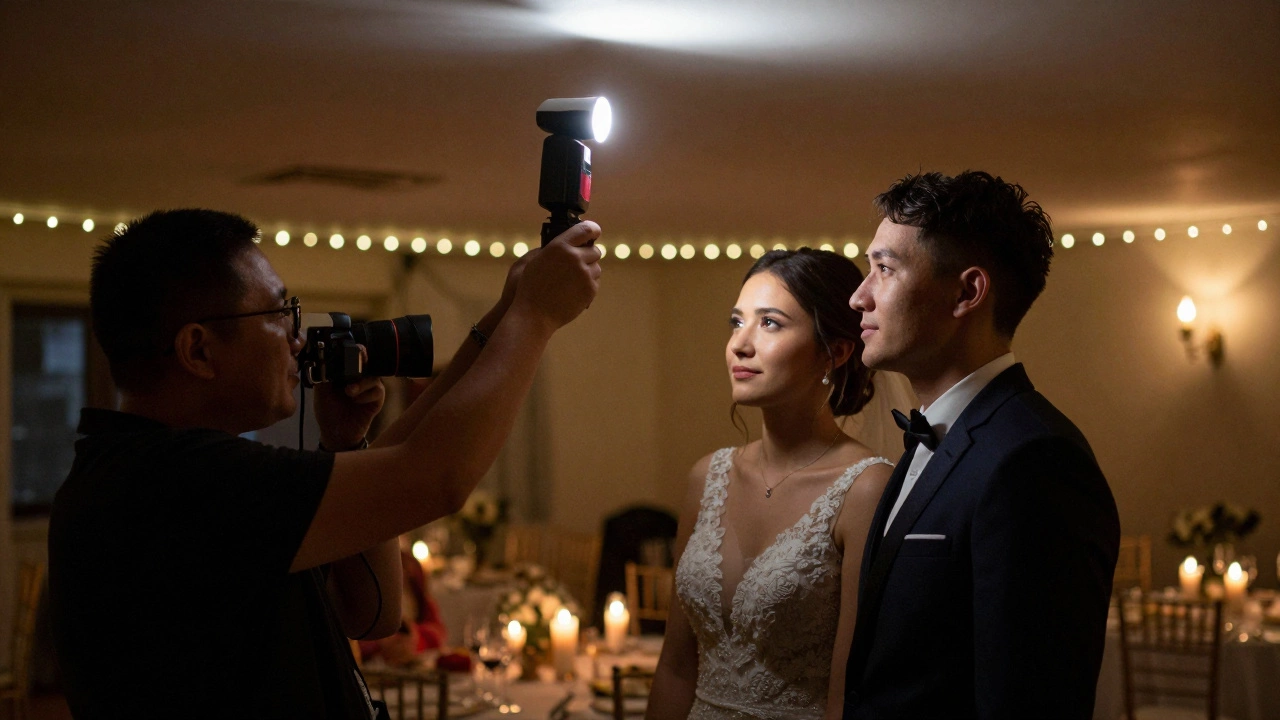
Why Do Eyes Look Black in Photos? A Wedding Photographer’s Guide
Black eyes in wedding photos happen when flash overwhelms dilated pupils in low light. Learn why it occurs, how to prevent it with proper lighting techniques, and how to fix it - so your wedding photos capture real emotion, not dark voids.
Read more