Pupil Dilation: What It Means and Why It Matters in Weddings and Beyond
When someone’s pupils widen, it’s not just a reaction to light—it’s a silent signal of what they’re feeling. pupil dilation, the natural expansion of the black center of the eye in response to emotion, light, or attraction. Also known as mydriasis, it happens without us thinking about it, and it’s one of the most honest things the human body does. You can’t fake it. That’s why wedding photographers, videographers, and even couples themselves notice it—the moment the groom sees his bride walk down the aisle, the pupils don’t lie. They widen. Not because of dim lighting, but because of awe, love, or sheer surprise.
Pupil dilation connects to emotional cues, invisible signals the body sends during high-stakes moments like vows, first dances, or quiet glances across the reception. It’s not just about romance—it’s also about focus. Think about the bride adjusting her veil while the photographer clicks away. Her pupils might dilate as she locks eyes with her partner, or when she catches a glimpse of her reflection. Even in the chaos of the day, those tiny changes in the eye reveal what’s really happening inside. And it’s not just for photographers. Couples who study each other’s reactions during planning, or who want to capture more authentic moments, can use this knowledge to time their shots, slow down, or simply be present.
It also ties into wedding photography, the art of capturing fleeting, unscripted emotions that define a wedding day. The best wedding photos aren’t the ones where everyone’s smiling at the camera—they’re the ones where someone’s eyes are wide, lost in a moment, barely aware they’re being watched. That’s pupil dilation at work. It’s why candid shots often feel more real than posed ones. Lighting matters, sure, but the emotional trigger behind the dilation? That’s what makes the image stick.
And it’s not just about love. Pupil dilation shows up in stress, surprise, even decision-making. Think about the moment a bride picks her veil. Her pupils might widen when she sees the one that matches her gown perfectly, or shrink when she’s overwhelmed by choices. It’s a biological rhythm that runs beneath every wedding decision—what you choose, who you look at, when you pause. You don’t need a lab to see it. You just need to pay attention.
Below, you’ll find real stories and insights from couples, photographers, and planners who’ve noticed how the smallest physical reactions—like a change in the eye—can say more than words ever could. Whether it’s about lighting, emotion, or the quiet magic of a shared glance, these posts reveal what happens when you stop looking at the surface and start seeing what’s really going on.
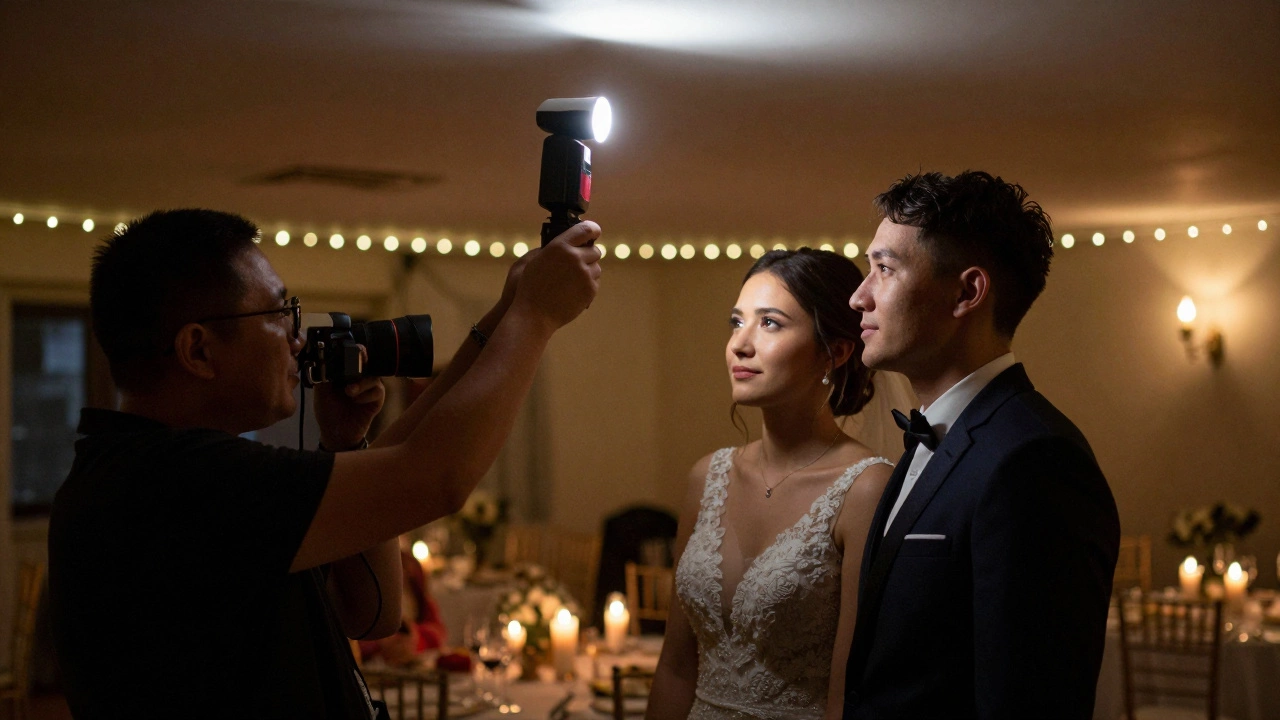
Why Do Eyes Look Black in Photos? A Wedding Photographer’s Guide
Black eyes in wedding photos happen when flash overwhelms dilated pupils in low light. Learn why it occurs, how to prevent it with proper lighting techniques, and how to fix it - so your wedding photos capture real emotion, not dark voids.
Read more