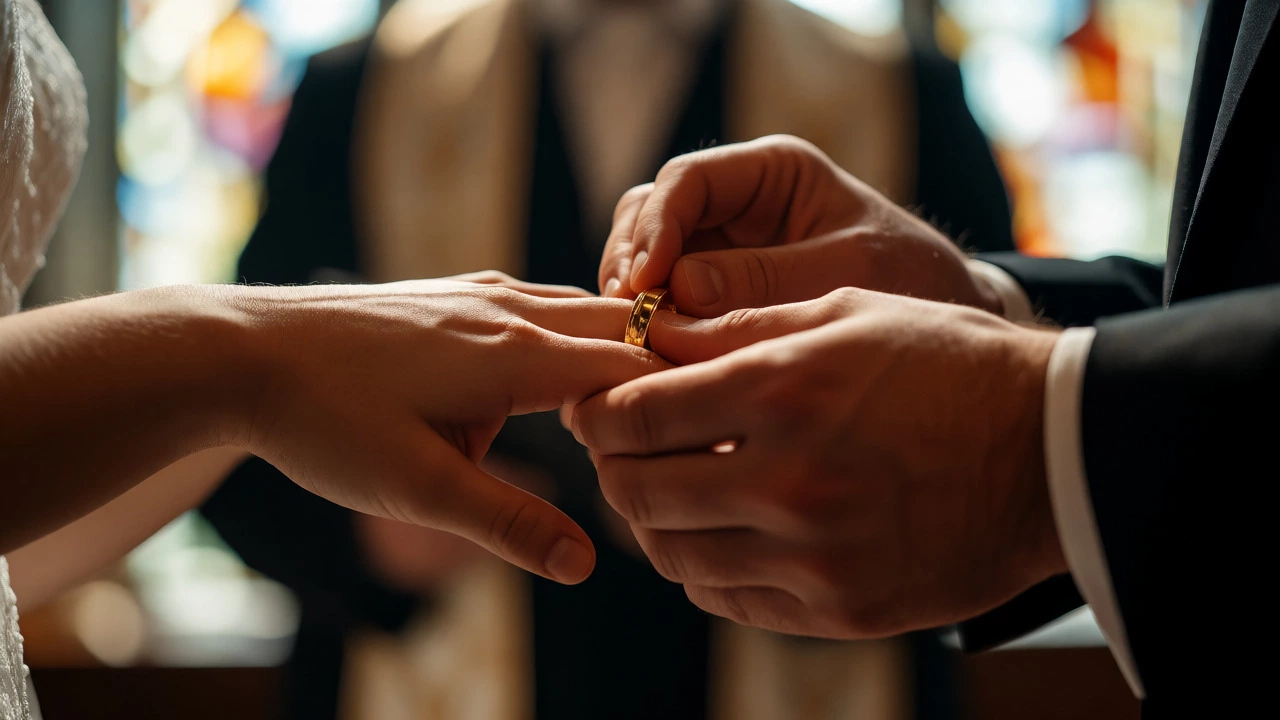
Wedding Ring Etiquette Quiz
Think you know who puts the ring on first? Or which hand it goes on in Russia? Take this quick quiz to test your wedding etiquette IQ.
Loading question...
Quiz Complete!
You scored 0 out of 5.
You’re standing at the altar. Your hands are shaking just a little. The officiant is talking about love and commitment, but your brain is stuck on one tiny, logistical detail: who gets the wedding ring first? It sounds like a small thing, right? But when you’re in the moment, with hundreds of eyes on you, getting it wrong feels like a major blunder. You don’t want to fumble the rings or put them on the wrong hand in front of everyone.
Here’s the good news: there is no single "law" that will strike you down if you deviate. However, there are strong traditions and practical reasons why most couples follow a specific order. Whether you’re planning a traditional church ceremony or a modern backyard elopement, knowing the standard sequence helps you relax and focus on what actually matters-marrying your person.
The Short Answer: Who Goes First?
In the vast majority of Western weddings, the groom receives his wedding band first. This isn’t because he’s more important; it’s mostly about logistics and symbolism during the exchange of vows.
Think about how the ceremony flows. Usually, the couple faces each other. The best man holds the rings. When the officiant says, "I now pronounce you husband and wife," or invites the exchange of rings, the groom typically places the band on the bride’s finger first. Wait, didn’t we just say the groom gets his first? Let’s clarify the difference between *receiving* and *placing*.
- Placing: The groom usually places the ring on the bride’s finger first.
- Receiving: Because the groom places the ring on the bride, she effectively "gets" her ring before he gets his.
So, if you’re asking who physically slides the metal onto their partner’s finger first, it’s almost always the groom. If you’re asking whose finger gets adorned first, it’s the bride. Why? Because traditionally, the groom speaks his vows first, followed by the ring placement, then the bride speaks her vows and receives her ring. It creates a rhythmic back-and-forth that looks balanced to the audience.
Why Does the Groom Place the Ring First?
It comes down to historical gender roles and practical staging. In traditional ceremonies, the groom was seen as the one making the public declaration of protection and provision, so he spoke first. By placing the ring immediately after his vow, he sealed that promise.
Then, the bride responded with her own vows and received her token of that bond. This sequence ensures that both partners have spoken their promises before either is fully "bound" by the symbol. It’s a dialogue, not a monologue.
Also, let’s be real about the mechanics. If the bride went first, she’d have to reach across or turn awkwardly while the groom waited. Having the groom go first often allows for a smoother physical transition, especially if the best man is handing the rings from the left side (which is common since most people wear rings on the left hand).
Does the Hand Matter? Left vs. Right
This is where things get tricky because culture plays a huge role. In the US, UK, Canada, and Australia, the wedding ring is worn on the fourth finger of the left hand. This is due to the ancient Roman belief in the vena amoris, or "vein of love," which supposedly ran directly from this finger to the heart.
But if you’re marrying someone from Russia, Germany, Poland, or Norway, they might expect the ring on the right hand. And if you’re Orthodox Christian, the right hand is standard.
| Region/Culture | Hand Used | Reasoning |
|---|---|---|
| USA, UK, France | Left Hand | Vena Amoris myth; widespread cultural norm. |
| Russia, Germany, Poland | Right Hand | Historical tradition; Orthodox influence. |
| Netherlands (Catholic) | Left Hand | Catholic tradition differs from Protestant neighbors. |
| India (varies) | Either | Depends on regional customs and family preference. |
If you’re in a mixed-culture marriage, talk to your families early. You don’t want your grandmother fainting because you used the "wrong" hand. Some couples compromise by wearing the engagement ring on the right and the wedding band on the left, or vice versa, depending on what feels natural.
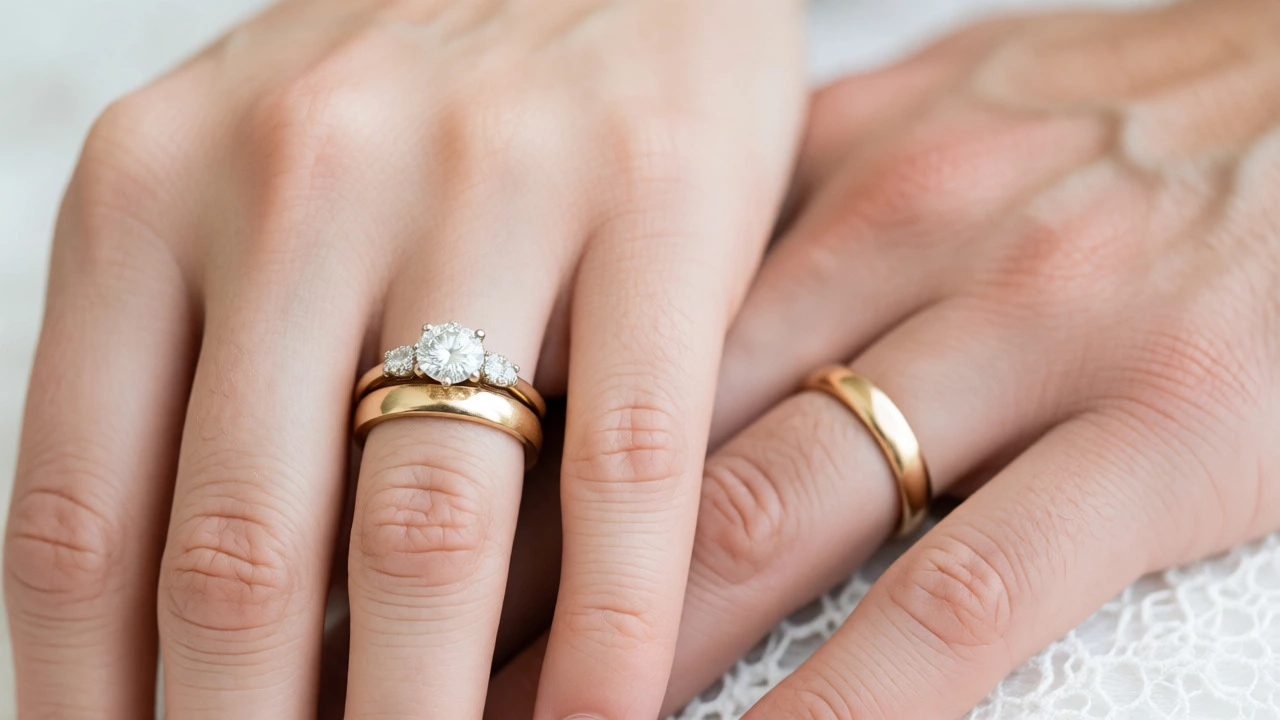
The Stack: Engagement Ring vs. Wedding Band
Once the ceremony is over, you have two rings. Which one goes closest to your heart? Technically, the wedding band should sit closest to the palm, underneath the engagement ring. Why? Because the wedding band represents the actual marriage contract, so it stays nearest to the heart.
During the ceremony, many brides move their engagement ring to the right hand temporarily. This makes it easier for the groom to slide the wedding band onto the bare left ring finger. After the ceremony, she moves the engagement ring back on top of the wedding band.
Here’s a pro tip: If your engagement ring has a large stone, sliding the wedding band under it can be annoying. Some jewelers sell "bridal sets" where the bands are curved to fit around the engagement ring. Others weld them together. Decide this before the big day so you aren’t struggling with tight fingers in the reception line.
What About Same-Sex Couples?
Tradition doesn’t dictate everything. For same-sex couples, the question of "who goes first" is entirely up to personal preference. There’s no "bride" or "groom" script to follow strictly.
Most couples choose based on who tends to speak first in arguments (okay, maybe not that serious) or who prefers to initiate gestures. A common approach is alphabetical order by first name. Another is simply flipping a coin. The key is consistency. Decide beforehand so you aren’t whispering, "You go first," "No, you go first," while the officiant waits.
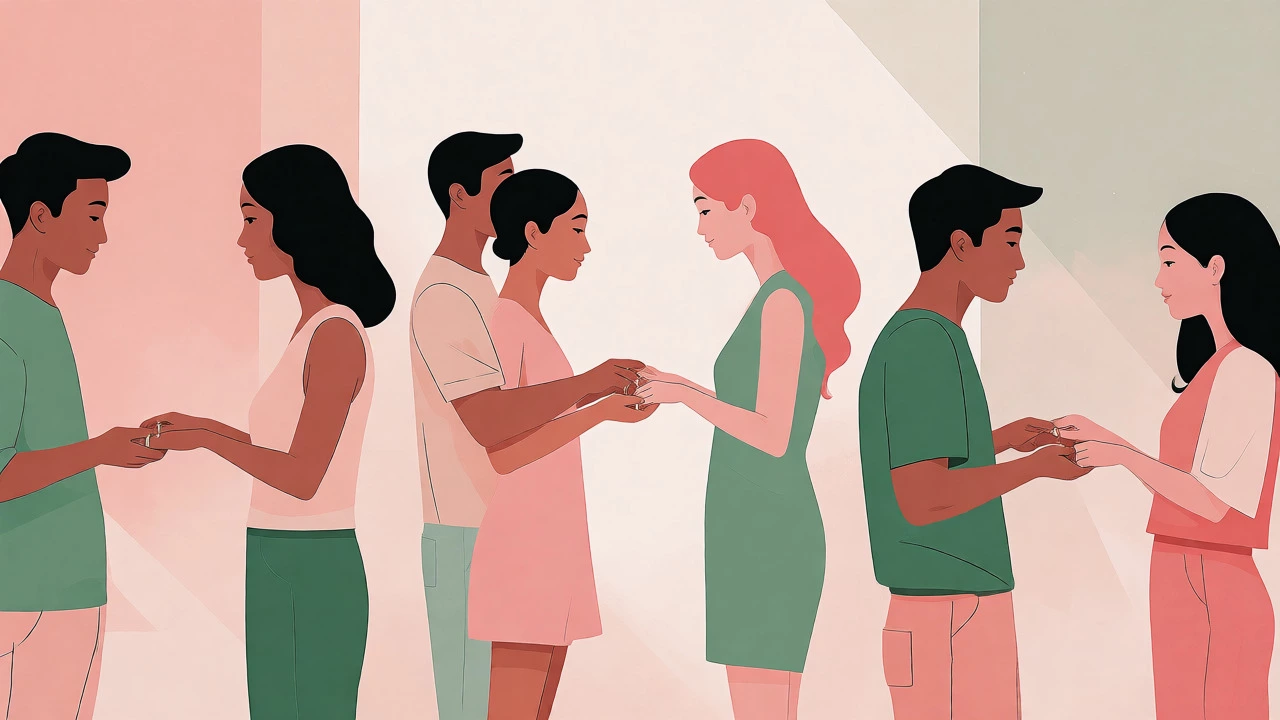
Practical Tips for Flawless Ring Exchange
Knowing the theory is great, but executing it requires practice. Here’s how to avoid disaster.
- Assign a Ring Keeper: Don’t rely on pockets. Give the rings to the Best Man or Maid of Honor. Better yet, use a dedicated ring pillow or box held by a junior attendant. Pockets are notorious for swallowing rings whole.
- Practice the Slide: Put the rings on before the wedding. Do they slide easily? If your knuckles swell from nerves or heat, you need a lubricant or a different size. Practice putting them on in front of a mirror to see how it looks.
- Coordinate with the Officiant: Ask your officiant how they structure the vows. Do they want you to repeat after them? Do they pause for the ring placement? Knowing the cue prevents awkward silences.
- Keep Hands Visible: When placing the ring, hold your partner’s hand firmly but gently. Don’t rush. Look at their face, not just the finger. It looks better in photos and feels more romantic.
Modern Twists on Tradition
Not everyone wants to stick to the script. Some couples exchange rings simultaneously. This looks powerful in photos-a symmetrical moment of mutual giving. To do this, both partners must have the rings ready at the exact same time. It requires coordination with the ring holder, who needs to hand both rings out quickly.
Others skip the individual exchange entirely and opt for a unity ritual, like lighting a candle or pouring sand, after the rings are already on. In this case, the order matters less because the rings were placed earlier or are considered symbolic accessories rather than ceremonial props.
Remember, the ring is a symbol, not a magic wand. The legality of your marriage comes from the license and the officiant’s pronouncement, not the precise second the metal touches skin. So if you swap the order and laugh about it later, it’s totally fine. Authenticity beats perfection every time.
Can I wear my engagement ring during the ceremony?
Yes, but most brides move it to the right hand temporarily. This clears the left ring finger for the wedding band. After the ceremony, they move the engagement ring back on top of the wedding band. If you leave it on the left hand, the groom has to slide the wedding band over the engagement ring, which can be difficult if the rings are tight or bulky.
What if I lose the ring during the ceremony?
Don’t panic. Have a backup plan. Many couples bring a cheap placeholder ring for the ceremony in case the real diamond gets lost or stolen. Or, ensure your ring keeper is trustworthy and has a secure pocket. If it does fall, the officiant can pause briefly. Most guests won’t even notice if you handle it calmly.
Do I have to follow the traditional order?
Absolutely not. Your wedding is yours. If you want the bride to place the ring first, do it. If you want to exchange them simultaneously, go for it. The only rule is that both parties agree on the sequence beforehand so you don’t hesitate at the altar.
Which hand do men wear their wedding rings on?
In the US and UK, men wear their wedding rings on the fourth finger of the left hand, same as women. In countries like Russia, Germany, and India, the right hand is more common. Check your local cultural norms or ask your partner’s family if it’s a concern.
Who holds the rings during the ceremony?
Typically, the Best Man holds the groom’s ring and the Maid of Honor holds the bride’s. Alternatively, a junior bridesmaid or flower girl might carry a ring pillow. Choose someone reliable who won’t accidentally drop them into a pocket or purse.