Flash Photography: What You Need to Know Before Your Wedding Day
When you think of flash photography, the use of artificial light to capture images in low-light or high-contrast settings. Also known as artificial lighting, it’s a tool that can make or break your wedding photos—especially when used without thought. Many couples assume flash means harsh, ghostly faces and red eyes. But modern flash techniques are nothing like that. Skilled photographers use off-camera flash, diffusers, and bounce techniques to create soft, natural-looking light that enhances your wedding day—not overwhelms it.
Flash photography isn’t just for dark churches or evening receptions. It’s often used to balance sunlight in outdoor ceremonies, fill in shadows under hats or veils, and keep skin tones consistent when the sun moves behind clouds. It’s not a replacement for natural light—it’s a partner. Think of it like a good makeup artist: it doesn’t hide you, it makes sure you look your best no matter the conditions. And when your photographer knows how to use it, you won’t even notice it’s there. Related concepts like wedding photography, the art of capturing the emotional and visual moments of a wedding day, rely heavily on understanding light. Without it, even the most beautiful veil or gown can look flat, washed out, or uneven. That’s why choosing a photographer who understands wedding lighting, the strategic use of natural and artificial light to shape mood and detail in wedding imagery matters more than the camera they use.
Some photographers swear by natural light only. Others use flash as their main tool. Neither is right or wrong—it’s about what fits your day. If you’re getting married at sunset in a garden, you might not need much flash. But if your reception is in a dim ballroom, or your first dance is under low-hanging chandeliers, flash becomes essential. Ask your photographer: "How do you handle low-light moments?" "Do you use flash for portraits?" "Can I see examples of your flash work?" Don’t just look at bright, sunny shots. Look at the ones taken inside, at night, or in shadow. That’s where you’ll see their real skill.
You’ll find posts here that dig into wedding photography choices, lighting setups, and how to avoid common mistakes. Whether you’re wondering if you need a second shooter, how to prepare for indoor photos, or why some photos look too flat—this collection gives you the real talk, not the marketing fluff. No jargon. No pressure. Just what actually works on the day you’re saying "I do."
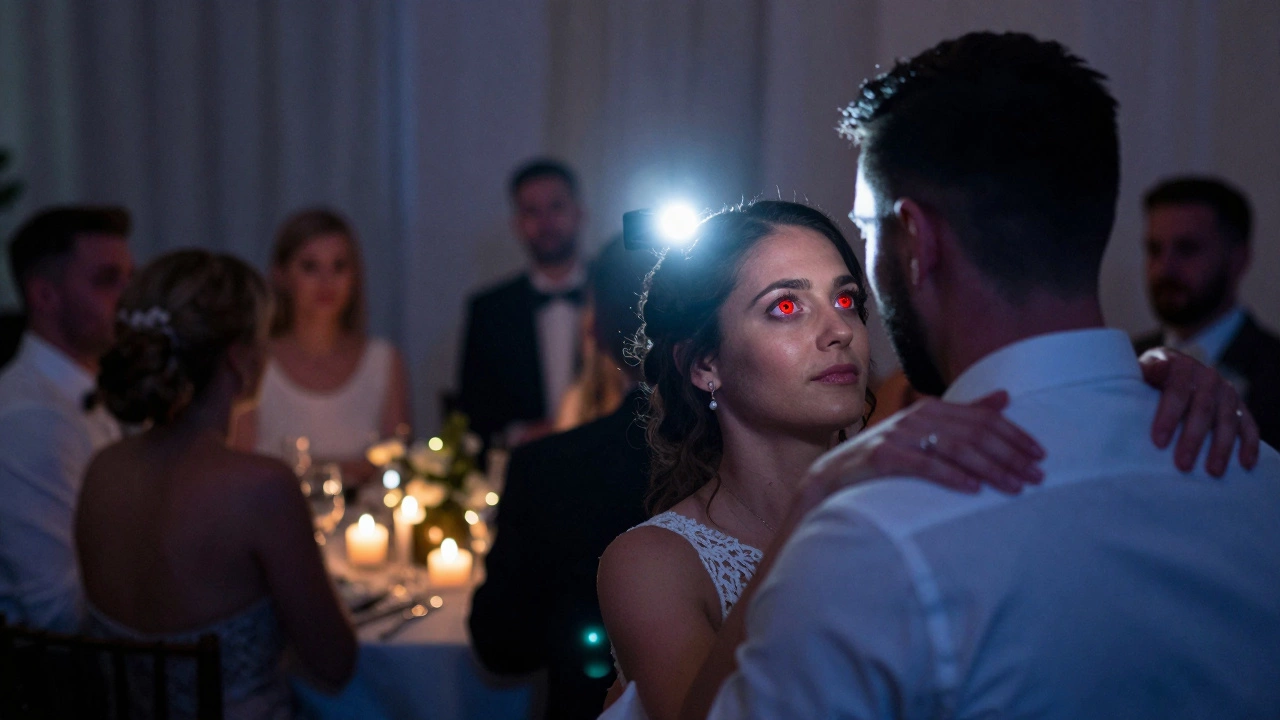
Why Do White People's Eyes Turn Red in Pictures?
Red eyes in wedding photos aren't about race - they're about light, eye color, and camera flash. Learn why fair-skinned people show it more and how photographers prevent it for natural-looking shots.
Read more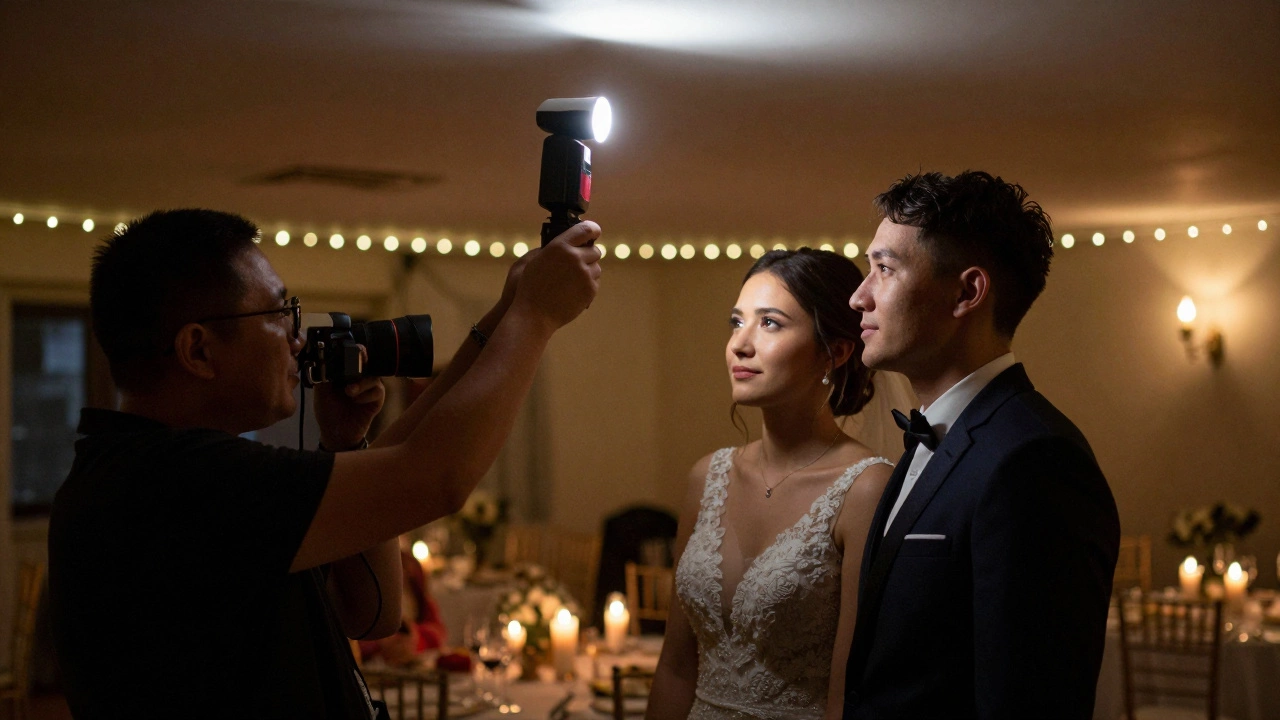
Why Do Eyes Look Black in Photos? A Wedding Photographer’s Guide
Black eyes in wedding photos happen when flash overwhelms dilated pupils in low light. Learn why it occurs, how to prevent it with proper lighting techniques, and how to fix it - so your wedding photos capture real emotion, not dark voids.
Read more